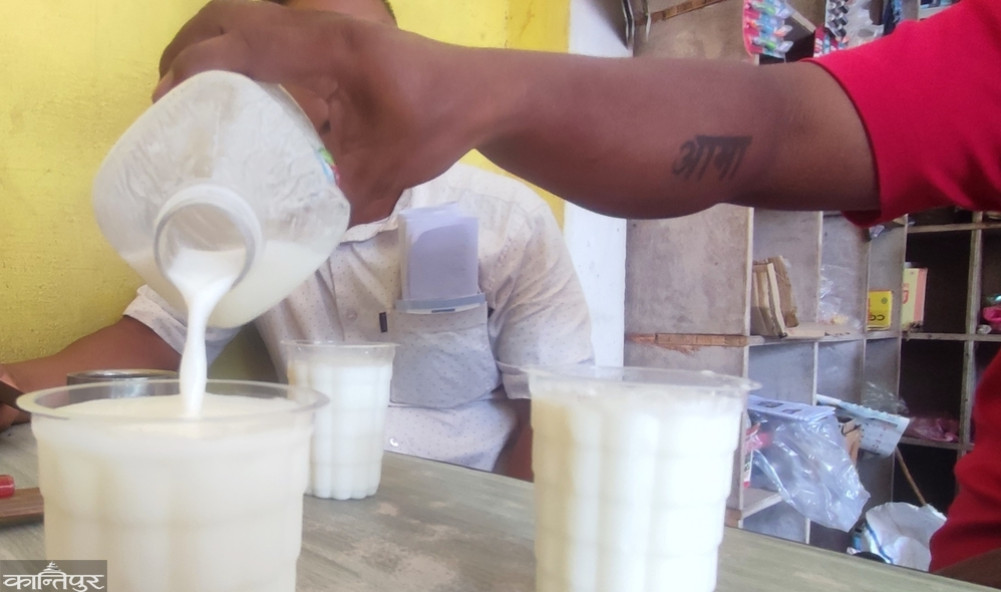
The demand and attraction of traditional drinks like Satu, Mohi, Belko Sarvat, and Sugarcane Juice have increased dramatically in the local markets of Terai-Madhesh for cooling. The business of these health-enhancing traditional drinks, which are providing cooling to the common people, is encouraging.
We use Google Cloud Translation Services. Google requires we provide the following disclaimer relating to use of this service:
This service may contain translations powered by Google. Google disclaims all warranties related to the translations, expressed or implied, including any warranties of accuracy, reliability, and any implied warranties of merchantability, fitness for a particular purpose, and noninfringement.
Until recently, the word 'cold' meant only imported and 'bottled' processed drinks. When the heat was unbearable, consumers were forced to choose those modern drinks in the market.
However, times have changed now - our indigenous drinks have started making a strong presence in the market. The original drinks, which were traditionally limited to the kitchen, have now become commercial and have reached the market. Where is it only in the market! Indigenous drinks have also become the first choice in hospitality at government offices in the district.
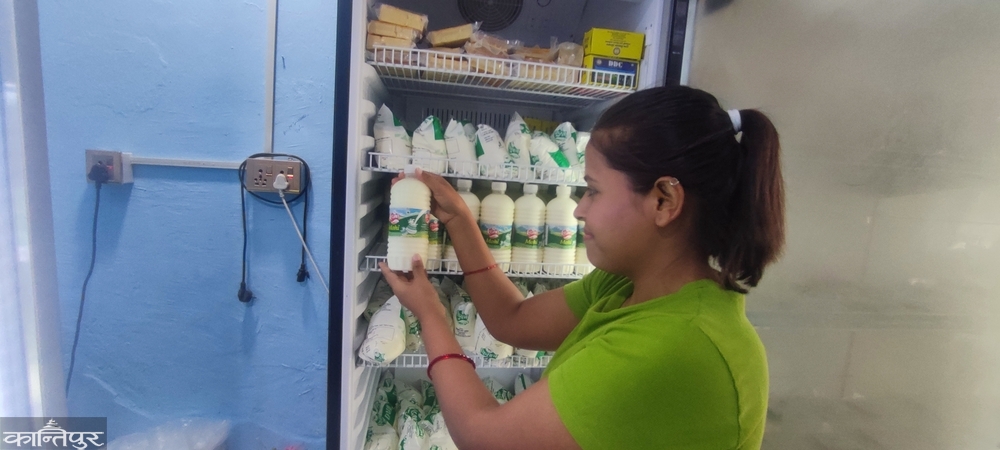
The most widely used indigenous drink is Mahi. Previously limited to the kitchens of villages, Mahi has now started decorating the refrigerators of markets and hotel tables. Mahi has become the drink of choice at meetings, ceremonies, banquets and other happy and sad gatherings. As it has become widely consumed in summer, the trend of selling Mahi in attractive bottles has increased. Dairy cooperatives and private dairy industries have also started producing Mahi.
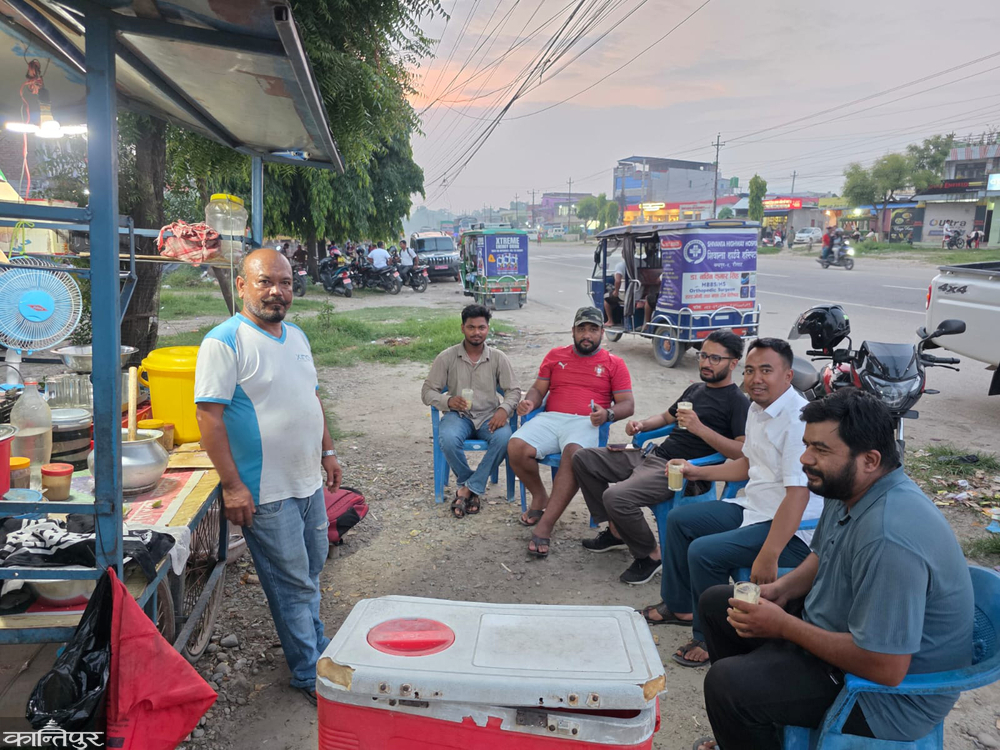
Jang Bahadur Thapa of Bharatpur-9, Sharadpur, Chitwan was found chatting with friends at a tea shop on Bharatpur Hospital Road on Tuesday afternoon. Instead of tea and cold drinks at the gathering, he bought a bottle of Mahi and shared it with his friends. And, he started drinking. He said that four friends had drunk three bottles of Mahi. ‘When I was young, there was plenty at home. When there was none, I would call people in the village and give them to them. That is how I got used to it. Now I have to buy it and eat it,’ he said, ‘But, it is not available everywhere.’ He said that even if I buy it, I feel confident in drinking a health-promoting beverage. He said that farmers have also received relief since Mahi has started being sold in the market.
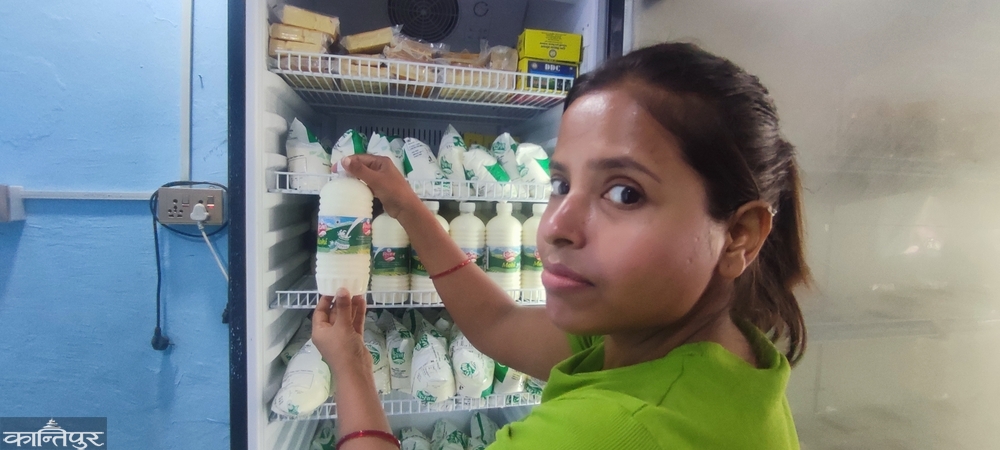
Ganganagar Dairy Cooperative in Patihani has been selling Mahi for four years. The chairman of the cooperative, Krishna Prasad Sapkota, claimed that they started the practice of selling Mahi. He said that after sales increased, they have been filling it in bottles and selling it in the market for the past three years. Now, Mahi is being sent to the market regularly. He said that there is a special demand for mahi for large gatherings, ceremonies and banquets. ‘Three thousand bottles of mahi have been ordered for the convocation ceremony of the Agricultural University in Rampur on Asar 6,’ he said, ‘Similar orders are also received for weddings and other events. Hotels that serve food also take them regularly.’
He said that 1,100 liters of mahi are being sold daily. According to the Chitwan District Dairy Cooperative Association, there are 117 dairy cooperatives in the district. Out of these, the district association and six others are producing mahi. Four private dairies produce mahi. The association has also set up sales centers in three places in the district to sell its products.
Various milk dishes are sold at the three centers. Janardan Poudel, the association’s manager, said that there are many customers who come looking for mahi. He said that a minimum of 500 to a maximum of 2,000 liters of mahi are sold daily. Poudel said that the market for mahi has been improving for the past three years. It is sold well from Falgun to Bhadra. Mahi is not sought after in Pus-Magh.
Ganganagar Dairy Cooperative Chairman Krishna Prasad Sapkota said that mahi is a cooling drink for the summer. Mahi is sent from here from Barpak in Gorkha to Bandipur in Tanahun. It is sold in plastic packets and bottles. Open mahi is sold for Rs 55 per liter and Rs 70 per bottle.
Sugarcane juice to fill the intestines
In the districts from east to west of the Terai, life is difficult due to the heat. After the sun rises in the morning, it becomes difficult to travel in the afternoon. In such a situation, even working people who go out of their homes are at risk due to the heat. That is why shops selling sugarcane juice have increased in the markets, roads and highways of the Terai. Some people travel around with sugarcane crushing machines in autorickshaws. There is a crowd of people drinking sugarcane juice to get relief from the heat in the shops. It is common experience that drinking sugarcane juice when it is freshly prepared in the heat cools the intestines.
From Rupandehi in the Western Terai to Kanchanpur, it is now difficult to even walk in the heat. Even doctors are advising people not to go out during the day except for essential work. While many are suffering from the heat, those who earn money by selling cold sugarcane juice have found relief.
One of those who is keeping the common people cool by selling sugarcane juice in this way is Bimala Chaudhary, 50, from Dhangadhi. She has been doing street trading for 10 years. According to her, during the summer, she sells juice to support her children's education and daily household expenses. She sells 75 to 80 glasses of juice a day and earns up to Rs 3,000 daily. According to her, juice is sold at a rate of Rs 40 per glass.
Till a decade ago, she had no way of earning an income. She started the business after her husband's earnings were too much to support her family. She said that she started the business by taking a loan of Rs 1 lakh from a local women's group. ‘Since we have a big family, farming alone is not enough to feed us throughout the year,’ she said. ‘This business has now become our main source of income.’
She said that her two children are studying in graduation and 12th grade through this business. In the initial phase of the business, sugarcane juice was sold for Rs 20 per glass. Bimala sells juice from 9 am to 9 pm. Bimala says that working from morning till late night is not easy, but she is worried about her children. The sugarcane juice business depends on the weather. Business runs in the summer. ‘Work stops when the cold starts,’ she said. ‘When the cold season starts, I work as a wage laborer to make a living.’
Small business owners have been hit by inflation recently. Bimala said that costs have increased after the prices of essential goods including diesel and lemons increased.
Beelko Sarvat cools
Beelko Sarvat, which provides coolness in the summer, is popular in Bardiya. Guests and program participants are welcomed with bel sarvat at government offices, forest groups, organizations, and homestays in the district. It is being used as a cold drink when the heat is scorching. The Navadurga Community Bel Sarvat Industry located in Orali Bazaar, Madhuban Municipality-2 is producing ‘Saugat Beel Squash’. The bel sarvat produced here reaches various parts of the country. Beel is produced in most of the community forests in the district. The demand for bel sarvat, which is considered important for the body, is high in summer.
Many people prefer bel sarvat as it cools the body in summer. Conservationists say that its demand is increasing due to the belief that bel sarvat cools the body, improves the digestive system, and solves stomach problems such as constipation and ulcers.
Orali Bazaar is famous for bel sarvat. The saugat beel squash produced here reaches Kathmandu via Nepalgunj and Narayanghat. Similarly, it is being sold well in the local market.
The Navadurga Community Bale Sarvat Industry was established in 2062 and production started a year later. WWF provided machinery and equipment when the Bale Sarvat Industry was established. Local Rabin Kumar Puri, who has been operating the Bale Sarvat industry with his own investment since 2079, said. “There is a high demand for Bale Sarvat during the season,” he said, “However, it is necessary to focus on the government’s approach.” Currently, 15-16 locals have been employed in the industry. It is produced from April 20 to June 20 every year. After that, it is stored with labeling and packaging.
Bale collected by users of community forests is purchased for Rs 15 to 20 per kilogram. 20 to 25 thousand bottles are produced every year. He said that 500 milliliter Bale squash is sold wholesale for Rs 220. We have to rely on the forest for the raw material of Bale. Some years it produces more and some years it produces less, which is why there is a problem. Since Bale Sarvat is profitable, it is necessary to increase its production, said Hari Gurung, Chairman of the Board of Directors. ‘I don’t know what the previous board of directors did,’ said Chairman Gurung, ‘now a new board of directors has been formed. Even though this year the responsibility for operating the industry has been given to others, the committee will run it properly from next year.’
Satu to beat the heat
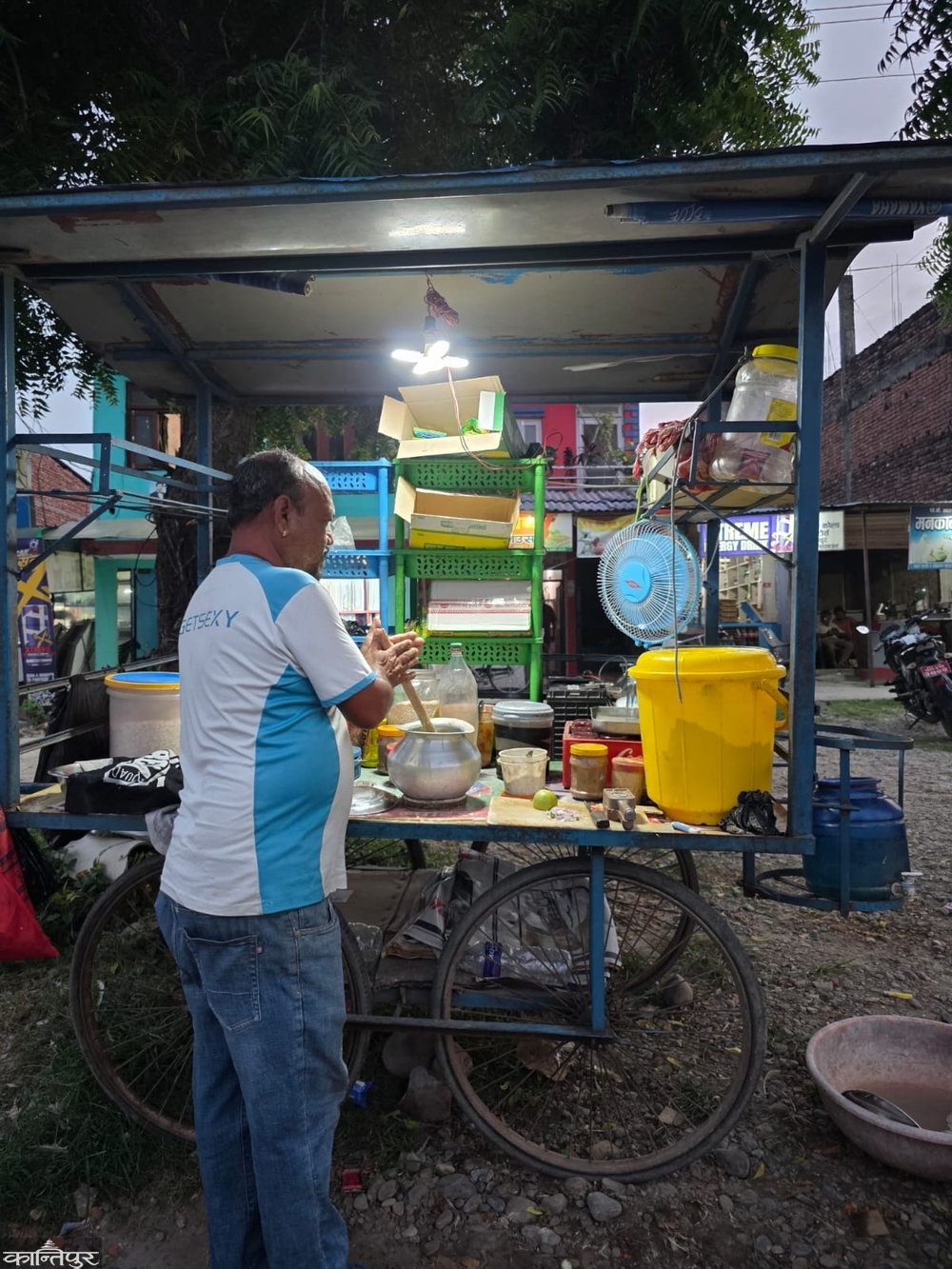
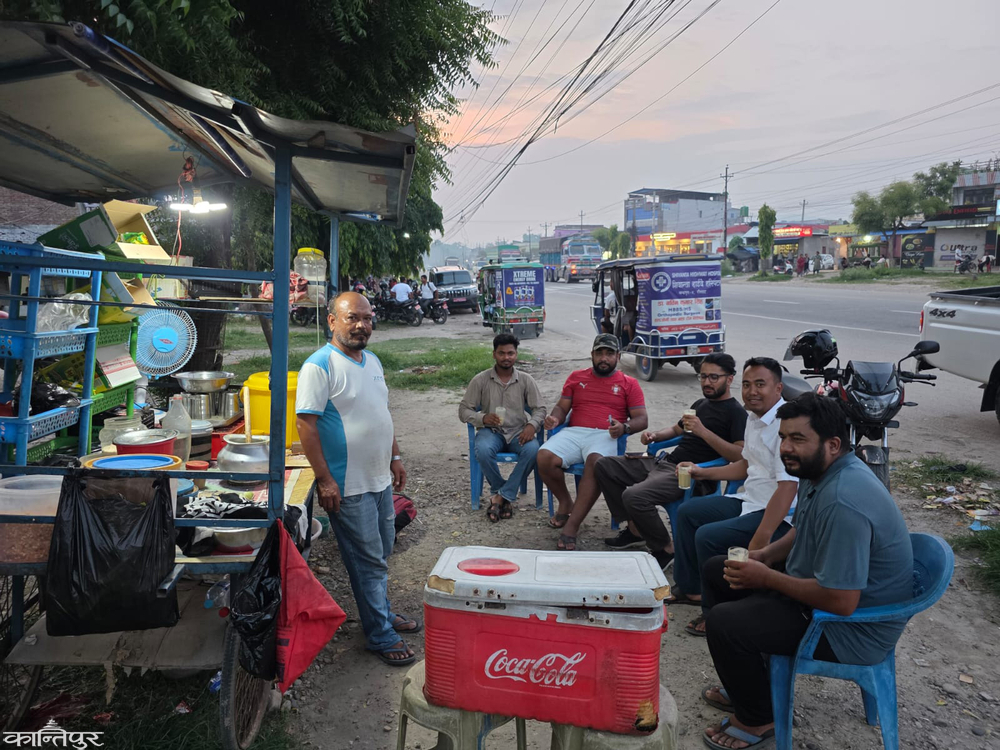
A different scene is seen every morning at Chandrapur Chowk in Rautahat. There is a dense gathering of people in one corner of the chowk. Anyone who sees such a scene for the first time will surely think – ‘What is going on here, such a crowd?’ However, the reason for the crowd is the taste of satu, which is associated with the identity of Madhesh.
People gather here from far and wide to eat satu. Not only the residents of the district, but also those traveling on the Mahendra Highway start looking for satu carts as soon as they stop their vehicles. Anil Karki, a satu entrepreneur from Chandranigahpur, said that the number of satu connoisseurs is increasing day by day as the heat increases. ‘Recently, more people are eating satu than cold drinks. "The business of satu has increased more than ice cream and kulfi in summer," he said. "Satu benefits the body and relieves fatigue in summer, which is why its demand has increased."
Satu is not only a food, but also a strong link in eastern civilization, culture and history. "I have seen crowds gathering around the cart for a decade," said local Shaligram Upadhyay. "Satu is completely natural and full of nutritious ingredients. It not only fills the stomach, but is also beneficial for health." Upadhyay, who has been involved in medical services for a long time, said that the business of satu, which is considered like nectar in the summer season, has not only sustained a traditional profession at the local level but also provided the common man with an alternative to a marketable snack.
Satu is prepared by roasting and grinding grains like corn, barley, wheat, soybeans and gram, which provide energy to the body, in a mill or grinder. Consumers also mix other grains or dried fruits according to their taste and health needs. Now, small traders who deliver gram satu to every house are also active. They put a small machine on the back of their motorbikes and grind gram and other pulses at home.
Chandrapur Hospital doctor Subhash Chaudhary said that although the cold drinks available in the market give temporary pleasure, they can affect health. ‘Satu also fills the stomach, cools the body and is completely purifying. Consumption of satu is considered best especially in the summer season,’ he said, ‘It is easily digested, cools and energizing. It keeps the body cool in the summer, satu is the best option to prevent dehydration and provide necessary nutrition.’
Some people even eat satu with salt, lemon, green chillies and onions and eat it spicy. Satu business has flourished in Chandrapur, Garuda, Shivnagar, Gaur, Samanpur and Kataharia. Satu is full of nutrients.
The taste of toddy in summer
As the heat increases in the eastern Terai, the taste of toddy starts to be talked about on the roadsides, squares and market corners. This natural juice extracted from palm or date palm trees is not only a natural juice, but also a tradition linked to the lifestyle, culture and local economy of the Terai.
The demand for toddy increases during the summer from Biratnagar to Jhapa. People tired of the scorching sun come looking for toddy to cool their bodies. Despite the expansion of the market for modern cold drinks and packaged drinks, the popularity of toddy has not diminished. ‘Tadi is my regular drink,’ said Jiwan Thapa of Biratnagar, ‘I feel a special pleasure after drinking it. It cools the body.’
The skill of extracting toddy has been passed down for generations. The juice is collected by making a special incision near the top of the palm or date palm tree. Toddy extracted early in the morning is fresh, sweet and slightly sour in taste. Its taste and quality change as the day progresses.
According to locals, toddy helps keep the body cool in summer. That is why it is in special demand among farmers, laborers and travelers working in the fields in the Terai districts. In rural areas, toddy is also considered a drink that provides natural energy.
The toddy trade is earning a living for many families. Hundreds of families who collect, transport and sell toddy are directly or indirectly associated with this business. One is Mohammad Ali. He sells toddy at the rate of Rs 20 per cup and Rs 100 per bottle. ‘Many people come to drink toddy during the summer season,’ he said, ‘I sell 15-20 liters daily.’
In the past few decades, the number of date palms and date palm trees has been decreasing in many areas of the Terai. Ali says that urbanization, road expansion and changes in the use of agricultural land have started to put the main source of toddy in crisis. In his experience, there were hundreds of toddy trees in Biratnagar and the surrounding areas in the past. Many have now been destroyed. ‘As toddy is being destroyed, production has been affected,’ he says, ‘and our livelihoods have also been affected.’ According to food experts, if we are to preserve local produce and traditional food culture, it is not enough to view toddy as a drink alone. It is necessary to give equal importance to its cultural, economic and tourism aspects.
In recent years, as the world has been increasingly attracted to local and traditional foods and drinks, toddy has also become an important traditional drink that carries the identity of eastern Nepal.