We had to board the train at 7:30 in the morning. The father handed over 20,000 in the hands of his son, 'Where did the money come from?' It was time to go while talking in his mind, suddenly his eyes fell on his mother's neck, the mother's neck adorned with jewels was empty that day, he looked at his mother with sad eyes. The mother's eyes were saying, 'This is all I can do for the child'.
We use Google Cloud Translation Services. Google requires we provide the following disclaimer relating to use of this service:
This service may contain translations powered by Google. Google disclaims all warranties related to the translations, expressed or implied, including any warranties of accuracy, reliability, and any implied warranties of merchantability, fitness for a particular purpose, and noninfringement.
At that time, Khagendra Lamichhane, who was not yet an actor, turned red in front of his friends. After finishing school, he was going to study in college. When he reached college, this speech surprised him. I was ashamed. The speech that was dear to him sounded unpleasant in front of others. What to say now? You,' had to practice on an unfamiliar subject.
The child used to call the mother. The son's ears picked up on that. Addressing 'you' was not disrespecting the mother. There was no reverence. Not to love. It was pure habit. In this habit, there was love for mother, intimacy, reverence. Now you have to say. Had to say sir. How difficult is the address made by this foreign word? How inappropriate?
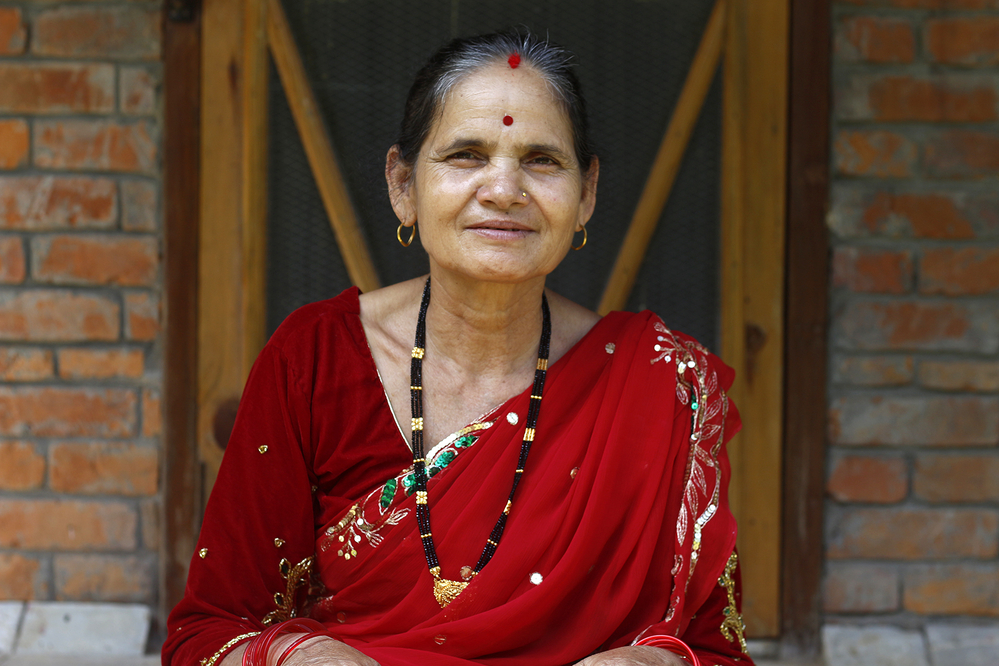
As the years passed, the age marks fell away. Meanwhile, Khagendra became a writer, became an actor. But even now he feels more intimate when addressing his mother as 'you'. You tell my mother when I am alone. He likes the word,” he says. He narrates the serial Smriti Khagendra with his mother. Mother's sacrifice, struggle, joy and pain are mixed in memory. He narrates from the color of happiness.
At that time, the mother looked very happy. When she wrote her name by drawing bangatinga letters on a piece of paper, ``Chandarkala Lamichhane.'' That was the first letter she wrote in her life after adult education was started in the village. That letter made me forget the sadness that will probably not be erased for a while.
At that time, Chandrakala liked to read a lot. Within a few days of taking the school yard, the door to study from home was closed forever. The right to study was not reserved for girls. After getting married at the age of thirteen, they were put on their foreheads and handfuls of grass on their hands. Chandrakala's immense desire to read was never fulfilled. After getting married and having children, adult education came to the village. That's when she wrote her name with her own hand and smiled. Then she wrote the second name of her son, "Khagendra Lamichhane."
Actor Khagendra still remembers his mother writing his name on a piece of paper. Even that time has passed. With time, Chandrakala's writing habits also changed. Now mother writes her name. You know my name when you see it. This is the only letter my mother used,' Khagendra remembers Bangatinga Dharsa drawn by his mother.
Even without writing a letter, a mother can read feelings that are not woven into words. She can convey deep visions of life. She can bring out the pain in the heart of the child. Sometimes Khagendra can detect from Chandrakala's deep sighs, 'Mother's biggest regret in life is not being able to read.' Chandrakala also tells her children, 'If there was a time like now, I would have rebelled and read.' The society at that time was like that.' After hearing his mother's unfulfilled desire, Khagendra mutters to himself, 'If I had understood then as now, I would have taken my mother to school.'
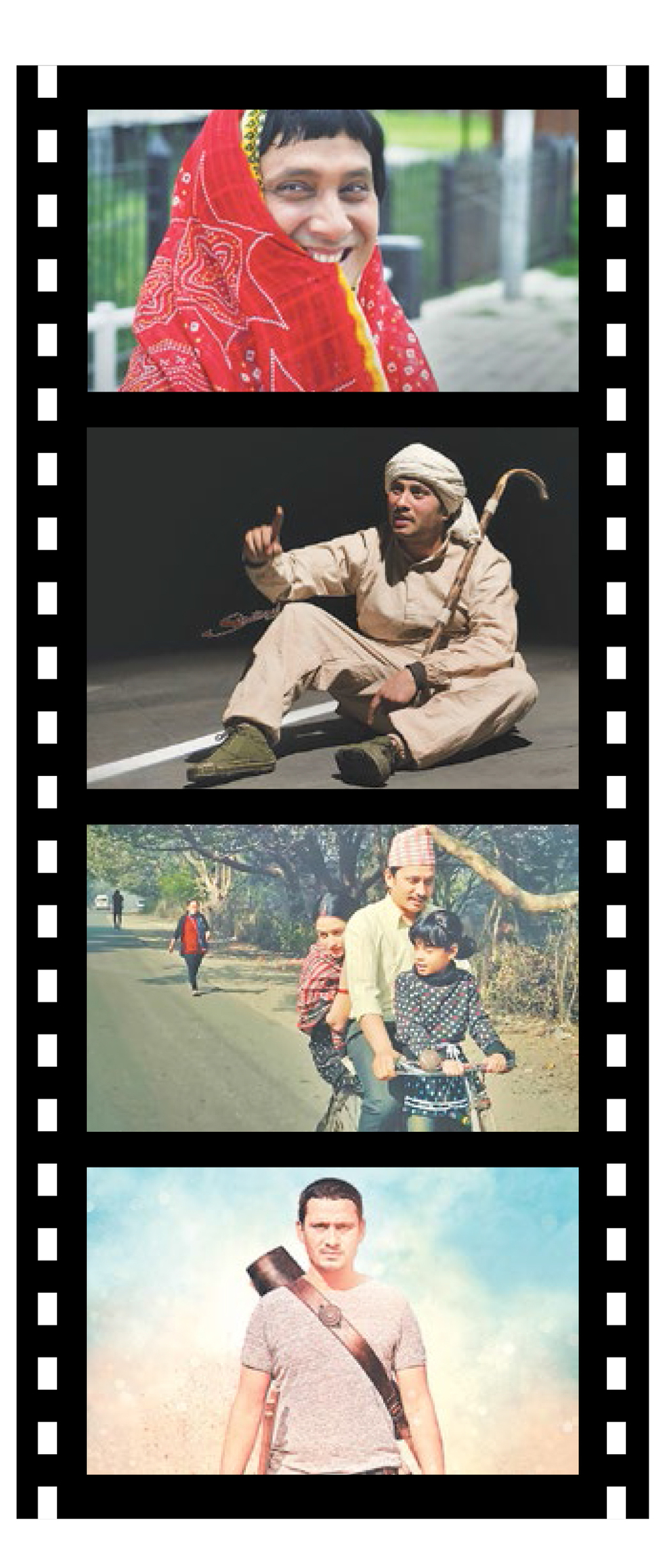
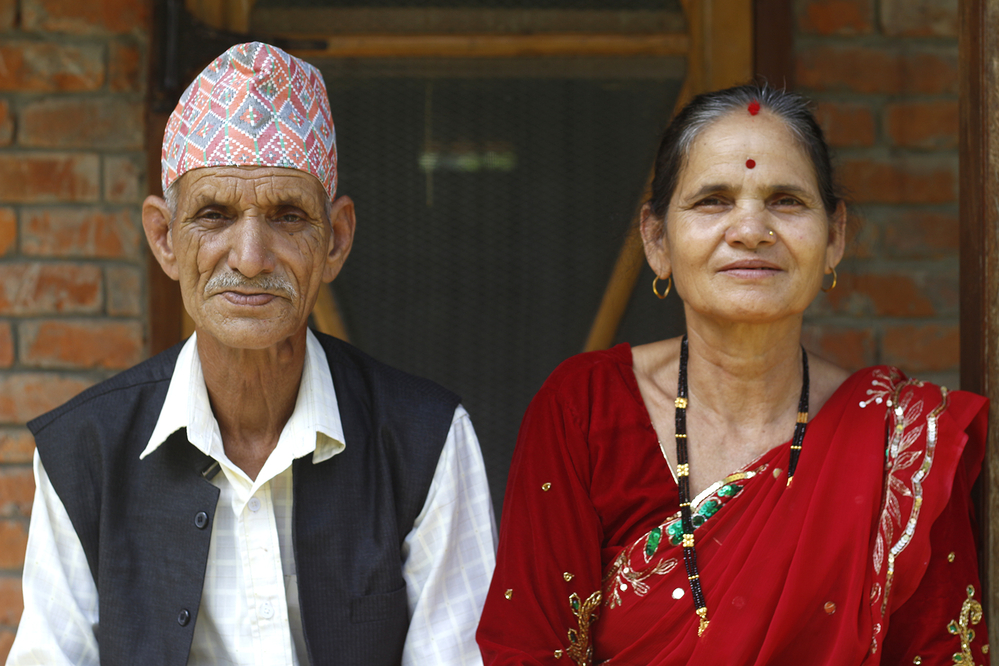
Mother looked back at the paths of life. It has been 52 years since Khagendra's father got married and moved into the house. Until then, children were born, grew up, studied, grew up and flew to their respective destinations. Chandrakala says, 'It has been 52 years since I cooked rice for you in this house.' which never failed. And they say, 'Mama's mother still has a rebellious voice inside her.' Where did you go? Now you only come sometimes. I am happy that my children have done well. But is my life just that?'' The biggest question asked by a person who has lived a long life makes Khagendra think, 'She made a good family by sacrificing her entire life. What happened to that mother's life?' He can't pay for his mother's sacrifice even if he wants to. Instead, he speaks of his wishes to his mother in a mocking tone, 'You go to school? Now we teach. At the age of 66, the mother laughs with a smile on her wrinkled cheeks. And she says, 'I don't know....' Ke Ghar Ke Dera : Ghar No 2', 'Mahabhoj', 'Mayor', 'Harsh', 'Veeman' are in the pipeline for release. He is not only an actor, but also the director of 'Paniphoto'. And is also a writer, screenwriter and producer. His foundation of painting is very strong.
Whether it is when thinking or writing a story, bringing it to the stage and screen, the power of his storytelling is originality. Where did that originality come from? One remembers the blurred scenes of the folk tales told by Khagendra Ama. "Maybe my mother also had an influence on my storytelling," says Khagendra Lakh.
Sometimes Khagendra birds watch. They see the bird picking the fodder with its beak and feeding it to the chick. And in that bird he meets his mother's form. When he was young, Khagendra could not eat anything. It was first chewed by the mother. And she used to feed. The taste of eating like that still follows him. Even after feeding the children, the sight of the mother still dances in Khagendra's eyes.
'Mother never ate without filling us. At one time, we used to finish eating,' he recalls, 'There are only mothers in the world who cannot fill their stomachs without filling their children's stomachs.'' Even now, Chandrakala inquires a lot whether her children have eaten or not. Now we can eat by ourselves. But he doesn't understand his mother's mind, he sends her home without keeping himself,' says Khagendra.
Khagendra was born in 2035. On that day, Chandrakala had to be taken to the hospital after suffering from labor pains. It is difficult to get a vehicle from Syangja to Pokhara. His mother used to say that he was put in a truck and taken to Gandaki Hospital in Pokhara. And I was born,' Khagendra recounts the moment of his arrival.
When Khagendra was young, sometimes he would ask his mother about his birth and sometimes he would inquire about his mother's marriage. They used to say, 'Did you cry on your wedding day?' Mother used to reminisce about the sound of instruments playing around the wedding, and her coming on a doli. When she met someone she knew on the road, she would say, 'He carried a doli in my wedding.'
Ba Hariprasad owned a small grocery shop. Apart from that, their family depended on agriculture. Khagendra also saw it in his dream. He wanted to grow oranges. Ba initially met great professors while working in a lab in India. He used to dream, 'I will make my son a professor too.' But Khagendra Kisani was stuck in his dream. Knowingly spoiled the exam. "If I want to pass, I will fail," Khagendra recounts the contradiction between his father and son. After re-reading it in class 9, he gradually felt the need to study. When he started studying in college, he understood the importance of education. Then Khagendra also changed his dream.
He was bullied during his childhood. He used to ask for things that could not be found in the market. When he did not get what he asked for, Khagendra would throw away the food. He was beaten repeatedly. But mother touched her hand only 2 times. Khagendra has a vague memory of that. "Once I got angry and threw the food bowl. Mother beat her. i cried Mother also cried with me,' he remembers Chandrakala, who cried with him, then sighed.
Ba would have beaten him. Again, the next day, Maya would remind me. Khagendra's relationship with Ba was equally deep. He used to sleep with Khagendra Ba until he was 16 years old. Bako followed behind. "Even now, if I go home, I want to walk behind my father," Khagendra recounts.
was a society that discriminated between children. Khagendra's father was an exception. His love for his children was not diminished at all. Four sisters were born after Khagendra. Unfortunately, one sister is only a memory now. At that time, a boarding school had just started in the village. The villager boarded his son. Govt school for daughter. The neighbor used to say to the mother, "Should you teach boarding to your son?" Then the mother would reply, "If we can, we will teach all five of them." That status is not there now. Khagendra used to feel sad when he saw the footsteps of other friends walking towards the boarding school. He used to think, 'I would have been able to go too.' But looking back, the decision made by his mother makes him proud.
Khagendra passed Inter from Pokhara after suffering. In the meantime, the desire for the stage arose. Baama was very supportive. The subsequent struggle started from Kathmandu. It was a very difficult and unforgettable time. After reaching a certain time, I thought, 'How long will I ask my mother?' But there was no way. There was a loan on the house. Baama was burdened with debt. Even though he was going through difficult times, Baama had faith in his son.
Once Khagendra reached home. The day of returning to Kathmandu was approaching. I had to come to Kathmandu. But no one had money,' Khagendra remembers that painful time. We had to board the train at 7:30 in the morning. But how? He was in Runbhulla. It was 7 o'clock. Father suddenly took out a handful of money. Ganer handed over 20,000 to his son. A miracle happened for Khagendra. 'Where did the money come from?' Before leaving, his eyes suddenly fell on his mother's ears. Mother's ear, which was decorated with jewels, was empty that day. He was shocked. He looked at his mother with sad eyes. The mother's eyes were saying, 'This is all I can do for the child.'
Khagendra made a stern promise, 'It may take two/three years. Now I will not return home without clearing your debts. Khagendra did not return home for two years. That's when he got a job at the BBC. Economic conditions improved with jobs. Then returned home. The ring lost by the mother was also returned. Baama became debt free. It was a very happy moment. Khagendra played the film 'Badhashala' for the first time. After playing the movie, he told Ba when he got home. Ba said, "You have to play the film." You become famous after playing a film.'
For the first time, Ba Ama saw Khagendra's film 'Talkjung vs. Tulke'. The joy of seeing his son on screen for the first time followed him for days. Even now, when his film is released, Khagendra talks to Baama. And they reserve a taxi and send it to the hall in Pokhara. Now, if anyone walks through the house, they are eager to meet Baama. They say, 'Your son is my beloved actor.' Even if Khagendra's name is mentioned while walking somewhere, the respect he gets is different. Mother doesn't get to go out much. If her son is interviewed on TV, she calls and says, 'We are watching you come on TV.'
Chandrakala never expressed her dreams for her son. Instead, she kept saying the same thing over and over again, 'You must be honest.' Perhaps this was the dream that her mother saw. A mother's affection showed the way that no school taught, no university showed. Chandrakala is always proud to see her son walking on the same path. And, the same thing always occurs to Khagendra, "I have reached here without straying from the path shown by my mother."