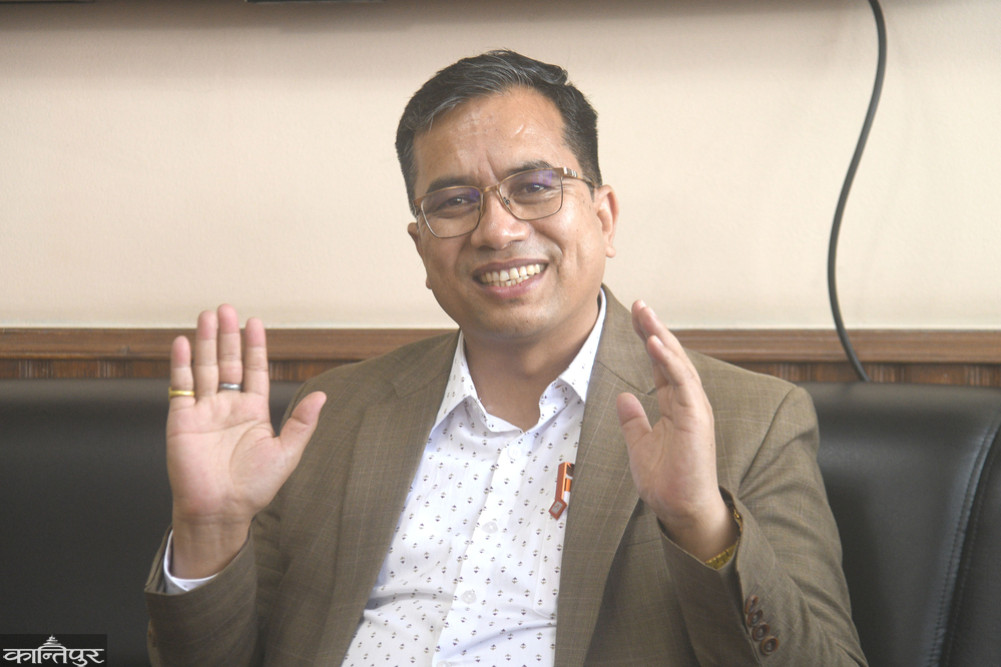
Higher education in Nepal began with foreign affiliation. Before the opening of Tribhuvan University, Trichandra Campus was affiliated with Patna University, and only later did the campus come under Tribhuvan University.
We use Google Cloud Translation Services. Google requires we provide the following disclaimer relating to use of this service:
This service may contain translations powered by Google. Google disclaims all warranties related to the translations, expressed or implied, including any warranties of accuracy, reliability, and any implied warranties of merchantability, fitness for a particular purpose, and noninfringement.
There are 56 colleges operating in Nepal affiliated with foreign universities. There are 37,000 students studying in them. Colleges are operating in Nepal affiliated with 28 universities from the UK, 20 from Malaysia, 2/2 from the US, Thailand and India, and 1/1 from Australia and Switzerland. Colleges were opened in Nepal for the first time in 2056 under foreign affiliation. The government issued a directive in 2059 to regulate them. After two and a half decades, the government passed the regulations in the last week of Ashad. Foreign Educational Program Operation and Regulation Regulations-2083, Education Equity Tax and other contemporary issues Laxman KC Kantipur's Sudip Kaini spoke to the President of the International Education Providers Association (IPAN)
:
The government has passed regulations to regulate colleges affiliated with foreign universities, which have been operating according to the directive for years, what will be its impact?
For the first time after 28 years of the establishment of the college, the government is trying to regulate it by bringing regulations. We understand that this will have a positive impact. Higher education in Nepal started with foreign affiliation. Before the opening of Tribhuvan University, Tri Chandra Campus was affiliated to Patna University. Only later did the campus come under Tribhuvan University. There was no clear legal provision to allow the opening of foreign colleges. A directive came in 2059. The directive was not in accordance with any law. Then the dispute reached the court.
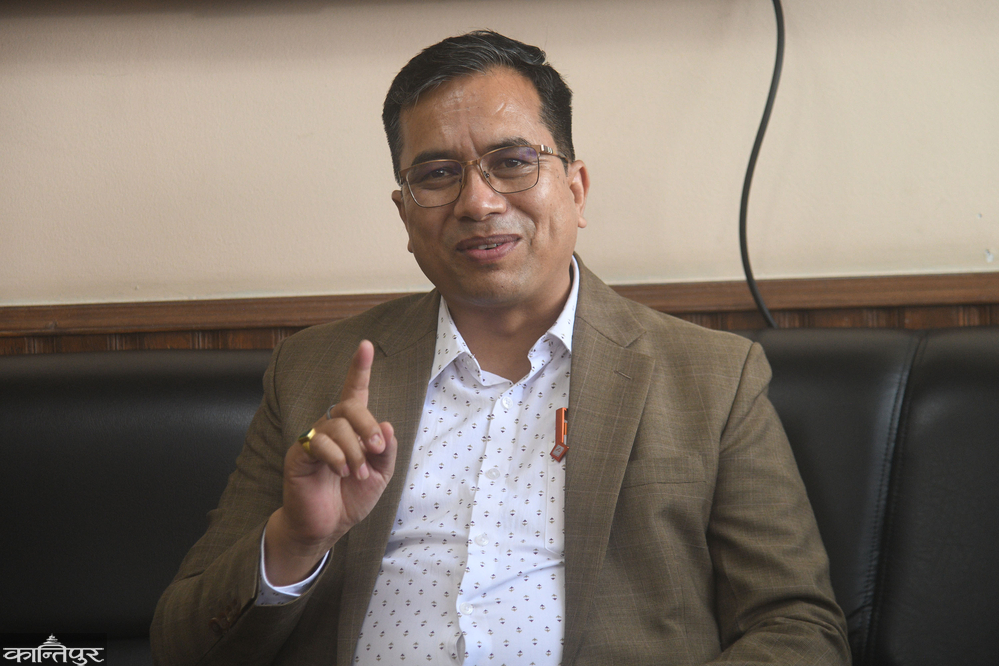
The court had been ordering the government and the Ministry of Education to regulate this sector by making a law. We had also been demanding a separate law to regulate foreign educational institutions. The previous government had also prepared a draft to bring regulations. But it was stopped for various reasons. This government has now paved the way for bringing a law to regulate foreign colleges by amending the Education Act through an ordinance.
In the case of world rankings, things like Times Higher Education and QS World University Rankings have been discussed. Most universities that run programs in Nepal fall within this. Those that do not have a 5-year period have been given. We had said that we should move towards accreditation (quality assurance) rather than rankings. But it seems that the government is trying to make rankings the basis for ensuring quality. It has set criteria such as operating programs only in universities within the top 1,000 in the world rankings, physical infrastructure, student admission and quota, and providing 10 percent scholarships. Will colleges operating in Nepal be able to meet these criteria?
Foreign colleges operating in Nepal have currently stopped 37,000 students from Nepal
In terms of physical infrastructure, there is a provision to purchase 3 ropanis of land within 5 years and to build their own building within 10 years. It seems that a total investment of Rs 700-800 million will be required to purchase 3 ropanis of land within the Kathmandu Ring Road and to build a building. This is a huge investment. We have agreed to follow this criterion because we are committed to quality education. The government was not ready to discuss openly. The government could have taken a policy that allowed educational institutions to be established even by leasing land. But that did not happen. We fully agree to provide 10 percent scholarship. It has been given before.
More than one lakh students go abroad for foreign degrees every year, what benefits will the educational quality and students and parents get after the regulations come into effect?
According to the latest data, 123,000 students go abroad every year. The main reasons for going abroad are quality education and employment. Foreign colleges operating in Nepal have now stopped 37,000 students from Nepal. A degree that costs 10 million rupees abroad is available in Nepal for only about 1.5 million. To stop more students from studying while earning, easy educational loans, part-time work, and night business should be created in Nepal.
The situation where you can easily get a loan while studying abroad but not get a loan if you study in Nepal should end. The provision of giving NOC even in programs that do not result in an academic degree has also seen a large number of students going abroad. The government should stop this. Currently, about 150 million rupees are also being spent annually along with students going abroad. If we can bring foreign students through policy reforms, it will have a positive impact on both the education and tourism sectors.
What are the chances of bringing foreign students to Nepal? What should the state do for this?
We want to provide that level of education to students who want to study abroad in Nepal. And, we want to make Nepal a hub of international education. But the current visa process in Nepal is complicated. It should be made easier. There should be a system in place where foreign students can get a visa based on the college's 'offer letter' and a visa should be guaranteed for the entire period of study. So far, it has been the case that foreign students come first on a tourist visa and get a student visa only after getting admission.
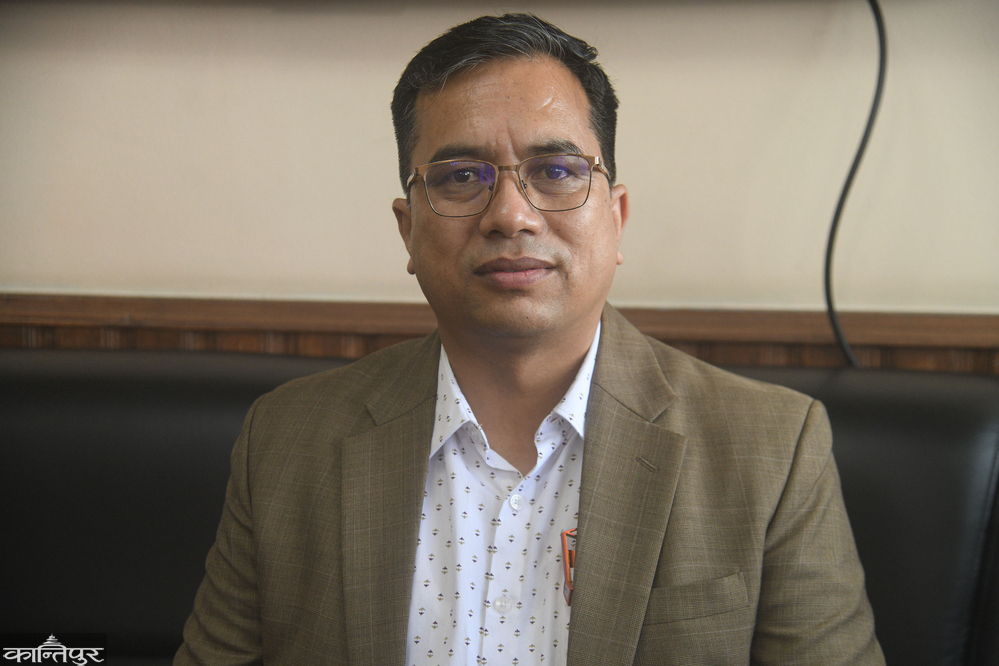
This has not been able to attract foreign students. Arrangements should also be made to improve the labor law so that they can work while studying. Guaranteed employment after studying should be guaranteed in collaboration with the government, universities, educational institutions and the private sector. There is a possibility of bringing students from Bangladesh, Pakistan, Myanmar, Indonesia, Cambodia and African countries. Nepali speakers from the Indian regions bordering Nepal and from all over the world can also be attracted.
The regulations do not create a monopoly. The same standards apply to both new and old colleges. The basic criteria for having 3 ropanis of land and own building are the same. The operating colleges have been given 5 years to buy land and 10 years to build their own buildings. The only difference is this. There is a provision that new colleges opening must first purchase land and obtain permission and complete the building within 5 years. There is also an allegation in the regulations that the government is trying to establish a monopoly by introducing loose standards for existing colleges but strict standards for newly opened colleges, right?
Currently, about 150 million rupees are being spent annually with students going abroad from Nepal.
The concessions given to operating colleges are a practical necessity. If there were such strict rules in the beginning, many colleges would not have come to this area. The government must have made arrangements for new investors to come with clear commitments and necessary capital, which would help improve quality. In other sectors including banks,
There is also a policy of increasing capital. This arrangement does not stop new colleges.
Colleges operate according to the university curriculum, but the regulations make Nepal Studies compulsory in foreign colleges as well. How is it taught?
The Nepal Studies curriculum has been prepared by the college operators' common organization, iPAN, itself and submitted to the Ministry of Education. The colleges have prepared this curriculum by mobilizing experts at their own expense. Keeping foreign students in mind, arrangements have been made for teaching in English. If this subject were only in Nepali, it would have been a problem for foreign students.
The curriculum includes subjects such as Nepal's history, geography, economic strength, international relations, ethnicity, language, culture, and federal democratic system. This subject has been made mandatory with the aim of ensuring that students gain basic knowledge about the country's civilization, culture, and political structure.
The government has said that it will levy a 3 percent equity fee in the education sector through the budget, and this is also being opposed. What is the view of IPAN?
We have been opposing the education equity tax. It will harm students and parents. This provision is also against the spirit of the constitution. In the context of Nepal taking the path of a socialist-oriented economy, it is not appropriate to impose taxes on basic necessities such as education, health, and electricity. Since 3 percent will be added to the fees charged by colleges from students and parents, it will affect the general public or ordinary citizens. Those who educate their children in private educational institutions will be directly affected financially. It is seen that this will be even more burdensome for colleges affiliated with foreign universities.