By learning from past mistakes, improving the present, and moving forward with a clear vision for the future, Nepal can once again soar confidently in the international skies.
We use Google Cloud Translation Services. Google requires we provide the following disclaimer relating to use of this service:
This service may contain translations powered by Google. Google disclaims all warranties related to the translations, expressed or implied, including any warranties of accuracy, reliability, and any implied warranties of merchantability, fitness for a particular purpose, and noninfringement.
Time always moves forward. But the aviation sector must sense the pace of time more quickly than other sectors. Aviation is always at the center of change as technology, safety standards, passenger expectations, and market structures are constantly changing.
For a country like Nepal, which is geographically remote, mountainous, and challenging to access by land, air transport is not just a convenience, but the backbone of national development.
Civil aviation is directly linked to all these sectors such as tourism, trade, investment, supply chain, emergency rescue, healthcare, education, and international relations. Therefore, understanding the state of Nepal's civil aviation sector means assessing the overall national capacity.
Nepal's air transport was limited before democracy. Despite the small number of aircraft, outdated technology, and poor infrastructure, Nepal had achieved some historical achievements.
Direct flights to Europe in 1989, the establishment of the international identity of the national flag carrier, and the effective use of air transport in tourism promotion were all points of pride. But while the global aviation industry was advancing rapidly, Nepal was able to move forward at a relatively slow pace after the emergence of democracy.
With the democracy that came after 2046, the entry of the private sector, open skies policy and bilateral air service agreements expanded the market. Today, Nepal has air service agreements with 42 countries. But having an agreement and actually operating flights are different things. Due to insufficient aircraft, weak financial capacity, managerial complexity and policy ambiguity, many agreements are limited to paper.
Till around 2007, air safety was considered an auxiliary subject in the aviation sector. Today, the situation has completely changed. Safety is now the central foundation of any aviation organization. Be it an airline company or a regulatory body. Air safety has become a top priority today, even above operations, finance or human resources. This change has led Nepali aviation in a new direction.
The aviation sector was once considered a complex by the ruling administrators. But today, the English vocabulary used in this field has become a daily vocabulary for the common man. From the party to the parliament, there has been an intense debate on aviation-related issues. The media has been able to publish articles and news on aviation issues like experts.
Today, no airline can fly commercially without an Air Operator Certificate (AOC). Safety refers to the entire system to protect passengers, crew, aircraft and property from risks while operating a flight. Operations are practical processes such as flight planning, scheduling, crew management, fuel, route selection. Instrument Landing System (ILS) is a technology that helps in landing safely even in bad weather. This topic has become an issue many times. Aircraft have started landing in Kathmandu using the Required Navigation Performance (RNP) satellite technology-based guidance system. Which makes safe flights possible even in mountainous and complex terrain. Human factor refers to the skill, mental state, training and decision-making ability of all human resources including pilots, engineers, ATC, managers. This issue has become a matter that cannot be neglected today.
The accidents that occurred after 2012 and the questions raised by international regulatory bodies thereafter gave a deep blow to the Nepali aviation sector. The declaration of a Significant Safety Concern (SSC) in 2013 was a serious moment in history. But this same crisis also opened the door to reform. The Civil Aviation Authority of Nepal started the airline recertification process. Strict audits were implemented and the five-stage operator certificate ‘AOC’ system was implemented. The removal of the Significant Safety Concern (SSC) in 2017 became a significant achievement for Nepali aviation.
Today, Tribhuvan International Airport has reached the limit of its capacity. The data of serving more than 5 million international passengers in 2025 shows the huge potential of the Nepali aviation market. But here the question arises - why is the utilization of new infrastructure slow?
Even though Gautam Buddha International Airport and Pokhara International Airport have come into operation, they have not been able to attract the expected international traffic. Airlines are cautious due to technical complexity, lack of full operation of the Instrument Landing System (ILS) system, a technology that helps in safe landing even in bad weather, the costly process of approval of the satellite-based aircraft guidance system Required Navigation Performance (RNP), high fuel prices and commercial risks. Infrastructure construction is not the ultimate goal. Its maximum utilization is the measure of success.
Among us pilots, Kathmandu Airport is considered to be very challenging from a technical point of view. High terrain, unpredictable weather, steep approach profile, runway slope, traffic density, bird and wildlife activity, seasonal fog all complicate matters. The decision-making process becomes even more sensitive when a mechanical problem is added to an airport that is already challenging under normal circumstances. Therefore, the technical preparedness, minimum service capacity, and emergency management of alternative airports must be clear.
The role of the Government of Nepal is crucial here. The government is not only a policy maker, but also a body that sets long-term strategic directions. A clear long-term strategy is needed by keeping aviation as a national priority. The Ministry of Culture, Tourism, and Civil Aviation should formulate a coordinated policy considering tourism and aviation as two sides of the same coin. Incentive packages, flexibility in fee structures, concessions in fuel prices, and aggressive market promotion campaigns are necessary to attract domestic airlines to convert to international airlines.
The main responsibility of the Civil Aviation Authority is to ensure safety. Inspection, audit, training and certification systems should be continuously updated according to international standards. It is necessary to make licensing, inspection and data management transparent by using digital systems.
Air transport is growing rapidly in the global and Asian context. The Asia-Pacific region is considered the fastest growing air market in the world. The expansion of the middle class, interest in tourism and cheap air tickets are increasing the number of passengers every year. Even if Nepal can utilize only a small part of this growth rate, it can reap huge economic benefits.
Nepal's geographical location is strategic. Located between huge markets like India and China, Nepal has the potential to become a transit hub. If Pokhara and Bhairahawa can be developed as effective international centers along with Kathmandu, the length of stay of tourists in the country will increase. Spending will increase and employment will be created.
In this context, Nepal must build Nijgadh International Airport for future generations. Further expansion within the Kathmandu Valley is not possible. If Nijgadh is developed as a long-term international hub, Nepal will have the opportunity to become a transit center between South Asia and East Asia. An airport with a modern runway, cargo hub, maintenance center, and training institute will bring a qualitative leap in the economy.
The role of the Nepal government is decisive here. It is necessary to formulate a long-term strategy by keeping aviation as a national priority. The Ministry of Culture, Tourism, and Civil Aviation should formulate a coordinated policy considering tourism and aviation as two sides of the same coin. The Civil Aviation Authority needs to strengthen the inspection, training, and certification system in accordance with international standards.
Air transport is growing rapidly in the global and Asian context. Even a small part of this growth can be utilized by Nepal, but it can reap huge economic benefits. Ultimately, the journey of Nepali civil aviation, although challenging, is full of potential. With a clear vision, strong leadership, and sustainable policies, Nepal can once again fly confidently in the international skies. Aviation is not just about flying, it is also an indicator of the height of the nation.
Human resources are the strongest foundation of Nepali aviation. Pilots, engineers and technicians are increasingly becoming highly educated. There is a gradual shift towards modern training systems such as 'Competency Based Training' and 'Event Based Training'. Although technology is important, skilled manpower is indispensable for long-term sustainability.
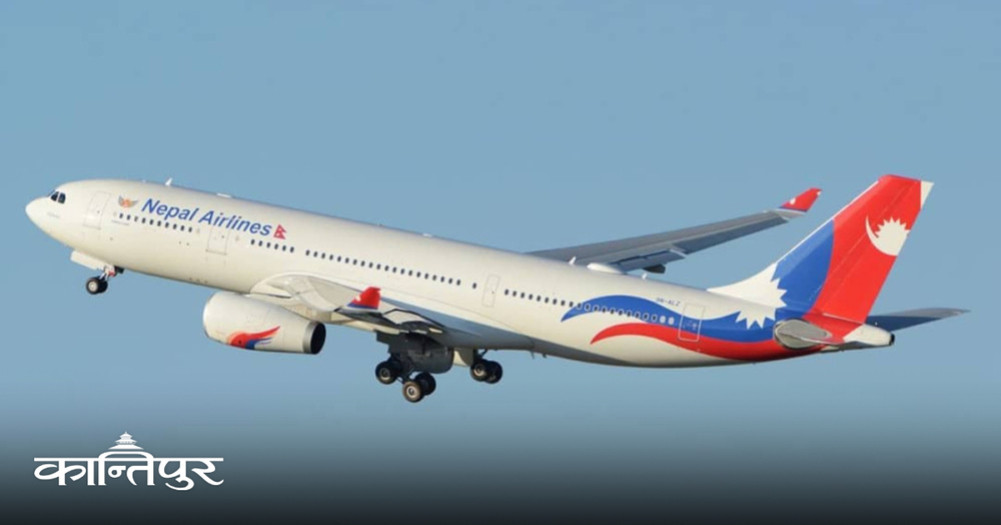
The COVID-19 pandemic has caused an unprecedented crisis in the history of world aviation. The planes of the world's largest airlines were 'grounded'. The international skies became almost deserted. But even in these difficult times, the Nepali aviation sector has set an example of self-confidence, capability and commitment. Nepal Airlines Corporation's wide-body aircraft have flown charter flights to various international cities including Australia amid the difficult circumstances of the pandemic. Those flights were not just passenger flights, they were symbols of Nepal's courage, reliability and commitment to international responsibility. Looking at the history of the flag carrier, the destinations touched by its wings are not limited to maps. They are symbols of pride that have been hoisted in the skies of the world, carrying Nepali identity.
The Nepali private sector has not been left behind in this glorious journey. Nepali helicopter and airline companies, including Shree Airlines, have been providing services in United Nations peacekeeping missions for many years. From the deserts of Africa to the difficult terrain of the Middle East, Nepali helicopter pilots, engineers and technicians have taken risks and flown. Their sweat has not only created jobs, but has also established Nepal as a reliable aviation partner in the world.
Today, Nepali aviators are in every corner of the world. The presence of Nepalis as captain pilots in major international airlines, as specialists in maintenance and engineering centers, as controllers in air traffic control towers, and as instructors in training institutes is increasing. Wherever they have gone, they have left a mark of Nepali hard work, discipline, and efficiency. This experience in itself is a matter of pride for the entire nation.
Therefore, Nepali civil aviation is not just a story of infrastructure or aircraft, it is a story of a proud history of Nepali spirit, skills, and potential, and a bright future. Overall, the journey of Nepali civil aviation has been full of ups and downs. By learning from past mistakes, improving the present, and moving forward with a clear vision for the future, Nepal can once again fly confidently in the international skies. Aviation is not just about flying planes, but also an indicator of the height of a nation.