If the bill is passed, Nepal's airspace will enter into a new structure. The Civil Aviation Authority will only regulate while the Air Services Authority will become a direct service provider.
We use Google Cloud Translation Services. Google requires we provide the following disclaimer relating to use of this service:
This service may contain translations powered by Google. Google disclaims all warranties related to the translations, expressed or implied, including any warranties of accuracy, reliability, and any implied warranties of merchantability, fitness for a particular purpose, and noninfringement.
The regulation and distribution of services in Nepal's airspace has been operated by a single body through the Civil Aviation Authority for the past 27 years, but now it is almost certain that it will be done through two bodies.
The history of Nepal's aviation sector is 76 years long. However, there has been no decrease in flights and helicopter charter accidents in remote and mountainous regions. The government has accelerated the preparation of the division of the authority into two bodies after the question of the legal rights of the authority alone, both in the role of regulator and service provider, has been raised all over the country and abroad.
When a single organization plays a role, questions about transparency, conflicts of interest and obstacles in the implementation according to international standards have been repeatedly observed in the audits conducted by international bodies in Nepal. This is the second time that a bill has been passed in the House to improve Nepal's airspace. This previous bill had already been passed in the National Assembly. But due to the obstruction of CPN Samajwadi led by Madhav Nepal at that time, this bill did not reach the House of Representatives and became unreasonable. This bill, which came in the second term of the House of Representatives, is currently being debated regularly in the International Relations and Tourism Committee. The Bill to Amend and Consolidate the Civil Aviation Authority Law has proposed 'Nepal Civil Aviation Authority' as a pure regulatory body. Authority separation bill in parliament, now regulator and service provider separately
After this bill is passed, the authority will only have the responsibility of granting air service permits, registering and issuing certificates of aircraft and parts, determining the qualifications of pilots and technicians, controlling the transportation of dangerous goods, regulating environmental pollution and noise, monitoring the safety of foreign aircraft, and implementing the standards of the International Civil Aviation Organization (ICAO). Thus the authority will focus only on regulation, like DGCA in India and FAA in US.
Collecting fees for the services and facilities provided at the airport, recommending internal fares, implementing safety standards and managing cleanliness in the airport environment will also be under this organization.
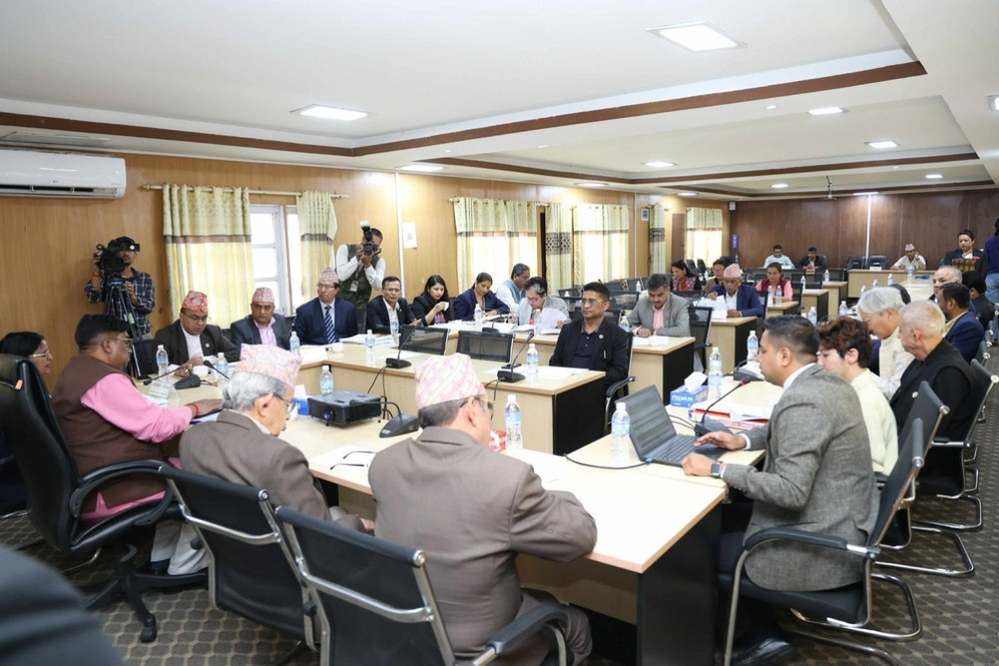
Thus the new organization will be established as a direct service provider only. The essence of both these bills is that the regulator and service provider will operate through different agencies. If the bill is passed, Nepal's airspace will enter into a new structure. The Civil Aviation Authority will only regulate while the Air Services Authority will become a direct service provider. According to the Ministry of Culture, Tourism and Civil Aviation, the government expects the institutional reform to increase transparency, strengthen security and strengthen its international image. The ministry presented a comparative analysis on this to the International Relations and Tourism Committee under the House of Representatives on Friday. During the presentation, the ministry hoped that the division of the authority would improve passenger safety and service quality.
The present Civil Aviation Authority of Nepal is taking the responsibility of granting permission to operate air services, registering aircraft, issuing certificates, granting maintenance permission and building airports, both in terms of approval and regulation. Providing air navigation and air traffic control services, search and rescue, recommending fares, safety and sanitation, all the work is being done by the authority.
Stakeholders have said that the current step is not limited to Nepal's needs but the result of international pressure and recommendations. ICAO and the European Union have repeatedly been suggesting to Nepal that both transparency and security will be weakened if both responsibilities are handled by the same body. According to the international practice, there should be a clear division between the regulator to follow the rules and standards and the service provider to provide the facilities. In the meeting of the
committee, MPs questioned Culture, Tourism and Civil Aviation Minister Badri Pandey about how to coordinate manpower, resources and management while implementing the new structure. Although the regulator and the provider are separated, the cooperation system between the two bodies should be strong, so they should be careful before passing the law. Chanda Karki said. "We have been cheated in the civil law bill, so let's pass the law including how to make Nepal's airspace safe after a detailed study," said MP Dr. Karki said, "Therefore, it is necessary to move forward with the bill brought by the government in an effective manner." They said that the decision taken by the government this time is positive, as the air sector is the lifeline of the country, according to international practice, each section should be passed after a detailed discussion to separate the regulation and service provider.
The first air department in Nepal was established in the year 2014. At that time, this body was under the then Labor, Communication and Transport . In 2017, Nepal became a member of the International Civil Aviation Organization (ICAO), a specialized body that regulates airspace under the United Nations.
Nepal introduced civil aviation policy for the first time in 2050. In the year 2055, the Civil Aviation Authority of Nepal was established as an autonomous body by canceling the Department of Aviation. At that time, it was given the role of both regulator and service provider of Nepal's aviation . By ensuring safe, efficient and quality service, the authority was given responsibility by the law to make air service a means of economic growth through tourism promotion and easy access to Nepal .


