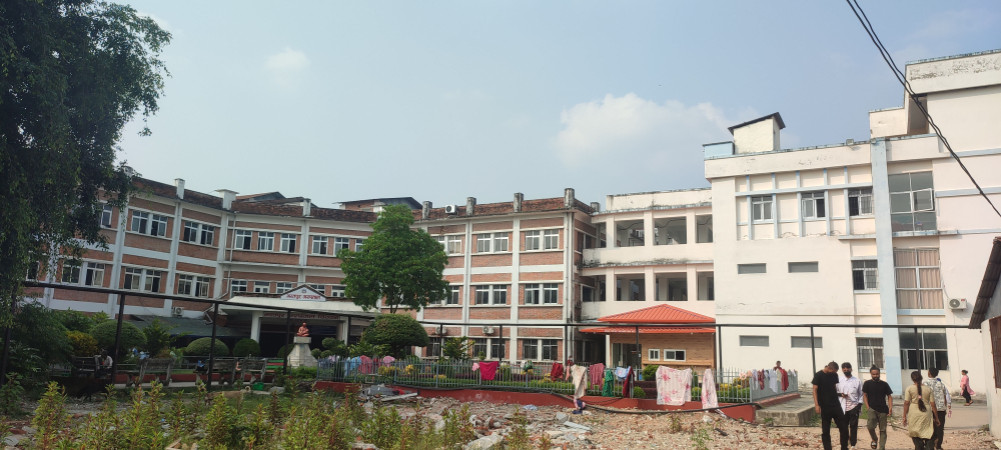
Due to its geographical location, Chitwan is a very favorable option for expanding access to accessible health services, for this the first step is to increase the capacity of government hospitals.
We use Google Cloud Translation Services. Google requires we provide the following disclaimer relating to use of this service:
This service may contain translations powered by Google. Google disclaims all warranties related to the translations, expressed or implied, including any warranties of accuracy, reliability, and any implied warranties of merchantability, fitness for a particular purpose, and noninfringement.
Sometimes people call Bharatpur in Chitwan as 'Medical City'. When I remember Bharatpur's health care, the picture that comes to my mind is as follows: a patient from the far reaches of the mountains, the countryside of Madhesh or some backward village in India comes wandering and wondering if there is a big hospital in Bharatpur.
Inquiringly, he reaches the government hospital and shows him to the OPD. And reaches a private hospital for an ultrasound. Another private lab for lab check. If you have to do a CT scan or MRI, go to another institution.
Tired of roaming around the city, he arrives at a government hospital with a flurry of reports. By then, even hotel stays had started to wear him down. After showing the report, he hears: Here the turn of the operation will come after two years, if you want to do it immediately, you should go to a private hospital. The operation is a bit expensive and should not be done immediately, but now many of such patients start the process of taking a loan at metered interest or selling their house or farm.
If the situation of the customer is like this, then the question naturally arises that how easily the facilities including hospitals can provide health services to the common people. The irony of Nepal is that this is the health sector situation in most of the big cities with big hospitals. Let's not talk about the rural areas that do not have access to health services.
It is difficult to change this situation only with the initiative of a particular city or district, but due to its geographical location, Chitwan is a very favorable option for expanding access to accessible health services. There is a large cancer hospital in Nepal, two medical colleges and a large government hospital under federal management. For the large population of Madhesh and Terai, it is much easier to reach Chitwan than to reach Kathmandu for treatment. Chitwan is also suitable for many districts in the central and western hills.
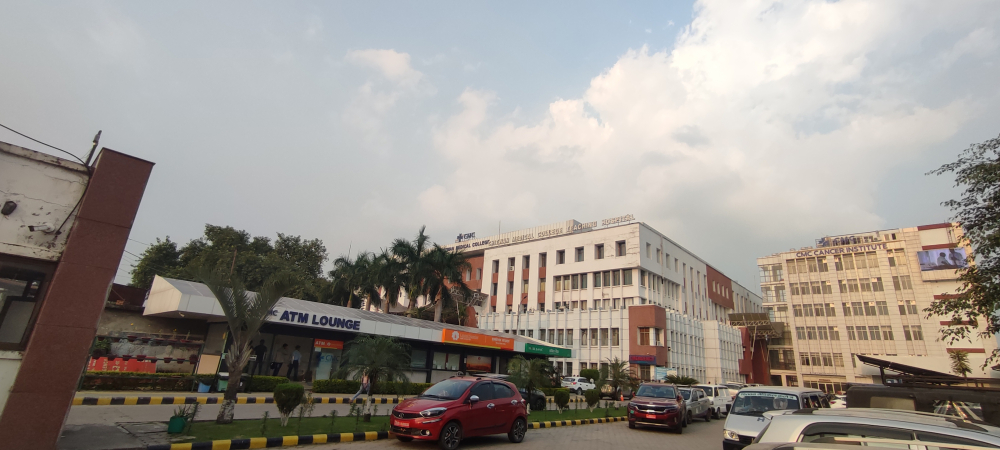 What is more important than the number of how many patients are coming here from where they are getting treatment is what kind of treatment those patients are getting. It is necessary to have many works in the self-proclaimed medical city if the general patients are not to be served in the condition as mentioned above.
The first of these tasks is to increase the capacity of government hospitals. That is not only to increase the number of OPDs, but also to expand all the services like internal, ICU, operation theatre, CCU, NICU and to maintain the posts in them as per requirement. Only then can hospitals be freed from the vicious cycle of raising their own resources to provide services and charging patients almost as much as private hospitals. The expansion of services such as dialysis, which is theoretically free but in practice is extremely low in supply compared to demand, has become mandatory.
In a country like Nepal where the purchasing power of common citizens is low, expansion of services in government institutions is always necessary. But we have already experienced during the covid epidemic, what kind of disaster people face due to profiteering in private organizations during disasters like epidemics. There is no option to expand the capacity of government hospitals to make the insurance program, which is currently ongoing but not popular, more effective.
Apart from that, there is another option that has potential in Nepal's health sector but is lagging behind: non-profit health services. In a country like Nepal, how non-profit hospitals can attract patients from other countries including India by providing world-class services to its citizens at a much cheaper fee than private hospitals, has been shown by dozens of hospitals of Netra Jyoti Sangh and Tilganga Eye Hospital in Nepal. One such eye hospital of Netra Jyoti Sangh is also operating in Chitwan.
For the development of this sector, the role of the government is less and the role of charitable citizens is more. If there is a large multi-departmental non-profit hospital in a place like Chitwan, on the one hand it will reduce the pressure of patients in government hospitals and on the other hand, many patients will be freed from the condition of having to be sold at home for services like admission or operation. Getting health care in a timely and accessible manner naturally increases the attraction towards health insurance and this program can be sustainable.
In Nepal, not only big hospitals but also government teaching hospitals for teaching MBBS have opened in places like Jumla in Karnali and Dang in Lumbini. He has undeniably improved the health care there and has provided essential specialist level health care. But even in them, when the government does not send enough budget, they are forced to rely on the fees collected from patients for operating expenses. As a result, health services have not been cheap as expected.
When the local and state governments are spending huge amounts of money on useless things like construction of view towers, beautification of rivers and lakes, or temple construction or decoration, the condition of education and health institutions under those bodies is pathetic. Such discrepancy is most striking in Bharatpur, where both income and expenditure are high under a large budget. While crores of rupees are being spent in the name of beautifying the solution, poor patients have to die because they cannot get the necessary dialysis services.
Therefore, there are many things that cities like Bharatpur and districts like Chitwan should do and can do to make real improvements in healthcare. For some of them, the federal government does not even need to be involved. A lot can be done to make the health insurance program that has already started more effective, popular and sustainable. But the starting point for all these works must be the same: the understanding of the importance of quality and accessible health in the political leadership. With this happening in the Union, there could be massive staff additions and capacity expansion in federal hospitals like the Cancer Hospital and Bharatpur Hospital. Provinces can do the same in their hospitals.
The road to reform in the health sector is not short or easy. Due to decades of 'inertia', it is not easy to do anything new. But if the reform work is started honestly, the long-term rewards will be huge.
In Jumla, which was only a health post until a few decades ago, it is now possible to run an institution offering MBBS and MD degrees, while it is absolutely possible to develop a model health system in an accessible and large city in the middle of the country like Chitwan. For that, there should be no confusion about who will do what. A model health system can be developed if governments at different levels expand and upgrade the capacity of government hospitals, responsible citizens give an alternative to non-profit multi-departmental hospitals, and private organizations provide services without forgetting ethics.
In the case of Bharatpur, the city has a special role. Now, in the name of beautification, he should shift the budget that is flowing into the rivers and lakes to the health sector and start the real development that will actually increase the quality of life of the citizens instead of the appearance development. The more we fail to do so, the worse the condition of the health sector here is sure to become.