Although Nepal has made progress in expanding its digital infrastructure and providing digital services this year, citizens' digital rights and security remain weak.
We use Google Cloud Translation Services. Google requires we provide the following disclaimer relating to use of this service:
This service may contain translations powered by Google. Google disclaims all warranties related to the translations, expressed or implied, including any warranties of accuracy, reliability, and any implied warranties of merchantability, fitness for a particular purpose, and noninfringement.
Until three years ago, artificial intelligence (AI) was considered the ‘technology of the future’ in the field of information technology and digital governance. Although we used AI through tools like Google Translate, Google Maps, Siri, or Grammarly, which corrects English grammar, they were mainly confined to the backend or behind the scenes.
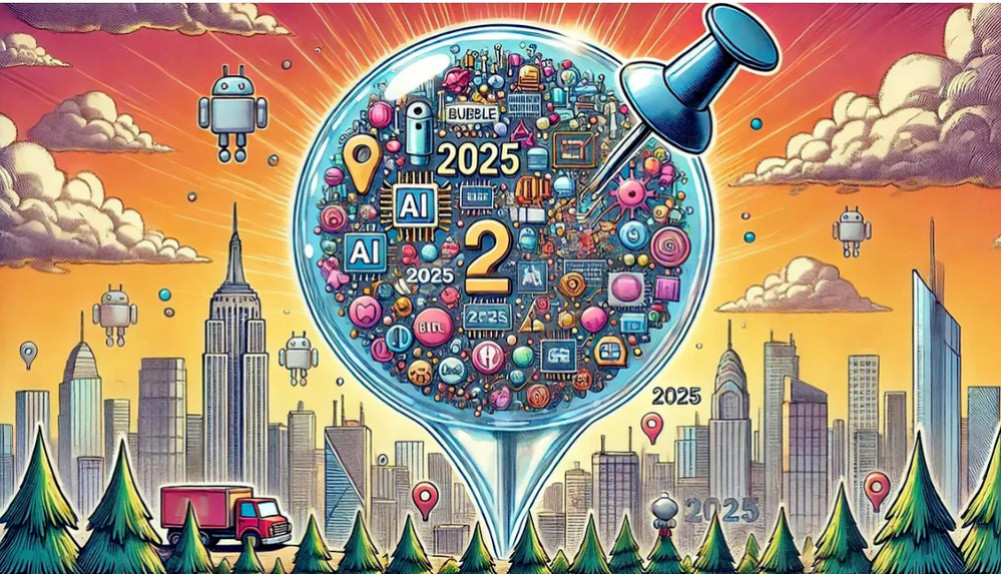
Towards the end of 2022, especially with the release of ChatGPT, AI suddenly became accessible to the general public. By 2025, AI had become an extremely powerful and relevant topic.
The year 2025 will be remembered as the year of the rise and use of ‘agentic AI’ in the technology sector. According to Brian X. Chen, a columnist for The New York Times on consumer technology, this year AI was no longer limited to answering questions or communicating with people, but rather transformed into ‘agents’ that plan and complete tasks on their own.
‘If a chatbot does something like book a plane ticket for you, techies or techies call it agentic,’ Brian wrote in a December 30 column. Agentic AI tools are used by large technology companies, especially Amazon Web Services, Google Cloud, GitHub, and Salesforce, for everything from customer support, system monitoring, or data management to automatically detecting and resolving bugs.
AI models, including Google’s ‘Gemini 3’, OpenAI’s ‘GPT 5’, and Chinese startup DeepSik’s ‘DeepSik R1’, made waves in the global market this year. Gemini added ‘advanced reasoning’ features to answer complex questions or go into depth, and the ability to create apps within chatbots. ChatGPT-5 changed AI from ‘assistant’ to ‘agent’, introducing long-context memory and multimodal features. DeepSik’s R1 model was made more powerful in calculations and coding this year.
This year, common users have also become accustomed to generating photos and videos and converting photos into videos using tools like Midjourney V-Six, Adobe Firefly, Luma AI, Synthesia, Vido, Runway, Gen-3, Pica Labs, and Sora. Although there are no exact details, according to estimates from international media and AI analytical tools, 15 to 20 billion photos and 20.5 million videos were generated using various AI tools in the past year.
Thus, AI-generated content appeared on the internet in abundance throughout 2025. Some of the content was misleading, false, and even of poor quality. To illustrate this, Merriam-Webster Dictionary has declared the word AI ‘slope’ as the Word of the Year. This points to the negative and challenging side of AI.
According to Google's annual review, AI has achieved historic success in scientific discovery and solving complex mathematical problems this year. In the field of social media, the issue of safety and regulation has become very complicated this year. According to The Hindu, Australia has created a global wave by banning children under the age of 16 from social media.
Strict rules have been implemented in various states of the US on AI chatbots, keeping in mind the mental health of children. Malaysia has announced that it will implement the system from 2026. Various European countries including Germany, France, Italy, Belgium are also trying to reduce screen time along with children's use of social media.
In terms of gadgets, Apple created a buzz by releasing its thin 'Air' variant of its iPhone 17, while Google's Pixel 10 series was also very popular. Tech 360 Awards has placed the Apple Watch Ultra and Sony PlayStation 5 in the list of the best gadgets of the year. Similarly, in China, humanoid (human-like) robots surprised everyone by starting to participate in marathon races and working in hotels and factories.
The cryptocurrency market also saw major upheavals this year. According to MIT Technology Review, Donald Trump brought the digital currency market into the spotlight by releasing his own 'mimecoin' called 'Trump'. This led to an exciting growth in the crypto market. The value of the overall crypto market increased by 10 percent in 2025, adding $600 billion to the total market capitalization. The price of Bitcoin crossing the $100,000 mark can be considered the biggest news in the crypto sector this year.
The expansion of satellite internet has brought internet access to remote places in the world. In the field of space, China's Sange-7 mission has taken an important step towards searching for water at the south pole of the moon. According to CGTN, China has led the world in clean energy and has succeeded in replacing coal with solar and wind energy as its primary energy source. Like Elon Musk's space company, SpaceX, Chinese rocket startup Landspace has made headlines in the space sector by building reusable rockets.
Musk himself saw 2025 as a turbulent year. He rose to powerful government positions through 'Dodge' by getting close to Trump and quickly left after the two fell out. However, senior journalist Philip de la Hauz has written an analytical article in The Verge, saying that we are taking a huge step backwards in freedom of expression because companies like Meta, Amazon, and OpenAI are controlled by 'Trump-friendly' billionaires.
For Nepal, 2025 was also a very active year in terms of digital transformation and digital rights. According to a report recently released by Digital Rights Nepal, although Nepal made progress in expanding its digital infrastructure and providing digital services this year, the digital rights and security of citizens remained weak. The government had approved the National AI Policy 2025 and expanded the public digital infrastructure (DPI) by linking the citizen app and national identity card to service delivery. However, there was a huge protest at the citizen level, saying that the social media bill and government efforts to regulate the internet were curbing freedom of expression.
Santosh Sigdel, Executive Director of Digital Rights Nepal, said that the movement led by Gen-G in particular has given a new turn to the use of technology and the debate on civil rights. “In documents like the social media bill, the information technology and cybersecurity bill, and the AI policy brought by the government, it seems that the idea of control rather than regulation is dominant,” he said. “Rather than making laws and regulating, there is a tendency to govern based on guidelines issued by the executive.”
Incidents of Nepali workers being taken abroad and involved in online fraud have raised cybercrime as an international problem. However, the activism of rights activists and civil society has continued to hold the government accountable and to debate the protection of digital rights. This year, as the pace of AI and technology accelerates, the debate over regulation has also intensified worldwide. –