Although child marriage, dowry system, domestic violence and Chhaupadi are legally prohibited, they still persist in practice. Implementing the policy and making the evaluation system efficient are the main challenges for the ministry.
We use Google Cloud Translation Services. Google requires we provide the following disclaimer relating to use of this service:
This service may contain translations powered by Google. Google disclaims all warranties related to the translations, expressed or implied, including any warranties of accuracy, reliability, and any implied warranties of merchantability, fitness for a particular purpose, and noninfringement.
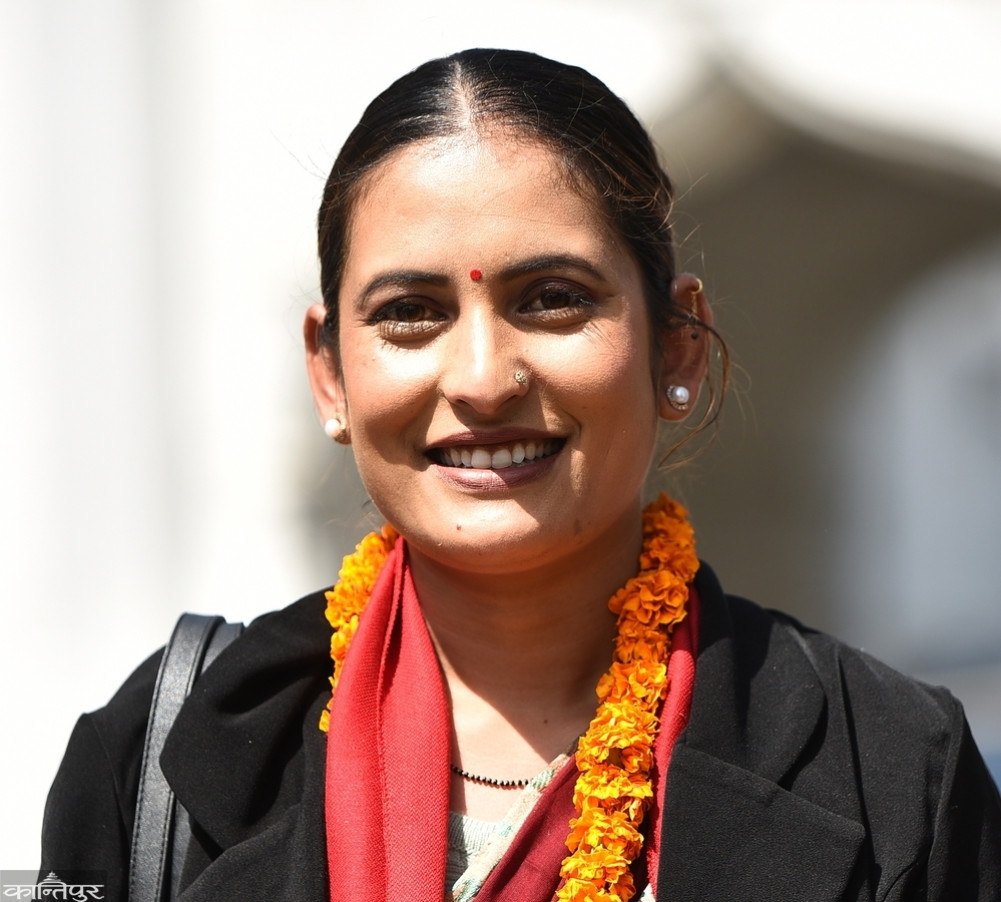
Sita Badi has been given the responsibility of the Ministry of Women, Children and Senior Citizens in the Balendra Shah-led government. She has created history as the first minister from the Badi community. She reached the parliament through the proportional system from the Rashtriya Swayamsevak Sangh (RSS) on behalf of the Dalit women's cluster and will now head the ministry.
Born in 2052 BS in Jhuprakhola, Birendranagar Municipality-11, Surkhet, she spent her childhood in poverty, untouchability, exclusion and humiliation. She has a master's degree in political science. She has been active in social work for a long time. She is still providing education to children from disadvantaged communities in remote areas and vocational training to women. She has started a business in the Chunikhel area to produce and sell handicraft materials. This venture has made her financially capable and also provided an opportunity to create employment for other women. 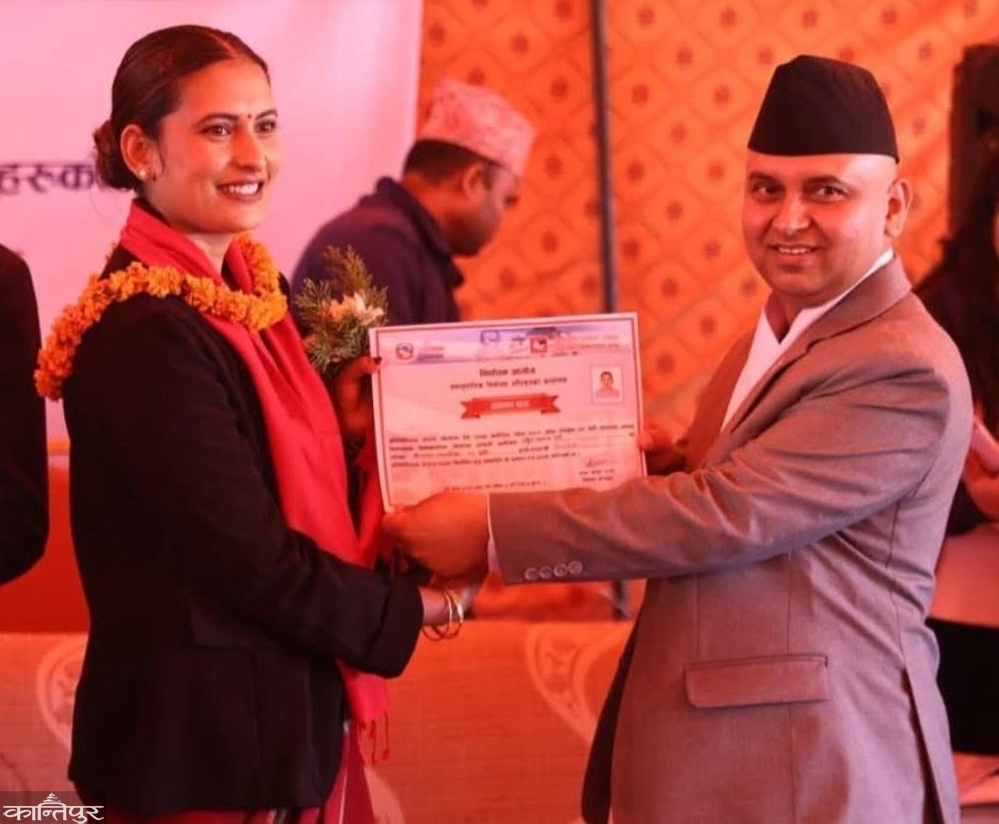
Her efforts to make women self-reliant through small enterprises have become exemplary for the society. She told Kantipur that her political objective is to build a society where the children of any community do not have to suffer the same sufferings as those she experienced while being born in the Badi community, including education, health, employment, caste-based governance, social humiliation and exclusion.
Although the Ministry of Women, Children and Senior Citizens, which covers a large population of the country, appears to be active in policy formulation, it is facing challenges in implementation. This ministry, which is primarily responsible for inclusive development and social security, has not been able to achieve the expected results due to structural weaknesses, limited resources and poor coordination.
The ministry has formulated various policies and procedures in the last decade to ensure social security, gender equality and child rights. Despite the establishment of national plans for human trafficking control, gender-responsive budgeting, child-friendly budgeting, and combating sexual violence, they have not been effectively implemented. The lack of clear responsibilities among the three levels of government, weak implementation plans, and ineffective monitoring systems have led to policies being limited to paper.
Although coordination between the federal, provincial, and local levels is extremely important according to the federal structure, its lack is clearly evident in practice. The lack of a clear role in the distribution of disability identity cards and senior citizen identity cards, management of child reform homes, and service delivery for victims of sexual violence has led to duplication of services in some places and complete lack in others. Stakeholders have pointed out that while programs are being effectively implemented at some local levels, basic services cannot be provided in others.
Women's rights activist Indu Tuladhar said that the Ministry of Women, Children and Senior Citizens is the main body for ensuring social security and inclusive development of the country and that this ministry should shoulder the responsibility of ensuring the rights, security and welfare of children, women, senior citizens and persons with disabilities, directly or indirectly covering more than half of the country's population. She said that the ministry is sensitive because all the responsibilities necessary to protect the vulnerable groups for the construction of a democratic and welfare state are concentrated in this ministry. She said, 'The population of women, children and senior citizens in Nepal is continuously increasing, and the number of persons with disabilities is also high. The main challenge of this ministry is the budget. It is a ministry with only a small budget available and is often neglected.'
Due to lack of resources, the ministry has not been able to fully demonstrate its potential. Skilled and qualified people have also not been able to come forward to take responsibility. She said that since the ministry is not attractive, people willing to take responsibility will not come forward. She said that it is essential to prioritize the ministry to enhance its capacity. She said that there is a need to provide budget, resources and skilled manpower to ensure social security and the rights and interests of vulnerable groups.
In order to make the programs run for women, children and senior citizens effective, the budget should be sufficient, and improvements in infrastructure and manpower are necessary. The lack of health workers, medicines and ambulances in old age homes, the lack of safe housing and psychosocial counseling in children's reform homes, and the lack of service centers in remote areas have directly affected the target group. 'This ministry is a body that implements the fundamental rights of the population. Its importance is very great. It is not possible to move forward by ignoring it. The ministry needs to be strong, capable and equipped with sufficient resources to make social security, women's empowerment, distribution of assistive devices for people with disabilities, management of children's reform homes, promotion of women's entrepreneurship and public awareness programs effective,' Tuladhar said, emphasizing the importance of the ministry.
This ministry carries a large portion of the total population, with 51 percent of the country's total population being women, 33.8 percent of children, 10.21 percent of senior citizens and 2.2 percent of the disabled. In 2081/82, a budget of 2.08 billion rupees was allocated to the Ministry of Women, Children and Senior Citizens. Stakeholders have been saying that the ministry has been neglected and that the budget has been allocated less.
Devi Parajuli, general secretary of the National Federation of Women with Disabilities, said that a large budget is required to operate essential services, rehabilitation, empowerment and social security programs for women, children, senior citizens and persons with disabilities, and that the allocated budget has not been spent effectively, the programs are delayed and the expected results are not achieved. According to Parajuli, the main challenge facing the ministry is the implementation of the law. She said that even though the Disability Act has been enacted, persons with disabilities have not been given their rights.
She stressed that the main thing is to strictly implement the law as the implementation of the law is also the responsibility of the ministry. Stating that the health and rehabilitation of persons with disabilities are in conflict between the two ministries, she said, ‘Since the responsibility of the Ministry of Health and Rehabilitation of Persons with Disabilities is not clear, they are deprived of it. The next government should clarify this.’
She said that there is no clear idea on how to include persons with disabilities at the federal, provincial and local levels. She said that persons with disabilities should be committed to their rights, not as charity. She said, ‘There are challenges in the Ministry of Women. Although child marriage, dowry system, domestic violence and Chhaupadi are prohibited legally, they still persist in practice. Implementing the policy and making the evaluation system efficient seems to be the main problems of the ministry.’