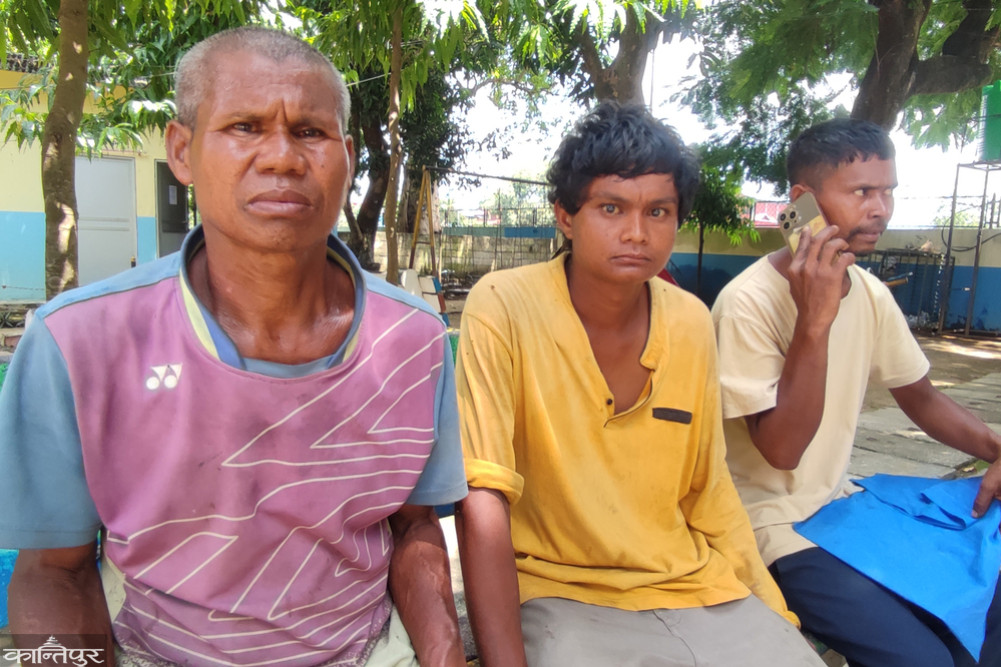
Shanichara has lost its parents, daughter-in-law, and grandson in 14 years to a single elephant attack, yet the park has stated that it is finding it difficult to control the elephants.
We use Google Cloud Translation Services. Google requires we provide the following disclaimer relating to use of this service:
This service may contain translations powered by Google. Google disclaims all warranties related to the translations, expressed or implied, including any warranties of accuracy, reliability, and any implied warranties of merchantability, fitness for a particular purpose, and noninfringement.
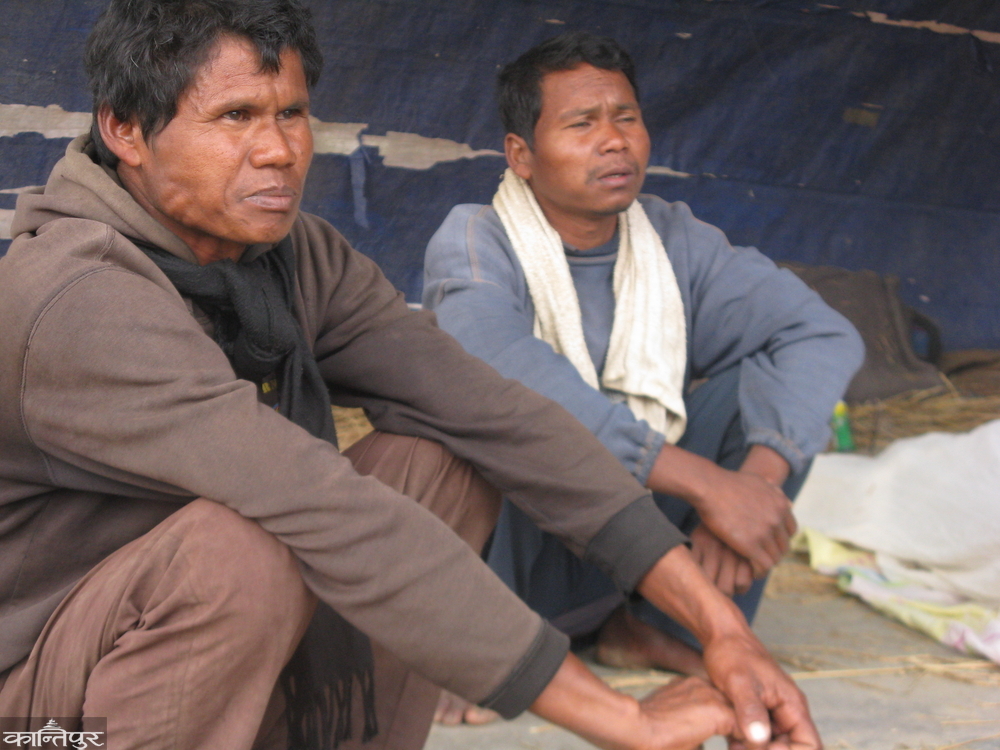
2069 Paus 1. Shanichara Bote was sitting with his brother in front of Baruwa Bazaar in Madi Gardi. The bodies of his mother and father were in the shelter. The elephant 'Dhurbe' had killed Shanichara's father Buddhiram and mother Jharli. The grieving Bote family had staged a sit-in at Baruwa Bazaar demanding that Dhurbe be brought under control.
After the incident, Shanichara migrated. He crossed the Riukhola, crossed the park, and even crossed the Rapti. But he could not be freed from his grief. On Sunday afternoon, the same Shanichara was found in a sad mood inside the premises of the Chitwan District Police Office. On Saturday midnight, Dhurbe killed Shanichara's grandson and daughter-in-law. The body was in the morgue of Bharatpur Hospital. Shanichara had reached the police office to complete the post-mortem process. He lost 4 family members in 14 years because of Dhurbe.
Dhurbe, the male elephant that killed his mother 14 years ago, attacked Shanichara's eldest daughter-in-law and grandson on Saturday. 'We, who lived in Madi Draupadi Nagar, had migrated to Jagatpur after being harassed by elephants. After so many years, the same elephant attacked us again and killed our daughter-in-law and grandson,' Shanichara lamented.
Dhurbe had previously terrified the residents of the southern region of Chitwan. Wild elephants chase males away from the herd when they grow up. Park officials say that Dhurbe is also a wild male elephant that was chased away in the same way. According to the park's information, Dhurbe had been attacking people since 2066 BS. The park has said that 25 people have died since then. 'We have placed satellite collars to monitor such aggressive elephants.' Yesterday, the location of the elephant was seen around the incident site,' said Conservation Officer Avinash Thapa Magar, who is also the Information Officer of Chitwan National Park.
Dhurbe has also killed two soldiers deployed for park security. After attacking Buddhiram and Jharli, Dhurbe had killed 15 people by mid-Mangsir 2069 BS. At a press conference organized by the park office on Chaitra 26, 2069 BS, the then Chief Conservation Officer Phanindra Raj Kharel said that 10 people had died in Dhurbe's attacks.
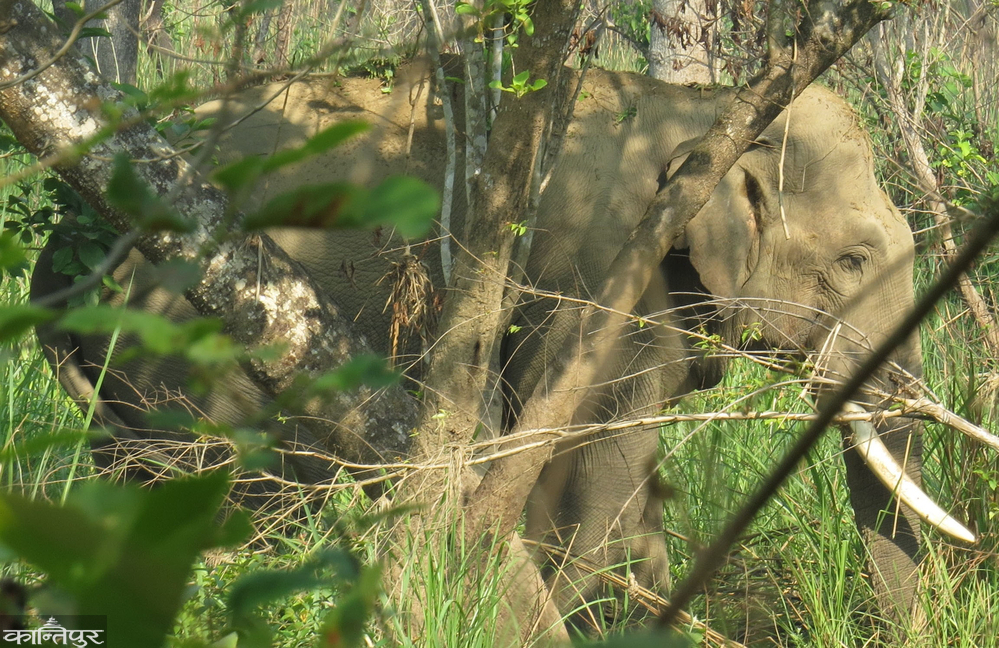
A meeting held on Poush 1, 2069 BS with the Chief District Officer had given the 'order to kill the elephant'. After that, a team was deployed in the forest for two weeks continuously to control the elephant. Dhurbe was shot on Poush 4 and Poush 12. The elephant, which appeared relaxed after the shooting, suddenly disappeared.
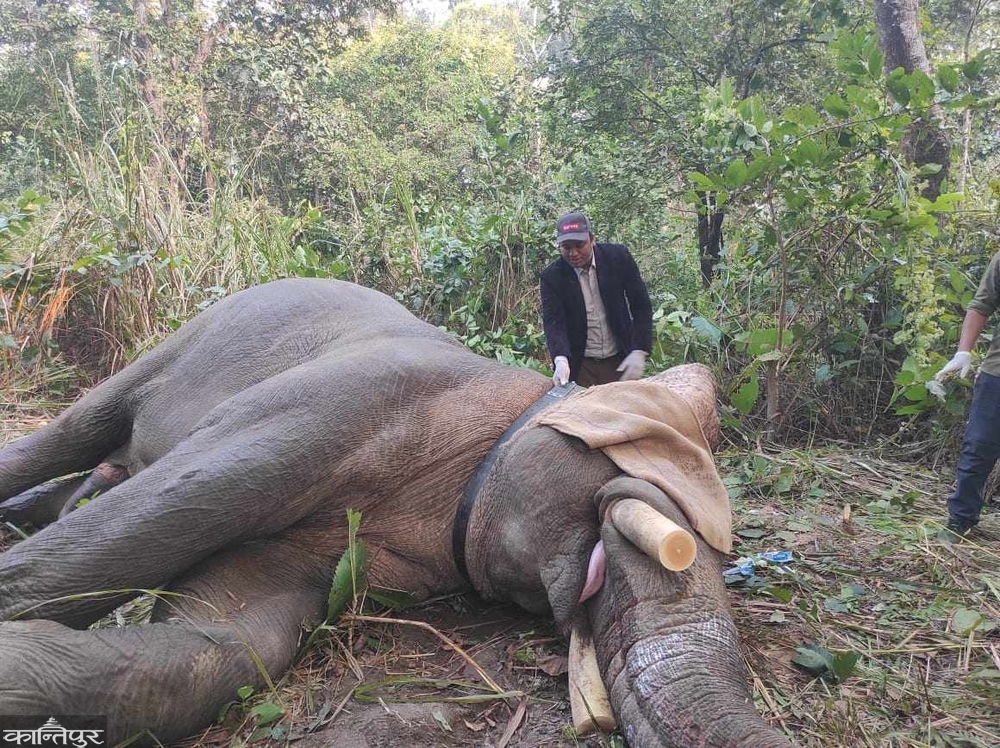
‘Dhurbe’ cut off his tusks and put a radio collar on his neck
At that time, the then Chief Conservation Officer Phanindra Raj Kharel had said in a press conference that 1.6 million rupees were spent to control the elephant Dhurbe. Dhurbe has started appearing again in the western area of the park since the winter of 2073 BS. Dhurbe was not limited to West Chitwan, but in 2076 BS, it also started roaming in East Chitwan and the Barandabhar forest area beyond the park.
Then in Baisakh 2077 BS, Dhurbe was fitted with a satellite collar for the second time. The radio collar, which was first placed in Mangsir 2069 BS, stopped giving signals after Poush 15 of the same year. And on Magh 25, only a radio collar was found in the forest of Parsa National Park.
After placing the radio collar, the signal about where the elephant is going comes to a computer operated by the park office staff from a safe distance. After the 'government chase' of 1980, a joint team of park staff and the army is mobilized to monitor 'Dhurbe', which has appeared calmer than before, and to chase it away when it starts entering the villages, said Avinash Thapa Magar, the park's information officer.
He said that Dhurbe was placed with a satellite collar for the third time on Mangsir 25, 2080. 'This satellite collar gives signals every hour,' he said. Chairman of the Ghailaghari Intermediate User Committee of Chitwan National Park, Lal Bahadur Dawadi, said that Dhurbe was coming from the park area towards the settlements 9/10 days ago.
Keshav Lamichhane came to live in Bharatpur Metropolitan City-23, Jagatpur Belhatta in 2042 BS. In the experience of 72-year-old Lamichhane, elephants come to the settlement in large numbers during the rice harvest. ‘It came a couple of years ago. It comes every year. It has even gone to the forest from Khadgauli, beyond our village, carrying sacks of rice. But this is the first time that a person has been killed like this,’ said Lamichhane.
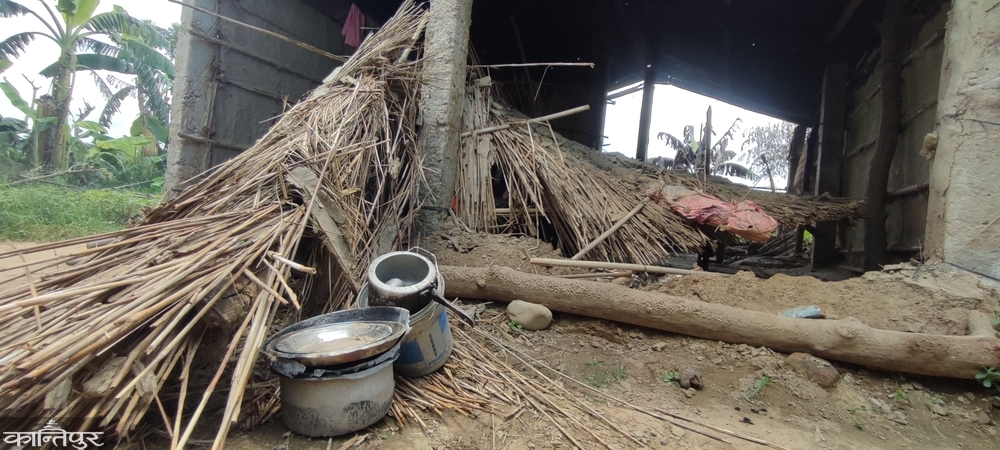
Shanichara’s family of nine lives miserably in a small house built on a piece of land. The two-sided roof, although covered with zinc, is old and rusty. It is not strong enough. The roof is covered with mud. The front row is covered with straw. Shanichara's husband and wife, three brothers and sons, eldest daughter-in-law, grandson and granddaughter, and daughter-in-law's mother live in the house.
'It felt like a wall was being hit at night. I went outside and saw an elephant. It doesn't take long for an elephant to hit a mud house. Once it's hit, the elephant kills it. So I woke everyone up by shouting. There was a stampede. My daughter-in-law was leaving with her grandson. He hit her. We couldn't do anything,' Shanichara said.
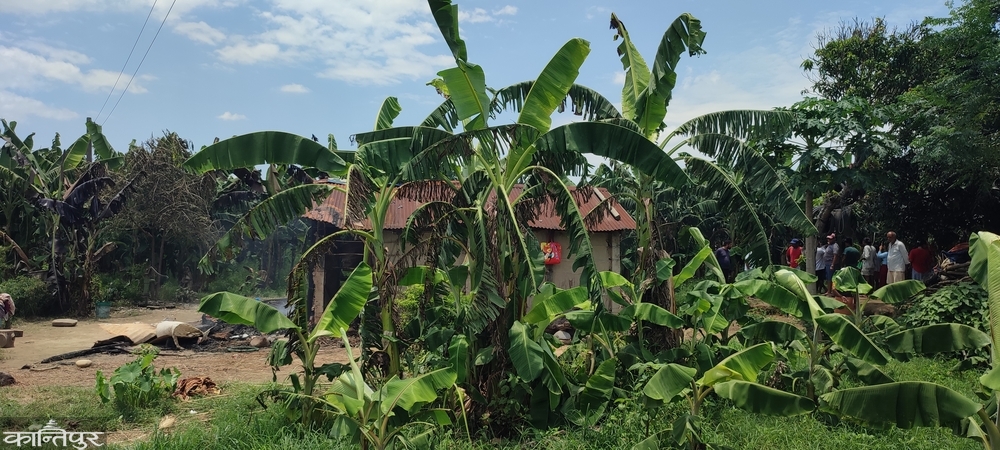
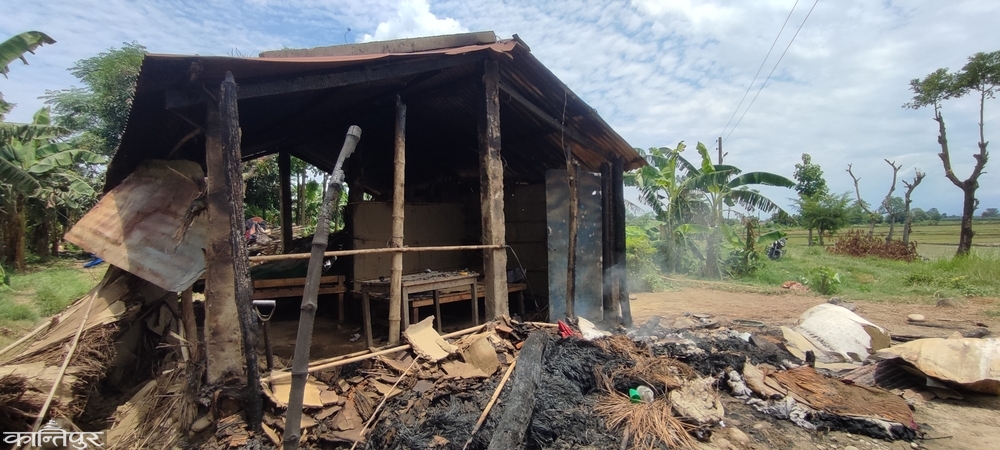
Thinking that the elephant would be scared when he saw the fire, he lit a handful of straw on fire and made a flame. But the fire also caught fire. 'The house burned down, but the elephant ran away when he saw the fire. That's why we were saved. But the daughter-in-law and grandson did not survive,' said Shanichara's wife Mangali Bote. The fire that broke out in the shed also affected the belongings inside. Smoke was still rising until Sunday afternoon.
Shanichara's house is in a secluded place in the middle of Keraghari. 'Earlier, the elephant used to come and go from the bottom of the house. This time, it came and started attacking from behind the house,' said Shanichara. Shanichara says that losing his mother, daughter-in-law and grandson to a single elephant without thinking added to the pain. Local residents protested on Saturday midnight, saying that the incident happened because the park did not maintain adequate surveillance even though the elephants were roaming around the village.
Shanichara's house is about 4 kilometers west of the Kasara headquarters. Shanichara's 25-year-old daughter-in-law Ashika and four-year-old grandson Bharat have died. They are the family of the eldest son Purna. The other two sons are not married. Purna also has a daughter. 'We came here from Madi and built a house. We have no other way to earn money. My sons and I work as labourers,' said Shanichara.
After Saturday's incident, an agreement has been reached to control the elephant. 'This elephant lives mostly in the Sukhikhar forest in the western part of the park. We are trying to stop it there. If we have searched for the female, we are thinking of keeping the female there,' said Magar, the park's information officer.
He also said that if a new satellite collar is installed, it will be possible to monitor continuously. The current satellite collar sends signals at intervals of one hour. When elephants go into the forest, there is not much clear signal. That is why it is necessary to install new satellite collars that give continuous and clear signals. Usually, the breeding process of domesticated female elephants starts from wild male elephants. In the meantime, some female elephants have given birth to babies after mating with Dhurbe. Along with Dhurbe, four or five new/old male elephants like Ronaldo and Govinde are active in Chitwan.