The ‘Acid and Other Hazardous Chemical Substances (Regulation) Ordinance 2078’ was promulgated in 2078 BS. The same ordinance was passed by the Federal Parliament in 2079 BS as the ‘Acid and Other Hazardous Chemical Substances (Regulation) Act’.
We use Google Cloud Translation Services. Google requires we provide the following disclaimer relating to use of this service:
This service may contain translations powered by Google. Google disclaims all warranties related to the translations, expressed or implied, including any warranties of accuracy, reliability, and any implied warranties of merchantability, fitness for a particular purpose, and noninfringement.
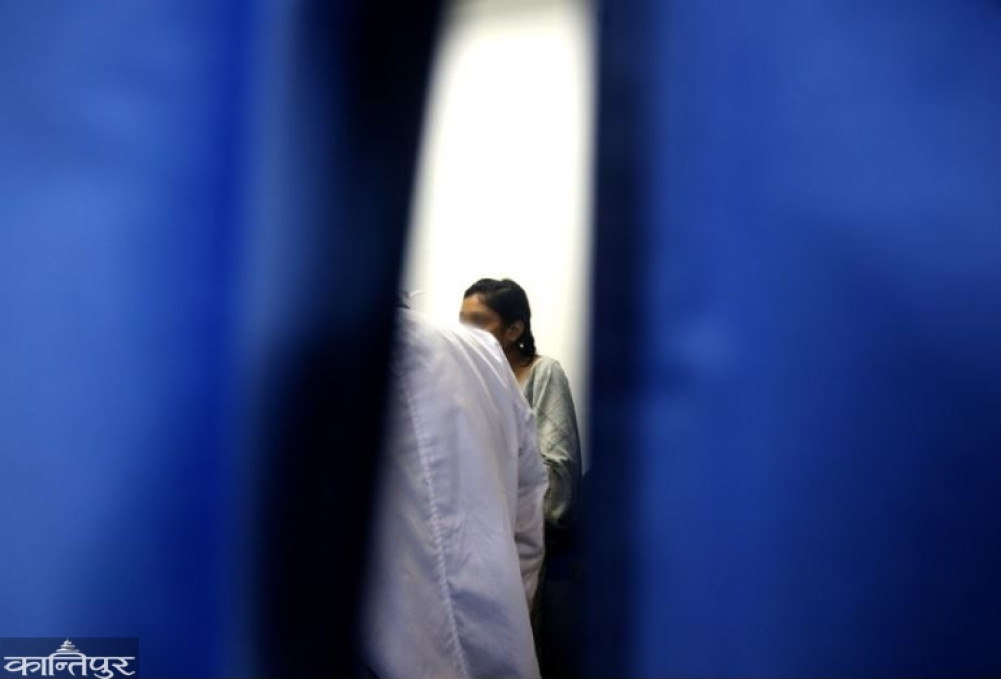
Sapna Tamang (name changed) from Makawanpur came to Kathmandu 10 years ago in search of work. While looking for work, she got a job in a carpet factory. She was happy to earn, have fun and send money to her family. But when she fell in love with a man who worked in the same industry, her life changed suddenly.
The man proposed to her, she refused, and then he proposed marriage, she refused that too. After that, the physical and mental pressure on her increased. The man locked her in a room for four months and started beating, abusing and mentally torturing her. She had to wear a key when she went out and even defecate inside the room, she said.
One day, she tried to escape the violence she had been enduring for a long time, but that attempt turned out to be the most painful turning point in her life. While running away, the man poured kerosene on her and set her on fire. Recalling the past, she said, "I was trying to run away when he poured kerosene on my body, then the fire started, whether it was with a match or a lighter, I couldn't see it. When I woke up, he was in the hospital, his body was completely hot, his body was badly burned. "The accused man, who stayed with her in the hospital for about four months after the incident, is now absconding. She is currently undergoing treatment with the help of an organization.
More than a decade has passed since the incident. But Sapna's treatment is not over yet. She has been undergoing continuous treatment since 2014 and has undergone skin grafting (a surgery in which skin is removed from a healthy part of the body and transplanted to a burned or damaged part) and contusion release (a surgery to remove skin that has shrunk after a burn).
The surgery healed some wounds, but the other wound still needs to be treated. She is also living with mental pain along with the scars on her body. She also lost her financial status while going to the hospital for treatment. But even after such a long treatment, she has not received any treatment expenses or any compensation.
Sapana knocked on the doors of the police office, court and various government agencies in search of justice, but every time she had to face the same question: Where is the evidence? Despite the burns and bruises on her body, she said that she was looking for evidence of burning while seeking justice. She said, “My body is burned and bruised. Aren’t these all the evidence that I have been undergoing treatment for years? They still say, ‘Bring the evidence of burning.’ In such a situation, what greater evidence can there be than a massage?
She said that she did not get justice because there is no separate law for the crime of arson. She said, "Not only is the pain unbearable when the body is burned, but the mental stress is also unbearable. Lakhs of rupees are spent on treatment. But the state neither provides treatment expenses nor compensation. There should be a law to look into the crime of arson and punish accordingly. The law itself should provide treatment and compensation for the victim.'
At the age of 14, Parin (Mangala Puri) was attacked with acid 12 years before her name change. The acid got on her face, neck and chest and caused burns. Even after more than a decade of the incident, she has not been able to forget the struggle for justice. After the incident, the fight for treatment and justice went hand in hand. Instead of being punished for the acid attack, the culprit was sentenced to 10 years in prison and a fine of 1 lakh rupees under the industry of murder.
The convict has already served his sentence and has been released from prison, but he is still receiving threats. She said that the convict should be sentenced to life imprisonment for the crime of burning. She said, "He served his sentence and got out of prison, but the scar on my face is still there. My life has not returned to the way it was before." She said, "I have to live with this scar for the rest of my life. According to my pain, he should be sentenced to life imprisonment."
The Criminal Code, which came into effect in 2074 BS, has for the first time defined the act of causing bodily harm by using acid, chemical or poisonous substances as a separate crime. The face and other parts of the body are classified differently. According to Section 193, disfiguring someone's face or body by using acid or other chemical, biological or poisonous substances is considered a crime, and according to the said provision, disfiguring the face is punishable by imprisonment for five to eight years and a fine of one hundred thousand to five hundred thousand rupees.
Similarly, there is a provision for imprisonment for three to five years and a fine of Rs 50,000 to 300,000 for disfiguring other parts of the body or causing pain to the body. Even if there is equally serious burning or permanent deformity in other parts of the body (such as hands, chest, back, stomach, legs), lesser punishment has been prescribed. In cases of other burns, the Domestic Violence (Offences and Punishments) Act, 2066, Evidence Act, 2031, Senior Citizens Act, 2063, Crime Victims Protection Act, 2075, Administration of Justice Act, 2073: Acts are applicable. Rights activists have been arguing that the law is discriminatory as there is one punishment for burning with acid and another for burning by fire or other means.
The acid attack on two young women in Kathmandu in Bhadra 2077 further exposed the incidents of burning. After the incident, the ‘Acid and Other Hazardous Chemical Substances (Regulation) Ordinance 2078’ was issued. The same ordinance was passed by the Federal Parliament in 2079 as the ‘Acid and Other Hazardous Chemical Substances (Regulation) Act’. This gave a permanent legal basis to most of the provisions of the ordinance. It has provided a fine of 50,000 to 100,000 rupees and imprisonment of 3 months to 1 year for those who produce, import, sell, distribute or import acid.
Similarly, if a person who has obtained a permit does not comply with the prescribed conditions, there is a provision that a fine of 10,000 to 50,000 rupees or imprisonment of 1 month or both can be imposed. Packaging without a label is subject to a fine of 50,000 to 100,000 rupees or imprisonment of 3 months or both. The provision in the act states that a fine of 10,000 to 40,000 rupees will be imposed for illegal sale, distribution, display or disposal. But the debate did not stop there.
The question arose: Is acid the only cause of burns? What about the situation of burn-related violence committed by setting fire, using flammable substances, pouring hot substances or by other means? In search of an answer to this question, in 2081 BS, 14 MPs, including Bindabasini Kansakar of the National Independent Party, registered the ‘Non-Governmental Bill to Make Integrated Legal Provisions on the Control and Punishment of Human Body Burns, 2081’ at the Parliament Secretariat.
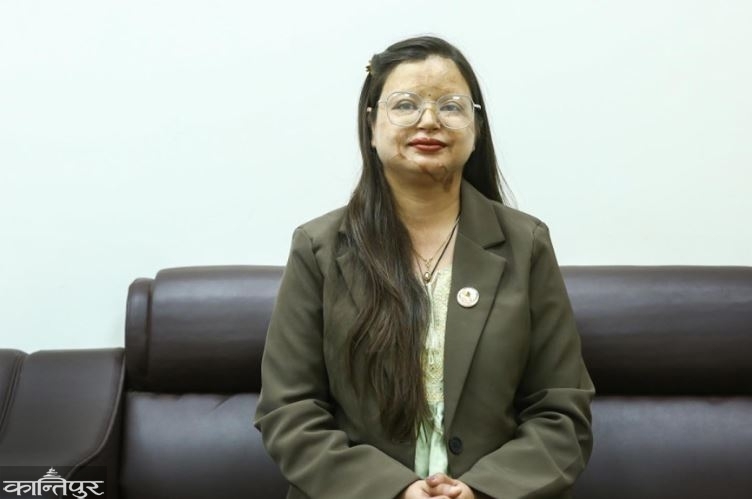
Kansakar herself said that this bill was not a legal document but a bill based on personal suffering and experience for those affected by acid attacks. She said, ‘The issue of burns has not yet been taken seriously in Nepal. A law has been passed on acid attacks, but many other forms of burns have not yet been adequately addressed legally.’ According to her, the state has not been able to adequately address the problems that burn victims face in hospitals, financial deprivation, long-term treatment, rehabilitation and social discrimination. She said that the treatment expenses, plastic surgery, re-treatment, mental health, education, employment, social relationships that the victim begins to struggle with from the day the incident occurs are all affected, but the law has not yet been able to look at it holistically.
There is no clear and comprehensive definition of ‘burn’ in the current law- Advocate Shashi Basnet Pratiksha Giri, Executive Director of Burn Violence Survivors Nepal, said that there is a difference in the legal punishment system between victims of burns and acid attacks. According to her, even though severe burns are caused by the same type of violence, there is a strict punishment system in acid attacks, while burns caused by other means are considered under domestic violence or other legal systems. She said that it is not fair to determine compensation based on disfigurement.
She said, ‘Whether burned with acid, poured with petrol or kerosene, or burned by any other means, the pain suffered by the victim is the same, but the law has treated it differently, which is discriminatory. She said that burn victims do not receive timely treatment, it is difficult to get justice and the government has not been able to address the need. She informed that a report has been prepared for the Government of Nepal and suggested that the disparity in punishment between acid and other burn crimes be removed, public awareness about burns should be raised from the school level, social rehabilitation of burn victims should be made effective, planned programs should be conducted to prevent incidents of burns caused by electricity, LP gas and violence, and regular monitoring should be made mandatory for fire safety standards in building construction.
Advocate Shashi Basnet said that the existing legal system on burns is incomplete and a special law is needed to cover burn crimes. According to her, there is no clear and comprehensive definition of 'burn' in the current law. Since the law mainly focuses on acid attacks, crimes caused by fire, kerosene, petrol, hot water, electric shock or other means have not been adequately addressed. She also said that there is inequality in punishment in cases of burns caused by acid attacks and other means. She said, "There is no clear legal provision for treatment, compensation, relief and rehabilitation for burn victims, and institutional responsibility is also unclear in cases of gas explosion or electrical negligence. Words like 'ugly' used in the law further affect the victim mentally, so it seems that amendments are necessary. '
Since the subject of the law on burns falls under the jurisdiction of the Ministry of Health and Food Hygiene, the ministry has been expanding burn units in hospitals in view of burn incidents, but discussions are underway to amend the law and unify the law on burns, said Dr. Sameer Kumar Adhikari, deputy spokesperson for the ministry. He said, "Currently, discussions are being held on the legal side, and we can only say after a decision is made. '