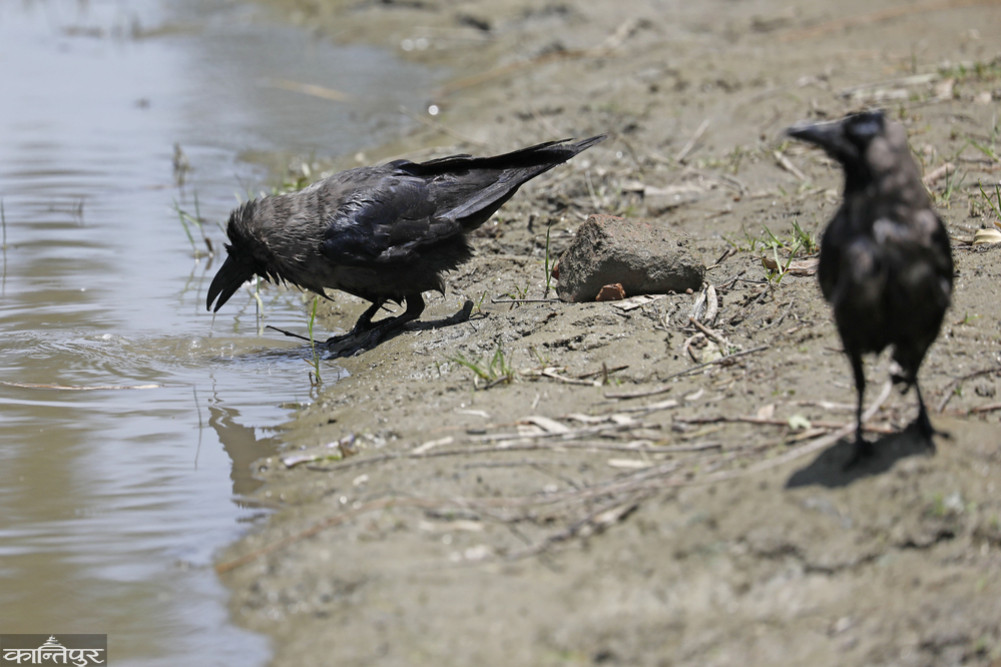
Bird flu has also been confirmed in zoo birds and mammals, and the increasing number of infections in crows has raised concerns about its spread and public health risk.
We use Google Cloud Translation Services. Google requires we provide the following disclaimer relating to use of this service:
This service may contain translations powered by Google. Google disclaims all warranties related to the translations, expressed or implied, including any warranties of accuracy, reliability, and any implied warranties of merchantability, fitness for a particular purpose, and noninfringement.
Brown Skua, a large seabird that breeds in Antarctica, migrates north after the breeding season. In the first week of Ashad, the bird, which had reached the coast of Cape Le Grand National Park near the city of Esperance in Western Australia in search of food and a warm environment, was confirmed to have bird flu (H-5N-1). According to scientists, due to the seasonal migration of birds, there is a risk of this virus spreading to domestic birds and birds. There have also been cases of infection in people who have come into direct contact with infected birds or animals.
Although bird flu seen in chickens is easy to control, it is difficult to control bird flu seen in birds that fly from one place to another, says Dr. Sher Bahadur Pun, Clinical Research Unit Coordinator and Infectious Diseases Specialist at Shukraraj Tropical and Infectious Diseases Hospital. “Migratory birds are considered the main source of bird flu transmission worldwide,” he says, “but not all of them transmit the disease. Cases of infection from migratory birds have been confirmed in other countries.” According to Pun, migratory birds do not show obvious symptoms of bird flu. Even if infected, they continue their normal activities. But when they reach domestic birds, it becomes fatal.
A study conducted in Nepal, which is part of the Central Asian Flyway, found the H-9N-2 subtype of influenza A virus in a sample of a ruddy shelduck. This has been mentioned in a journal article titled ‘
Surveillance of Influenza A Virus and Its Subtypes in Migratory Wild Birds of Nepal ’. ‘Out of a total of 1,811 samples collected during the study, only one (0.055 percent) sample was confirmed to be influenza A virus,’ the article by Divesh Karmacharya states, ‘Genetic analysis of the HA gene of the H-9N-2 virus showed that it is closely related to the H-9 virus group found in wild and domestic birds from different geographical regions of the world.’
The Chakhewa sample was collected from the Koshi Tappu Wildlife Sanctuary in Sunsari, which is one of the important wetland habitats for migratory birds from different countries. The bird regularly visits Nepal during the winter.
According to the article, the H-5N-1 virus was found in this species in Qinghai Lake, China, in 2005. These findings add to the growing evidence that long-distance migratory birds such as gannets can carry and spread avian influenza viruses.
The article mentions that more than 100 wild bird species are identified as major vectors of avian influenza viruses. In particular, ducks, swans and herons, seabirds, terns and birds living in wetlands play a role in spreading the virus in nature. Recent evidence has shown that the highly virulent bird flu (HPAI) H-5 virus can cause severe disease and widespread mortality not only in poultry but also in wild birds.
A total of 1,063 outbreaks of H-5N-1 in wild and domestic birds in South Asia were reported to the World Organization for Animal Health from 2006 to 2019. Of these, the highest number of outbreaks were observed in Bangladesh, followed by Nepal. H7N1 killed more than 964,000 birds in Asia.
 Dr. Sher Bahadur Pun , infectious disease specialist Most studies have shown that bird flu in wild birds, domestic ducks and geese is less deadly and asymptomatic. In contrast, symptoms in domestic chickens are more pronounced and severe. “These birds do not show symptoms, they are doing normal activities. But the same virus becomes fatal when it reaches domestic birds,” says Dr. Pun. Migratory birds are considered the main source of bird flu, and cases of infection from such birds have been confirmed in other countries. -
Studies have shown that mild to moderate infections have been seen in both domestic and wild aquatic birds. Respiratory and neurological symptoms are more pronounced in domesticated species and mortality rates are also higher.
‘
A Global Review of Highly Pathogenic Avian Influenza and Control Strategies in Nepal ’ states that, ‘Neurological symptoms similar to those seen in chickens, such as head and neck tremors, neck flexion, head tilt, and wing paralysis, have been reported in wild birds infected with HPAI.’ The study by Deepak Subedi and others states that, ‘These viruses sometimes cause high mortality rates as well as neurological symptoms, respiratory symptoms, greenish diarrhea, or sudden death.’ Such symptoms have also been seen in some wild species that are asymptomatic to other virus strains.’
The study states that a total of 17,104 outbreaks of highly lethal bird flu have been recorded in domestic and wild birds worldwide from 2011 to 22 August 2025. Asia and Europe are the most affected by this disease and it has been concluded that frequent outbreaks are seen due to intensive poultry farming, live bird markets and migratory bird routes.
Infectious disease specialist Dr. Pun says that the virus is transmitted from wild bird feces to domestic birds that use water sources. ‘Migratory birds, which are carriers of the disease, also interact with crows. Crows, ducks or chickens are also spreading bird flu when they come into contact with them. The risk of bird flu transmission is high from crows living in groups and roaming around the community, he says, “There was an understanding that bird flu is transmitted through the transportation of chickens and eggs. Now that understanding needs to be changed and precautions should be taken against the possible risks from crows.”
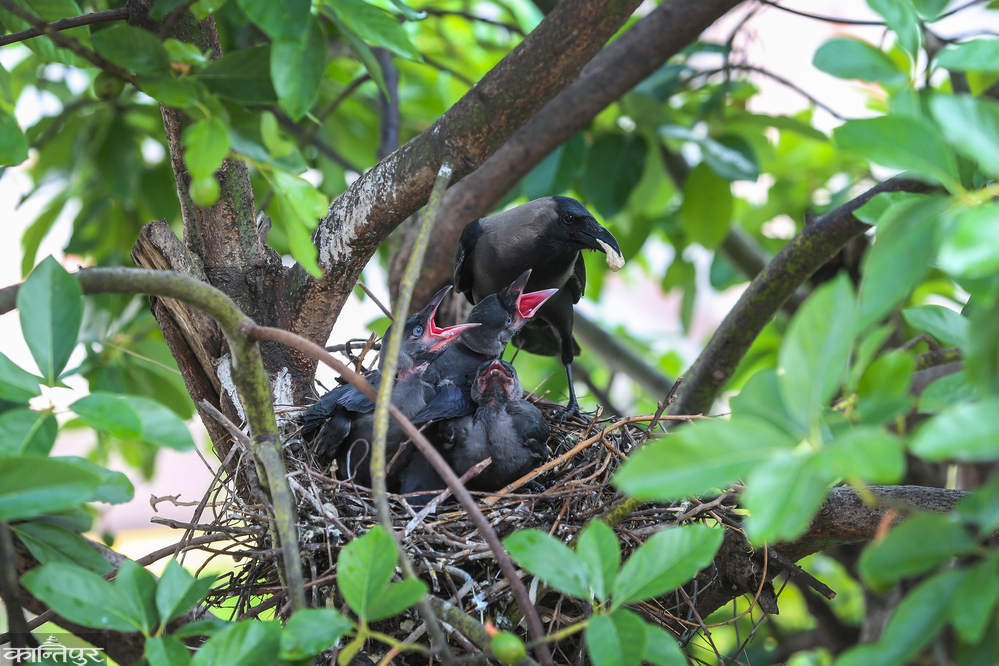 After Kirtipur, 15 dead crows were also found in the Toudah area
There have been cases of large numbers of crows dying in Kathmandu and other places in the past, and such cases are usually attributed to bird flu. -
 Dr. Mukul Upadhyay , Spokesperson, Department of Animal Services In some places, only one or two birds died, while in Lainchaur, Kathmandu, 2019, 200 crows died. There is no record of any wild birds being destroyed for control in these outbreaks. According to the study, in 2012, 4 crows died in Kathmandu City Hall. In 2013, one crow each died in Mechinagar, Jhapa, and Ravi Bhavan, Kathmandu. In 2017, wild birds other than crows were also found dead in Itahari. 14 Maharaj Hans and one Ghungifor Garuda died. In 2022, 15 crows were found dead in Lainchaur, and in 2023, 20 crows were found dead in the same place. ‘The first outbreak of H-5N-1 in Nepal was seen in Jhapa, which borders India.’ This raised suspicions that the virus may have entered Nepal through illegal transportation of poultry and poultry products across the open border. Another possibility is that the disease may have entered Nepal through migratory wild birds,’ the study said.
The last time bird flu spread was inside the Sadar Zoo in Jawalakhel, Lalitpur. When crows started dying on the premises, bird flu was confirmed in the animals here. The zoo has been closed since 5 Asad.
Bird flu in Jawalakhel Zoo animals, closed indefinitely
Spokesperson and senior doctor of the Animal Services Department Dr. Mukul Upadhyay says that incidents of large numbers of crows dying have occurred before and bird flu is usually seen in such cases. ‘There have been cases of bird flu confirmed in crows in the year of the bird flu outbreak,’ he said, ‘If the disease is found in chickens, it can be controlled and managed, but since crows are flying birds, it is not easy to control, the risk of infection remains.’
Bird flu, which was seen in eastern Nepal in the first week of last Chaitra, was confirmed in the Kathmandu Valley two months later. The confirmation of bird flu in crows that died in the valley and mammals in the zoo has increased the fear of infectious diseases among the general public.
Out of the total 37 animals and birds that died in the zoo, bird flu was confirmed in 24, said Dr. Upadhyay, spokesperson of the Department of Animal Services. ‘Some of the confirmed cases are low pathogenic and some are highly pathogenic,’ he said.
Cleaning and disinfection work is underway, as it is a sensitive issue for human health, there should be no rush to open the zoo. -
 Ganesh Koirala , Spokesperson, Sadar Zoo According to spokesperson Ganesh Koirala, there have been no cases of infection in animals here since 12 Ashadhar. 'Bird flu has also been seen in birds and mammals such as Latokosero, Huchil, Bakulla, Sawari, Vulture, Kalij, and jungle cats, civet cats, wild tigers, and leopards,' he said. He said that since the virus was confirmed, continuous disinfection and cleaning work has been being done regularly to control it. After the zoo incident, the government had formed an investigation committee to study the cause of the spread of the infection, information management, and the overall situation. Spokesperson Koirala says that the zoo will open only after the committee's report comes and the government takes a decision. 'The bird flu situation in Kathmandu is still terrible. There was no rush to open it immediately as it is also a sensitive issue for human health. Studies and inspections are also being carried out on the environmental conditions here.'
750,000 birds destroyed in the latest outbreak
The latest wave of bird flu began in the east on Chaitra 4. The outbreak, which was seen in Jhapa, Morang, and Sunsari, was brought under control only after a month and a half. Bird flu was also seen in Bara, Mahottari, Chitwan, and Nawalparasi. The spread of bird flu infection, which began in the Kathmandu Valley in mid-June, has reached zoos.
The department says that its outbreak has been seen in 82 places in 11 districts since Chaitra. 'During this period, about 750,000 birds and about 1.09 million eggs were destroyed,' said department spokesperson Dr. Mukul Upadhyay said, ‘If 250,000 kg of grain is destroyed, the loss to farmers will be more than Rs 700 million.’
 Especially those who work directly with chickens, poultry farmers, farm workers, and traders are at risk of bird flu, but now this range has increased and the risk has increased, says infectious disease specialist Dr. Sher Bahadur Pun. ‘With the increasing incidence of bird flu even in crows, it seems that the common people should take precautions,’ he says, ‘This incident is also an indicator of caution. Do not pluck the wings of a dead crow, hold it with bare hands and throw it away. Especially children going near it can be another risk.’
The first outbreak of H-5N-1 in Nepal was confirmed on January 16, 2009, at a poultry farm in Mechinagar Municipality, Jhapa. The first case of infection in humans was confirmed on March 24, 2019, due to which a man lost his life.
Bird flu is a contagious viral disease that affects birds such as chickens and ducks. Doctors say that the disease can spread through direct contact with such birds, through waste or infected materials, and can also infect humans.
The World Health Organization (WHO
) has reported that there have been 954 cases of human infection with this virus in 24 countries from January 1, 2003 to December 12, 2024. Of these, 464 people have died. Accordingly, the mortality rate of the infection is 49 percent.