Only 3 percent of perpetrators of serious human rights violations have been prosecuted, while the remaining recommendations have been stuck on paper for decades due to government indifference, leaving victims waiting for justice.
We use Google Cloud Translation Services. Google requires we provide the following disclaimer relating to use of this service:
This service may contain translations powered by Google. Google disclaims all warranties related to the translations, expressed or implied, including any warranties of accuracy, reliability, and any implied warranties of merchantability, fitness for a particular purpose, and noninfringement.
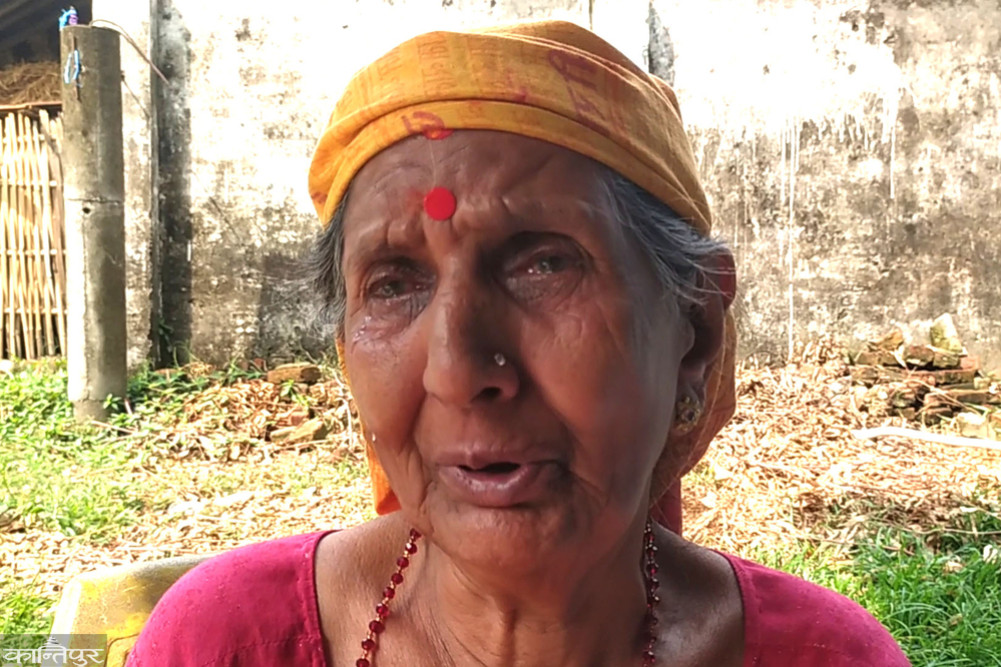
Durgadevi Poudel, who is in her late teens, has wandered the noisy streets of Kathmandu for a long time. At the age of 77, when she should be resting at home and being cared for by her family, she has walked for justice for her son, a journey that is not easy.
Supporting her weak body with a cane, she stutters as she speaks. A sigh is heard in her breaking voice - only justice for her son!
'When my daughter-in-law keeps asking me what to eat hot and cold, I have to walk the streets of Kathmandu in search of justice for my son,' asks Durgadevi of Bagmati Municipality-2 in Sarlahi, 'How long will I have to keep knocking on the doors of courts and government bodies?'
Her son Kumar was the Sarlahi district in-charge of the Nepal Communist Party led by Netra Bikram Chand. He was murdered at 1 pm on 2076 Ashad 5 in the Lakhandehi forest of Lalbandi Municipality-1, Sarlahi. The police have been claiming that he was killed in retaliatory action after firing on a patrol team.
The then Home Minister Ram Bahadur Thapa had also said in Parliament, giving it more weight, 'I would like to inform the esteemed House that the report of the investigation committee has revealed that Kumar Poudel was also shot dead in a joint police retaliatory action while firing at security personnel.'
The victim's family has been repeating the allegation that the incident took place on the orders of those in power. 'The government that was there killed him. Because it was the same government that killed him, our case was not even registered. They did not allow us to register the case,' says Kumar's father Khilakraj in anger, 'The Human Rights Commission asked him to file a case there, but this government did not.' He says he hopes the current government will deliver justice.
The National Human Rights Commission's investigation revealed that Poudel's death was not in a confrontation but after being taken into custody, using unnecessary force. The commission concluded that the police killed him by taking him into custody, torturing him, and shooting him in the foot and chest nine times.
Based on the on-site investigation report of the commission's investigation team, it recommended that the government immediately suspend and prosecute Police Inspector Krishnadev Prasad Sah, Police Constables Srivinod Sah and Satyanarayan Mishra, who were directly involved in the incident and were also the commanders. The commission also recommended that a criminal investigation be conducted and that the victim's family be compensated with Rs 300,000. However, the government has not yet implemented the recommendation.
The Supreme Court itself had issued a order on 28 Falgun 2082 to proceed with a criminal investigation against the then Home Minister Ram Bahadur Thapa, IGP Sarbendra Khanal, and the then Chief District Officer Krishna Bahadur Rautal, including 12 others. In such incidents, the government should investigate on its own and take action against the perpetrators and provide justice to the victims. But many recommendations sent to the government by the constitutional body Human Rights Commission after conducting an independent investigation remain in the drawer. Complaints are not even registered in many incidents. Victims say that the government's indifference in implementing the recommendations is like rubbing salt in their wounds.
Another character who is suffering from similar pain is Shanti Devi Sah Budhathoki of Bardibas, Mahottari. Her life, which was devastated during the conflict, has been hit by one after another. Her life, which was run by a small tea shop and supporting her family, was going on normally. At around 12 midnight, 6-7 men entered the house while she was sleeping. They forcibly kidnapped Shanti, took her to the forest and gang-raped her. After brutally torturing her, they left Shanti in the forest, thinking her dead, and fled. She was found naked by locals who had gone to graze cows for hours, bleeding. She was then rushed to Janakpur Hospital with the help of her family. She was taken to Kathmandu for further treatment.
25 years have passed since the incident. However, no investigation has been conducted to find out who the culprits were. That dark night has never ended for Shanti. She says, 'Whenever I close my eyes, I see the same scene, I can't sleep all night.'
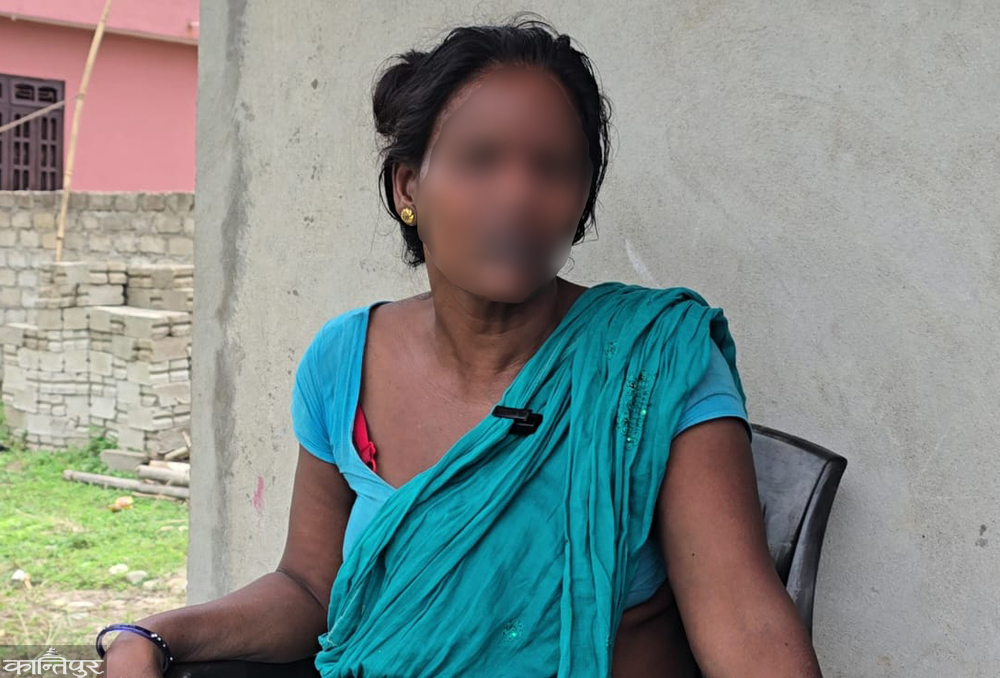
Her treatment, which was rendered incapacitated due to the same incident, is ongoing. When she came to the Tribhuvan University Teaching Hospital for treatment, her son, who had gone missing two years ago, has not been found yet. On the one hand, she suffered from the injury she suffered, on the other hand, the pain of losing her son; mentally traumatized, she also lost her husband a few years after the incident.
'His condition is very serious. He cannot walk,' says Shanti Devi's daughter-in-law Pramila Khadka.
The commission had held the then Chief of the Armed Police Force Chinnamasta Battalion, Superintendent of Police Prakash Ojha, and the then Chief of Police of the District Police Office, Mahottari, responsible for not being prompt and coordinating the investigation of the incident. Similarly, in the case of Shanti Devi, the commission had recommended interim relief. Interim relief should be given immediately. But Shanti Devi has not even been able to feel what relief is like.
In addition, the investigation report of the Gaur massacre that took place on 7 Chaitra 2063 is also secret. After investigating the incident that claimed the lives of 27 people, the Human Rights Commission made a recommendation to the government on December 19, 2079, 16 years after the incident. The government did not implement that recommendation either.
Gaur massacre: 7 files anonymous for 18 years
Twenty-seven people were killed and more than a hundred were injured in the attack on the rice mill in Gaur, Rautahat. The commission had recommended at least three hundred thousand rupees in compensation to the families of the deceased. This recommendation has not been implemented yet.
The Commission has recommended action and reform in 1,621 serious human rights violations since its inception till 2082 Magh. Although those recommendations were sent to the government and the concerned bodies for implementation, the government has not fully implemented them. The government's indifference is also similar in implementing the recommendations made to compensate the victims.
The Commission has recommended compensation worth 316.476 million rupees to the victims of various incidents till last Magh, but has given only 81.714 million rupees. The Commission's data shows that only 13 percent of the recommendations have been implemented.
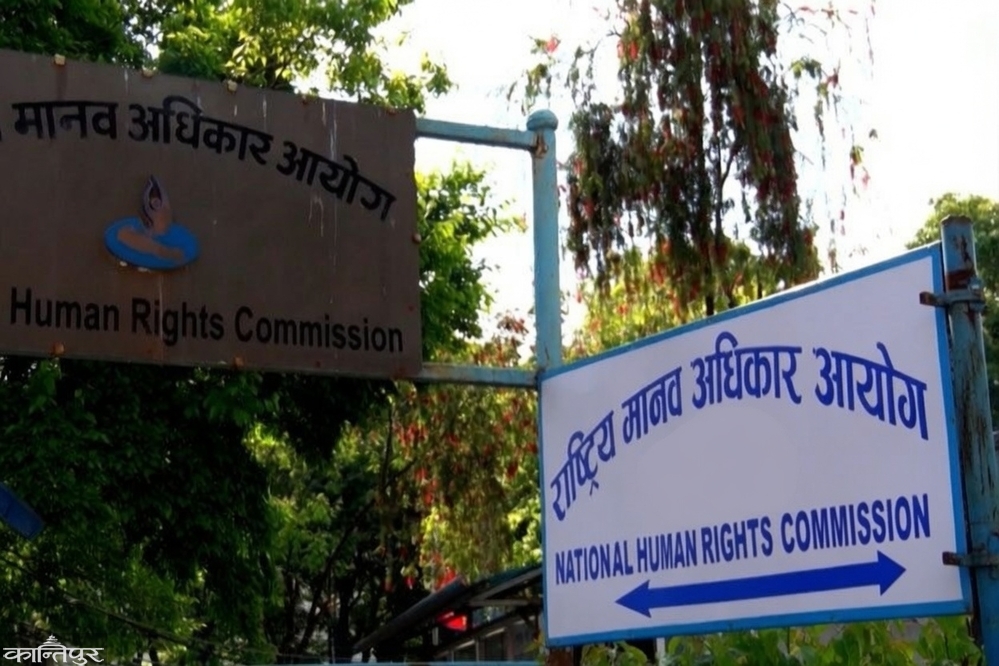
Commission spokesperson Tikaram Pokharel says that the government's indifference in implementing the recommendations is unfortunate. 'The responsibility to implement the recommendations lies with the government. Whatever the Commission recommends, it should be implemented,' he said. 'The court has also said that implementation is not an optional matter for the government, but a mandatory obligation.'
The commission had last studied the Gen-G movement and made recommendations to the government. In the report made public after all-out pressure, the people who recommended action by the commission are in power and in the House.
What the Human Rights Commission saw in the Gen-G movement
Congress MP Bharat Bahadur Khadka has expressed doubts about the implementation of the commission's recommendations. 'The incumbent Home Minister, who was recommended by the said report, is sitting on the bench of the government. The commission's report has also included the honorable gentlemen who burned the prison and walked around waving their hands on the rooftop car,' he said in the House. 'I would like to ask through the honorable Speaker, when will the government implement the report? When will the senior honorable gentlemen whose names are included in the report get legal respect?'
Universal principles and international laws are very strict in human rights violations. The United Nations Declaration of Human Rights and various international conventions to which Nepal itself is a party state that the state cannot compromise on any pretext in serious crimes such as extrajudicial killings, torture, and rape. Similarly, it is the binding and irrevocable obligation of the state to provide speedy justice to the victims along with compensation and prosecute the guilty. Advocate Badri Bhusal says that the government must fulfill this obligation at all costs.
'They believe that implementing the recommendations of the Human Rights Commission will lead to the overthrow of the government. Because of that, the governments to date have not been human rights-friendly,' he said, 'We have a constitution, the government cannot restrict fundamental rights.'