What is happening with the investigation into Oli and the author?
We use Google Cloud Translation Services. Google requires we provide the following disclaimer relating to use of this service:
This service may contain translations powered by Google. Google disclaims all warranties related to the translations, expressed or implied, including any warranties of accuracy, reliability, and any implied warranties of merchantability, fitness for a particular purpose, and noninfringement.
This question has now reached the center of debate after the National Human Rights Commission recommended further investigation against some individuals, including the chairperson of the commission formed to investigate the Gen-G incident of Bhadra 23 and 24. Based on the report given by the Karki-led commission, the recommendation of an investigation against the chairperson of the commission itself has become an important question at a time when the investigation into the dereliction of duty against former Prime Minister KP Sharma Oli and former Home Minister Ramesh Lekhak is entering its final stages at the District Police Complex, Kathmandu. This is why this issue was also raised in the House of Representatives on Sunday. Prime Minister Balendra Shah, who reached the rostrum after taking an emergency time, was asked by lawmakers when the Human Rights Commission's report would be implemented.
The Human Rights Commission had mentioned that further investigation is needed into whether Karki's statements on social media before, during and after the Gen-G movement influenced the protesters or incited the movement. This question was raised by parties including the main opposition Nepali Congress in the House.
The commission had also recommended an investigation into the role of Karki, the then Prime Minister Sushila Karki, Home Minister Om Prakash Aryal, and some political figures, ruling party Rashtriya Swayamsevak Sangh (RSS) President Rabi Lamichhane, and some MPs and influencers.
After questions were raised in Parliament, Prime Minister Shah replied that the government would implement the Human Rights Commission's report, but that the government had not yet received the full report.
On Chaitra 13, the commission had submitted only the facts, analysis, and recommendations section of the report to the Office of the Prime Minister and Council of Ministers. Acknowledging that this section had been received, Prime Minister Shah informed the House that the implementation process would begin only after receiving the full report. A few days ago, Attorney General Narayan Dutt Kandel had also commented that it was not possible to move forward based on the commission's recommendations section alone. A few days later, Prime Minister Shah also indicated that the report had not been received. However, opinions are divided among legal practitioners regarding the nature of the questions raised against Karki. Some have interpreted it as a moral question related to impartiality, while others have argued that it has become a legal question after the recommendation of the Human Rights Commission. Although the Supreme Court had earlier dismissed the writ petition filed against Karki and concluded that there was no legal obstacle to the formation of the commission, the latest recommendation of the commission has given a new twist to the debate. According to them, the commission's report has provided an opportunity to once again study and investigate the Genji incident in detail. The commission had recommended that the then Prime Minister Oli, Home Minister Lekhak, Communications Minister Prithvi Subba Gurung, and the heads of security agencies be taken into action for human rights violations, and had asked for further investigation in the cases of some people including Chairman Karki. Similarly, the Karki Commission had recommended that Lekhak and Oli be investigated for dereliction of duty. Although both these reports are related to the same incident, they were prepared by different commissions, so criminal law experts have suggested that an integrated study be conducted.
Senior advocate Bipin Adhikari commented that the government should take this opportunity to conduct more detailed investigations not only in Karki's case but also in many other matters. The official believes that the current issue is more of a moral issue than a legal one, as Karki's impartiality has been questioned in court before regarding his views expressed on social media regarding the incident and that has been resolved. Although there is a moral issue, if the government investigates based on the commission's report and finds his involvement, it can be brought under the ambit of action, but further study is required for that, he argues.
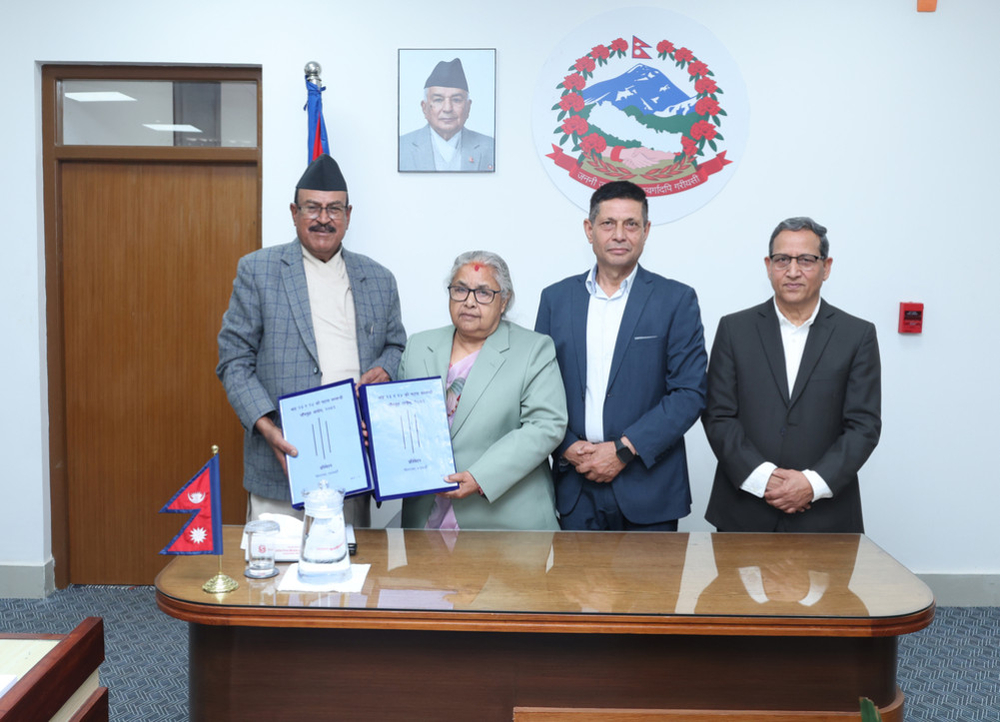
Similarly, former president of the Nepal Bar Association and senior advocate Gopal Krishna Ghimire said that only moral issues have been raised against Gauri Bahadur Karki in the past, but after the commission's latest report, legal issues have also been added. He said that for this, a high-level commission should be formed under the leadership of a sitting judge of the Supreme Court to resolve the issue.
How will the Human Rights Commission's recommendation be implemented?
The government had formed a three-member commission on October 25, 2005 under the leadership of former Special Court President Karki. The members were Vigyanraj Sharma and Bishweshwor Prasad Bhandari. The commission submitted its report to the government on Falgun 24, 2082, and it was made public on Chaitra 11.
What was the Human Rights Commission's recommendation?
Karki's name is mentioned in point number 30 of the Human Rights Commission's facts and analysis case, which is included in number 30 of the recommendation section. Along with him, the names of the then Prime Minister Sushila Karki, Home Minister Om Prakash Aryal, some Rashtriya Swayamsevak Sangh (RSS) MPs and other influencers have also been mentioned as people who should be investigated.
‘The fact that these individuals made statements regarding the Gen-G demonstration before, during and after the demonstration is evident from their social media, published news and reports collected by national investigations that they may have participated in the demonstration,’ the recommendation states. ‘Since it has been commented from various angles that their statements played a role in inciting the demonstration, further investigation is required to determine whether they were involved in the human and material damage caused by the incident on Bhadra 23 and 24, whether their statements angered and provoked the protesters and whether they had any impact or influence, whether they acted to disrupt public peace and order or whether they were encouraged to do so.’
What did Karki write?
Spontaneous demonstrations began in Kathmandu on Bhadra 23. 19 protesters were shot dead in front of the Parliament building in New Baneshwor alone, while demonstrations were vandalized on the 24th.
On Bhadra 24, Prime Minister KP Sharma Oli was forced to resign after the protests intensified and government buildings and leaders' houses were occupied and set on fire.
Karki had written a series of statuses on Facebook. Stating that there was a rumor that Prime Minister KP Sharma Oli had escaped by helicopter, he wrote that the airport and borders should be closed and no one should be allowed to escape. He also called them 'treasonous criminals' and mentioned that they should be detained and investigated without being killed.
On Bhadra 24, at around 4:30 pm, he wrote on Facebook, 'Former Prime Minister KP Sharma Oli, Sher Bahadur Deuba, Pushpa Kamal Dahal 'Prachanda' and other former ministers, MPs and officials should not be allowed to go abroad and escape. They should be detained and investigated. The airport should be closed. Private helicopters should not be allowed to operate. The Indian and Chinese borders should be closed. No one should be allowed to escape and be detained. These traitorous criminals should not be killed, but action should be taken against them for corruption, disproportionate assets and violation of the law.’
After the investigation commission was formed under his leadership, ethical questions were raised against him. The writ petition against him was dismissed by the full bench of the Supreme Court on Poush 11. While dismissing the writ, the Supreme Court had also explained that this issue was more of a moral issue than a legal one.
What is the investigation into Oli and Lekhak going on?
While the Human Rights Commission report, which was made public late, is being debated, the investigation initiated by the government against former Prime Minister Oli and former Home Minister Lekhak in the Gen-G incident based on the Karki Commission report has reached its final stage.
SSP Ramesh Thapa said that the investigation being conducted by the District Police Range, Kathmandu has reached its final stage. The first cabinet meeting, immediately after the formation of the government under the leadership of senior Rashtriya Swayamsevak Sangh (RSS) leader Balendra Shah, had decided to implement the Karki Commission report. It was decided to form a separate investigation committee in the case of security personnel and to proceed with the investigation in the case of other individuals.
On Chaitra 14, the then Prime Minister KP Sharma Oli and Home Minister Ramesh Lekhak were arrested. They were released on Chaitra 16 based on the Supreme Court order after being in custody for about 13 days.
The investigation into the murder case by the District Police Range Kathmandu, which is investigating this case, has reached its final stage.
While the accused is in police custody, the case must be registered in the district court within 25 days. However, since Oli and Lekhak have been released on bail, there is no time limit for the investigation, said Somkant Bhandari, Chief of the District Public Prosecutor's Office, Kathmandu.
Kathmandu SSP Thapa said that the investigation has reached its final stage. "Despite their release, the investigation is continuing," Thapa said. "We have requested some more details as we need them. We will submit the report to the Public Prosecutor's Office after receiving it."
Bhandari, Chief of the District Public Prosecutor's Office, also said that since the investigation is ongoing, the report will be received within a few days and a decision will be taken on whether to prosecute or not after studying it.
Investigation report on security personnel to be submitted within a week
The investigation committee formed by the government to study the role of security agencies during the Gen-G movement on April 20 has completed its work.
The government had formed another committee under the leadership of former Justice Prem Raj Karki to study the implementation of the recommendations made by the Karki Commission regarding security agencies.
The committee, formed under the coordination of Karki, includes former Additional Inspector General of the Armed Police Force Subodh Adhikari and former Additional Inspector General of the Nepal Police Tek Prasad Rai.
According to a member of the committee, work is underway to submit a report to the government within the next week. The report will include suggestions on whether or not the then Chief of the Nepal Police, Armed Police Force and National Investigation Department, from the jawans to the jawans, should be brought under the purview of action.
If the committee recommends that a case be filed, the investigation process will proceed through the concerned body. After completing the necessary investigation, the report will be sent to the District Government Attorney's Office and based on that, a decision will be made whether or not to file a case in the district court.
Suggestion to conduct a comprehensive investigation by keeping all reports in one place
Legal experts have suggested to conduct an integrated investigation by keeping the reports of the Karki Commission, the Security Agency Study Committee and the National Human Rights Commission on the Gen-G incident in one place.
According to them, both the commissions have recommended action against the then Prime Minister Oli, Home Minister Lekhtar and leaders of the security agencies, while further investigation is required for other individuals. Therefore, they argue that an integrated study and investigation would be more effective than proceeding with separate processes.
Senior advocate Bipin Adhikari said that since the Human Rights Commission has recommended an investigation even against the chairman of the government-formed commission, it would be appropriate to study the entire incident in an integrated manner.
‘The Human Rights Commission is a constitutional commission. Its recommendation cannot be completely ignored,’ Adhikari said, ‘There may be ethical questions raised against the chairman of the government-formed commission, but since the report was prepared with the involvement of two other members, it cannot be completely rejected. The government can study both reports and take the necessary decision.'
He also said that if there is practical difficulty in implementing the recommendations, the government can discuss with the commission and seek further clarity.
Former member and advocate of the National Human Rights Commission, Mohana Ansari, said that since the Human Rights Commission is a constitutional body, further study and investigation should be done instead of ignoring its recommendations. According to her, only through an integrated investigation of the Gen-G incident can the truth of the incident be clarified.
She suggested that the government should move forward based on the latest report as questions have been raised against the chairman of the Karki Commission formed by the government since the past and now the Human Rights Commission has also recommended an investigation.
Former president of the Nepal Bar Association and criminal law expert Gopal Krishna Ghimire said that there are some study-related weaknesses in the reports of both commissions. According to him, it is appropriate to use these reports as a basis for further investigation rather than taking them as the final truth.
Former Deputy Attorney General Bishwaraj Koirala, on the other hand, said that cases should not be prosecuted solely on the basis of the Human Rights Commission's recommendation.
‘Administrative and departmental action is one thing, but to file a criminal case, a new investigation is required,’ he said. ‘A case cannot be registered based on the recommendations sent by the commissions. For that, a legal basis, evidence and investigation are necessary.’
He said that since the Karki Commission was also formed under the Commission of Inquiry Act, its findings should also be taken to the legal process only on the basis of further investigation and examination of evidence.


