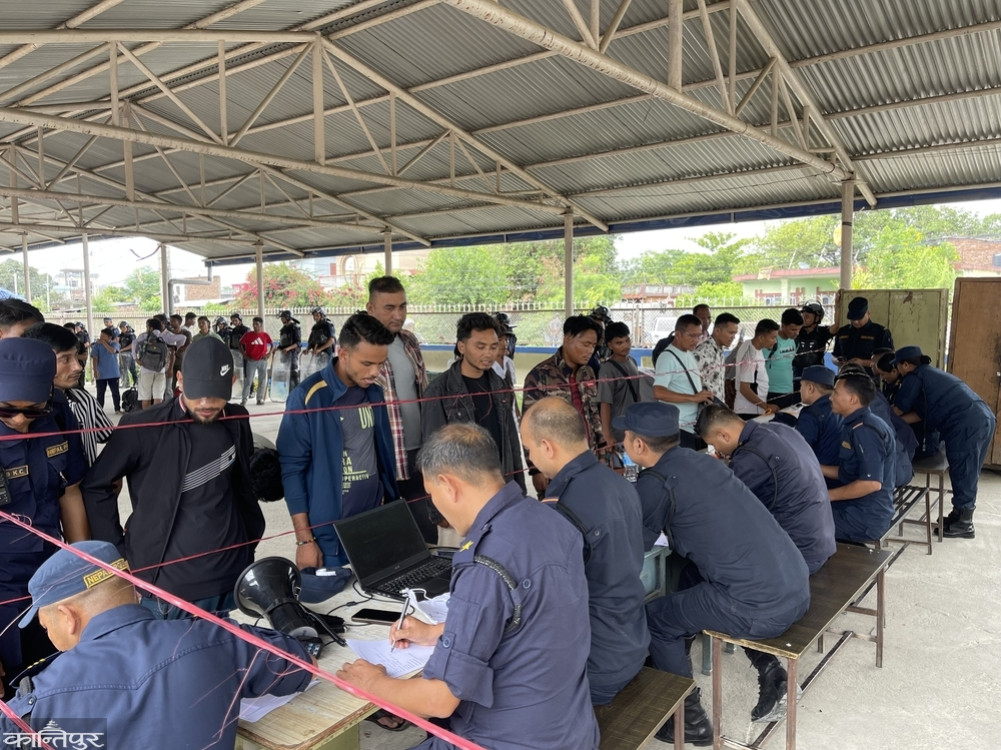
453 Nepalis who were forcibly recruited into the networking business have been rescued in coordination with the Nepali Embassy in Delhi, Uttar Pradesh Police, Lumbini State Police and Rupandehi Police. This incident is a case study in understanding how Nepalis are being lured by the lure of employment.
We use Google Cloud Translation Services. Google requires we provide the following disclaimer relating to use of this service:
This service may contain translations powered by Google. Google disclaims all warranties related to the translations, expressed or implied, including any warranties of accuracy, reliability, and any implied warranties of merchantability, fitness for a particular purpose, and noninfringement.
Four hundred and fifty Nepali citizens who were initially forced into the networking business through financial inducement and later physical and mental torture have been rescued from India. They have been rescued from Kushinagar in Uttar Pradesh, India and brought to Nepal.
According to the acting ambassador of the Nepali Embassy in Delhi, Dr. Surendra Thapa, the embassy team reached Kushinagar and rescued them based on information that illegal companies were calling unemployed Nepalis and employing them in the networking business by giving false promises of employment through various means. The embassy, with the help of Uttar Pradesh Police and social organization Why India, rescued 453 Nepalis on Friday night.
Among the rescued, 115 are women and 338 are men. They were brought to Nepal by bus on Saturday morning under the supervision of Indian security personnel and handed over to the Rupandehi police by embassy officials. Of them, 434, including 109 women and 325 men, were released after completing the necessary procedures, according to the police. The remaining 19 people, including 6 women and 13 men, are in police custody.
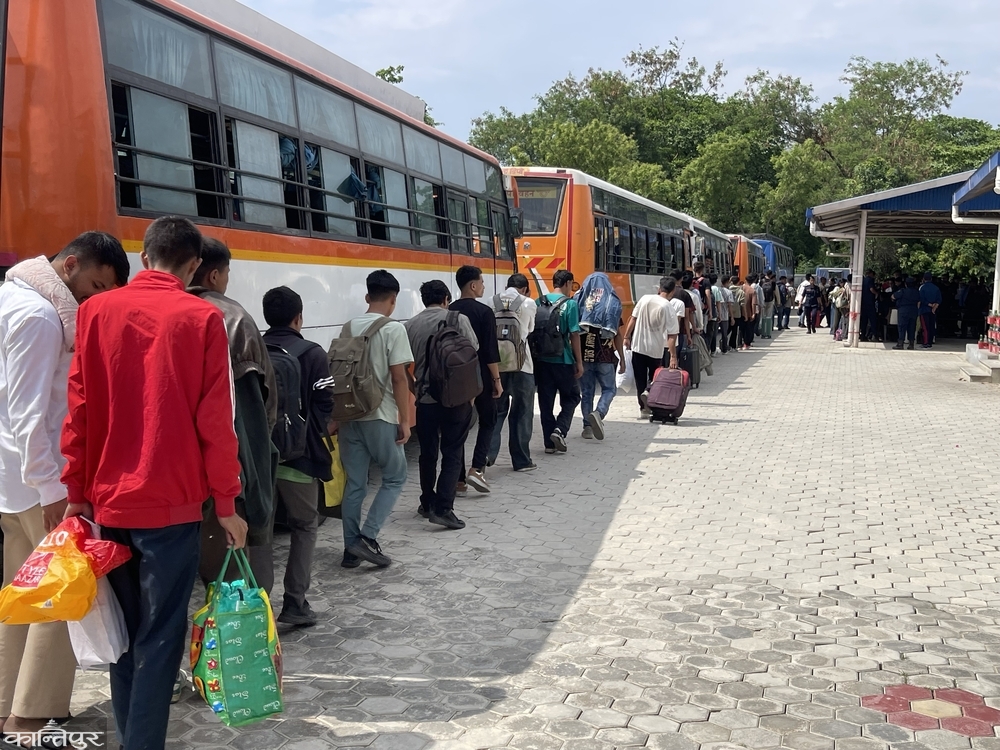
The rescued citizens from various districts are between the ages of 18 and 55. Rupandehi police have started further investigation into the matter. After receiving information that a large number of Nepali youths were held hostage in Kushinagar and were being called to their families to demand ransom, they were rescued and brought to Nepal after a four-day operation coordinated by the Nepali Embassy in Delhi, Uttar Pradesh Police, Lumbini Province Police and Rupandehi Police, said Rupandehi Police Chief Superintendent of Police Janak Bahadur Shahi.
Acting Ambassador Thapa said that it was found that people he knew were calling unemployed youths from various districts of Nepal to Bihar and Uttar Pradesh for employment. ‘After keeping them for a few weeks under the pretext of training by giving them attractive jobs, it has been found that more Nepali citizens were recruited through them,’ he said. ‘Money was being collected from every person who came for employment in the name of registration fee.’ They are working to collect money by creating a pyramid-style structure.'
He said that Nepalis have been found to be involved in an organized fraud ring where they call one person after another, charging a monthly salary of up to 25,000 rupees, and also charging separate fees for food and accommodation in the name of additional training period. It has been revealed that the Nepalis who were called in this way are not given the work and food and accommodation facilities as promised. After the information that Nepalis were being lured into the fraud business by giving them employment, a team including the officials of the mission and Kin India was mobilized for the rescue. Diplomatic officers including SSP Consul Prakash Malla of Nepal Police, who were at the embassy, reached Kushinagar and succeeded in rescuing the Nepalis.
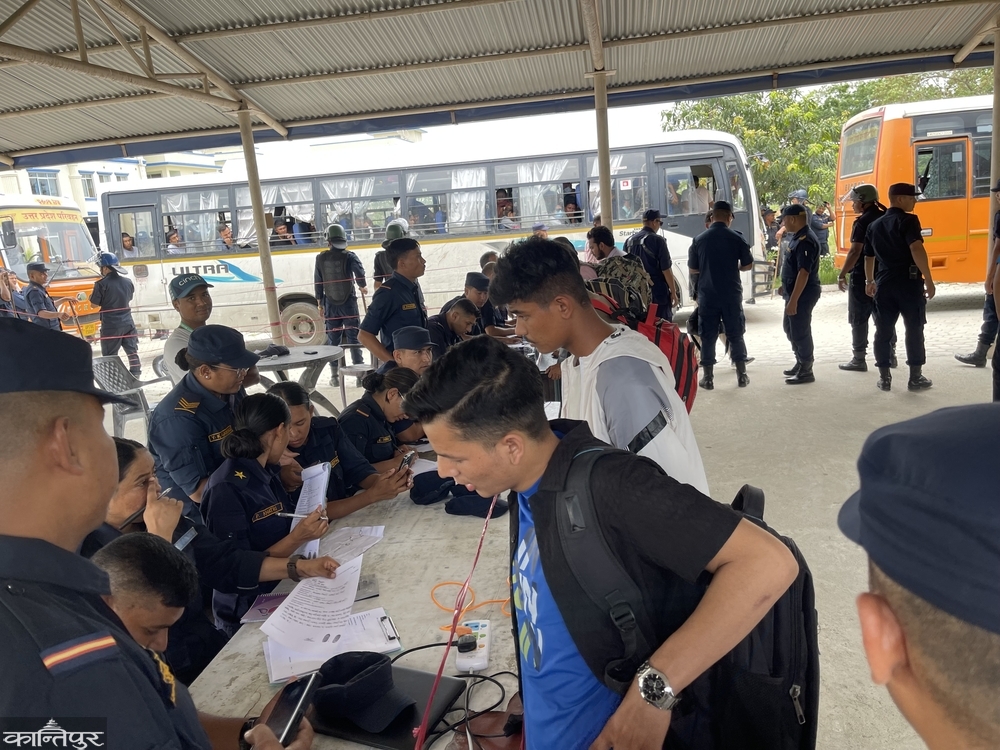
Kin India Chief Naveen Joshi said that the raid was conducted with the help of the Uttar Pradesh Police after it was confirmed based on the information that a large number of Nepali citizens were being held captive. ‘The Nepalis were taken out by raiding 8 houses from midnight to 4:30 am,’ he said. ‘The Nepali citizens were kept in separate groups under the supervision and command of locals. Some had been there for months, while others had just arrived.’ Joshi said that within the first week of their arrival from Nepal, they were charged up to Rs 25,000 as a registration fee, and then it was increased to Rs 200,000. ‘They are being lured with the promise of making good profits from employment and business income.’ However, after they start ignoring the money, the Nepalis feel cheated,’ he said. ‘They are not being given employment, they are not being given money back, and they are not being allowed to return home, and there is no proper arrangement for food and accommodation.’
According to one of the rescued youths, they were initially lured into paying Rs 10,000 and then a monthly salary was given. ‘I only found out about the networking business after I got there,’ the young man told Kantipur, ‘If I try to return within a day or two, I won’t be able to.’ According to him, new arrivals are woken up at 4 am and made to participate in training. After participating in the training until 10 am, they are kept in a hostel. ‘The hostel we stayed in used to send us to another hostel in the afternoon,’ he said. ‘Every hour, new people would come there and tell us about the networking business and the benefits of it.’ He said that when they were suspicious and questioned, they were assured that it was a professional organization that had been operating for 4-5 years. ‘However, there is no clear information about the organization on Google,’ he said. ‘Many young people like me are there.’
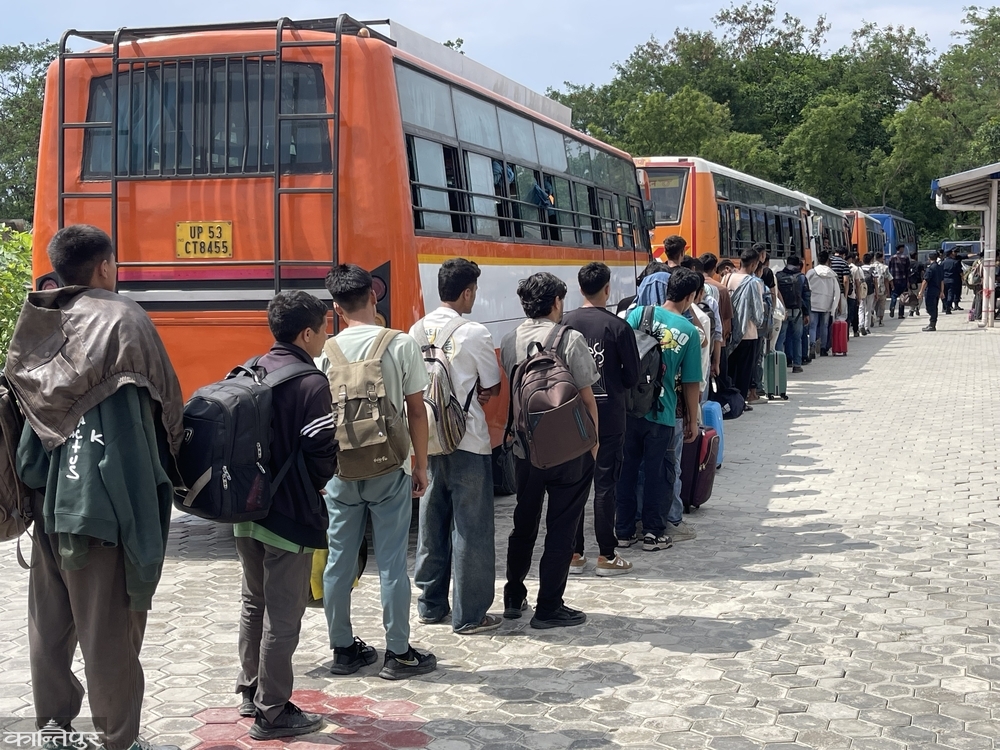
Nepali officials and Uttar Pradesh Police jointly formed 5 teams at 12 midnight on Friday and surrounded all 8 houses and collected details, revealing that there were 453 Nepalis. Among them were those who had arrived only 2 years to 3 days ago. All the rescued people were brought to Nepal in 8 Indian buses at once, said SSP Malla, Consul of the Delhi Embassy. Since networking business is illegal in Nepal and legal in India, a gang of Nepalis have been seen running such a business there, and further investigation will reveal the truth, he said.
According to Ambika Joshi, Minister Consul of the Embassy, who was deployed in the rescue operation, up to 15 people were kept and made to sleep in the same room in the dark and gloomy part of the hostel. "After 7 days of training, they would divide the group into groups of 5 to 10 people and pressure them to recruit 4 more members each," he said. "If the new members could not recruit 4 more members, they would put various pressures on them, mentally torture them, and even force them to call their families to demand money." He said that after it was seen that those who could not even expand their membership or ask for money from their homes were being mentally tortured and pressured, they rescued the victims, considering it a 'networking scam'.
Most of those rescued are from Kailali, Baitadi, Kanchanpur and other districts of Sudurpaschim Province. Similarly, some are from Rupandehi, Kapilvastu, Dang, Rolpa in Lumbini Province, and some are from Udayapur, Dhankuta, Tehrathum and Ilam in Koshi Province. More than 90 percent of the rescued people reached Kushinagar through the Sunauli checkpoint and their screening is underway, said Nishant Srivastava, Deputy Superintendent of Police at the Area Police Office, Butwal.
Rohit Parki, 19, who is a permanent resident of Purchaudi Municipality-2 in Baitadi and lives in Kanchanpur, said that he reached there four months ago through his friend Suresh Bohara. 'I went there after my friend Suresh called me saying that there is a good income,' he said. 'I started selling clothes by paying a fee of Rs 10,000 and becoming a member, and invested an additional Rs 200,000.'
Like Karki, a 26-year-old woman from Kapilvastu, who reached there two months ago, did not want to reveal her identity. However, she said that she reached there after hearing from a friend that she could earn up to Rs 50,000 per month. "I paid the money after paying 15,000 at the beginning and was told that I would get a higher level and earn 40,000 per month," she said. "However, my 40,000 disappeared after I was unable to recruit more members. When I asked for a refund, they started abusing me and telling me to borrow 100,000 for food and accommodation and 25,000 for training expenses from home." When she could not even take money from home, they made her call relatives from her phone and pressured her to borrow money, saying that the job was good and that she needed to invest more to earn more. She said that she was rescued while she was trying to escape.