There are complaints that the diet of mothers and children has deteriorated after being displaced from the slums. When they need nutritious food, they are not allowed to eat fish, meat, or eggs in shelters.
We use Google Cloud Translation Services. Google requires we provide the following disclaimer relating to use of this service:
This service may contain translations powered by Google. Google disclaims all warranties related to the translations, expressed or implied, including any warranties of accuracy, reliability, and any implied warranties of merchantability, fitness for a particular purpose, and noninfringement.
Sabina Nepali, 35, was breastfeeding her newborn baby in a corner of the Kirtipur-based holding center where displaced Sukum residents are being held. She arrived here last Saturday, clutching her four-month-old daughter.
After Tuesday's rains soaked the beds of many displaced people living here, they were given a tent. She was at one end of the same tent. Next to it was a zebra bag with clothes, baby wipes, and an electric water heater. She shared her frustrations while living in the holding center, "We used to eat whatever we wanted at home. Here, they give us tea and biscuits in the morning. We have to eat whatever others have cooked."
After being displaced from the slum, the mother and child's diet has deteriorated, and when they need nutritious food, they are not allowed to eat fish, meat, or eggs in shelters. Before being displaced, it was easy to feed her four-month-old daughter at her own time, but after coming to the holding center, she said that her eating schedule did not match. She said, "There is not much milk. When I was at home, I used to cook and feed her. How can I feed her like that here? I have been feeding her by dissolving Sarlex in hot water."
She came to the holding center on Saturday and said that she had to sleep without a tent for four days at first, and that her four-month-old daughter was crying frequently at night, making it difficult for her and others around her to sleep. "We got a tent this morning," she said, "Yesterday and the day before yesterday, mosquitoes also bothered her a lot. My daughter was bitten all over her face and body, and she couldn't eat. When I said that mosquitoes bothered her, I got a cold yesterday." Sabina's experience shows what kind of government preparations are in place before placing the displaced in the holding center.
In the early days, many displaced people who were brought there complained of not being able to eat hot water at the appointed time. Young children like Sabina were being cared for and the sick complained of not being able to eat hot water when they were asked. Kantipur obtained an audio from a messenger group created for displaced Sukum residents to share their problems. In it, the mother of an 8/10-month-old baby said, ‘We don’t get milk powder or lito here. There is no arrangement to heat hot water. Milk is not enough for the baby. For the first 2/3 days, despite my repeated requests, I was only able to cook lito once a day.’
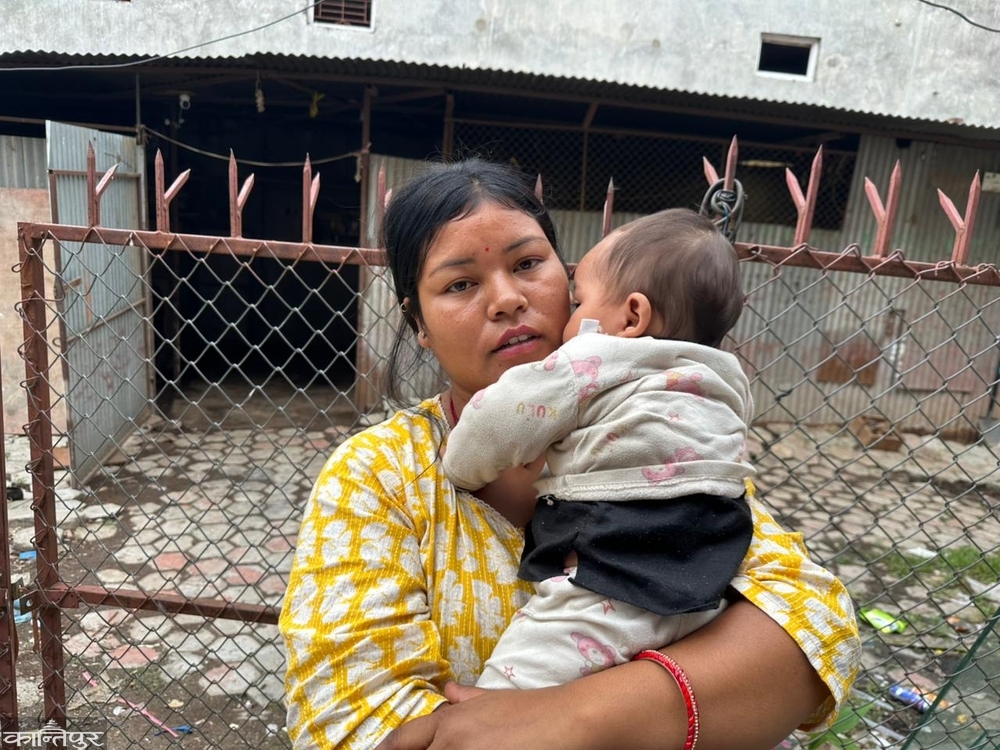
Mothers like Sabina who are raising their babies are also affected by the rule that they are not allowed to eat fish or meat inside the Radhaswamy Satsang Center. In the audio obtained by Kantipur, a woman says, ‘We can’t eat fish or meat here, let alone eggs. Other women like Sabina who have reached the holding center with their young children have the same experience. They shared problems like children crying at night and the fact that there was no barber shop, so the noise of a place could easily spread. Sabina, who lives there with her two other sons, aged 21 and 16, said, “Even if it is a hut like her own house, it is her own. Even the child knows this. Her daughter cries all evening due to the noise of people there.”
Sabina’s husband works in a garment factory in Banasthali. On one day off a week, he used to come to the slum in Sinamangal. Since her husband’s income alone did not cover the household expenses, Sabina’s daughter used to go to work at someone’s house for two months. But after being displaced and reaching Kirtipur, this job has also been cut off. ‘The money I earned by working in a house for some time during the day also helped with household expenses,’ she said. ‘Even if I worked in the afternoon and ate rice porridge in the evening, I would cook meat or whatever I ate and eat it at my own home.’ On one hand, the trauma of the house where I had lived for 19 years collapsed, and on the other, the pain of having to live in a holding center with my four-month-old daughter. She said, ‘I don’t have my own house anymore. Why bring other things to keep on the road, I left the bed and drawers there.’
Metropolitan Police Chief Bishnu Joshi claimed that they were playing a supportive role. He said, ‘We are playing a supportive role in the management of those staying at Radhaswamy. The center is arranging food.’ He said that initiatives are being taken to send two pregnant women out of the 48 women and children there to the hospital and to provide education for the children. He said, “Although the government and the Ministry of Urban Development are yet to come up with a plan for their long-term rehabilitation, we are facilitating the management at the local level.”
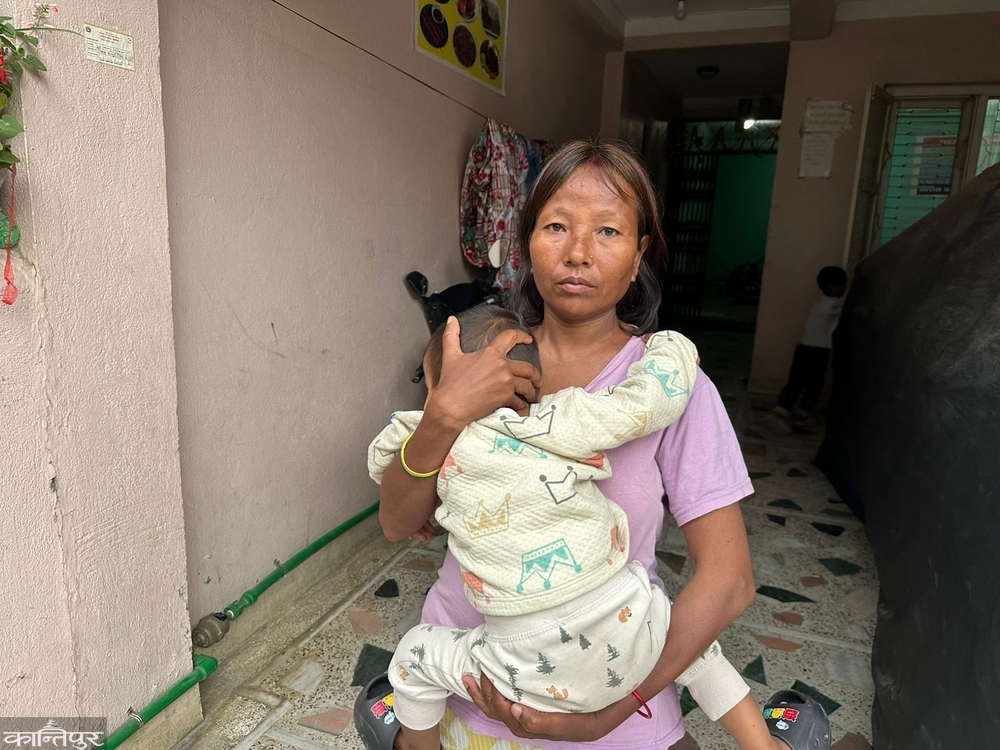
The government has also brought the displaced people to some hotels in addition to the holding center. But even there, those living with infants face the same difficulties. The government has also brought the displaced people to some hotels in addition to the holding center. But those living there with their infants are facing the same difficulties. 27-year-old Asma Syaba, who was displaced from the Manohara slum with her 7-month-old son, reached a lodge near the New Bus Park on Saturday. She was walking around the New Bus Park with her 5-year-old eldest daughter and 7-month-old son around Wednesday afternoon. She said that she was eating what was cooked for everyone at the hotel. “Whatever you have given me, I have eaten that. Whatever we have eaten, the child will get the same,” she said, “What can I do? I am a pregnant woman, there is no question of giving me different food. Whatever is cooked for everyone, that is my share.”
Even though it is a slum, Asma used to live in a rented tent. A year ago, her husband rented a tent for an annual payment of 30,000. She said that after leaving her pregnant wife and young son, she went to Kuwait to earn money for her husband by selling her old scooter and some gold she had saved. Asma says that after demolishing the tent on Saturday, she initially stayed at a relative's house and the next day she went to the stadium to register her name. She said, "After going to the stadium and registering her name, they sent her to stay in this hotel from there."
She said that despite the facilities in the hotel, the infant's diet is having problems and the child's hygiene is not good. She also said that she has not received any information about when they will be taken to temporary accommodation.
She met 40-year-old Sangeeta Singh with her 18-month-old daughter at another hotel in New Bus Park. She had arrived from a slum in Shantinagar with her two sons, aged 7 and 8, and a baby daughter. She said that a few months ago, her husband had gone to the Gulf to earn money and was living in a slum on a monthly rent of 6,000.
She shared her experience of experiencing great hardship when a bulldozer suddenly came and demolished her house while her husband was abroad and she was staying with her small children. She said, “I was alone. Only the small children were scared. When the bulldozer started moving, I went to look for a room with my children. No one gave me a room because I had too many children and they were too small.”
After searching, she could not find a room, so she went to the stadium to register and from there she reached the hotel. She also said that it was difficult to stay at the hotel because her small children were always playing around. She said that the problem was compounded by the fact that many people used to come and go in the hotel in the evening and that even though it was time for her daughter to sleep, the noise would not let her sleep and she would cry. She also complained that the food served in the common areas was not suitable for the children, adding to the problem. "There is a place to stay. But now I was wondering where to go with this child. I have made up my mind," she said, "It has become difficult to think about what to do. My two sons have already finished their studies. I wish I could have educated them sooner. Now I feel that the government should make arrangements for us soon."
According to Kathmandu's Chief District Officer Ishwar Raj Poudel, the list of those who want government assistance but not housing is being compiled. He said that those in trouble have been accommodated in various hotels, lodges and the building of Radhaswamy Satsang Nepal in Kirtipur. "Within the next 15 days, a rigorous screening of all their details, from whether they have any housing or not, will be conducted," he had told Kantipur two days ago. "If it is found that even a member of the family does not have any land, it will be managed."



