While it is positive that the state has apologized for acknowledging the oppression of the Dalit community, stakeholders complain that similar announcements made repeatedly in the past have not been implemented.
We use Google Cloud Translation Services. Google requires we provide the following disclaimer relating to use of this service:
This service may contain translations powered by Google. Google disclaims all warranties related to the translations, expressed or implied, including any warranties of accuracy, reliability, and any implied warranties of merchantability, fitness for a particular purpose, and noninfringement.
The government has decided to publicly apologize to Dalits and historically marginalized communities. The fifth point of the 100 agenda for governance reforms made public by the government states that ‘the state will formally acknowledge the injustice, discrimination and deprivation of opportunities faced by Dalits and marginalized communities.’ According to this decision, a reform-oriented program will be announced on behalf of the state within 15 days along with a formal apology.
Ruling Rastriya Swatantra Party (RSWP) President Ravi Lamichhane also apologized from the rostrum in the first meeting of the House of Representatives for the state’s discrimination against the Dalit community. ‘Now, we will not have to bow down in the name of any Nepali caste,’ he said, ‘I apologize on behalf of the entire party, the Prime Minister and the government. I want to ensure that the price of apology will now do justice.’
Rights activists and stakeholders say that although they have welcomed the government’s announcement and President Lamichhane’s address, there are challenges in implementing it. However, while the government in the capital Kathmandu is announcing an apology and an end to discrimination, discrimination against Dalits continues in remote and economically and socially backward districts.
Rights activist and former central member of Mukti Samaj Nepal, Ramhari Shahi Samundri, said that the Dalit community is still in a state of exclusion in Nepali society. He said, “The state had institutionalized discrimination through laws and policies in the past, due to which the Dalit community has had to suffer for a long time. Therefore, although it is positive for the state to admit its mistakes and apologize, it should be emphasized to translate it into practice.”
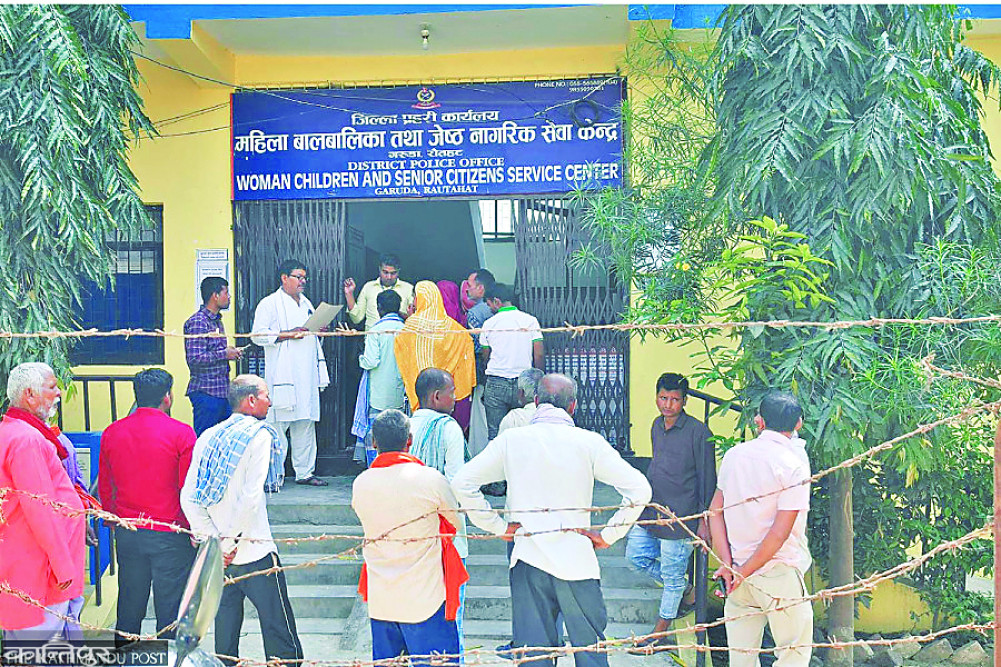
Jaruwadevi Paswan (name changed) from Devahigonahi, Rautahat, Madhesh Province, reached the Women, Children and Senior Citizen Service Center in Garuda on Friday to seek justice. She was seeking justice from the police for protection and legal treatment after being beaten and injured by her neighbors over a livestock issue. Paswan has filed a complaint with the service center, demanding action against the culprits and ensuring the safety of her family.
 The incident is dated 13 Magh 2082. However, the service center has stated that justice has been delayed while trying to cover the treatment expenses and security guarantee incurred when Paswan was injured. The service center chief, Sai Deepika Ojha, informed that the issue was once discussed socially with the village elders. According to the victim Paswan, neighbors Ramsurath Sah and Dharmanath Sah beat him up because a goat had gone into the field.
‘I was beaten up on the pretext of my cattle going into the field,’ she said, ‘The so-called upper caste people should be taken to task.’ According to the victim, when she tried to take the goat out while apologizing, they started beating her. National Assembly member Dharmendra Paswan said that the Dewahi incident reflects the reality of discrimination and oppression in society. ‘Physical assault on anyone and caste discrimination under any pretext is a legal crime. Goats entering the fields may be a common farmer's problem, but it is unforgivable to hurt caste and self-respect over it,' Paswan said, 'Discrimination against Dalits has not gone away in Madhesh. I will raise this issue in the National Assembly.'
Jhamki Kumari Das (name changed) of Katahariya was beaten up by neighbors Bishwa Yadav and Saroj Kumar on the afternoon of 2082 Kartik 13 on the pretext of a fight between children. Immediately after the incident, Das filed a complaint for justice at the Women, Children and Senior Citizens Service Center in Garuda. There was a fight between children from Das and Yadav's side. Das was beaten up while trying to resolve the fight. After Das's application, a discussion was held between both parties at the service center. During the discussion, the Yadav side apologized and a reconciliation agreement was reached between the two parties on the condition that they would not fight or use abusive words in the future, according to the service center.
The incident of beating a Dalit family in Santapur Dostia, Fatuwa Bijaypur Municipality-5, on the evening of last March 19 has shaken the entire settlement. Six Dalit families were injured in the incident. Lalan Kumar Ram, 23, of the Dalit settlement, his father Birja Ram, mother Gayatri Ram and another son Rajkumar Ram were injured in the beating by people from the upper caste nearby. Neighbor Sita Kumari, who went to separate them, also had her head broken. Another neighbor Naresh Ram was also injured.
Birja suffered injuries to his back and neck from the beating. His wife Gayatri had bruises all over her body. Son Rajkumar has three stitches on his head. Neighbor Subba Ram's 16-year-old daughter Sita also had to get 7 stitches on her head. Lalan's right hand was injured and there were bruises all over her face and body. Naresh Ram Chamar has injuries on his head, eyes and various parts of his body. Lalan alleged that a group of 14/15 people, including neighbor Pasinder Yadav, entered the settlement and attacked.
The police reached the spot within a short time. However, Lalan's father Burja and brother Rajkumar were taken into custody. Police Inspector Surendra Yadav of the Area Police Office, Vijaypur, said that those who beat up the Dalit, including Pasinder Yadav, were arrested. 'The neighbors, who were surnamed Yadav, beat him up using the pretext of election campaigning. They attacked him suddenly without any fault,' he said. 'When we demanded justice, the Area Police Office instead took us and locked us up. How far is this justice?’ However, the police claimed that after reaching the spot, they saw a man named Bhuvaneshwar Yadav covered in blood, and they took Burja Ram and Rajkumar Ram of the Dalit settlement into custody.
Dalit Sanu Majhi (Musahar) are upset over the discrimination they face in the Chhath festival at the Chhath Ghat on the Chandi River in Chandrapur-5. After the upper castes refused to celebrate together, Dalits have been performing Chhath puja by building a separate ghat. There is a large pandal on the north side of the Chandi River and a small one on the south side. 16 families of Dalit Majhi families sit separately and worship at the ghat. Similarly, a separate place has been given to the Dalit community in the reservoir at Rajpaida. Musahar and Ram communities perform Chhath puja in the Dalit pandal. While Chhath itself is considered an inclusive festival. There is no caste discrimination in this festival. All castes have been worshipping at the same place for more than a decade, but now the Dalits are upset that the place where they worship has been separated. ‘We are hurt because upper caste people asked us to sit separately,’ says Sanu Majhi. ‘We wanted to celebrate Chhath together, but the upper caste people did not agree. We are celebrating Chhath by setting up separate pandals.’
According to the Women, Children and Senior Citizen Service Center Garuda, 77 incidents of social violence against Dalits were registered in 080/81. 84 were registered in 081/82. Since Shrawan of the current fiscal year 082/83, 73 incidents have been registered so far. The service center’s own data also shows no decrease in incidents of social violence against Dalits. Women’s rights activist Devaki Nepal said that it is not good that incidents of discrimination such as abuse, beating and abusive language by the so-called upper caste people are increasing.
Almost 19 years have passed since Nepal was declared an untouchability-free country. This historic declaration made on 19 Jestha 2063 BS formally identified Nepal as a country free from caste discrimination and untouchability. However, even after nearly two decades, in practice, incidents of untouchability have not been completely eradicated. Nepal's legal framework has clearly defined caste discrimination as a punishable crime. The Caste Discrimination and Untouchability (Offences and Punishment) Act 2068 has criminalized untouchability and discriminatory behavior and made provision for punishment.
However, in practice, complaints have been widely raised that these laws have not been effectively implemented. Dalit communities are facing discrimination in various sectors of Nepali society. Difficulties in finding housing in urban areas, inability to use public taps or water sources in rural areas, social boycott during inter-caste marriages, and other discrimination have not stopped. In the case of Rautahat, most of the cases are settled by the village 'gentlemen' before they reach the police station. Rights activists in Nepal believe that settlement not only prevents the victim from getting justice, but also makes the perpetrator more powerful.
National Dalit Commission spokesperson Sundar Purkati said that out of the seven provinces, the highest number of complaints of abuse against Dalits comes from Madhesh province. ‘When injustice is done to a community, public representatives sit idly by. We feel that the administration also does not appreciate the uniform,’ he said, ‘The local level should come up with incentive programs to reduce caste discrimination. Such incidents are happening every day. Everyone needs to be serious about this right now.’
Advocate Bipin Gautam says that even though the law is strong on paper, Dalits are still struggling to live with self-respect at the ground level. ‘As long as criminals get political protection, this process will not stop,’ he said, ‘We should not discriminate against anyone. Whether it is big or small, everyone should be treated with respect. Such incidents of social violence against Dalits do not do good to the society.’
Advocate Gautam said that law alone is not enough to end violence and discrimination against Dalits. For that, Gautam says that local governments should be proactive, form Dalit rights monitoring committees at ward and municipal levels, and take incidents of caste discrimination directly to the legal process without politicizing them. Advocate Gautam says that it is necessary to spread widespread public awareness about caste equality in villages rather than making paper declarations.
Rights activist Dhankumari Sunar also stressed that although the state's decision to apologize for the oppression of the Dalit community is positive, the experience of repeated declarations but not implementation should not be repeated. According to her, such decisions cannot yield the expected results if they are limited to declarations alone. Therefore, she said that a clear plan, implementation strategy, and monitoring system are necessary. She said, "Although the rights of the Dalit community are mentioned as fundamental rights in the Constitution, they have not been implemented in practice." The state should ensure proportional representation in all state bodies, provide equal access to education and employment opportunities, and take the initiative to implement social inclusion.’
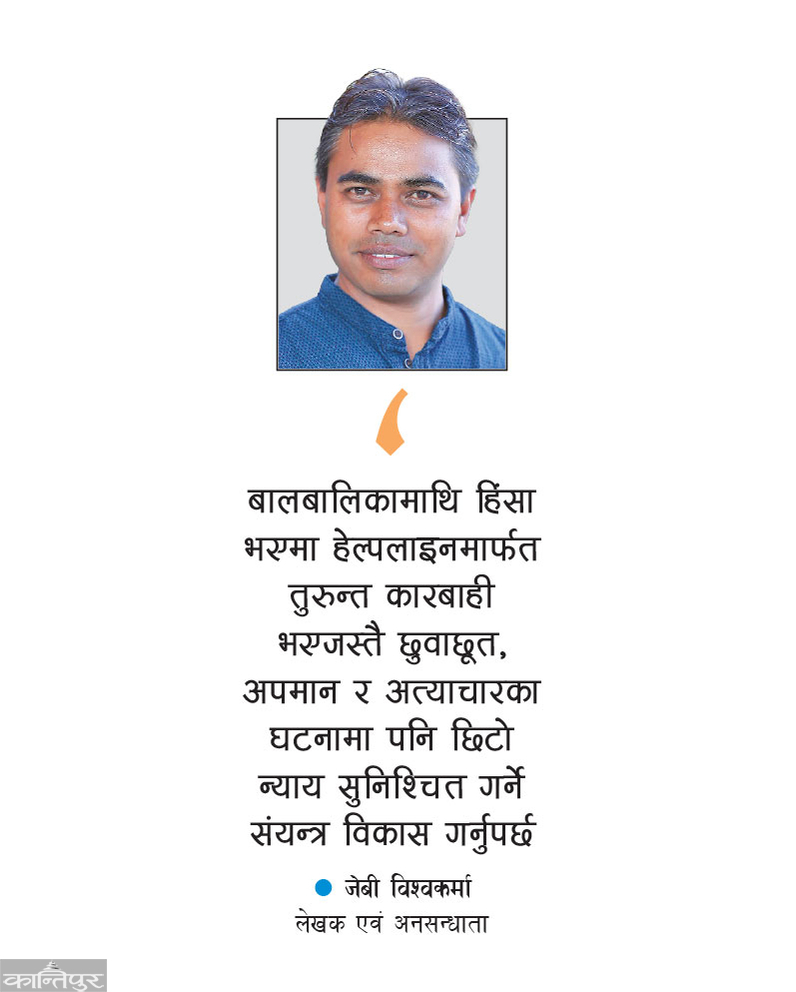
Author and researcher J.B. Bishwakarma has acknowledged that the state has historically committed systematic discrimination against the Dalit community and said that an apology is a positive step. He said that such an apology is necessary and meaningful as the state’s own policies and structures have created a situation where the Dalit community has been excluded for a long time. ‘Just as immediate action is taken through a helpline in case of violence against children, a mechanism should be developed to ensure speedy justice in cases of untouchability, humiliation, and atrocities,’ he suggested. Bishwakarma argued that the local level should also apologize to the Dalit community, just like the central government.
Apologizing when feeling that the state has done injustice to the community is a practice in other countries as well. New Zealand had been apologizing at various times for the injustice done to the Ori community in 1995 and also apologized through parliament. The United States formally apologized in 2009 for the practice of slavery and discrimination against people of African descent. Researcher Bishwakarma said that the continued incidents of discrimination even after the declaration of a nation free of untouchability raised questions about the state's implementation capacity. For this, he pointed out the need to ensure the Dalit community's access to education, health, and employment, as well as to conduct social awareness programs on the state's own initiative. Bishwakarma said, "The government should not only make a declaration, but also formulate an action plan with a specific deadline and implement it effectively."