Pradeep Adhikari, who became the head of three national pride projects during Oli's tenure, and who, under Deuba, on the recommendation of Madhav Nepal, jumped from the 11th level to become the Director General of the Civil Aviation Authority, had reached the 'status' of being respected as a minister before Dahal when he became Prime Minister.
We use Google Cloud Translation Services. Google requires we provide the following disclaimer relating to use of this service:
This service may contain translations powered by Google. Google disclaims all warranties related to the translations, expressed or implied, including any warranties of accuracy, reliability, and any implied warranties of merchantability, fitness for a particular purpose, and noninfringement.
Does anyone voluntarily reduce their own rank? Such an example is unheard of in a bureaucracy that gains power based on rank. But a similar extraordinary proposal came up at a board meeting of the Civil Aviation Authority of Nepal (CAN) a few months ago.
Pradeep Adhikari, who was the Director General, put forward an agenda to demote himself. All the participants in the meeting were surprised after hearing the agenda.
Adhikari was appointed Director General for a four-year term on 17 Magh 2078, surpassing six people from the 11th level and 12th level. When his term was ending, he had formally requested the board to reduce his own position. This was seen as his planned move - to go back down and get a promotion. Doing so would pave the way for him to become Director General again.
According to an official present at the meeting, board member and Joint Secretary of the Ministry of Tourism Indu Ghimire objected and described it as extremely unprofessional conduct. This proposal did not move forward as other board members did not support it.
Adhikari, Director General of CAN, was arrested on 17 Mangsir and on the same day, the Commission for the Investigation of Abuse of Authority filed a case against him and six others in a special court. The CIAA has filed a case against Adhikari for financial irregularities during the construction of a heliport in Nalinchowk, Bhaktapur. The court has sent him to jail for trial in the same case.
 Four days later, on 21 Mangsir, another corruption case was filed against Adhikari in a special court. A case has been filed against him and 56 others for causing losses to the state by unnaturally increasing the cost of the construction of the Pokhara Regional International Airport, claiming a loss of eight and a half billion rupees. The corruption case related to the Pokhara Airport, built with Chinese investment, is the largest in Nepal so far in terms of construction cost.
Similarly, he is being investigated for irregularities in the construction of Bhairahawa Airport, the construction of the CAN building in Sinamangal, the cutting of the Chinedanda-Ritthepani hills connected to Pokhara Airport, tax exemptions for Chinese contractors, the purchase of aircraft monitoring systems, and the selection of consultants.
Before the corruption case, Adhikari was considered the most influential official in Nepal's aviation sector. The government changed repeatedly, his behavior did not change, he became more and more 'powerful'. Even when there were many allegations of irregularities and complaints, he was acquitted without investigation. Adhikari is just a character, in fact, he is just a by-product of Nepal's statehood, style and tendency. Our statehood, which changes faces in power but does not change style, gives birth to characters like Adhikari, raises them and makes them powerful. Adhikari's story also says the same.

Adhikari, who studied at Pulchowk Engineering Campus, joined the NEA on 19 Poush 2064 as a seventh-level officer. Four years after joining the service, on 9 Magh 2068, he was promoted to eighth-level officer. About four years later, on 5 Jestha 2073, he was promoted to ninth-level. While he was in CAN at the eighth and ninth levels, he was responsible for advancing the contract process for the construction of Pokhara Airport. He has been made a defendant in the initial contract process for the construction of Pokhara Airport filed by the Authority in the Special Court two weeks ago on charges of being involved in the decision to inflate the cost while he was the Deputy Manager of CAN.
After working at the ninth level for only about 9 months, he was selected for the eleventh level through open competition on 11 Falgun 2073. About 5 years later, Adhikari became the head of the national pride project under the Authority. The government declared Pokhara Regional International Airport, Gautam Buddha Airport and Nijgadh International Airport as national pride projects, so he became in-charge of these important projects. When he was given such an important responsibility, there was a powerful government led by KP Sharma Oli, and Rabindra Adhikari was the Minister for Culture, Tourism and Civil Aviation.
In fact, Pradeep was active in the fraternal organization of UML during his student days. Even when he was the acting head of the Pokhara Airport Project, he was a candidate for the post of General Secretary of the Engineering Association on behalf of the UML-affiliated Progressive Engineers Association. At that time, he was defeated. However, in his government responsibilities, his winning streak continued.
After the Oli-led government was overthrown and the government led by Congress's Sher Bahadur Deuba was formed, Adhikari became the Director General of CAN on 17 Magh 2078. He was at the 11th level at that time, there were 6 Deputy Directors General at the 12th level, but the government removed all of them and made him the Director General of the 13th level for four years. At that time, the Minister of Civil Aviation was Madhav Nepal-led Unified Socialist Party leader Prem Ale.
According to CAN officials, Adhikari started showing his leadership as soon as he became the Director General. One day in June 2022, he reached the domestic terminal of Tribhuvan International Airport. But he 'grounded' a Buddha Air captain for not greeting him. According to employees, he had created an atmosphere of fear in the aviation sector. To prove that he was different from others, he had allocated two floors for himself in the new building of CAN, where no employee was allowed to go.
The official had also tried to play a game on 17 Paush 2079, the day of the inauguration of Pokhara International Airport. At that time, the airport was not fully built, but he had pressured Himalaya Airlines' Airbus A320 to fly to Pokhara. His plan was to conduct a test flight of the Airbus A320 with the President, Prime Minister and other VVIPs. However, Pokhara was unsuitable and risky for large jet flights under the VFR (visually guided flight) system.

Himalaya Airlines Vice President Vijay Shrestha refused to fly the Airbus. Then, a request was made to Nepal Airlines' Airbus, but it also refused. And the Prime Minister and others were taken to Pokhara by a Buddha Air plane. Aviation experts say, 'If the Airbus had been flown, there would have been criminal negligence in the aviation sector.'
Earlier, CAN had conducted a test flight with journalists and others on a Nepal Airlines plane during the inauguration of Bhairahawa Airport on 2 Jestha 2079. After the controversy, CAN defended it by calling it a 'demo flight'. Since CAN itself is the regulatory body, this issue was immediately resolved.
Many CAN employees filed complaints against Adhikari to the Prime Minister's Office, from the Authority to the Prime Minister's Office, regarding corruption, suspicious increase in assets, misuse of position, arbitrary transfers, and administrative oppression. But he kept escaping investigation/investigation. He did not change his working style either. He also continued to publicly abuse and insult government officials and MPs.
Last year, in July, Adhikari called MPs 'donkeys' on social media. After the then Congress MP Udaya Shumsher Rana demanded in Parliament to remove the CAN Director General, Adhikari wrote on Facebook, 'There is no point in Singh ignoring the challenge of a donkey, it is better to be ashamed than to win...'
The aviation safety record during the officer's tenure shows a terrible situation. In four years, the country saw eight plane crashes. More than 100 people died in them. The European Union has imposed a ban on Nepali airlines for 12 years, citing air safety issues. Even CAN has not taken any effective initiative to lift this ban.
On 1 Magh 2079, 72 people died when a Yeti Airlines plane crashed while landing at Pokhara Airport. The investigation commission had pointed out CAN's weaknesses in the plane crash. Because the Chinese company that built the airport had reported that it could not land on the eastern runway-30 without conducting a 'detailed safety analysis'. But the authority had allowed Yeti Airlines to land on that runway without conducting a safety analysis.
After the Yeti Airlines accident, advocate Amrit Kharel filed a case in the Supreme Court against the authority and the airline. Kharel says, “The Yeti Airlines accident is an example of how people lose their lives when safety-related CANs are operated by incompetent people.”
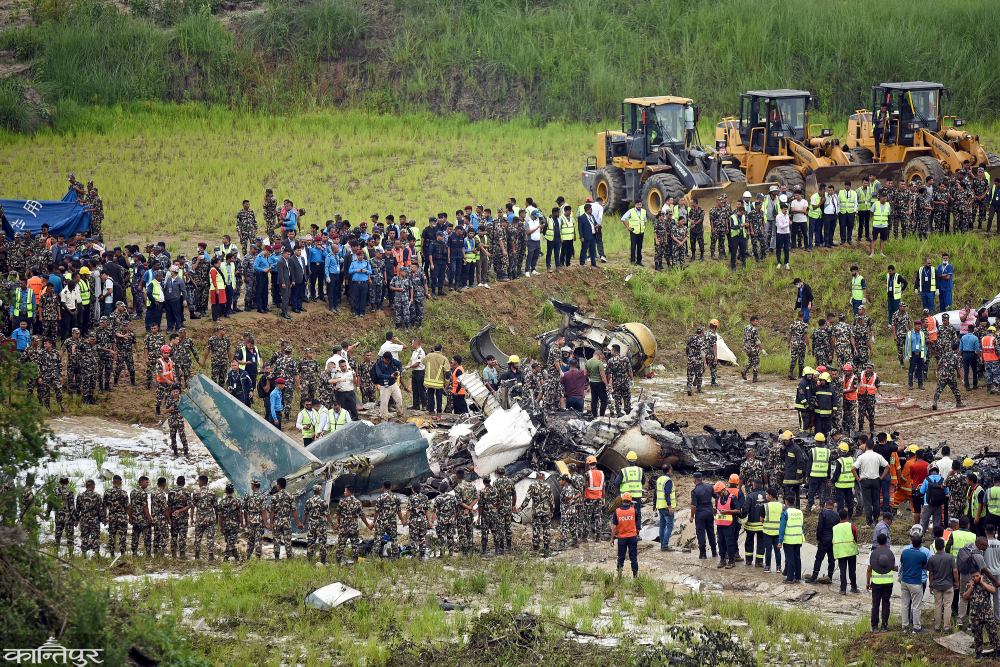
The Saurya Airlines accident at Kathmandu Airport on 9 July 2002 further exposed CAN’s negligence. 18 people died in that accident. Officials tried to escape the accident by pointing to the pilot’s error. However, the investigation commission has concluded that the accident occurred due to extreme negligence on the part of CAN.
CAN has been both regulating the aviation sector and providing services. Questions have been raised for years that giving both responsibilities to the same body will lead to a conflict of interest and weaken regulation. The government itself had brought the plan to split CAN 21 years ago. The CAN board also decided to split it 15 years ago. After that, a report on how to split CAN was prepared with the help of the Asian Development Bank, spending $4.2 million. However, implementation has been hampered.
After two air crashes each year from 2009 to 2012, international bodies including the European Commission have started raising questions about Nepal's air safety. After Nepal did not take any initiative in reform, the European Commission put Nepali aircraft on the air safety blacklist in December 2013. After that, the government prepared a bill to divide CAN.
On 11 Falgun 2076, the then Minister for Civil Aviation Yogesh Bhattarai presented the bill in the National Assembly. But due to political instability, it could not be finalized. After a long time, on 18 Shrawan 2078, the National Assembly passed the bill. Then the bill was sent to the House of Representatives. Adhikari became the Director General of CAN while the bill was under consideration. Although he is a government employee, he blocked the bill that had been passed by the National Assembly in the House of Representatives, which he himself has been making public.
In fact, the International Relations and Tourism Committee of the House of Representatives had formed a subcommittee under the leadership of Madhav Kumar Nepal, the Chairman of the Unified Socialist Party. The report it prepared suggested that CAN should be divided into two bodies (service provider and regulator) as soon as possible. Nepal, who was also the chairman of the committee, was one of the few leaders who stood in favor of separating the regulatory and service provider roles of CAN in accordance with international practice.
Meanwhile, in October 2021, Prem Ale of the Unified Socialist Party became the Minister of Culture, Tourism and Civil Aviation. His responsibility was to table the long-stalled reform bill and the civil aviation body division bill in parliament. But Ale did the opposite. In August 2021, it was Nepal, the chairman of the Unified Socialist Party, and Ale, the minister he had appointed, who prevented the bills that had been passed by the National Assembly from being tabled in the House of Representatives.
On 18 Falgun 2078, Minister Ale had a agenda to propose a bill in the House of Representatives meeting, but the bill was withdrawn. ‘Yes, I withdrew the bill,’ Ale told Kantipur, ‘I worked on behalf of Madhav Kumar Nepal. Nepal called the then Speaker of the House of Representatives Agni Prasad Sapkota before me and asked him not to discuss the civil aviation bills in parliament. I withdrew the bill on the instructions of the party chairman.'
In fact, Ale has even spoken in Parliament that Madhav Nepal himself instructed him to make Adhikari the Director General of the Authority. On 15 Baisakh 2082, during a principled discussion on the Civil Aviation Authority Bill in the House of Representatives, Ale revealed that Adhikari had to be appointed as the Director General of CAN under party pressure. 'A junior person was brought in and made DG, yes, he was made. It was made during my time. But it is not written on the forehead, and you do not know whether he is a thief or a saint. At that time, I said many times that even though I did not want to make a junior person, he was made DG because he could not withstand the party pressure.'
In fact, there are many reasons for the relationship between Ale and Adhikari to develop and deteriorate. One reason is that after becoming the Minister of Tourism, Ale had planned to build a regional airport in Dhangadhi and pressured the Authority to allocate budget. By that time, Adhikari had not become the Director General. प्राधिकरणको तत्कालीन नेतृत्वले त्यो प्रक्रिया अघि बढाउन मानेन, प्राधिकरणको बोर्ड अध्यक्षसमेत रहेका मन्त्री आलेले केही महिना क्यानको बजेट रोकिदिए ।
‘अझै अर्को क्षेत्रीय विमानस्थल बनाउन मन्त्रीले लबिइङ गर्नॅ अकल्पनीय हो,’ पूर्वअर्थ सचिव रामेश्वर खनाल (अहिले अर्थमन्त्री) ले डिसेम्बर २०२१ मा काठमान्डु पोस्टलाई भनेका थिए, ‘आर्थिक वर्षको आधा समय बितिसकेको थियो, तर बजेट रोकिएको थियो । यो सुशासनका सबै सिद्धान्तविरुद्ध हो ।’
मन्त्री र क्यानको विवादपछि अन्ततः ११ पुस २०७८ मा तत्कालीन मन्त्री आलेको अध्यक्षतामा बसेको क्यान बोर्ड बैठकले धनगढीमा क्षेत्रीय विमानस्थल बनाउन जग्गा अधिग्रहणका लागि १ अर्ब रुपैयाँ विनियोजन गर्यो । राष्ट्रिय योजना आयोगबाट स्वीकृत नभएको आयोजनाका लागि करिब ४० बिघा जमिन अधिग्रहणका लागि क्यानले करिब १ अर्ब रुपैयाँ विनियोजन गर्यो, जबकि परियोजनालाई २०० बिघाभन्दा बढी जमिन चाहिन्थ्यो । तर, ३० पुस २०७८ को मन्त्रिपरिषद् बैठकले जग्गा अधिग्रहण गर्ने निर्णय गर्यो ।
लगत्तै माघमा प्रदीप अधिकारी क्यान महानिर्देशक भए । उनले यो आयोजनालाई अघि बढाइरहेका थिए । यही बीचमा धावनमार्ग आसपासको जग्गा सस्तोमा खरिद गरेर प्राधिकरणलाई मुआब्जामा बिक्री गर्ने खेल चल्यो । आले आठ महिना २१ दिनमै मन्त्रीबाट हटेपछि विमानस्थल स्तरोन्नति कार्य अलपत्र पर्यो । आयोजना अगाडि नबढाएपछि आले अधिकारीसँग बिच्किए ।
पार्टीभित्र सबैलाई पालो पुर्याउने भन्दै माधव नेपालले आलेलाई फिर्ता बोलाएर जीवनराम श्रेष्ठलाई मन्त्री बनाए । नागरिक उड्डयनमन्त्री बनेका जीवनराम श्रेष्ठले पद सम्हालेकै दिन भने, ‘युरोपेली आयोगको मागअनुसार नियामक निकाय अलग गर्ने विषयमा मलाई रुचि छैन ।’
ओलीका पाला आयोजनाहरूको प्रमुख भएका, देउवाका पाला माधव नेपालको समेत सिफारिसमा महानिर्देशक भएका अधिकारी माओवादी अध्यक्ष पुष्पकमल दाहाल प्रधानमन्त्री भएका बेला त झन् शक्तिशाली भए । सिधै प्रधानमन्त्रीका आडभरोसा पाएका उनले मन्त्रीलाई भने बेवास्ता गरिरहे । दाहालका पाला माओवादीबाट सुदन किराँती पर्यटन तथा नागरिक उड्डयनमन्त्री बने ।
किराँतीले नागरिक उड्डयन विधेयकहरू पुनर्जीवित मात्र गरेनन्, बारम्बार दुर्घटना भइरहँदा पनि उड्डयन सुरक्षा सुनिश्चित गर्न असफल भएको भन्दै अधिकारीमाथि दबाब बढाए । सरकारले प्राधिकरणलाई नियामक र सेवा प्रदायक निकायका रूपमा अलग गर्ने नीति लिएको भए पनि त्यस नीतिविरुद्ध काम गरेको र अभिव्यक्ति दिइएको आरोप पनि उनलाई लगाइएको थियो ।
हवाई सुरक्षा लगायतका नौ सवाल उठाउँदै ‘तपाईंलाई किन कारबाही नगर्ने ?’ भन्दै मन्त्री किरातीले प्राधिकरणका महानिर्देशक अधिकारीसँग लिखित स्पष्टीकरण मागे । तर अधिकारीले मन्त्रीको स्पष्टीकरणको जवाफ दिन आवश्यक ठानेनन् । ११ असार २०८० मा सोधेको पहिलो स्पष्टीकरणको जवाफ नआएपछि मन्त्रालयले अर्को पत्र काट्यो । त्यसलाई पनि अधिकारीले बेवास्ता गरेपछि मन्त्री किराती आफैं संकटमा परे । किराती भन्छन्, ‘दोहोर्याएर स्पष्टीकरण माग्दा पनि बेवास्ता गरियो । तनाव चर्किएपछि प्रधानमन्त्री दाहालले मलाई बोलाउनुभयो । म बालुवाटार पुग्दा अधिकारी पहिले नै त्यहाँ बसिरहेका थिए ।’
किरातीका अनुसार प्रधानमन्त्रीले अधिकारीलाई स्पष्टीकरण बुझाउन र मन्त्री पदको सम्मान गर्न भनेका थिए । त्यस्तै अधिकारीले दिने स्पष्टीकरण सार्वजनिक नगर्न मन्त्रीलाई पनि निर्देशन दिइयो । यसरी प्रधानमन्त्रीले पनि नियमसंगत निर्देशन दिनुको सट्टा मध्यस्थता गर्ने बाटो लिए ।
यहीबीच किरातीले अघि बढाएको विधेयक अन्तर्राष्ट्रिय सम्बन्ध तथा पर्यटन समितिमा पुग्यो, जसले तत्कालीन प्रधानमन्त्री दाहाललाई विधेयक तुरुन्त टेबुल गर्न निर्देशन दियो । तर केही समयमै समितिका सभापति राजकिशोर यादवको धारणा पनि बदलियो । आफ्नै समितिको निर्णयविपरीत उनले पनि क्यान विभाजन आवश्यक छैन भन्दै अभिव्यक्ति दिन थाले ।
दाहाल सरकार ढलेपछि कांग्रेस–एमाले गठबन्धनबाट फेरि एमाले अध्यक्ष केपी शर्मा ओली प्रधानमन्त्री भए । यो सरकारमा कांग्रेसका बद्रीप्रसाद पाण्डे संस्कृति, पर्यटन तथा नागरिक उड्डयनमन्त्री भए । यो बेला पनि क्यान महानिर्देशक अधिकारीको कार्यशैलीलाई लिएर प्रश्न उठ्ने क्रम तीव्र हुँदै गएको थियो । संसद्मा समेत अधिकारीलाई कारबाही गर्नुपर्ने आवाज उठ्यो । अधिकारीलाई क्यान महानिर्देशकबाट हटाउन कांग्रेस सांसदहरू हस्ताक्षर संकलन गरेर सभापति देउवालाई भेट्न बूढानीलकण्ठ निवाससम्म पुगे । तर देउवा मानेनन् ।
युरोपियन युनियनसँग संवाद गर्ने, सुझाव सुन्ने र आफ्नो पक्ष राख्नेभन्दा पनि अधिकारी भने भिड्ने र तनाव बढाउने मुडमा देखिए । यही क्रममा प्राधिकरणले १७ पुस २०८१ मा एयरबस हेलिकोप्टर आयातमा प्रतिबन्ध लगाउने निर्णय गर्यो । यो समाचार क्यानका महानिर्देशक अधिकारीका तर्फबाट सूचना अधिकारी ज्ञानेन्द्र भुलले नै मिडियामा दिएका थिए । एयरबसको हेलिकोप्टरलाई नेपाल आयातमा प्रतिबन्ध लगाउने निर्णय ठूलो थियो । तत्कालीन पर्यटनमन्त्री बद्रीप्रसाद पाण्डेले तुरुन्त महानिर्देशकलाई फोन गरे । भुल पनि उपस्थित रहेको त्यही बैठकबाट अधिकारीले जवाफ दिए, ‘यस्तो कुनै निर्णय भएको छैन । परिपत्र पनि गरिएको छैन ।’
पछि पर्यटन सचिव विनोदप्रकाश सिंहले अधिकारीलाई मन्त्रालय बोलाएर स्पष्टीकरण मागे । सिंहले ‘तपाईंको अनुमतिबिना तपाईंको संस्थामा पातसमेत हल्लिँदैन’ भन्दै उनीसँग स्पष्टीकरण मागे । तर प्राधिकरणले यसको बेवास्ता गर्यो । ‘यो शक्ति प्रदर्शनको उदाहरण थियो,’ मन्त्रालयका एक अधिकारीले भने । उनका अनुसार दुई पटक ताकेतापछि मात्र एक लाइनको स्पष्टीकरण आयो, ‘त्यस्तो कुनै निर्णय भएको छैन ।’ त्यसपछि यो विषय त्यसै हराएर गयो ।
समग्र परिवेशले मन्त्री पाण्डे पनि निरीहजस्तै देखिए । तत्कालीन मन्त्री पाण्डे भन्थे, ‘सबैतिरबाट दबाब थियो । तर मैले उनलाई बर्खास्त गरे पनि अदालतको आदेश लिएर फर्किन्थे, त्यसैले खराब कार्यसम्पादन हुँदाहँॅदै पनि बर्खास्त नगरी काम गराउने नीति लिएँ ।’ हुन त मन्त्री पाण्डेले १९ माघ २०८१ मा विधेयक प्रतिनिधिसभामा दर्ता गराएका थिए । विधेयक दफावार छलफलका लागि समितिमा पनि लगिएको थियो । तर २७ भदौमा प्रतिनिधिसभा नै विघटन भएपछि विधेयक निष्क्रिय भएको छ ।
अधिकारी महानिर्देशक रहेकै बेला करिब दुई अर्ब लगानीमा सिनामंगलमा बनेको प्राधिकरणको भवनमा अनियमितता भएको विषय अहिले अख्तियारकै अनुसन्धानमा छ । पोखरामा आकाशमा उडिरहेका विमान निगरानी गर्ने प्रणाली चीनबाट ८६ लाख अमेरिकी डलरमा खरिद गरिएकामा अहिले ११ उपकरणमध्ये ६ वटाले काम गर्दैनन् । अख्तियारले यस विषयमा पनि अनुसन्धान जारी राखेको छ ।
त्रिभुवन अन्तर्राष्ट्रिय विमानस्थल रनवे निर्माणसहित नेपालगन्ज, भरतपुर र विराटनगर विमानस्थलको टर्मिनल भवन निर्माणमा पनि अनियमितता भएको उजुरी परेपछि अख्तियारले यसमाथि पनि अनुसन्धान जारी रहेको जनाएको छ । महालेखा परीक्षकको कार्यालयले पनि पोखरा र गौतम बुद्ध विमानस्थलसहित नेपालगन्ज, भैरहवा र विराटनगर विमानस्थलमा टर्मिनल निर्माणमाथि प्रश्न उठाउँदै प्राधिकरणसँग सुरु ठेक्कालगायतका कागजात मागेको थियो ।
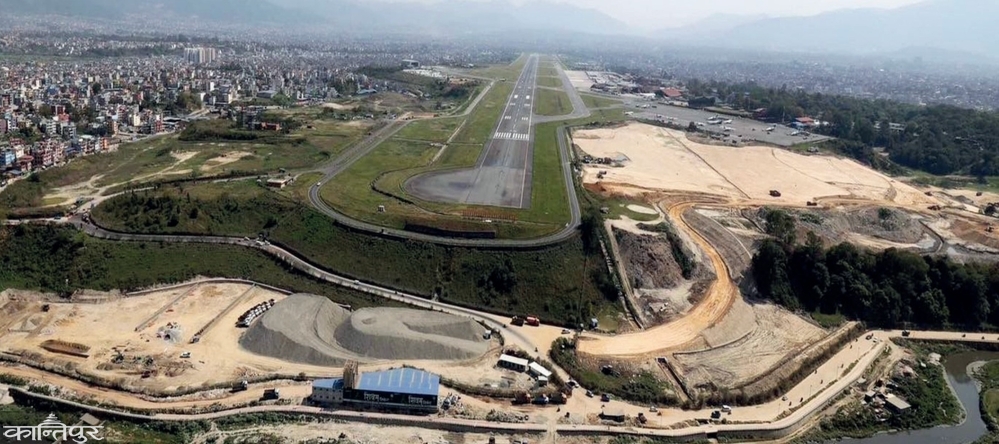
महानिर्देशकको ४ वर्षे कार्यकाल सकिनै लाग्दा अधिकारीविरुद्ध पोखरा विमानस्थल र नलिन्चोक हेलिपोर्ट निर्माण प्रकरणमा भ्रष्टाचार मुद्दा दायर भएको हो । उनी आगामी १७ माघमा कार्यकाल सकेर बाहिरिँदै थिए । भक्तपुरको नलिन्चोक हेलिपोर्ट निर्माणमा भ्रष्टाचार गरेको आरोपमा प्राधिकरणका महानिर्देशक अधिकारीलाई अख्तियार दुरुपयोग अनुसन्धान आयोगले १७ मंसिर २०८२ मा पक्राउ गरेको हो । उनीसँगै प्राधिकरणका पूर्वनिर्देशक मुरारी भण्डारी पनि पक्राउ परे । त्यही दिन अख्तियारले अधिकारी र भण्डारीसहित ६ जनाविरुद्ध १३ करोड ५७ लाख रुपैयाँ बिगो कायम गरी कैद र जरिवाना मागदाबी लिएर विशेष अदालतमा मुद्दा दायर गर्यो । मुद्दा दायर भएपछि अधिकारी निलम्बित छन् ।
विशेष अदालतले हेलिपोर्ट निर्माण प्रकरणमा मुद्दाको किनारा नलागेसम्म पुर्पक्षका लागि अधिकारीलाई कारागार पठाउन आदेश दियो भने अर्का प्रतिवादी भण्डारी धरौटीमा रिहा भए । नलिन्चोक प्रकरणमा अधिकारीलाई कारागार पठाउने आदेश आएकै दिन २१ मंसिरमा अख्तियारले पोखरा क्षेत्रीय अन्तर्राष्ट्रिय विमानस्थल प्रकरणमा मुद्दा दायर गरेको हो ।
यसमा अधिकारीसहित ५ पूर्वमन्त्री, ९ पूर्वसचिव, सर्वोच्च अदालतका पूर्वरजिस्ट्रारसहित ५३ नेपाली र ३ विदेशी कम्पनी (प्रतिनिधि) लाई प्रतिवादी बनाइएको छ । यसमा ८ अर्ब ३६ करोड ७३ लाख रुपैयाँको बिगो कायम गरिएको छ । पोखरा विमास्थल प्रकरणमा भने विशेषले अधिकारीलाई ५ लाख धरौटीमा रिहा गर्न आदेश दिएको छ । तर, नलिन्चोक हेलिपोर्ट मुद्दामा पुर्पक्षमा भएकाले अधिकारी रिहा हुन पाएनन् । उनी अहिले पुर्पक्षका लागि डिल्लीबजार कारागारमा छन् ।
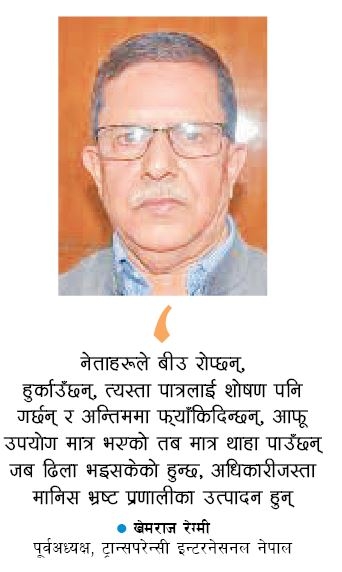
उनी पुर्पक्षमा भएकाले उनको भविष्यको तय अदालतको फैसलाले नै गर्नेछ । तर, अधिकारीजस्ता पात्र जन्माउने, हुर्काउने, दुस्साहसी बनाउने र दुरुपयोग गर्ने हाम्रो राजनीतिक शैलीको उपचार भने अदालतको फैसलाबाट मात्र सम्भव छैन भन्छन् ट्रान्सपरेन्सी इन्टरनेसनल नेपालका पूर्वअध्यक्ष तथा अवकाशप्राप्त सचिव खेमराज रेग्मी ।
अधिकारीजस्ता व्यक्तिहरू राजनीतिक नेतृत्वले नै उत्पादन गर्दै आएको बताउँछन् । ‘नेताहरूले बीउ रोप्छन्, हुर्काउँछन्, त्यस्ता पात्रलाई शोषण पनि गर्छन् र अन्तिममा फ्याँकिदिन्छन्,’ उनी भन्छन्, ‘अधिकारीजस्ता मानिस भ्रष्ट प्रणालीका उत्पादन हुन् । दशकौंदेखि देश लुट्दै आएका नेताहरूका लागि उनीहरू मध्यस्थकर्ता बन्छन् । तर आफू उपयोग मात्र भएको तब मात्र थाहा पाउँछन् जब ढिला भइसकेको हुन्छ ।’


