Brian Hudson, the British resident representative for Nepal, who was interested in the bird, mentioned in the book that the bird was first seen in Kathmandu valley in 1829 and the second time in 1844.
We use Google Cloud Translation Services. Google requires we provide the following disclaimer relating to use of this service:
This service may contain translations powered by Google. Google disclaims all warranties related to the translations, expressed or implied, including any warranties of accuracy, reliability, and any implied warranties of merchantability, fitness for a particular purpose, and noninfringement.
After nearly two centuries, the small Savari waterfowl has been recorded in the Kathmandu Valley. Savari was seen on Saturday while flying in the Seemsar area near Kageshwari Manohara river in Kathmandu valley.
Bird wildlife photographer Pratap Gurung, Deepak Budhathoki, Hitman Gurung and Samyang Rumba saw the bird called Glossy Ibis in Manohara river and took pictures. Senior ornithologist Dr. Dr. who may have seen this bird in attractive colors while returning to India after breeding. Hemasgar Baral said.
"Not only India, this bird reaches Thailand, Cambodia, Malaysia and Laos through the territory of Nepal," he said. This bird was seen at an altitude of 1,250 meters above sea level. It looks charming and attractive with its elongated thin valley, attractive flight, dark cutus, purple and green colors.
Brian Hudson, the British resident representative for Nepal, who was interested in the bird, mentioned in the book that the bird was first seen in Kathmandu Valley in 1829 and for the second time in 1844 . Ornithologists say that the bird was recorded in the valley after 181 years when it was recorded now. Wildlife photographer Pratap Gurung said that he was happy to document such a bird even after two centuries. "It is a great pleasure to record a bird that has not been seen by the valley dwellers for a long time," he said.
This bird is seen as a warbler . This bird is taking flight following the Hocha Valley, a river in Nepal. However, he does not live in Nepal. Not being able to find the direction, losing the way when the weather is bad and getting tired while flying is seen in Nepal.
30 species of wading birds are believed to be scattered around the world. This small sawari is the least among the three species found in Nepal. Similarly, in Nepal there are white Savari and Karra Savari varieties. It takes off in September October. 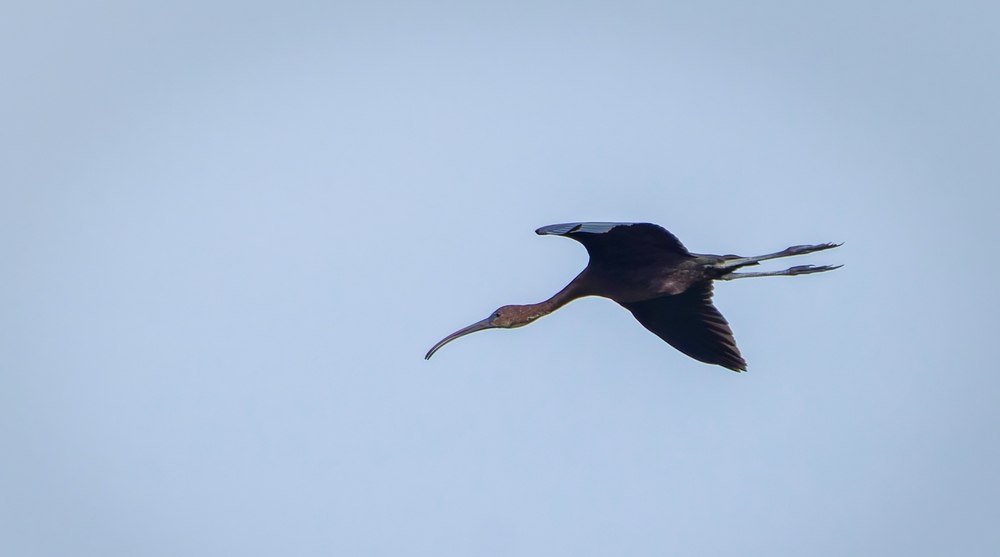 A small sawari seen in Kageshwari Manohara river in Kathmandu valley. Photo courtesy: Pratap Gurung
Center Breeds in Asian Republic countries (including Kazakhstan, Uzbekistan and Azerbaijan). Ornithologists say that this bird is about to go to India or South East Asia from Nepal through the border of the North West Himalayas. Ornithologist Hathan Chaudhary said that the distribution of this bird is spread all over the world. He said that 30 species of small sauri have spread to 6 continents including South America, North America, Australia, Europe, Asia and Africa. This bird has also been recorded in Koshi reserve, Shuklaphanta and Chitwan National Park in Nepal.
Earlier on July 28 last year, the world's rarest bird was recorded for the first time in Kathmandu Valley. A summer visitor bird was also recorded in the Manohara river . This was also seen and photographed by a team of 3 people including wild life photographer Pratap Gurung.

