The Chief Justice was not invited to the establishment day of the Nepal Lawyers Council (Bar Council).
We use Google Cloud Translation Services. Google requires we provide the following disclaimer relating to use of this service:
This service may contain translations powered by Google. Google disclaims all warranties related to the translations, expressed or implied, including any warranties of accuracy, reliability, and any implied warranties of merchantability, fitness for a particular purpose, and noninfringement.
Nepal Lawyers Council (Bar Council) celebrated the establishment and self-evaluation day on Tuesday. The council has been celebrating the day every year on 27th of July. The chief justice was invited as the chief guest in the program.
However, this time, breaking the tradition of the past, the President was invited to the program. Chief Justice Prakashman Singh Raut was not even invited.
The Chief Justice Raut was sitting on the bench in the Supreme Court while the council was holding a program at the Nepal Police Club at the Exhibition Marg. Although the Supreme Administration said that Raut did not sit on the bench due to his health, he did not sit on the bench because he was in the mood to attend the Bar Council program. But he was not invited. Since Raut, who became the Chief Justice on 20 October 2081, took charge, there was increasing disagreement between him and the Bar Association and Attorney General Ramesh Badal . Raut's absence from the council program on Tuesday has revealed that misunderstanding.
In the 31-year history of the Nepal Bar Council, there has been an unbroken tradition of calling the Chief Justice on the foundation day. The more you understand politics, the more difficult it is," Advocate Deepak Raj Joshi wrote on the social network Facebook. Not only him, but most of the legal professionals, government lawyers and invitees who reached the event of the Bar Council were concerned about the fact that the Chief Justice and Judge were not invited .
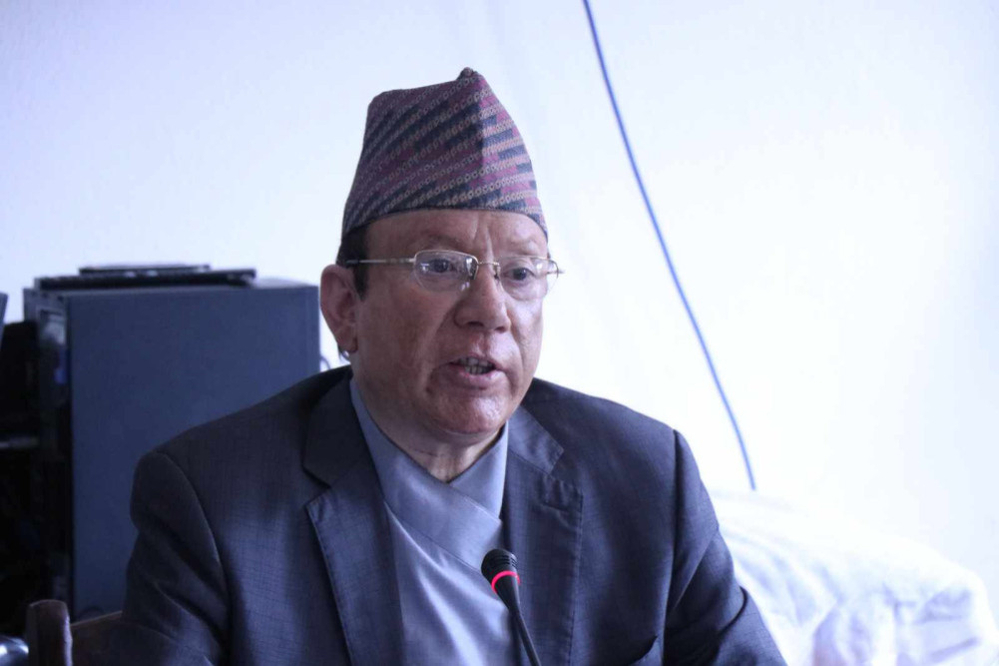 Chief Justice Prakashman Singh Raut
Prior to the establishment of the Council, according to the then Legal Practitioners Act 2025, the Supreme Court was doing the work of giving certificates to legal practitioners, keeping registration records and punishing legal practitioners who are not in professional discipline . After the Nepal Bar Council Act 2050, the Bar Council (Nepal Bar Council) was established. After the establishment of the council, the council has been responsible for conducting the examination of those entering the legal profession, registering the names of legal practitioners, determining the professional code of conduct, and monitoring whether the legal practitioner has worked in accordance with the prescribed professional code of conduct.
Similarly, the Council does the work of receiving complaints and punishing disciplinary action against legal practitioners, keeping up-to-date the records of legal practitioners involved in business, arranging necessary training to make the profession dignified, protecting the respect, reputation, safety, rights and benefits of legal practitioners, working to enhance the interests of legal practitioners and recommending appropriate educational standards to encourage quality legal education .
The Bar Council consists of the Attorney General President, Bar Association President-Vice President, Supreme Court Registrar and Tribhuvan University Law Faculty Dean Council. Similarly, there is an arrangement for 7 councilors to be elected for 5 years by the electoral board of senior advocates and advocates working in 7 provinces of Nepal and 2 councilors to be nominated from the Nepal Bar Association . It is stipulated that the councilors to be elected and nominated should be senior advocates or advocates with at least 10 years of legal experience.
Attorney General Ramesh Badal commented that the matter of making the President the chief guest and not inviting the Chief Justice should be understood as a different style program by the Bar Council this time. Law Minister Ajay Kumar Chaurasia, a member of the Judicial Council participated in the program but the judges of the Supreme Court were not present.
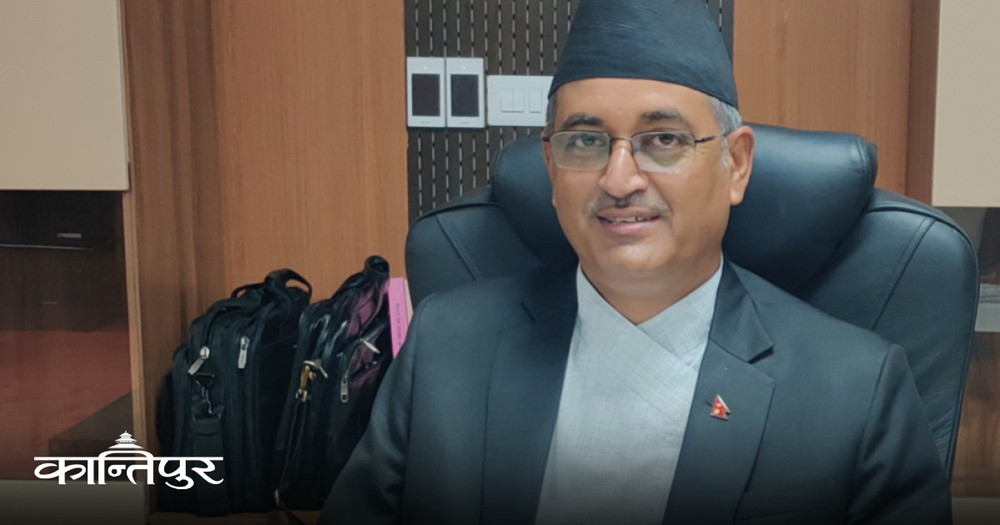 Attorney General Ramesh Badal
Attorney General Badal claimed that although it was a practice to have the Chief Justice and Judges as guests in the past, it should be understood that this practice should not be done this time. A member of the Bar Council claimed that the Chief Justice was not summoned due to a 'conflict' with Kantipur, the Bar and the Attorney General.
Chief Justice-Bar cold war
Chief Justice Raut's failure to get an invitation to the Council's annual event is considered to be the main reason for the long-standing cold war between Bar and him. Last time, Bar was angry with Raut saying that there was no coordination and cooperation with the Bar even on the recommendation of 3 judges in the Supreme Court and 27 judges in the High Court . After the discussion on the appointment of judges in the High Court, the bar issued a press release saying that legal practitioners should be given half of the quota for the appointment of judges.
Nepal Bar General Secretary Kedar Koirala demanded at least fifty percent on July 19. But on July 22, the Judicial Council recommended only six lawyers as judges. Releasing a statement on 23rd July, the bar commented that there was an unbalanced appointment.
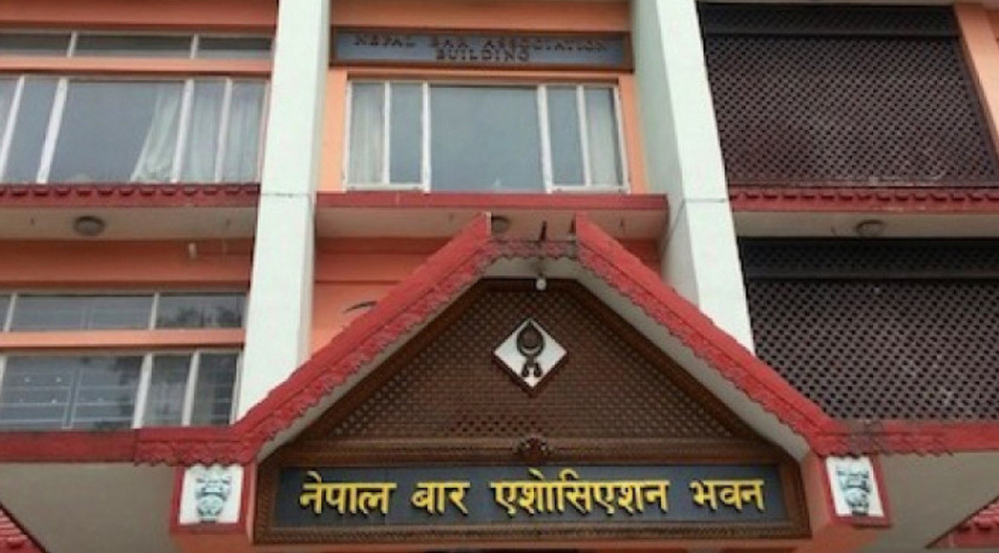 Similarly, the bar has long been demanding that the amendment to the Judicial Council Rules should be repealed . But Raut, who is also the chairman of the council, was avoiding the matter. The bar was even more angry after the Council appointed judges in the Supreme Court and the High Court showing the interim order in the writ against the regulations registered in the Constitutional Bench some time ago.
2080 The meeting of the Council of Justice held on October 1 amended one point of the regulations and changed the seniority roll of the judges . Even though the bar expressed displeasure against it, the council continued to ignore it . While the controversy was going on, Vishwambhar Prasad Shrestha came as the then Chief Justice. He also formed a committee under the chairmanship of the then senior judge Raut for bar-bench coordination while trying to resolve the dispute. The committee prepared separate reports and submitted them to the Chief Justice and the Judicial Council.
But Chief Justice Shrestha, who is about to retire, decided to recommend two judges to the Supreme Court on October 11 amid the bar protests. The decision further angered the bar . The then President of the Bar, Gopalkrishna Ghimire, in a public speech, alleged that judges were appointed on the basis of transactions. The Supreme Court took the allegation seriously.
A contempt of court petition was registered against bar president Ghimire on October 14th after the meeting of the full court. Although it was said that the hearing would be held the next day, it was postponed after some time . Taking it seriously, the Bar held a meeting of the Advisory Council of Valley Bar and Nepal Bar and made public its views.
The Bar decided to defend the case registered against the President Ghimire as it is against the Bar. Then the Co-Registrar of the Supreme Court Govinda Ghimire announced through social media that he would withdraw the case saying that he had registered it under tax. But the case was not returned . The case was issued on October 1 in the bench of Judge Kumar Regmi and Kumar Chudal. On that day, an order was made to demand a written answer from the bar president. The Nepal Bar has also submitted a written response on behalf of the bar president, but the bar official understands that the decision is not meant to be prolonged and to argue with the bar.
Bar President Vijay Kumar Mishra said that he did not share the platform with the Chief Justice considering the fact that the contempt case against the Bar President is pending in the court. An official of the Nepal Bar said that since the Supreme Court did not give a platform to the bar president in the distribution of the title of senior advocate earlier, the bar did not give it this time.
'Chief Justice should be present at yesterday's event. We have realized this too . But the Chief Justice, who is in judicial leadership, could not be shared," Bar President Mishra said, "The bar has been making demands on him for a long time, but he has been ignoring, showing contempt cases and moving forward in an arbitrary manner. Therefore, we have come to the conclusion that we cannot sit on the same platform. Admitting that the tussle between Bar and Wench has increased, President Mishra said that the decisive movement has now reached the stage. He said that the bar has called a working committee meeting on July 30 to take a bold decision.
General Secretary Kedar Koirala confirmed that a working committee meeting of the bar has been called for the formulation of future strategies with the judiciary and the questions raised now. However, this incident has increased the distance between the Bar and the Chief Justice, according to the comments of the former judges of the Supreme Court. They commented that the fact that the person who rose to the top from the bar did not give a platform to the bar itself increased the cold war.
Chief Justice-Attorney General Katuta
Attorney General Ramesh Badal is the legal advisor of Prime Minister KP Sharma Oli . Recently, he has also been irritated with the judicial leadership due to the judgments and orders in some cases along with the appointment of Supreme Court and High Court judges. When four judges were vacant in the Supreme Court, there were two judges on the side of the parties.
Meghraj Pokharel, who was recommended by the Congress, was rejected while Ishwari Bhattarai, who was recommended by the UML, was rejected in the quota received by Nepali Congress and UML. Even though senior judge Sapna Pradhan Malla disagreed, Pokharel's name was approved but Bhattarai was dropped. Along with this, Prime Minister KP Sharma Oli and UML got angry with Chief Justice Raut.
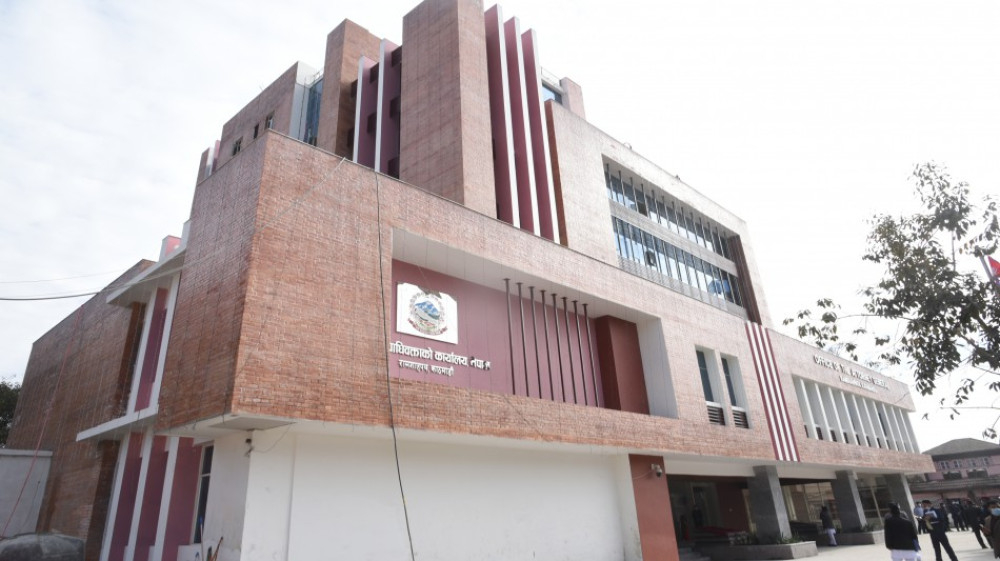 Similarly, when recommending 27 judges to the High Court, only one quota was given to the public prosecutor. Shankar Khatri, head of the High Public Prosecutor's Office, Patan, was the only one left. The Attorney General's understanding was that he was appointed because he was close to Chief Justice Raut. Similarly, Attorney General Badal was also dissatisfied with the issuance of an interim order by the Supreme Court in the National Identity Card dispute and the verdict of the Constitutional Bench headed by Chief Justice Raut, which hindered the construction of hydropower and development.
Prime Minister Oli was displeased after complaints came from businessmen that the National Parks and Wildlife Protection Act, 2029 (Amendment in Section 5 and Section 6) had been repealed by the decision of the Constitutional Court, which resulted in loss of investment and long-term losses. The Supreme Court had rejected the amendment of the law which allowed development projects to be carried out in protected areas such as national parks and wildlife reserves.
Businessmen lobbied saying that the decision of the Supreme Court should be reviewed as the decision was made to affect more than 19,000 megawatt projects. It was seen that 19 thousand 736 MW hydropower of 267 projects will be affected by the decision of the Supreme Court. As the full text of the decision is not ready, the government is confused about what to do. The businessmen were persuaded by the government saying that they would take a decision on the review after the full text.
The former judges of the Supreme Court said that increasing the normal distance between the bar and the bench should not be taken otherwise, but the practice of not sharing the platform with each other is a wrong way. Former judge of the Supreme Court, Krishnajung Rayamazhi, claimed that there was a practice in the past of increasing and decreasing the distance between the fence and the wench. But since they should not sit on the same stage, the practice of stopping Cholendra Shamsher Jabara at the gate of the court is anarchy. Rayamazhi argued that both parties should settle their disputes without delay and that the right of justice of the service users who came to seek justice should not be obstructed.
Even the Supreme Court judges are not satisfied with the current conflict. Bar and bench are two sides of the same coin of the court and are fellow travelers of justice.
Bar and all of us have the same objective to give easy justice to those who come to seek justice. The purpose and goal is the same and why there is conflict or enmity,' a judge commented, 'the judicial leadership should pay attention to this . In the past we have seen many agitations and strikes . Those who have gone through the protest of the judge at the main gate by the bar should now close it . The bar should also be flexible on this.'
Why is the Attorney General angry?
Why did the bar get angry ?

