We use Google Cloud Translation Services. Google requires we provide the following disclaimer relating to use of this service:
This service may contain translations powered by Google. Google disclaims all warranties related to the translations, expressed or implied, including any warranties of accuracy, reliability, and any implied warranties of merchantability, fitness for a particular purpose, and noninfringement.
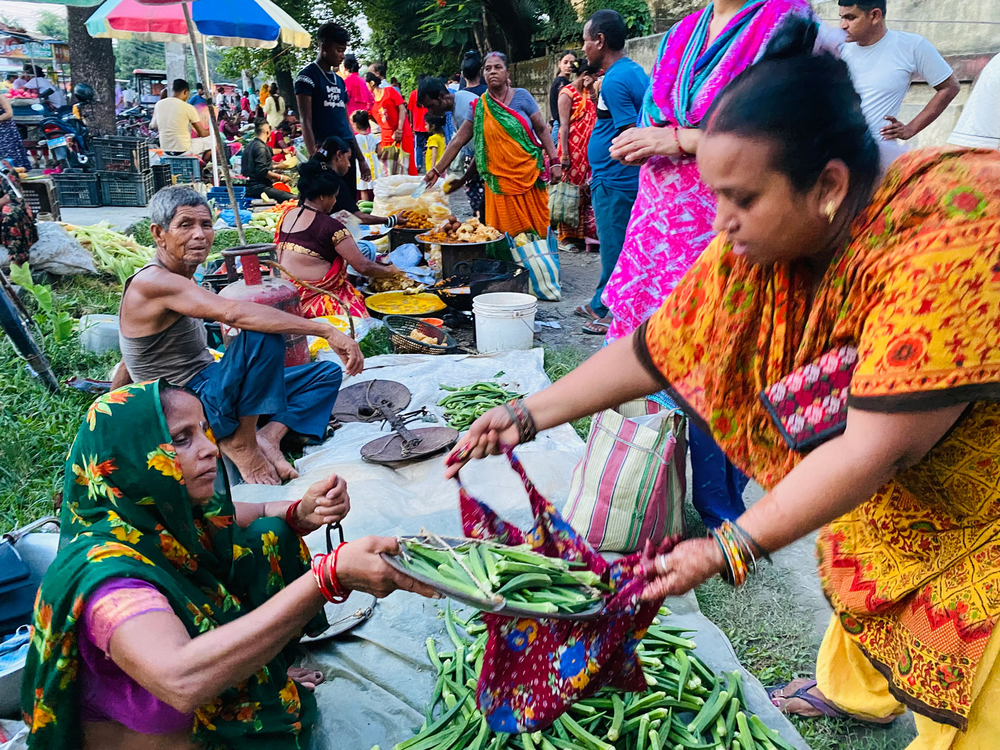
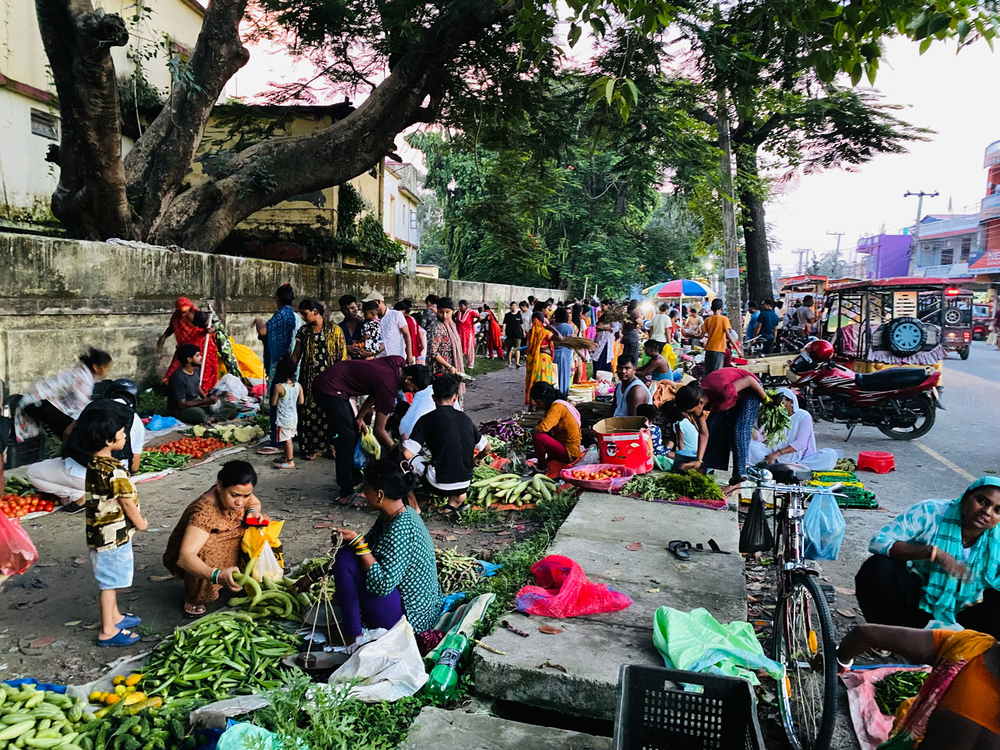
There is a daily hotia on the roadsides, squares and open fields of Biratnagar. A small village market called Hatia, which still keeps the ancient cultural traditions of Madhesh alive. It is not only a shopping platform but also an important bridge connecting farmers and consumers directly.
Farmers begin to lay out baskets of goods for sale in Hatia from early morning. Locally produced organic vegetables, fruits, rice, wheat flour, pulses, eggs and milk are sold to consumers. "Hatiya tradition is not only commercial, it is also an integral part of social and cultural life," says Parul Chhetri, an old resident of Biratnagar.
In today's era, the role of the middleman is becoming dominant in most businesses. Hatia is challenging that structure and working to connect farmers and consumers directly.
Due to this, the farmers got a fair price for their products and the consumers got to buy fresh goods at a fair price. "Hatiya has pushed the margin-eating brokers out of the market," says Ramkumar Mandal, who has been selling goods in Hatia for a long time, "That's why Hatia is becoming more and more popular." Here daily hundreds of farmers sell their products, thousands of consumers come to buy. According to the estimate of the Metropolitan Corporation, there is a daily turnover of lakhs of rupees in Hatia. However, there is no definite data. "It is estimated that there will be hundreds of local attendance and millions of transactions daily," Saroj Timsina, head of revenue division of Biratnagar metropolis, said, "The metropolis has planned to start a detailed study of Hatia economy from this year." The farmer's produce is being sold. The business of small traders has also been running. In addition, consumers are able to eat cheap, fresh and organic products. "Hatia is not only a commercial center, but also a place of social interaction," says Dinesh Shrestha, an old resident of Biratnagar, "People talk to each other, exchange news and try to strengthen relationships."
Old to young, women to children are found in Hatia. This diversity has made Hatia more vibrant. Mankumari Sardar of Budhiganga Rural Municipality, who has been doing hatia continuously for 30 years, says, "Hatiya is our way of life." Traffic management and sanitation are chaotic. There is a need for improvement in the use of plastic and waste management. It seems that the metropolis needs to pay special attention to organize Hatia. Punam Kumar Dahal, head of the sanitation branch of the metropolis, said, "The contractor has taken charge of the cleaning itself. There is no problem in waste management due to the mandatory cleaning as soon as the house is finished.
The hatia system, which carries the cultural identity of Madhesh, is still a bridge between farmers and consumers. Economist Dr. Biratnagar who is keeping the economy of Hatia city running due to middlemanless market, fresh ingredients and reasonable prices. Vedaraj Acharya said. "Hatia is a small unit of buying and selling, where the presence of middlemen is absolutely prohibited."
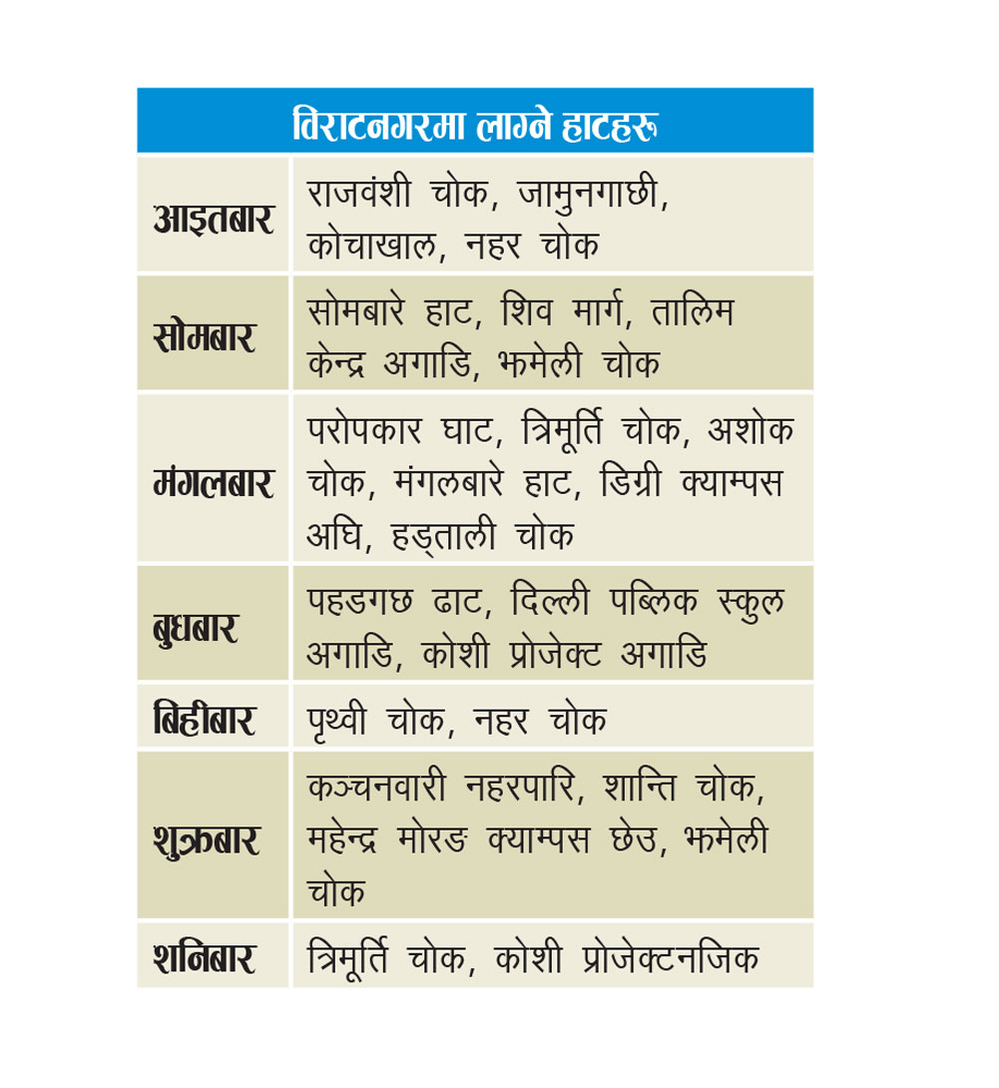
According to Biratnagar Metropolis, for the financial years 2080/081, 081/82 and 082/83, the existing (contract) of Hatia operation has been settled at 45 lakhs excluding value added tax. Saroj Timsina, head of the revenue department of the metropolis, says, 'Hatiya is also a tradition of Madhesh, it is making the local economy run.' This tradition has made the relationship between the farmer and the consumer so close that some places in Biratnagar are known by the name of Hatiya Laga day. The place where Hatia is performed on Saturday is called Shani Haat and the place where Hatia is performed on Thursday is called Thursday Haat. Similarly, Monday, Wednesday Chowk are also keeping the existence of Hatia alive.