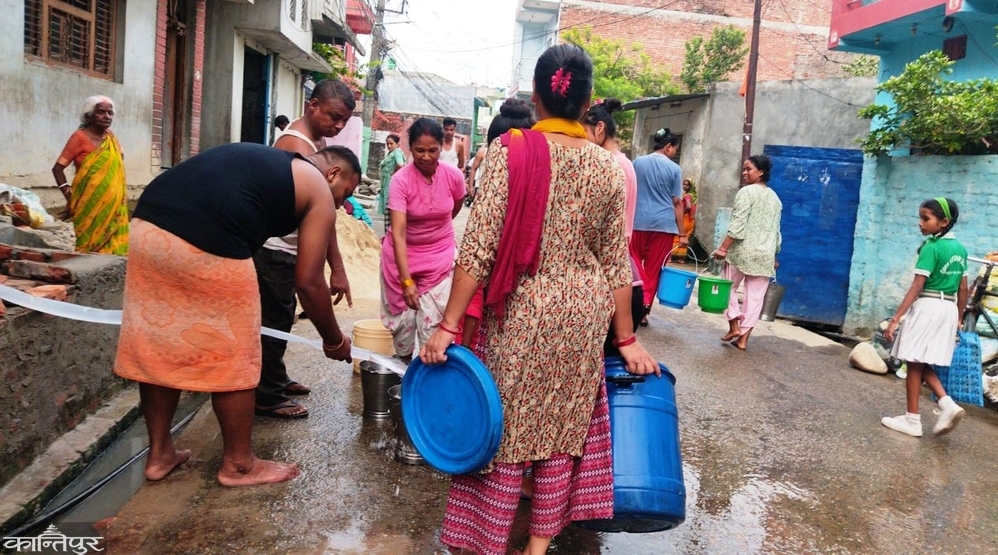
Chapakal, which has been receiving rain for years, is closed, the fields are barren, summer is hot due to lack of rain, people are forced to buy water in bottles and jars.
We use Google Cloud Translation Services. Google requires we provide the following disclaimer relating to use of this service:
This service may contain translations powered by Google. Google disclaims all warranties related to the translations, expressed or implied, including any warranties of accuracy, reliability, and any implied warranties of merchantability, fitness for a particular purpose, and noninfringement.
Ramnath Sah of Janakpurdham-9, Saraswati tol was under stress on Sunday morning. There was sweat all over his face, an empty bucket in his hand. Since Saturday afternoon, there was no water coming from the pipes of the water company in Janakpur. There were power outages since Sunday morning.
He was saying, 'Chapakal ta suke-suke. He trusted and connected the water pipe, he also cheated. Carrying a bucket, he carried water from the neighbor's house without hesitation.
Ashok Thakur of Janakpur Thapa Chowk also looked worried. The reason for that was the suffering his family was experiencing due to the lack of water. Thakur says, "When there is no drinking water, we have to work with water from jars. There was a shortage in the market because the consumption of jars also increased."
Every house in Janakpur was running for water. Janakpur, the provincial capital, became a disaster when the water supply was stopped for two days due to a problem with the motor of the Nepal Water Supply Corporation.
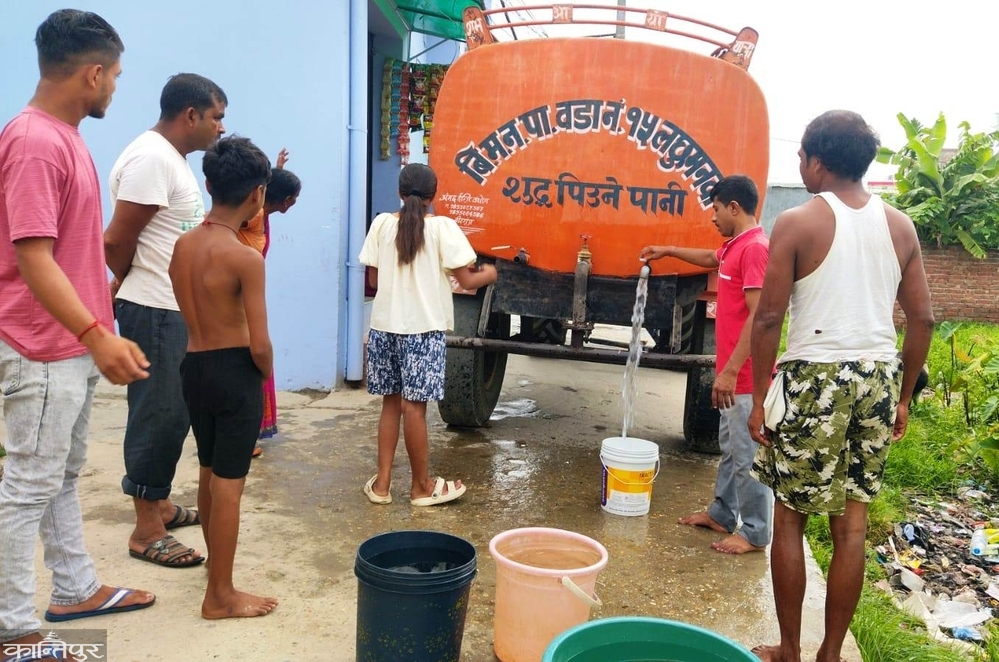
The residents of Janakpur were reassured after the institute's water was restored from Monday morning. Chapakal buried at 60 and 100 feet in Janakpur has been dry for almost a decade. Chapakal, which is now 450 feet in Janakpur, later grows to 250 feet, also dries up in May-June.
The provincial government is trying to supply water from fire trucks and tankers to the districts of Madhesh, which are suffering from severe shortage of drinking water. Chief Minister Satish Kumar Singh discussed the issue of underground water crisis in Madhesh with Federal Water Minister Pradeep Yadav on Tuesday.
Chief Minister Singh of Madhesh Province has mobilized the Varunyantra to avoid the acute shortage of drinking water in Madhesh due to the drought. There is an extreme shortage of drinking water in Bara and Parsa when the spring dries up. In other districts as well, locals are forced to suffer for drinking water when chapakal dries up.
On Wednesday morning, Chief Minister Singh has deployed the Varuna Yantra to distribute water to the areas around Birganj in Parsa, where there is an acute shortage of drinking water. He used 8 wind turbines purchased by the Madhesh Ministry of Home Affairs, Communications and Law in mid-June to distribute drinking water. In order to avoid the shortage of drinking water, Chief Minister Singh has entrusted the Nepali Army with Varunyantra for the time being and informed that the fuel and other arrangements will be made by the state government.
'There is a problem of drinking water in the districts of Madhesh due to lack of rain for a long time, and to avoid that problem, the water dispensers have been mobilized,' says Chief Minister Singh, 'immediately, 8 water dispensers belonging to the state government, 7 separate tankers of the Nepali Army and 18 vehicles including 3 of the forest office are distributing water to the settlements.'
Awadhesh Jha, Press Adviser of Chief Minister Singh, informed that it has been sent. "One wind turbine has a capacity of 5,000 liters," says Jha. Gahwamai Mandir Managing Committee Chairman Narendra Sah, Senior Member of the Committee and Constituent Assembly Member Rajendra Bahadur Amatya, General Secretary of the Committee Advocate Vijay Kumar Upadhyay were performing Havan in the Rain Yagya.
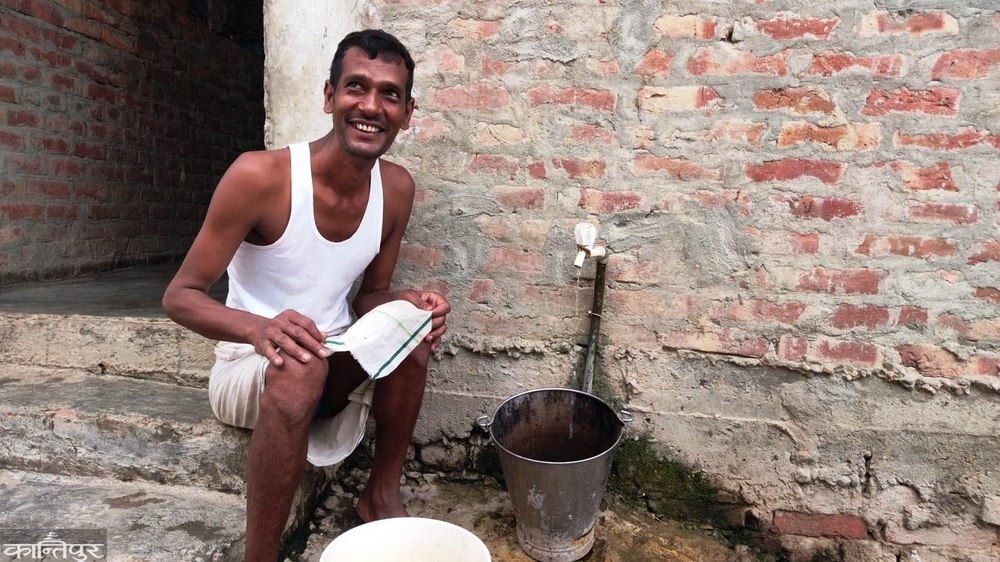
The office secretary of the committee, Shivjikumar Sah, said that the yagna, which started at 8 in the morning, ended at 3 in the afternoon. Varuna Puja i.e. Yajna for watering was probably first performed in this way at Virgunj. Despite the end of June, the Parsa and Bara districts have been devastated due to lack of monsoon rains. Chapakal, which has been receiving constant water for years, has stopped. The fields are barren. The heat has increased rapidly due to lack of rain. Common people are forced to buy bottled and jar water.
58-year-old Sushil Aryal, a resident of Birgunj-13 Tejarath Toll, says that he has experienced such a water shortage in Birgunj for the first time in his life. "Actually, this problem has been seen since 3 years ago," he said, "but this year, this problem has been seen in a big way." This problem is also serious in neighboring Bara district. Most of the chapakal attached to the house are dry. A crowd of metropolitan residents who have not connected the taps of the drinking water company because of easy water supply is now seen at the Birgunj branch of the drinking water company.
branch head Praveen Kumar Sah said that the request for new water connection has been received only since 12 days. He said that a total of 400 water lines were connected during this period. During this period, 5,000 meters of pipes have been installed. He said that he received 3,000 phone calls and messages from customers in 20 days.
The office currently has only 1 contract and 5 salaried manpower. This manpower was able to connect 30 to 35 pipes daily, he said. Earlier, 20 to 25 taps were installed per month, but now 30 to 35 taps are installed daily, he said.
He says that locals are stealing thousands of taps in Chhapkaiya and Radhemai areas of Virgunj where the demand for water is high. Birgunj Metropolitan Corporation is working to install boreholes in various wards for the convenience of the locals, but that is not enough. This problem is seen more in the constituency and district of Federal Water Supply Minister Pradeep Yadav. He also came to Birgunj and went door to door in the wards to try to solve the problem.
The daily life of the locals is affected by the lack of drinking water. Those who grew up in the Terai with water splashing are now worried about having to rely on mineral water and jars. Sardar Jaspal Singh, President of Prakriti Seva Pratishthan Nepal, says that there is no alternative to tree plantation and wetland protection to solve the water problem in the long term.
In Bara's Simraungadh municipality-8 Kachorwa village, paddy seeds have dried up in the beds. Madhesh, which is a grain donor (grain store), has not received frosty rain. Planting could not be done even after the end of June due to lack of rain. The fields in the district where there is no irrigation facility are dry. Bad is scorched by the sun. Tubewell water has dried up. After the water level has decreased, water has stopped coming into the deep tube well and chapakal. ``The basis of living is drinking water, there is no irrigation for grain production, the bad fields are all over,'' Nakkhed Yadav of Simraungadh-8 Kachorwa said, ``How to survive?''
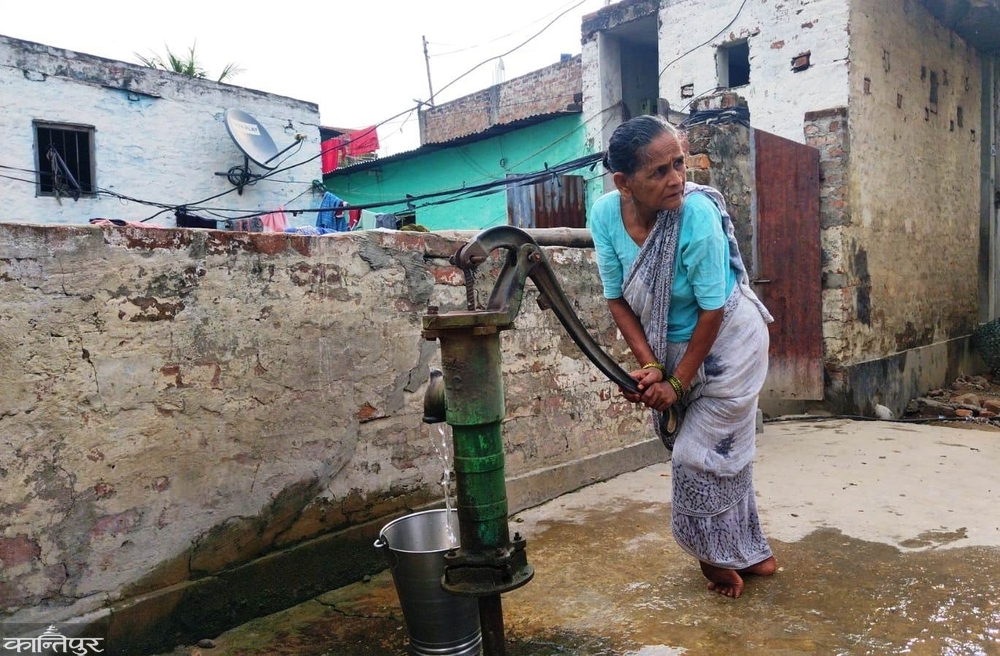
Common people have to wait in line to fill water from deep tube wells buried in public places to avoid drinking water problem. The same tube wells are used alternately for drinking water and for irrigation of fields. The Madhesh government has already declared 8 districts of the province as dry and crisis zones.
In the Chure area where there is a source of water, uncontrolled sand-gravel mining and forest destruction have created rivers, and there is no water in Pani. Panis have also been encroached upon. When the local level gave contracts for sand-gravel to the rivers of Chure area to increase their income, the source of water has dried up due to uncontrolled and wanton cutting.
District Administration Office Bara held a meeting with all stakeholders including the people's representatives of the municipality on Monday last Monday and pressured the municipality to collect water resources for irrigation management. According to the Assistant Chief District Officer Chhabiraman Bhattarai, such a discussion was held with stakeholders when municipalities are unable to allocate sufficient budget to collect resources for managing drinking water including irrigation.
As the electricity supply is not regular and there is a voltage problem, the sale of pump sets has increased in the market to draw water from tube wells as an alternative. The sale of pipes for burying tubewells has also increased.