We use Google Cloud Translation Services. Google requires we provide the following disclaimer relating to use of this service:
This service may contain translations powered by Google. Google disclaims all warranties related to the translations, expressed or implied, including any warranties of accuracy, reliability, and any implied warranties of merchantability, fitness for a particular purpose, and noninfringement.
Few people know that pollination has made human life very easy. However, it has been playing an important role in maintaining food production, ecological system healthy and environmental balance.
Bees, butterflies, bats and hummingbirds, which have made a name for themselves in pollination, are in danger, and pollinator week is being celebrated to highlight the importance of these animals. Organizations working in different parts of the country are celebrating Pollination Day week-long by organizing various programs to contribute to the conservation by highlighting the importance of pollination, which contributes to the economy in an unknown way.
Bhaktapur-based social media based platform Butterfly Watchers Nepal has coordinated the program with the participation of Leo Club of Pokhara North, Club for Wildlife Conservation, Youth Action for Sustainable and Eco Nepal, Bhaktapur Jaycees and Happy Cakes and Bakery, Bhaktapur. The theme of this week-long event, which will be celebrated from June 16 to 22, is 'Honoring Pollination, Protecting the Future'.
The program coordinator and butterfly expert Sanej Prasad Suwal said that the pollination week is being done with a small effort of conservation lovers. In fact, small butterflies, bees, bats, beetles and birds are also of great importance,' he said. Conservation organizations around the world are now celebrating Pollination Week. As part of the
week-long program, there is a pollinator photography competition and a butterfly marathon (a prize for photographing butterflies of many species) that will be shot at the June location in Nepal. Similarly, painting competitions, face painting and coloring programs are being held in schools to make children active in pollination conservation.
There is a program to educate the public about the importance of pollination habitat protection by establishing a bee house in the urban forest area. Likewise, Siddharth Sapkota, president of Leo Club of Pokhara North, said that a program will be held in Ranibari of Kathmandu to provide awareness through direct observation of Pacharagsechan animals. All programs will be held in the three districts of the valley. 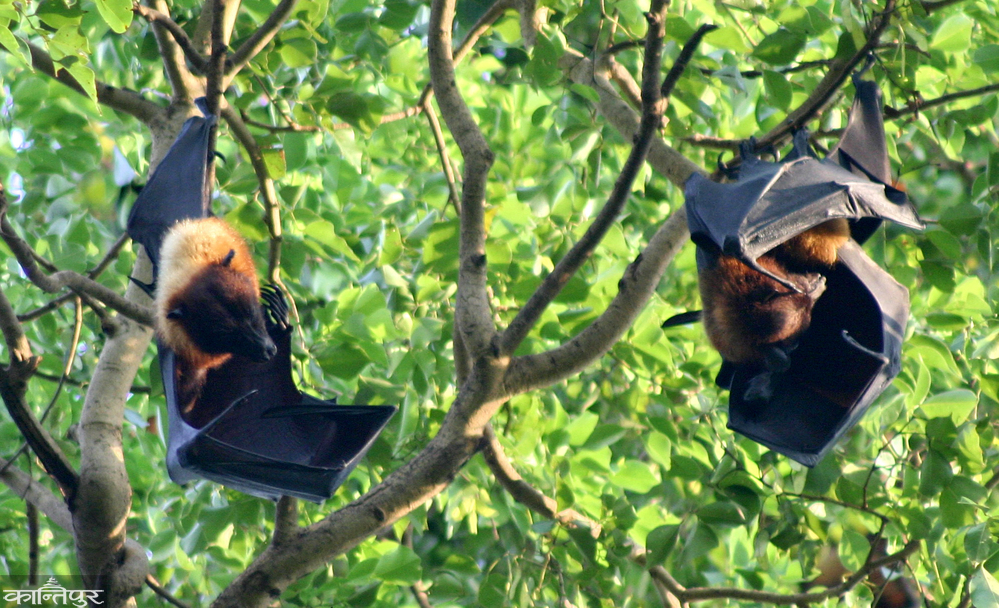 Bats seen in Sisau tree in Kapilvastu Municipality-3, Devangadhia. Photos : Manoj Poudel/Kantipur
Pollinators move pollen from one flower to another . It is the first step in the process of producing seeds, fruits and the next generation of plants. Although it seems commonplace, pollinators transfer genetic material important to the reproductive system of most flowering plants.
75 to 95 percent of all flowering plants on Earth require pollination, according to a study by the Pollinator Partnership, the world's largest pollination organization headquartered in the United States. Similarly, it is said that the pollinators will provide pollination services to more than 180,000 different plants and more than 1,200 crops. This means that one out of every three meals that humans eat is caused by pollinators.
Pollinators add $217 billion to the global economy and the Pollinator Partnership states on its website that bees contribute $1.2 to $5.4 billion to agricultural productivity in the United States.
The number of pollinators is decreasing due to pollution, increased use of pesticides, poaching, disease and climate change. Sapkota, president of Leo Club of Pokhara North, said that the local level should not delay in making a plan for this.
Pollination helps balance ecosystems and help plants reproduce . Apart from food, pollinators also help balance biodiversity and balance the food cycle.

