What was your routine like before you were in a relationship? Was there a focus on studies or not? Is good work being encouraged or reduced? Psychologists say that these things can tell if a relationship is 'toxic'
We use Google Cloud Translation Services. Google requires we provide the following disclaimer relating to use of this service:
This service may contain translations powered by Google. Google disclaims all warranties related to the translations, expressed or implied, including any warranties of accuracy, reliability, and any implied warranties of merchantability, fitness for a particular purpose, and noninfringement.
Srishti (name changed) was studying in class 12 and was in a relationship with Garada. Currently, 22-year-old Srishti, who is studying in her fourth year of graduation, while having lunch with her friends during a college 'break', recalled her old relationship and said, "Even after knowing that she cheated, she didn't want to leave him." She was in a relationship with a friend she had known since class 10.
When she reached class 12, she found out that her boyfriend was having an affair with others. At first, it was hard for her to believe that her boyfriend, who had been close to her for 2-3 years, had 'cheated' her. Later knowing all this Srishti could not leave her lover. "You cheated, he used to cry and say 'breakup' instead of breaking up". He also promised not to make a mistake again, but such a mistake was repeated again and again and he used to say the same,'' she narrated the past.
Srishti was repeatedly assured that she was loved by her boyfriend who would 'manipulate her emotionally'. It took Srishti months to realize that was not right. This incident also caused him mental stress. "It took me a long time to understand that what he did was wrong," she recalls.
Similarly, a 19-year-old girl studying in class 12 is worried about whether she can still do something to improve her boyfriend. Neither she can let go of her boyfriend nor can she let go of the self-doubt and stalking habit.
Having been in a relationship with a 21-year-old boy for a year, she doesn't like the fact that her boyfriend forces her to detail his every move. Even if all the activities are clearly stated, the lover does not stop doubting. She said, "Sometimes he even got hold of my mobile's Google Track details. And why did you go there? What did you do? '
She can't leave her boyfriend, who is so suspicious, sometimes checking the chat details of Messenger and WhatsApp, and she can't tell him that she doesn't like this activity. She said, 'She doesn't like this habit. But I can't even say. According to an investigation officer working in the cyber bureau of the
police, some of the many cases that come to him are related to crimes arising from such 'toxic relationships'. The officer said, "Teenagers can neither leave their boyfriends nor can they fight against his surveillance as it is a kind of crime." Only when there is a problem, they come to understand the police.'
The same police officer narrated the incident of a teenage girl who came to him recently. According to him, the ex-boyfriend of the 21-year-old girl used to get hold of her social network passwords and threaten her by saying that he will assassinate her from there. The girl went to the police saying that she was mentally stressed. According to the police, the girl has been living under stress for six months because of this.

These are just a few examples of 'toxic relationships'. There are many other young people who knowingly or unknowingly find themselves in such toxic relationships. Why do some people live in a 'toxic relationship' or do not know they are in a 'toxic relationship'? Experts say that there are not many studies on this.
According to psychologist Karuna Kunwar, to understand the reason why a relationship is toxic, it is necessary to understand how the relationship started from the beginning. In the beginning, in any relationship, giving each other time, complimenting, giving a lot of 'attention' is what makes 'attachment'. If we talk about teenagers or young people, how many of them are having their first relationship. It may seem that the relationship always goes like this," says psychologist Kunwar, "Even after spending a lot of time together, the addiction is there. But in any relationship that doesn't last forever, the focus on other things also increases. Such as studies, career, which reduces the respect and trust in the relationship and starts to become toxic.'
Adolescents can't know at first even if something bad has happened while they are getting used to loving behavior. Kunwar adds that they do not take any decision with long-term thinking, but after the violence, they think that it will be fine gradually and they stay in the relationship with many hopes. After a long relationship, it is difficult to leave.'
Kunwar said that many lovers put up with their partners in the hope that they will change their bad habits or make them change. If there is a problem like that he will improve, promise not to make a mistake, repeat the same problem again, the trusting partner will be mentally traumatized. Many women are found to be victims of this. However, she said that it is seen in both men and women.
Similarly, clinical psychologist Hasana Shrestha says that staying in a 'toxic relationship' and not being able to get out of it is also influenced by the conditions and experiences of your childhood. According to him, the root of any 'toxic relationship', inability to get out of it or difficulty, is connected to his childhood. What is in your family? How the relationship between parents affects everyone's life. "People are easily attracted to familiar things," she says, "If things are not good at home, it is natural to feel bad about yourself." It is normalized that everyone will have the same problem.'
Shrestha said that another reason for this kind of behavior depends on how she is treated at home. "If a child hears expressions like 'I'm not happy because of what you're doing', he will develop the feeling that what I do should not be difficult for others. That's why he starts showing behavior that annoys people.'
Shrestha argues that other neurological things are also connected to this. She says, 'A single person is experiencing both good and bad at one time. After feeling very bad, if he makes you feel good, it is very rewarding. Feeling that reward releases dopamine and other feel-good hormones in the brain. This is the reason why even the bad things are forgotten.'
Human rights activist Mohana Ansari makes the same argument. She says that family matters also affect people's relationships. "Fighting all day long and getting along, showing love but also showing hatred in a harmful way is often seen in the family", she says, "again when complaining about this, no one takes it seriously. Violence is also tolerated. There is an understanding that violence is okay. As a result, even if it is toxic in the current generation, it has been generalized that it is the same.'
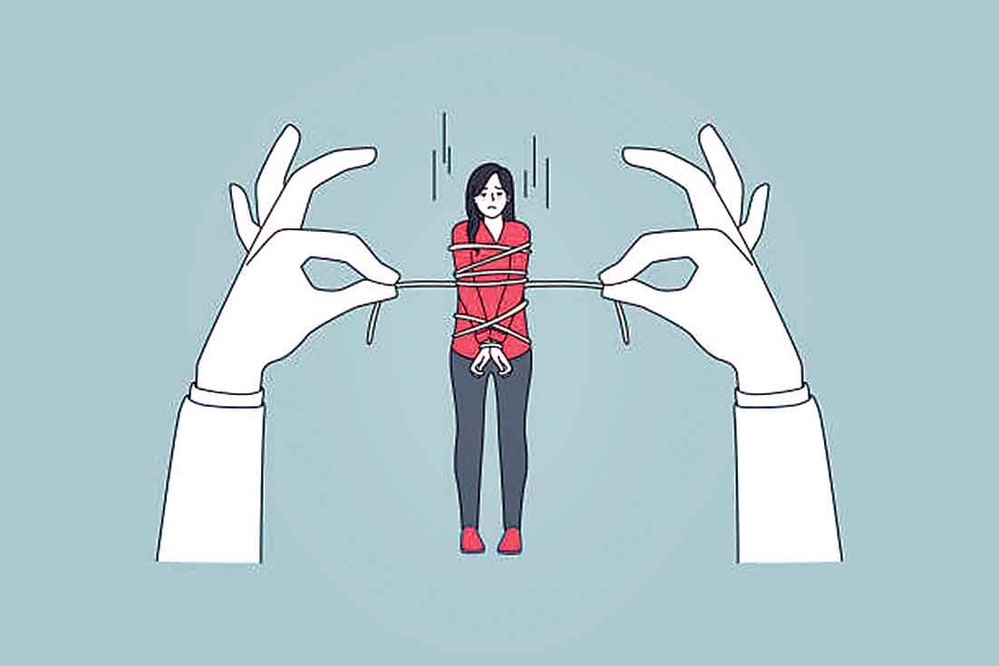
Similarly, Ansari says that such a problem also occurs because of the way women are viewed. There is a trend in the society where women are blamed if something bad happens. Narrating her experience of 'counseling', she says, 'Women don't feel empowered, that's why they can't defend themselves.'
How to know 'toxic relationship'?
Psychologist Kunwar says that many people do not even know that the relationship is 'toxic'. How were you before you were in a relationship, what was your routine like? Was the focus on career, studies or not? Is doing good things encouraged or discouraged? These things can tell if a relationship is 'toxic' or not. If you have a good experience or enjoy living with someone, it can be understood that the relationship is healthy.
If you are feeling stressed, many things are playing in your mind, you feel like you are melting, then the relationship is not good. Kunwar said that if such a situation has arisen, he should remember his past. She says, "There is a lot of manipulation in some places. Doesn't even feel free. Shrestha says that even if you start to love yourself i.e. 'self-love', it can be understood that the relationship is 'toxic'. She says that to understand whether a partner is caring or monitoring, one has to know how to love oneself. Shrestha says, 'The way you treat yourself, others will treat you the same way. That's why it is necessary to make your own value.'
Ansari believes that families and friends should listen to the teenagers and support them. She says, 'Today many people's help is needed to solve this problem. There is a tendency to blow that the problem is not serious which is wrong.'

