NSK, Napsides, Madzone, MC Flow and Unique Poet followed the path of Nepali rap music blazed by rapper duo Girish Khatiwada and Pranil Timalsina (GP). Yama Buddha made rap popular among Nepali youth. Right now Balen, Lahure, Easy Twelve, Kaviji, Sakar are treading on the rap highway that he dug.
We use Google Cloud Translation Services. Google requires we provide the following disclaimer relating to use of this service:
This service may contain translations powered by Google. Google disclaims all warranties related to the translations, expressed or implied, including any warranties of accuracy, reliability, and any implied warranties of merchantability, fitness for a particular purpose, and noninfringement.
When rapper Balen Shah became the mayor of Kathmandu metropolis, Manas Ghale of "Nepsides" said, "Becoming mayor of Balen Shah is entering the system. Now the country will start loving our genre!' Manas, known as 'Lure' in hip-hop music, was sure that Balen's win would change the attitude towards the rap genre and increase respect.
As Lure puts it, there are now more people who "understand" rap. That's not just the fault of Mayor Balen's Polta. In the history of Nepali rap music for three decades, the rappers who have been continuously on this genre, their music and its impression are the factors of change, which makes rap not only 'loose', but the feeling that has been lost in the society
is also a means of breaking out. Rap music has become a commentary on social, political and economic dissonance, a voice of the marginalized. So today we are remembering such rappers here, who have brought rap as a strong genre in mainstream music and brought it here.
rap has now arrived on the musical highway. But who blazed the trail to get rap here? Two names come to the fore, Girish Khatiwada and Praneel Timalsina (GP). In particular, Girish recorded 'Meaningless Rap' around the year 1992 when he was studying in class 8 and made it public. At that time, the music company was attracted by the new flavor of rap songs. Then they encouraged Girish to release the album. After giving SLC in 1994, Girish released an album titled 'Meaningless Rap' together with Praneel.
no meaning rap, this is meaningless rap
No Meaning Rap, It's a Meaningless Rap
No meaning rap, this is meaningless rap
At that time, those who sang ragas and practiced music were considered singers only. Rap was considered completely different. So some people did not consider Girish as a singer at that time. Those who heard his rap for the first time would say that a new 'front' had come to town. 'Did you sing the speech?' Some would say to Girish. That style was only found in promotional materials at that time, Girish and Praneel adopted the same style in their raps.
'There is poetry in rap, when you put that poem into rhyme, some people thought it was a speech,' says Girish. After that, his album 'Back Again' in 2002 became a massive hit. However, after GP's first album, there was a gap in the music scene for a long time in rap. New raps were not heard. Napsides (Kiran Shrestha, Manas Ghale, Ganon Chitrakar) started rap in English at that time. From 'Back Again' to 'I'm like this, I'm like that, I'm like that, no matter what...', he started rapping in Nepali again. This song established the rap genre in Nepal.
Girish's 'See is the Bomb' also ran widely. It was a rap song by Girish and the Unity. After that, the songs of 'Made in Nepal' album like 'Chuchuin Toor Mayale', 'Maya O Maya' took rap music to a new height. "We were conscious of the choice of words," says Girish about the audience's preference for rap music until then. In the early days of
, Ratan Subedi brought a rap with the lyrics 'Batti Baler' in 1991. Ratan claims this as the first Nepali rap. However, some rappers see Ratan's 'Batti Baler' as less of a rap and more of a 'parody'. If Ratan is to be placed in the group of rappers, then he is the person who recorded the first rap. However, if we look at rap only, Girish and Praneel are the first rappers of Nepal," says Lure (Manas Ghale).
Young rapper OMG adds, 'Ratan Dai has captured some of the style of rap, so don't forget to give him credit.' Anyway, what was the first rap song? More important than the debate is Girish and Praneel's rap and how hip-hop music was established in Nepal. If Girish and Praneel had not started this journey then, Nepali rap music would not have reached the mainstream. NSK (Nirnaya Shrestha) entered Nepali hiphop after
GP. The history of hip-hop seems incomplete without him. From NSK's raps like 'Din Phani Bityo', 'Hamro Village Jeevan', through the radio program 'Bring the House Down', his contribution to spreading rap among the general audience is invaluable. By 1989, NSK had started rapping in America. In 1998, he returned to Nepal and ran a radio program called 'Bring the House Down', where hip-hop music was played. The show played a role in bringing hip-hop/rap to a younger audience.
At that time, the audience of this program was only young people. But, they were not interested in what was happening in the country," says NSK. "At that time, there was no way to listen to hip-hop music here. This program brought rap music to the young audience. NSK recorded the song with the name of the radio program covering the situation at that time. At that time, the Maoist conflict was going on. That song was recorded to inform my audience about it,” NSK recalls. His 'Bring the House Down' went well.
Then 'Rapper's Union' started. This group of four rappers released an album called 'For You All'. According to NSK, the music played in 'Bring the House Down' in the early days was too new for the youth. NSK claims that the second generation of rap was born from the radio program he has been running for 26 years.
'Nepsides, madzones seem to have come from that show. "This program has played a very big role in giving birth to new rappers," he said. While he was rapping in English, someone asked NSK one day, 'When will Nepal win the Grammy Award?' NSK felt that he should rap in Nepali to bring rap to the young audience. Then he covered the pain of foreign employment in the rap 'Din Bhi Bityo'. I mixed rap and folk styles in it. This song reached the general youth,' says NSK, 'When this song played, many young people used to copy my clothes. Before reaching Khotang, I went there by helicopter to present this song.'
While Girish and NSK were rapping, Nepsidez arrived. Initially, Nepsidez rapped underground. Manas used to do rap covers with his friends. However, Manas remembers that he started rapping through Napsides while speaking, writing and rap battles on NepHop.com.
At that time, they named hip-hop in Nepali - Nephop. DJ AJ and I coined the term NapHop together. Those who fought around 1999 thought that we could not speak English. To break that, we started the word NepHop so that we can also do HipHop," Manas told Kantipur, "NepHop means Nepali HipHop. There is still controversy over this terminology. Underground rappers consider nap-hop to be commercial. The beboingers are still using hip-hop.'
After the Napsides, the 'Beats' arrived. Madjon's 'Keti Tu Kati Ramri Deheko' was very popular after Nepsides did 'Made in Nepal'. Meanwhile Norbu Sherpa, Apar Gurung, Sami, Hakim came. Then the trend of remix songs started. And with the onset of the 'digital' era, access to YouTube increased. This era introduced Yama Buddha, the 'icon' of Nepali rap. After Nepsides and before Yama, Nepali rap music was moving to the left. With the entry of Yam, rap in Nepal changed everything.
Most of the Nepali rappers who are in the forefront of rap right now believe that Yam's intervention in hip-hop music is the best. Girish also believes that Yama played a big role in spreading rap among the youth by turning Nepali rap towards video. I consider Yama Buddha's time as a good time for Nepali rap. Rap is the hip-hop culture practiced by Nepalese youth.
rap was heard among the minority. However, Yama made a music video on rap. It then spread to a wider audience. Before this, Emcee Flow and Unique Poet had rapped. But, till then there was no music video,' said Girish.
It was Yum who started the rap battle with 'Raw Barge'. Balen, Unique Poet, Lahure, Easy Twelve, Sakar, Kaviji were recognized by this platform. This platform gave place to new talent. Raw barge was raw, here it was possible to leave the mouth. There was fun, there was creation. After Awaz, rap took off fast,” says Girish. Not only did he bring in new people through 'Raw Barge', he became a 'trendsetter' in rap itself, yum.
He raised social themes from contemporary issues in rap. Yama's 'Saathi' made waves in hip-hop music. He sang rap covering big issues like discrimination between sons and daughters, child marriage, human trafficking. He wrote 'Aama' while referring to his mother. Copyright lifted. From giving a platform to new talents to bringing them together, this same nature cannot forget Yama even those who try to forget it.
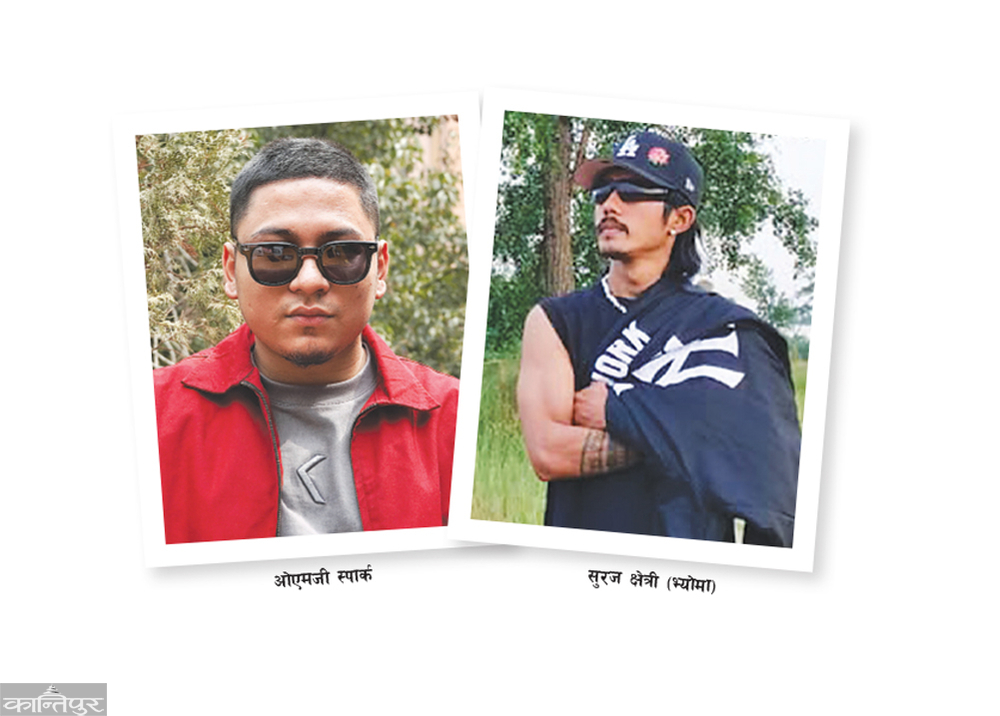
He is an 'icon' in Nepal's rap history. Yamama had a vision to unite rappers. Raw Barge practiced democracy. Rao Barge taught the youth to express themselves freely. Rao Barge gave birth to the democratic youth who did not see the Panchayat period and the king's rule,' says OMG. Rapper Suraj Chhetri 'Bhyoma' is of the opinion that rap has arrived on the highway now, even as the youth finds himself in rap. This genre helps to get out things that are not satisfied and suppressed. That's why the young people found themselves in the expressions expressed,' said Bhyoma, 'Hip-hop has now become the mainstream in world music.'
Balen, Lahure, Sakar, Viten, Unique Poet, G-Bob, Dimitri, OMG Sparks are the generation after Yama. Rapper OMG opines that this generation has a different taste in rap. The young audience also listened to hip-hop. That's why rap is flourishing now. Hip-hop is pop culture in itself,” he said. Rap captures the emotions of the youth, speaks their language. That's why young people argue that they found their voice in 'rap', OMG. OMG, who recently brought the rap lyrics of 'Babal' to the market, said, "The youth found their voice in rap, so they fell into rap."
Balen mixes social issues, dissonance and political criticism into his raps. It criticized and questioned the government by showing the problems of the country through 'Sadak Balak' or 'Aam Nepali Buba', 'Tathaya', 'Oi Budha Sarkar', 'Nepal Haseko', 'Man Yo Udyo' which included the issue of street children brought in 2012. OMG's analysis is that these rappers are representing society in their raps.
'We artists are the mirror of the society, we show what is in the society. "I'm proud of my culture, and that's what happens in my rap," he said. In particular, as he said, the rapper has been presenting the pain and suffering of the society and country in which he grew up in rap. Balen, who won the hearts of the young audience with his rap, also won their hearts and votes. And he became the mayor. Bhyoma says Balen's raps are more poetic.
'Lahure' is also a powerful rapper in the post-digital era. In 'Mero Solta', Lahure covered the story of Paltan by covering the compulsion of those who go to Lahore. After that, he rapped about social problems and issues in "Lahure", "Howde", "Tito Satya", "Nephopko Bato" and "Birami".
'His raps are the words spoken in the village,' said Bhyoma. The use of common colloquialisms is the rap that identifies Lahure. The concern of the country can be found in Unique Poet's 'Mero Desh Madil'. Poet has unique writing in raps like 'Kaalo', 'Ma Kassam'. Girish says that Unique's grip on rap writing has strengthened after Yama. "After Yama, Unique Poet is putting a very conscious thought into rap," he said.
Vitan rose through many struggles and came to rap. The society seen by Witten is found in his rap. The complexity of the society he saw is found in the 'Galli Sadak', 'Katha', 'Yatra' etc. NSK believes that the 'story' of Witten has a special power. "Many of you may remember Whiten's Chala song. But the story is very powerful,” said NSK. Whitten's raps are mixed with 'street' lyrics. The same kind of words are included in rap when covering the experiences that you have experienced. Let's look at the story of Bhitne!
Today I'm going to eat as much as possible
I am in the old village, the ancestral farm
I go across the hills, I carry firewood heavily
Anyway, I will live sadly