A large congregation is ready for bird information, knowledge expansion and new records. ”Bird watchers” have not only helped in bird conservation, but have also helped in promoting tourism.
We use Google Cloud Translation Services. Google requires we provide the following disclaimer relating to use of this service:
This service may contain translations powered by Google. Google disclaims all warranties related to the translations, expressed or implied, including any warranties of accuracy, reliability, and any implied warranties of merchantability, fitness for a particular purpose, and noninfringement.
After leaving the 'concrete jungle' in the first week of Baisakh, we reached Chitwan. The objective was – jungle safari. After entering the 'natural forest' of Chitwan National Park, energy was added to the tired body. Cold spread over the hot body. Keeping our eyes and ears alert, we were moving slowly in the jeep, nature guide Vikas Limbu signaled the driver. The vehicle stopped. A couple of peacock heads were seen in the grassy field, looking at us, they disappeared into the bush.
A little later appeared – the rhinoceros, which had come out to bask in the bright morning sun. Both ears perked up at the sight of us and remained engrossed in their own conversation. Chital, wild boar, red monkey, Ratuwaka activity and the sound of many birds including Kalij, Haleso, Lahanche, Kakakul were giving us a feeling of another world.
A lot of foreign tourists could be seen on a jungle walk and some on a jeep safari. Binoculars slung over most of their shoulders were pointed at tree branches or grassy fields. What are they seeing in the bird?
"For bird watching tourism, it is even better if there is a special species of bird," says ornithologist Hemsagar Baral, "Foreigners come here to see the birds found in the Himalayas or mid-mountains." Their other aim is to find birds that are found in the Terai region but are not seen in other countries. Many people are interested in the thorny vulture, which is found only in Nepal. He says that 400 species of birds can be seen in at least two weeks.
About 72 percent of the 900 species found in Nepal, i.e. more than 650 species of birds are found in Chitwan. Among the 9 protected birds in Nepal, the Rajdhanesh, Black Eagle, Little Kharmuzur, Kharmuzur, White-necked Eagle and Saras are here. Birds such as Bhundifor Garuda, Red Junbakulla, Black Partridge, Big-throated Toriganda, Suntale Chanchar, Red Muniya, Chakhewa, Kingfisher are roaming here. Chitwan is the habitat of many wetland dependent birds.
Chinese, Japanese and British tourists are more interested in birds. They come with the main purpose of bird watching," says Prakash Neupane, managing director of Siddharth Vilasa Vanabas, "Chitwan has become a very good place for birds in Nepal. This is the bird's hub. Not only foreigners, domestic tourists are also increasingly interested in the bird. Photo : Manoj Paudel/Kantipur
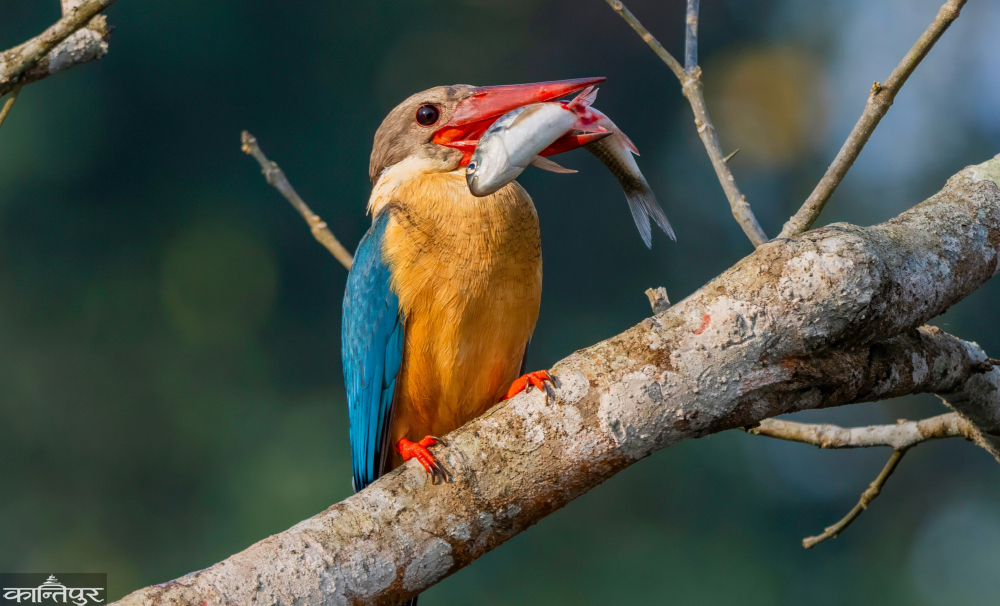 Siddharth named his room after a bird. Like – Hornbill, Kingfisher, Fish Eagle, Brown Fish Owl etc. Neupane said that they are also working on waterfowl conservation. We started 22 months ago on the theme of conservation. We have 200 species of trees, 50 of them are fruits that can be eaten by birds," he said. "The fish in the pond are for the birds' food." He claimed that 50 to 100 species of birds can be seen here.
Most of the hotel-resorts in Chitwan do not include 'bird watching' in the post-breakfast package. Not only the park and its surroundings, the geography and environment of Chitwan is a 'paradise' especially for birds. The number of 'bird watchers' who observe birds in the park and nearby protected areas is also increasing, who have not only helped in bird conservation, but have also helped in promoting tourism. The activities of bird related organizations, independent bird hunters in different districts are attractive.
Along with those involved in conservation organizations, the role of independent bird watchers and photographers has been seen to be important, says Baral. "There is an increasing trend of traveling around the country and abroad using the bird as an excuse," he says, "a large congregation has been prepared for bird information, knowledge expansion and new records." If we need to get any new information, they are helping us.'
Photo : Manoj Paudel/Kantipur
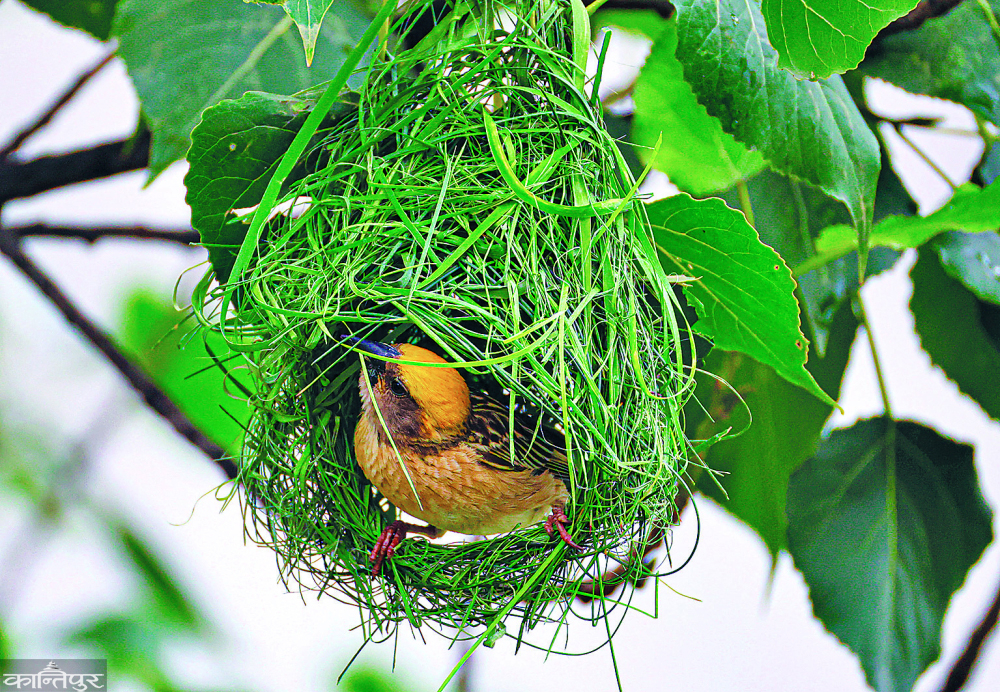 Nepal has also become a destination for tourists and birds. More than 150 species of birds migrate here in winter and 65 types of summer birds nest here. Due to the availability of dense forests to grasslands, wetlands, lakes, rivers and ponds, Nepal is a permanent habitat and 'transit point' even for rare birds.
Nepal has taken more than 8 percent of the 11,000 birds found in the world. After the cold in the Northern Hemisphere, the arrival of birds from Siberia to Nepal. Ornithologists say that tourism can be linked to bird watching from the foothills of the Himalayas to the foothills of the mountains and the plains, valleys and wetlands.
Conservationist Vasu Dhungana considers 'bird watching' as a good opportunity in tourism. He said that especially luxury tourists and bird watchers will stay for a long time, so their expenses will increase and it will benefit the tourism sector.
600 species of birds live here. Such birds are found up to 5000 meters altitude. We have 74 species of migratory birds and around 50 species of migratory birds that reach India, Pakistan, Sri Lanka and Africa. Who would not be happy to see the wonderful world of birds that come to Nepal from Siberia, Mongolia, Kyrgyzstan, Korea, Tibet, Eastern Europe and even India! But, are we able to work in bird tourism?
Photo : Manoj Paudel/Kantipur
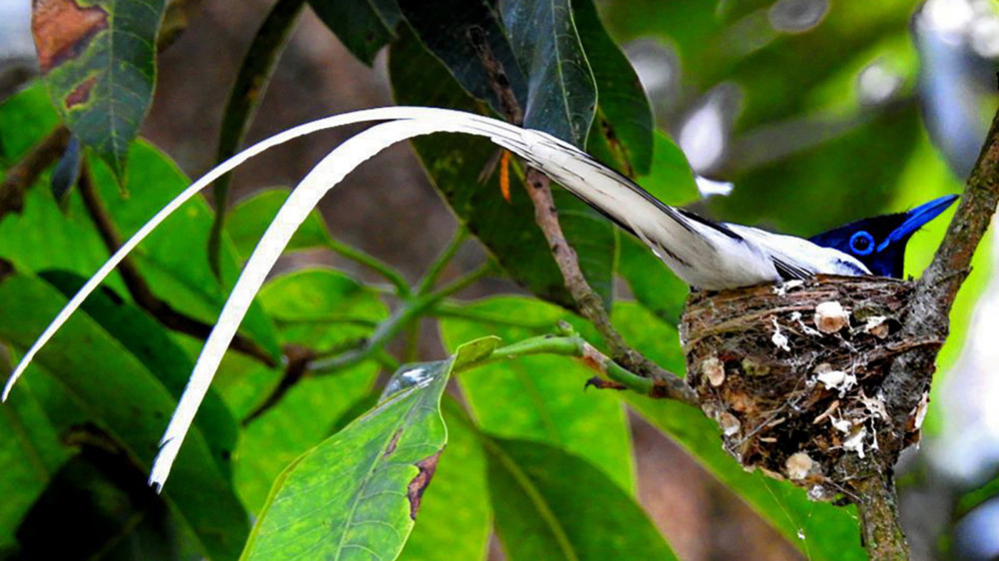 Ornithologist Baral estimates that 1,500 to 2,000 foreigners come every year especially to see birds. About 15 percent of the total tourists who enter Nepal also watch birds, he says, "Doesn't this fact show that birds are important in tourism?" The probability increases. However, bird researcher Devendra Kharel believes that publicity is important for this.
Bird tourism is an area where you can earn immediate income without making a big investment. Although there is a potential for bird tourism in eastern Nepal, it has not been implemented," he says. "There are no bird protected areas anywhere before Koshitappu. It is home to not only rare birds but also important wildlife habitats. New records for birds have been added from the east. He says that 354 species of birds have been found in Jhapa's Mechinagar municipality alone.
Kharel found a new bird, 'Bajni Dhade Bungechara' (Purple Rumped Sunbird) in Mechinagar-6 Kakdvitta area on February 7. In November 2077, he found 'Harit Pareva' (Green Imperial Pigeon) in Mechinagar. After the Mustang, it was seen for the second time in Jhapa, Fusro Saraun (White Cheeked Starling).
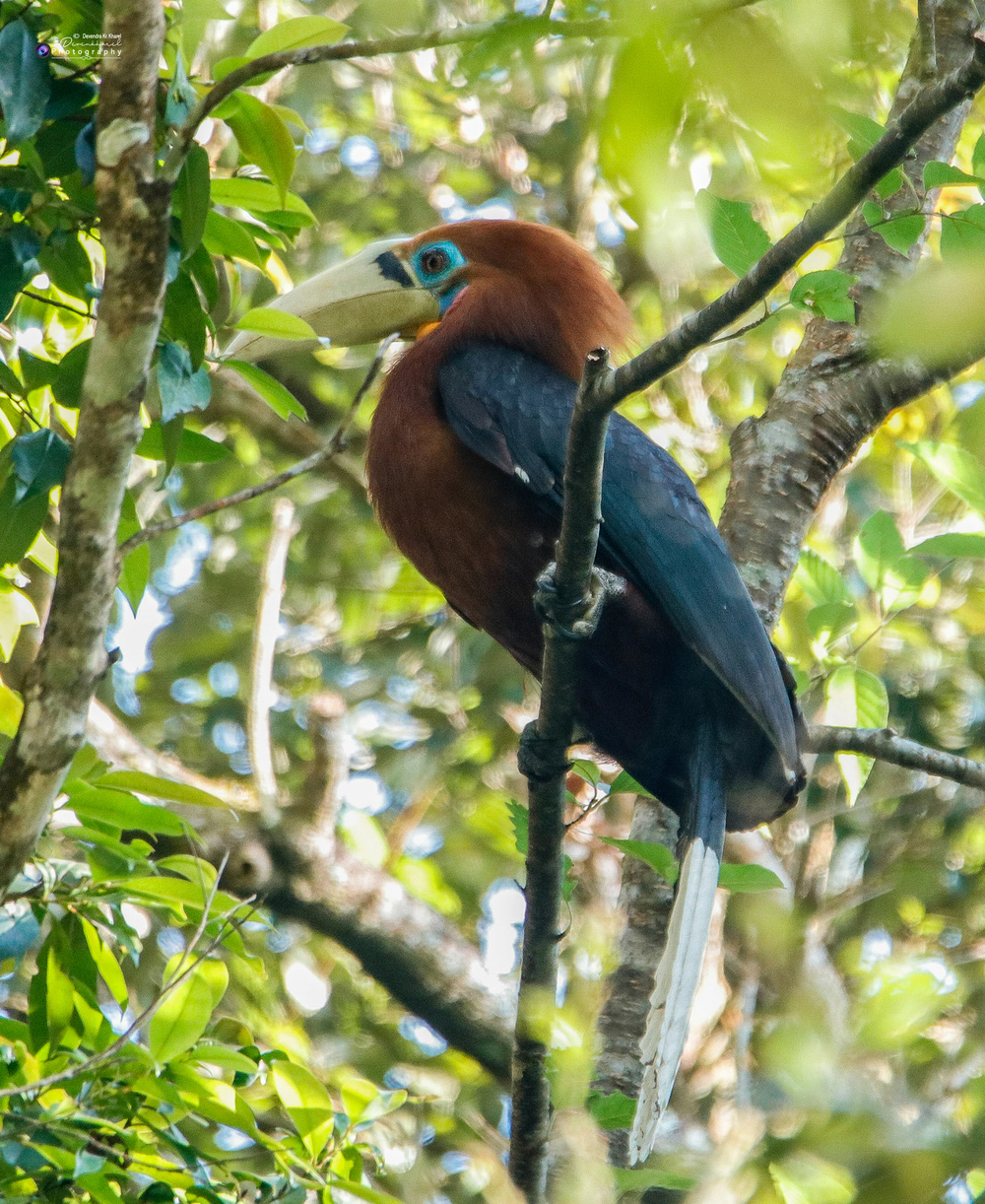
Kharel also managed to meet 'Hangrayo' (Rufous Necked Hornbill) which is thought to be extinct from Nepal. On December 6, 2078, he saw a pair of 'Hungrayo' in Suryodaya Municipality-1 Seemdhap forest area of Ilam.
Bird researcher Brian Hudson recorded it in Nepal in 1829. "Since then, leading ornithologists have been saying that it has disappeared from Nepal, but finding it is a great achievement for this region," he says.
With such records and achievements, the demand for a bird sanctuary (bird reserve) in the east is necessary, he says. Currently, 'Koshi Tourism Year 2082' is going on. He said that if all the stakeholders can put pressure for the bird sanctuary on this occasion, it will be a milestone in the promotion of tourism. According to Kharel, tourists from India enter the forest areas unannounced and take photos. Some have published as 'birds found in India'. Therefore, he said, if bird sanctuaries are announced in such possible places by the state agency, it will also benefit the revenue.
'Bird sanctuary can be declared in Mechinagar by connecting Kalika and Bansbari community forests and Hadiya river. Moreover, special types of birds are found in the forest area from Kutidanda to Harkate in Alimathi Elam, that is another potential area,' he suggests, 'Jamuna, Hagetham, Kaiyankatta, Sandakpur area of North Eelam is also a suitable place for a bird sanctuary.' At the same time, it is necessary to increase the importance of birds and their understanding to maintain ecological balance and biological diversity. "Bird tourism is an important part of tourism to earn local or foreign currency," says Kharel, "to turn this potential into an advantage, the state should not delay in designating new places as protected areas."
The start of bird tourism
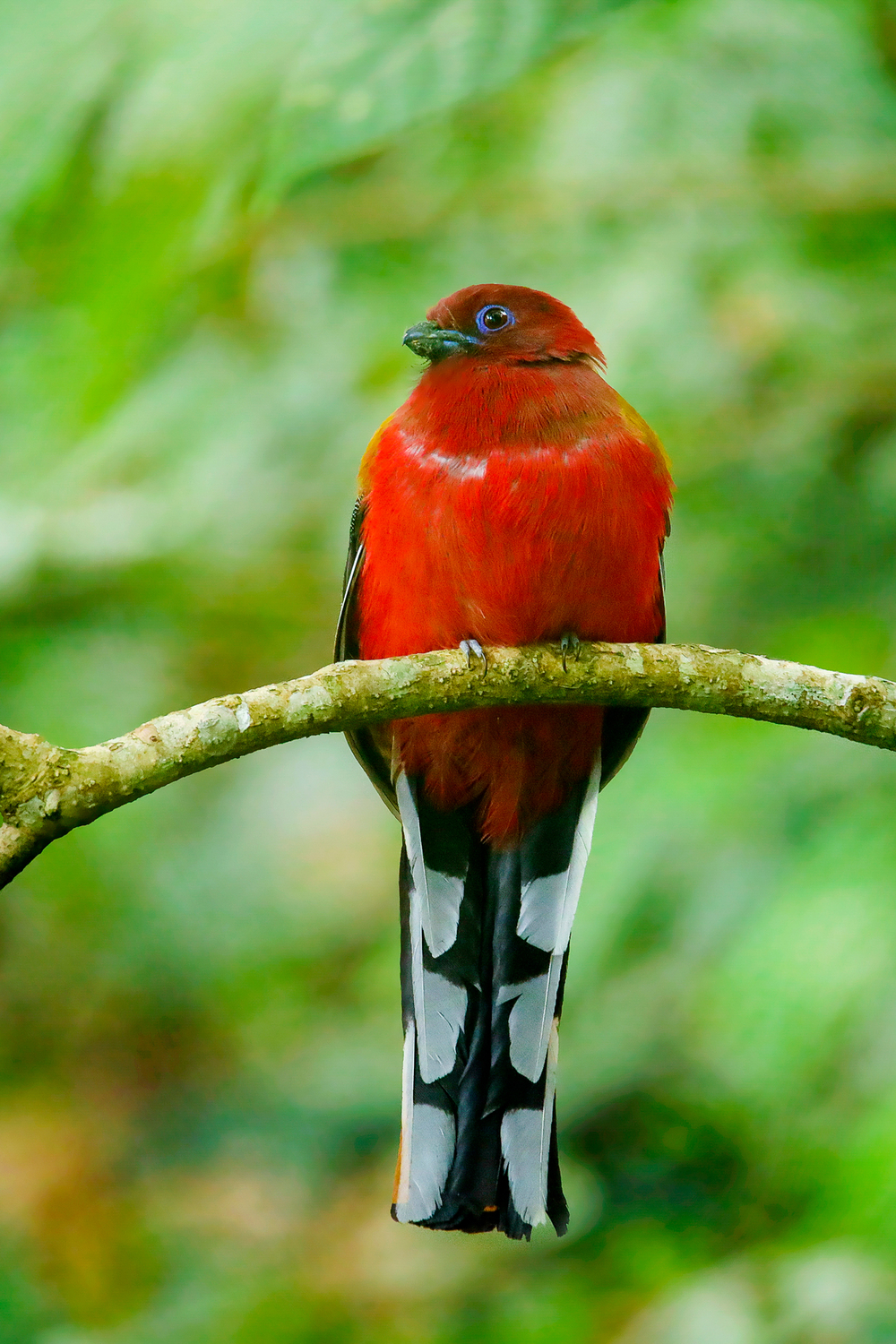
The history of bird tourism in Nepal is about 55 years long. Ornithologist Hemsagar Baral says that bird tourism started in the early 1970s. According to him, at that time, with the arrival of European tourists, especially British youth, Nepalese interest in birds started to increase. He remembers that 20/25-year-old British youths, carrying binoculars and cameras on their shoulders, reached different parts of the country in fakir style, and it created a wave.
photo : Ramesh Kumar Paudel/Kantipur
When big hotels were not developed, they were less expensive and lived in ordinary places. They used to eat biscuits and fruits. "Their lifestyle was a backpacking type living for 6 months on a hundred pounds," says Baral, "Bird watching and photography activities spread the message that birds can attract attention in Nepal." This process continued until 1990. Other foreign tourists and Nepalis also started to become curious about the bird.
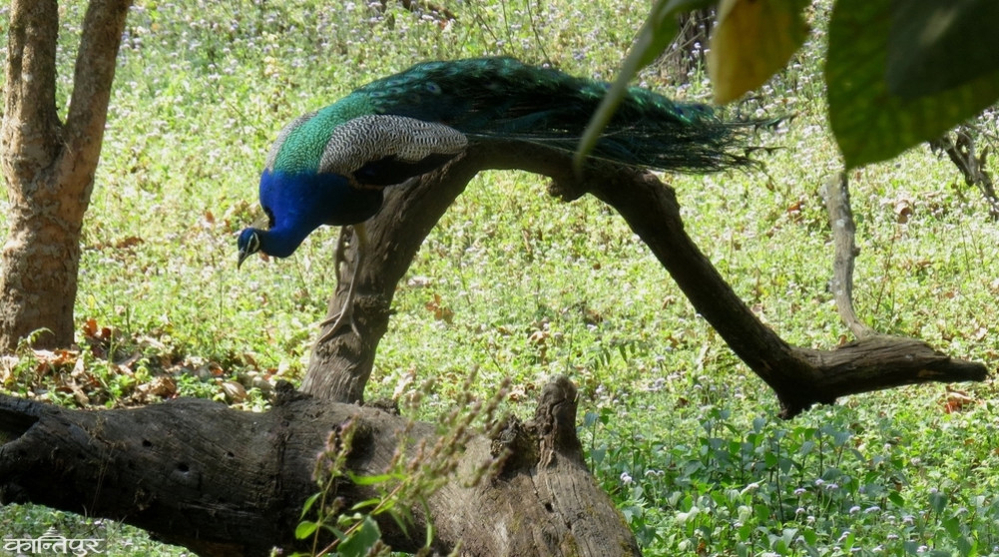 In the meantime, big companies like Adventure Travel and Yeti Travels arrived. He started providing quality service by bringing in expensive tourists. Such companies, which entered from 1980, earned good income from mid-80s. Baral recalls that the Nature Trek Company has made a huge contribution, especially to bird tourism. Photo :
Rame
Shaw
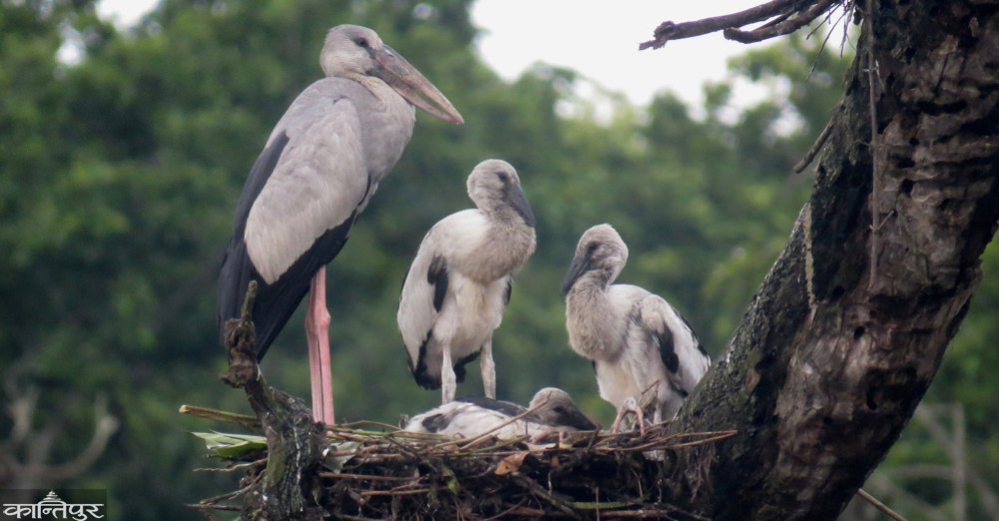 Kumar Paudel /Kantipur 'In the mid-1990s, 800 tourists came to Nepal annually through nature treks, especially to see birds,' he says, 'along with that, wild animals and different plants and flowers were seen in the Himalayas.' Because he had entered as a 'freelancer' in showing birds and wildlife to tourists. As the conflict between the government and the Maoists escalated, the nature trek began to flourish from 2000. Other agencies that have sprung up since then are working on it. Bird tourism, which started in the 1970s, has now taken off. It is your responsibility to let it fly without hindrance and make the 'nest' safe.

