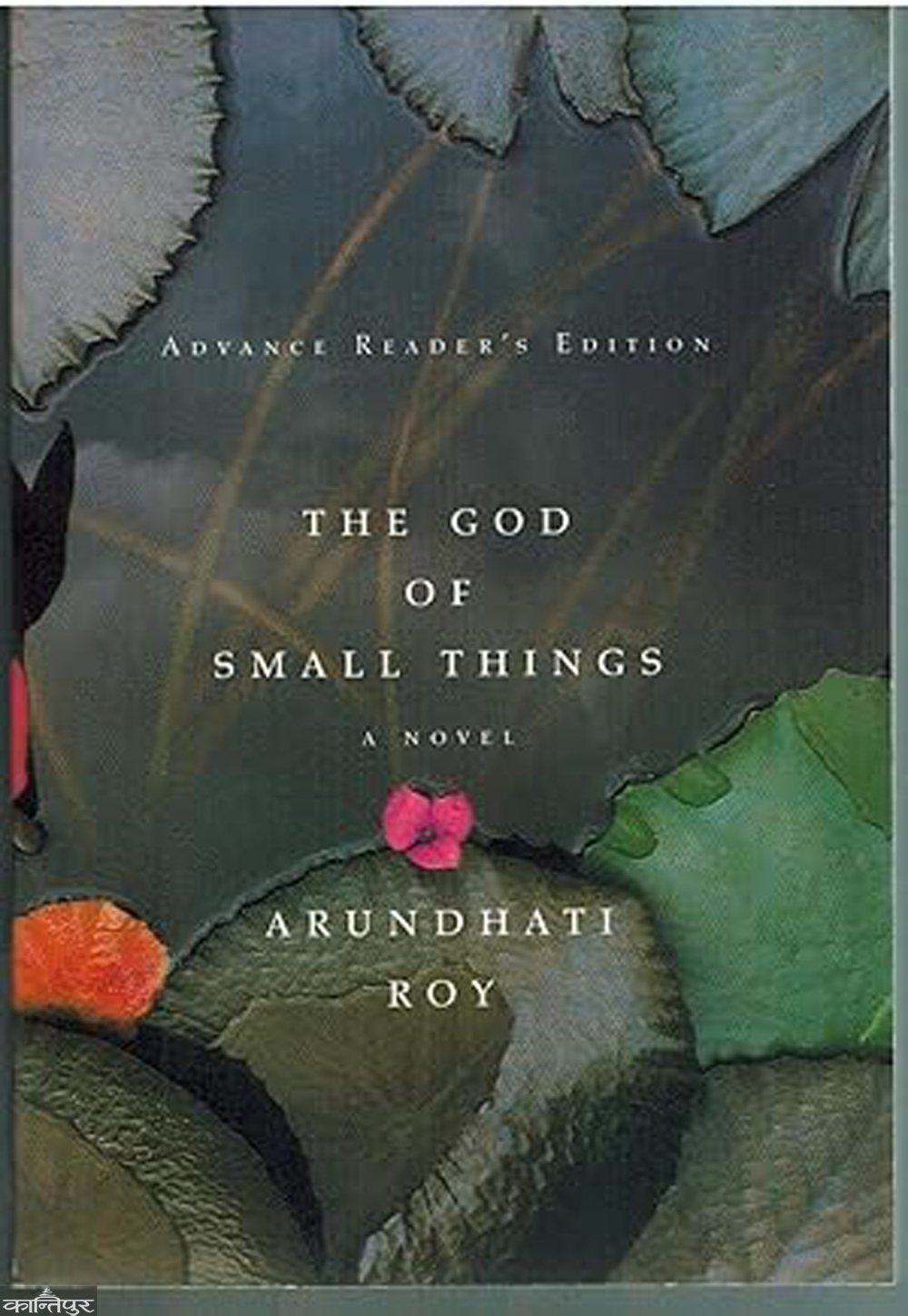
To understand political writer Arundhati Roy's 'Gage', it is not easy to understand the novel 'The God of Small Things' which brought her the most fame. Looking back after 28 years of publication, what is the smell in the novel, which still attracts the reader?
We use Google Cloud Translation Services. Google requires we provide the following disclaimer relating to use of this service:
This service may contain translations powered by Google. Google disclaims all warranties related to the translations, expressed or implied, including any warranties of accuracy, reliability, and any implied warranties of merchantability, fitness for a particular purpose, and noninfringement.
I was specifically looking for the Nepali word that gives the sense of 'gauge' in English, for the title. The background of this is that writer Arundhati Roy received the prestigious Penn Pinter Literary Award 2024 from the UK. And I was at the British Library reading his acceptance speech last October when he accepted the award.
The Pinter name behind the pen is that of the Nobel-winning British author Harold Pinter, whose play 'Homecoming' is one of the works that continues to touch and shake my home even after reading it for many years.
This prize established in his honor is given every year to such a special writer as Pinter expressed in his Nobel statement, who is looking at the world we live in with an unwavering 'gauge'.
Be it the 'truth' or the depth or the height or the superficiality of things, the way Arundhati has been looking at it for the past 28 years, I am happy to think that India is my neighboring country on the occasion of examining the reflections coming out of her 'intellectual stratosphere'. Of our one billion and 46 million neighbors to the south, I like her the most. Only then comes the turn of singers and artists and other writers.
The mental blueprint of today's article was formed at that time. Even without reading the explanation of this award, if someone asked me 'Why do you like Arundhati, tell me in one word', my answer would have been the same - the 'gauge' she does to the world!
As I couldn't think of a word like 'Gage' in Nepali when I sat down to write, I borrowed two words from his beautiful and powerful novel 'The God of Small Things' and put it in the title, 'Small Things'. You will find out why as you read the article.
She could also be called the 'Goddess of Small Things', but I don't feel comfortable using words that carry beliefs other than those established in the modern knowledge tradition. So when a man dies, you don't hear me saying 'may his soul rest in peace'. If there is a soul and someone is having peace because of someone's desire, I don't have a problem with that. I will start by adding some context to tell you what is the smell of
when I look back after 28 years after it was published and I read it. However, the focus of this article will be not only 'The God of Small Things' but Arundhati herself, who has written more than a novel in quantitative terms. Famous writers are also of Indian origin - like Salman Rushdie, Amitabh Ghos to Pankaj Mishra.
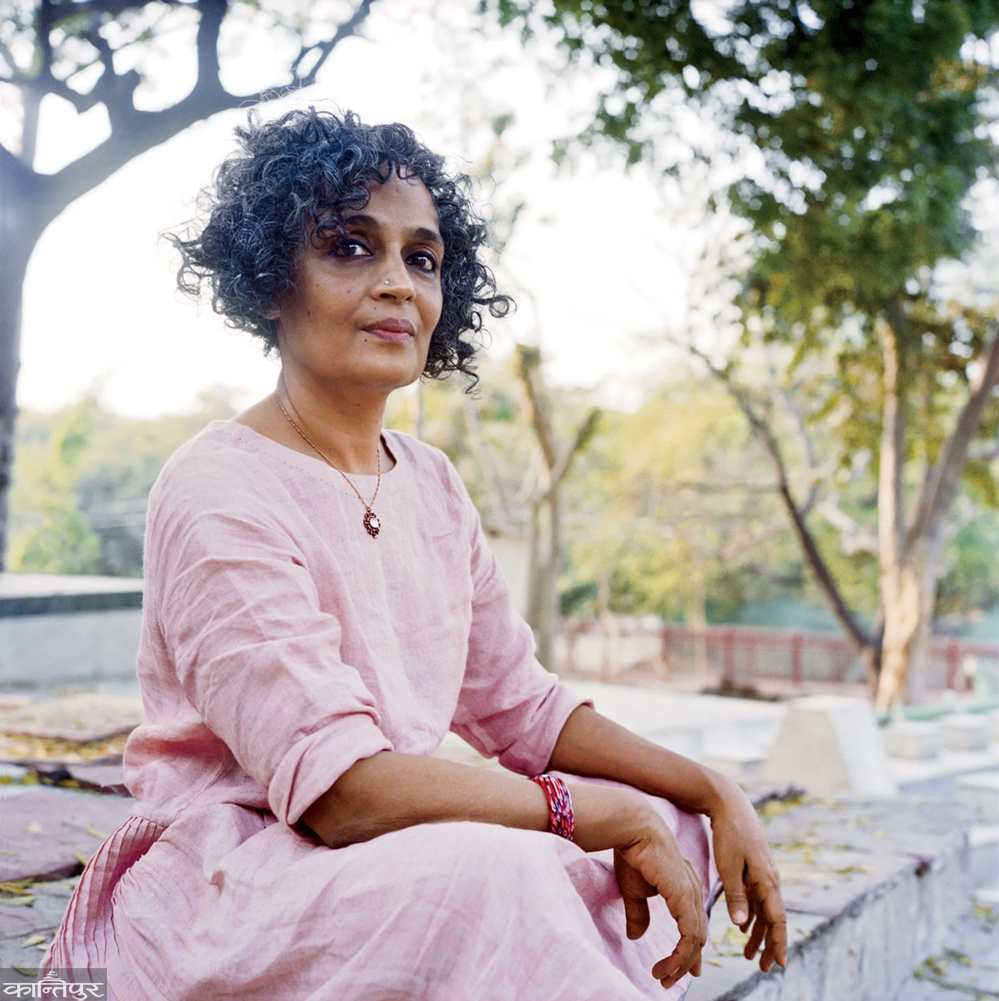
Their works have their own standards and they also speak/write on world events. There are other established intellectuals who comment on the contradictions of contemporary Indian society and other anomalies in the world. By comparing in this way, I am not disrespecting others, but what I want to see in this article is - what is there in Arundhati's view, so that the context of her writing and speaking attracts more attention than others on the same issue? Or sacrifices those who disagree with his point of view?
My 'thesis' to discuss the answer to this question is that the 'gauge' of the novelist Arundhati and the political writer Arundhati are the same. That 'art' is the same. The 'intellectual stratosphere' of his 'gauge' is the same in both genres.
Sahaj For example, BP Koirala's literary writings are said to be devoid of political views (although I disagree), my argument is that Arundhati's non-narrative is an 'extension' of her narrative 'gauge'. Because of that legendary 'gauge', she has been speaking, writing and commenting on political issues for three decades.
Those who write what that means may not know themselves, but Nepal is constitutionally a 'socialism-oriented' country. They don't see the difference between left and Ram, but Nepal is a left-wing majority country. That is why, in my estimation, there are many people who consider Arundhati as 'their own' in the Nepali left circle. However, there is also a strange intellectual confusion. It is my understanding that that circle considers Arundhati as its own, apart from 'The God of Small Things'.
because the initiates of 'socialist' literature cannot go through the journey that this novel takes the reader as a 'work of art' without suffocation. However, it is not their fault. If you have been an unquestioning believer in leftism or any other creed for years, your brain is 'cognitively' wired that way. The 'neurons' of your brain are set in such a way that I don't think the 'aesthetic' beauty of this novel can be assessed without shaking it.
The reader envisioned by Arundhati's novel seems to be an open-minded one, who is sometimes satirizing himself, blowing away even those who are called 'his' and is ready to meet the 'secrets' of his own mind that he did not know until now.
However, Arundhati speaks and writes for social justice, the anomalies of capitalism and for those who cannot make their own voices heard, so the left considers her a writer who sympathizes with her issues. The funny thing here is that some leftists probably don't understand – how Arundhati blows them away every now and then? After all, in this life we have the freedom to understand what we want.
The democratic scholars of Nepal probably do not think much about how to approach him. However, an international intellectual like him has become a 'brand', so they may not be able to 'dismiss' him directly. Personally, I have not had direct contact with many people in this circle. I don't associate as much as possible with those who are only interested in such matters as 'Tell me, where will politics go now?'
However, why is it interesting to observe people's interests? How deep do they go? Or splash on the surface? Not only that, it is also helpful to understand our political-intellectual 'paradigm'.
I was 25 when I read The God of Small Things for the first time. After living longer than that, how much the world has changed, how can you keep track of how much you have changed! Before I sat down to write, I had many conversations with myself about my own changing intellectual trends and aesthetic views during these three decades, as I was making a mental blueprint of how I would see Arundhati over the three decades. If there is an idea that is subjugated immediately, the attitude towards it will also change over time.
How many other works have you read in the meantime? Some of the topics that were thought to be 'special to know' may now be considered normal. However, what I found strange to myself is that now, in the long background of time-travel, when I read the same pages again, I found Arundhati's 'The God of Small Things' more fascinating than before. After that, whatever he has written on political and social issues, I have read as much as possible without missing a beat.
A few weeks after his second novel 'Ministry of Utmost Happiness' was published, I also wrote a comment on this very page of 'Cosely'. And, looking back deeply after all these years, my conclusion is that the gift of 'gauge' that he has for three decades to speak, write and talk about sensitive issues without hesitation, the 'skill' to look at the subject was clearly revealed in his first novel.
So my advice to those gentlemen who like him politically, but who are of a non-narrative tendency: His perspective cannot be felt apart from the novel. The underlying beauty of Arundhati's novel is that she can see many extraordinary moments hidden within the 'ordinary' moments of an 'ordinary' man.

She opens the letter of a myriad of possible feelings within a common feeling of common people. In general, most people's lives run on an 'autopilot'. Most of the daily tasks are done by him without even thinking about it. Even if he thinks about a subject, he is repeating the same thoughts from the same angle every day.
Arundhati 'dare' to think and think about the extraordinary meaning hidden within those 'ordinary' events. When entering there, he is not afraid of how many legitimate and how many 'illegitimate' truths will be dug up by himself or others. Therefore, the source of his 'gauge' in the political world is in his literature. Like
, 4-5 people urinating in the urinal of a public toilet should be very common, right? However, Arundhati finds that while narrating that 'small' incident, she spreads her insights in such lyrical prose that the reader is mesmerized by her art.
What are these different people thinking while urinating? Who would have thought of a stranger urinating in rhythm with him? He smells like him, but if I were to describe his style in Nepali in my own imagination, it would sound like an 'adolescent' urinating -
What do people change when they urinate? Will they urinate or not? Do and change are the same or different? If separate, has he urinated now or changed? Is he the same as he was before he passed urine, is he still the same now? If so, what did he change? Is this how everything changes? Oli changed to Deuba, Deuba changed to Oli, are all these changes the same?
How many people have urinated in this urinal so far? Did they all think as he thought at this time? Just then, he thought of something else that seemed immoral to him. Does everything moral become immoral after adding 'a'? So how come all A's are always immoral? So what is immoral is not a person but only a word?' If the available language is not enough to describe a
and a complex event and the time it is woven, she creates her own language immediately. She has created her own separate English within English wherever she needed to write her story.
is generally understood to be insufficient to convey the meaning of the words that are written separately, whether by connecting the words that are written separately or by separating the words that are written together. Even in non-narrative, when she presents a point by making it condensed, the same usage is also seen there. After that, what is needed - the subject is non-narrative, but when you read it, it flows like a narrative.

'The God of Small Things' The story begins with the reunion of twin sisters Rachel and Estha when they are 31 years old and goes straight back to their childhood traumas and beauty. Be it Ammu's 'illegitimate' relationship with the Dalit Velutha or Rachel and Estha themselves in physical union at the end, the characters throughout the novel have 'must not have' relationships, are thrashed about on forbidden topics. However, in my opinion, whatever happens in 'The God of Small Things', the writer's angle, 'wit', satire and the overall narrative are deeper than the events themselves. Through each major character, the author showers her insights.
And where is the big 'plot' in anyone's life? People don't live in the small events of the moment - whether you are called a big person or a small person in the world! How those small events make and destroy a person as a whole, which it is not possible for a person to keep a record of. It is precisely in this sense that the title of the novel has been given to each 'small' in the sense of 'The God'.
And, when he casts his 'gauge' on the events that take place in the novel, whether the character is mother or brother, uncle or 'cousin', he does not spare anyone. There is no saying, 'This is my mother, so she should be treated like this'. In a society that insists that 'so-and-so is my father or someone, therefore he is a good person', his written description is indigestible to some people.
As in his novel there is intellectual sharpness, satire, humor and poetry-like sweetness that connects it all, in his non-narratives these elements are combined with a strong logic. Whether reading what he writes or listening to him speak, not everyone will always agree with his arguments. Even if I don't agree - but many people probably think - yes, I didn't think of it that way. Some people wonder - Yes, it could be understood in this way.
Not everyone thinks like that. What most of the writers and speakers do is to 'recycle' the newspaper news according to their orthodox ideological inclinations. And the focus of those who do that is 'let's write the kind of writing that many people like'. However, in Arundhati's political view, the event is the same and it seems that she sees what others do not see in that event because she is not afraid to enter the event. They don't care if they become unpopular. There are many who see the person sitting at
in the peak of a paradise. Many people think that someone got no royal position. But, the Guge 'Gussee' can see the moral tropper of any of the moral trickiness from afar. Rames reminded them of the rimes in power as special people are really young! & Nbsp; Stores of
, the existing inheritance, socialism, socialism, socialism, socialism, and socialism of liberal injustice, the existing Indian society and seven decades of freedoms, which have not been able to address the technical democracy from the court. He is always male people in his center, there are minorities, as poorly made, are made of excluded. In the name of the
caste system, he has also starved in the 'Maatth's "Gandhi's'' Mahatkind. Dr. The presentation of the Br Ambedker's new print edition of 1936 was a satyar 'cents, like a "slainness' of Gandhi. & Nbsp; In his view of stories-Break, a decades he has committed a decade for a decade for a decade that one decades ago that one decade was not different from the quarter. Patchuut was criticized, but the single she has rewrite the history of Gandhi. & NBSP;
does not mean that all the rewhesing of history. Some even have tattoos to return. However, those who are clothed in history is found in a very progressive eye. No further beauty in the back of life is not to worry about which the priests of the society will be defended by the way they are defeated, and the corposiness of popularity 'and' Fame 'is not confused.
powerful are in the same power. What does the 'agency "as a writer and intellectuals, what does it mean to your' face '? & Nbsp; What is the world in evergreen crisis in the ignorance in the universe, the modern measures of the economy began only increasing it every year. Countries the original size of the economy are more than more than each previous year. 'The generation of the territory of the kingdoms are usually more increased. City-country relations are determined from the size of the economy. What country do not go to
? The country is determined by how wealthy is. It can be said that the purpose of being in the earth is just running for capitalization, the purpose of living on earth is only running capital. However, when he looks a story of rich countries, the country has become rich every year and there is no mediopolitarian job for a lifetime. Whether it was the story of Tokyo or that of Solly or in a city of America! & NBSP;
China, Korea, does not think too much of marriage, thinking too much in Japan, Japan. This does not mean that it is important, but if they do not, they follow so in 'cyper. " In rich countries, it has also started the debate, financially, is the right thing for financially? It seems that it seems that the work is done after the higut!
is being measuring the way that knowledge is becoming like is that the elder is. To be a human being is linked to meaning. The use of artificial Intiliges' to disprove people over working as a person is experiencing them. And, it's all for prosperous for enriches, being enriched for humanism - the world is prosperous, but every human life will be reduced to more clean! And the lands will be weaken, but the race of citizenship will be increasing! & NBSP; What is the other thing that is believed in
mythic story, or there is no injustice in the world in the history of writing. History if proof is that the possibility does not seem to be different in the future. But, what is almost all the time in history, there are also those who are going to change what is happening in every day. The closer they have to change is slightly. But, those who try to try to turn away from those who are not trying to change are cistersable. So I feel therusthetituted actor. & Nbsp;
she sees the meaning that seems meaningful to see the meaning of the 'Small Things'. I think of anyone's plot 'in one's life is the only one of which is the one who fills it through the filling. And, 'The Gad-of Slash' The gauge 'gauge' clopentic sense of 'gauge' clover "is really 'big'. & Nbsp;

