It has come to stand in a long process of trying to break through the continuous mixing of feeling with imagination – Pauli.
We use Google Cloud Translation Services. Google requires we provide the following disclaimer relating to use of this service:
This service may contain translations powered by Google. Google disclaims all warranties related to the translations, expressed or implied, including any warranties of accuracy, reliability, and any implied warranties of merchantability, fitness for a particular purpose, and noninfringement.
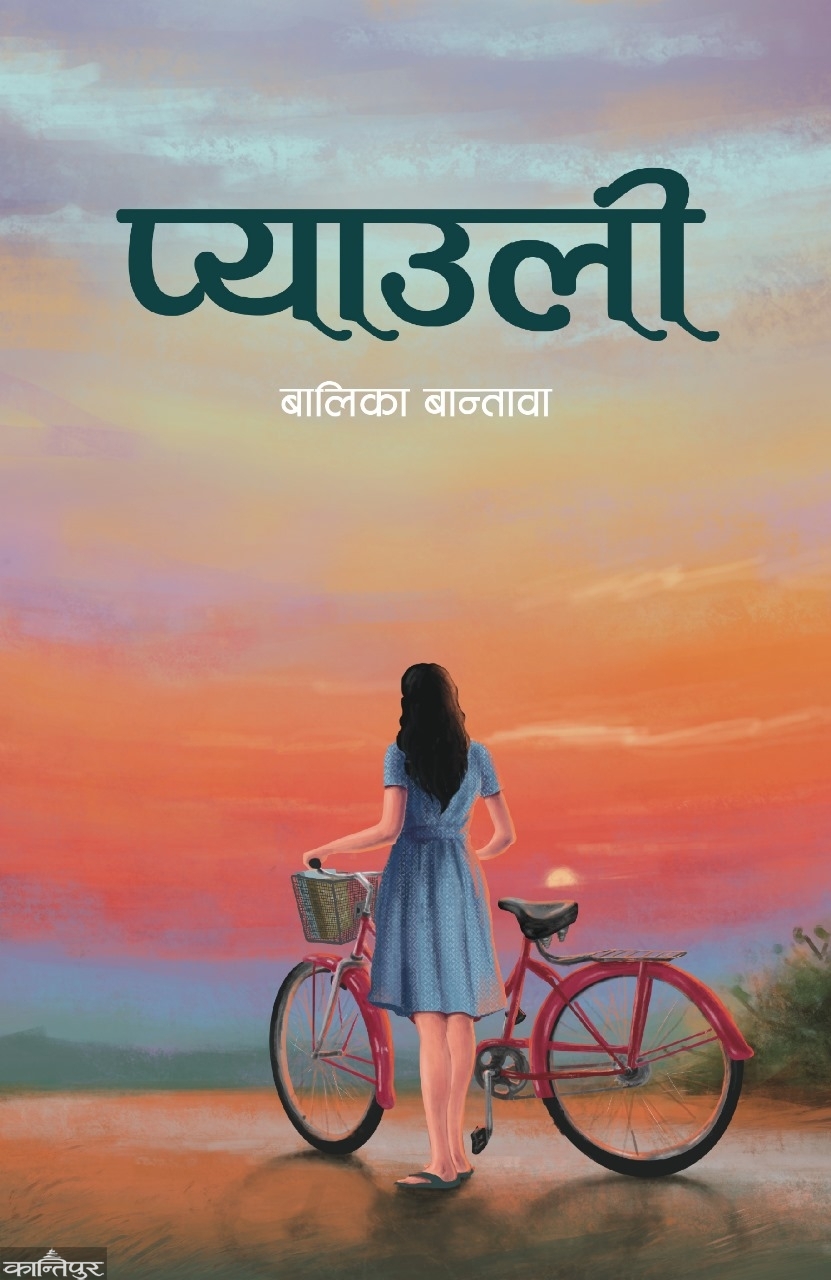
Writing is an experience, whether it is your own or someone else's. However, writing is not complete just by the flat expression of feeling. It requires the skill and imagination to lead to a conclusion in a systematic manner. Writer Balika Bantawa has come to stand in the long struggle to present the feeling in a systematic manner with some imagination - the writer Balika Bantawa, with her new novel 'Pauli'.
Although the
theme is not entirely new, the approach to the subject is new, that is the strength of this novel. The main theme of the story is the two men involved in the life of the main character Ladipma, their relationship with them and the consequences after the end of the relationship. This is usually the case in Nepali novels. Many stories of love and betrayal have been written. However, Balika Bantawa is the difference in these stories.
Two men come into the life of Ladipma, the main character of the novel, Prashant and Upmihang. Prashant is the first love and also the first betrayal. The marriage started in Kishori Bainsa starts going on the Nagbeli path as soon as Ladipma reaches Hong Kong. After her love with Prashant comes to an end, another character enters her life, Upmihang. Ladipma decides to end her relationship with Upmihang, who has a sadistic nature. That is where the novel begins. However, life is not possible without the end of relationships. The power of this novel is the narration of the story that cannot be finished.
Balika does not limit the main character of the novel to a sad woman who is saddened by the misfortune of relationships. On the contrary, Ladipma is an independent strong woman who stands on her own feet. Most of the literature tells the sad story of a sad woman suffering from a bad relationship. However, in 'Pauli', the author has shown that women have the right to decide how to live their lives through the character of Ladipma. Also, women have tried to confirm that their economic self-sufficiency is the first condition for them to be able to live such a life unconditionally. After all, the responsibility of the narrative is not only to express the present experience, but also to describe the future of the author's imagination. Through Ladipma, the heroine of Payoli, women have given a message that instead of silently accepting fate, they should resist from their side. That resistance is an exercise in free living, not revenge. In this sense, 'Pauli' is a feminist novel. By saying this, the question of what kind of feminist comes automatically.
The way the author has made Ladipma a self-reliant and independent woman, her feminism is revealed in that effort. The liberal feminism that has been dominant in the Nepali feminist movement for a long time is the feminist perspective adopted by Balika Bantawa. Opposing the social structure that treats men and women differently, while supporting educational opportunities, civil rights, reproductive rights, etc. for women, liberal feminism ignores the class and racial oppression structures of society, so that it is limited to the issue of middle-class women.
In the language of Sera Tamang, the Nepali practice of liberal feminism has been limited to development feminism, which is limited to the development, upliftment and empowerment of women, which does not take into account the social hierarchal structure that oppresses women including class, ethnicity, caste, sexuality ('Development feminism in Nepal', sociological thinking in the context of Nepal).
Balika also narrates the story of a woman's struggle to be independent and live the life she wants, which is admirable in itself. However, in the world he imagines, there is only one woman. The socio-cultural-economic structure that forced him to be oppressed and oppressed has been overshadowed. So the whole novel is reduced to the story of a woman's personal struggle. Personal struggle is not a sacrifice in itself. However, a society cannot be built as expected by the individual struggle of one person. Even if Ladipma of 'Pyawli' thinks that she has built a life as independent as she thought after struggling for one stage, there is still the risk of being imprisoned within the four walls of the social structure that keeps making her a second-class person. On the other hand, there is also the risk that other women like Ladipma will not be as successful as her in the same socio-economic structure because the comfortable ground she has found for that struggle is not possible for everyone. The first journey to freedom begins when women become independent. There is no doubt about it. However, is it possible for every woman to be independent in this socio-economic structure? Such a question encourages us to move forward from the liberal recognition of feminism, which has not been noticed by the author. Another strong aspect of the
novel is Ladipma's character development. The creation of this novel is due to the presence of characters like Prashant Niraula, Upmihang and Ladipma's resistance to them. In the novel, Ladipma is depicted as a poet, a talented teenager, a self-respecting woman and a loving person, whose background describes the events of her school life, writing poetry, participating in volleyball competitions including dancing, blindly embracing teenage love, leaving a nursing baby to work in a garment factory within four to five months of giving birth, and finally moving abroad.
These series of life experiences show that the soft-hearted Ladipma has matured ideologically with age. Ladipma, who believed in destiny in the early days, has come to believe that destiny can be changed in the later days. The story of so many transformations in a character's life and the beautiful description of the modes of that transformation has established the character. The environment, events and dialogues brought in the course of telling the story make the novel believable. It allows the reader to read in his own way. This is another strong point of the novel.
Written in simple, simple language, this novel has some other limitations. While reading the novel, there is a lot of possibility that the reader will be bored by the lengthy episodes of 'virtual' messages between Upmihang and Ladipma. The language of the narrator and characters of the novel is similar, which makes all the characters sound the same. When describing some events that can be shown through visuals, the reader is deprived of the facility to imagine them.
Despite these limitations, the selection of characters, the arrival of co-characters, events and unexpected climaxes have made 'Pauli' readable. This novel should also be read to understand the current understanding of women empowerment. Let's say more, parents should encourage their daughters who have just started school or college to read this novel to understand women empowerment.

