Rashtriya Natya Vidyalaya is not only a place to learn acting, but also a place to learn how to live life in a different way. For drama gurus Sunil Pokharel and Anup Baral, the school is a vast sacred temple of art, where they tear themselves down and build anew every day.
We use Google Cloud Translation Services. Google requires we provide the following disclaimer relating to use of this service:
This service may contain translations powered by Google. Google disclaims all warranties related to the translations, expressed or implied, including any warranties of accuracy, reliability, and any implied warranties of merchantability, fitness for a particular purpose, and noninfringement.
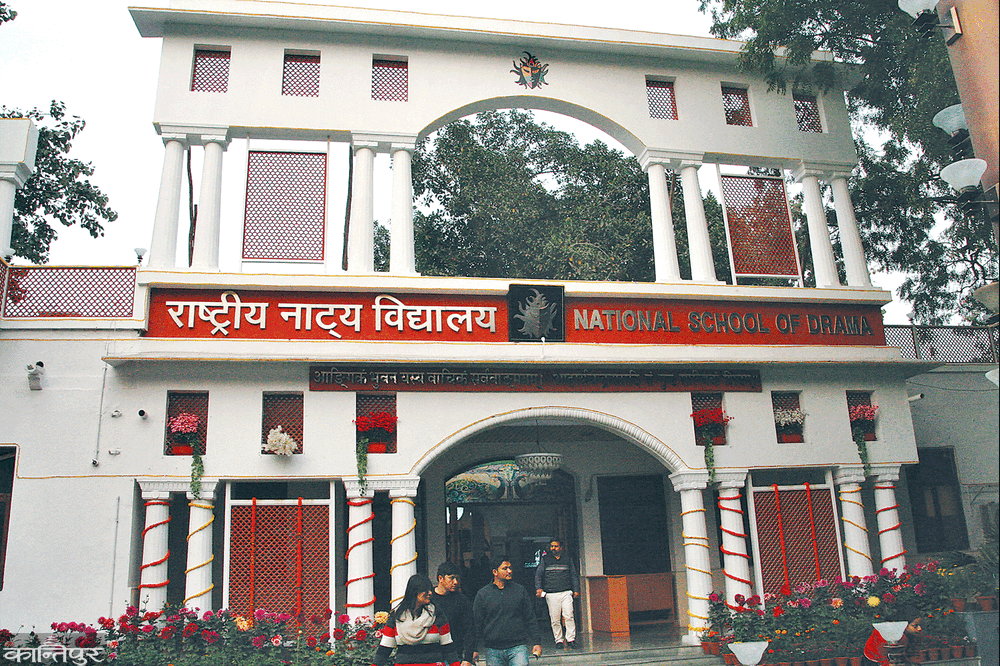
Rashtriya Natya Vidyalaya (National School of Drama i.e. NSD - 1959), golden evenings in New Delhi with the sun setting, misty rains and chilly days with the pass-outs, Sunil Pokharel and Anup Baral are still fresh in my memory. Both of these are 'pass-out' students of NSD, who are engrossed in reminiscing the precious past while sitting on the premises of this school on a sunny day in February.
Sunil-Anup had reached New Delhi - to participate in the staging of the plays 'Gachchami' (Arohan Gurukul - Director Sunil Pokharel) and 'Katha Kasturi' (Actors Studio - Director Diya Maske) at the 25th Bharat Rang Mahotsav - 2025 organized by NSD.
NSD is very busy. All around are twinkling – festival boards, lights wrapped around trees. The atmosphere of the festival is spectacular. On the stage, the building, the corridor, the lobby - dozens of artists and vivid pictures of the play. It looks like a grand art gallery. But no, this is the Mahakumbh of dramatists, where those old days of NSD are floating in the apple of Sunil-Anup's eyes.
In the opinion of these two dramatists, the most beautiful and idealistic daily of their age and time was NSD Study. The sub-plot memories connected with those golden past stories may have faded a bit, but the main story is still burning in the treasury of his memory.
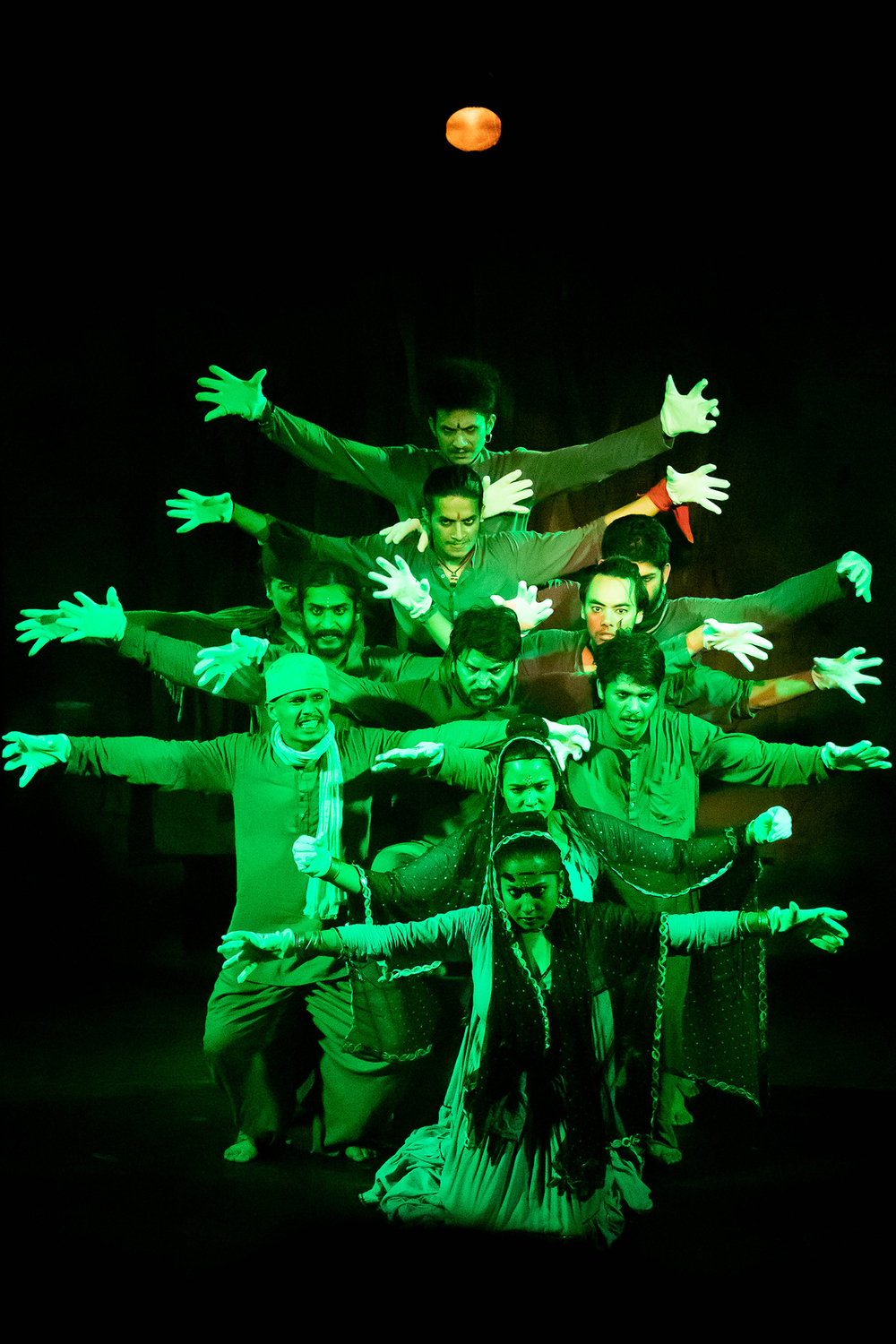
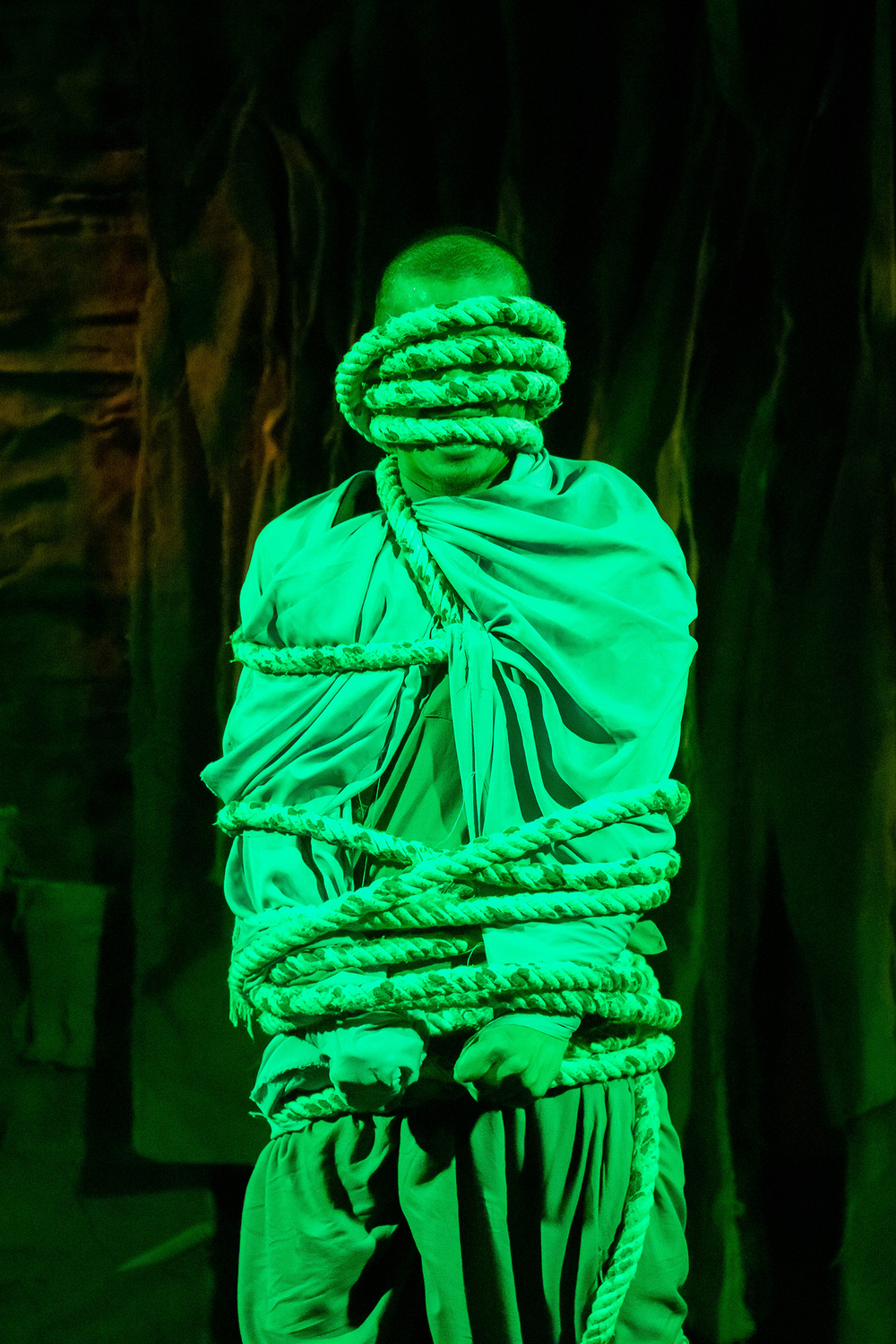
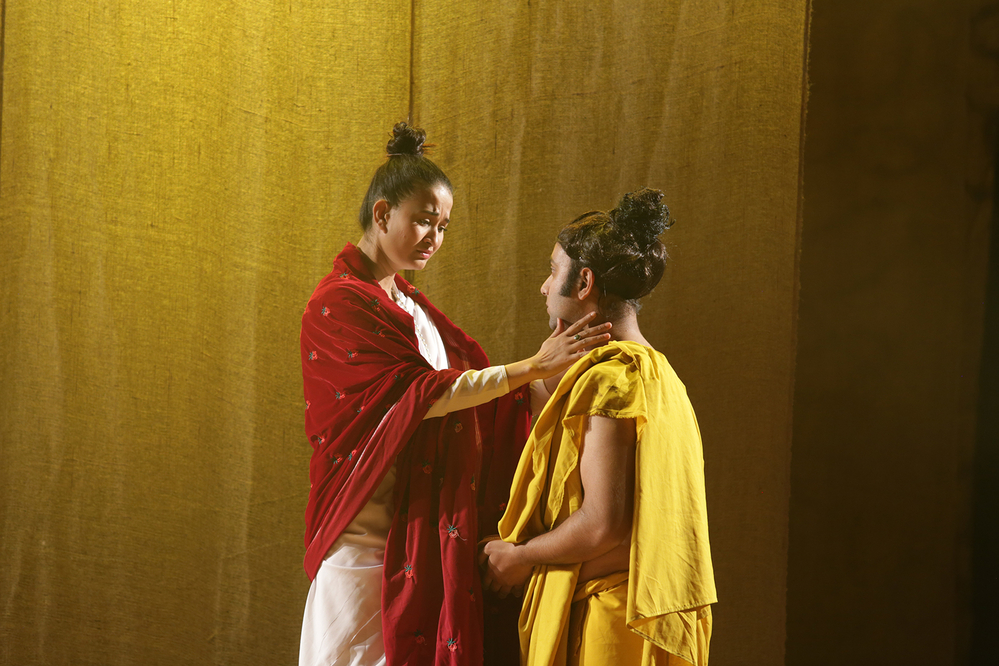 A scene from the play 'Gachchami'
The seasons of reading NSD are still fresh in their minds. Sweaty rehearsals on hot days, memorizing dialogues wrapped in blankets on cold days, serious debates with friends over tea in the rain — all those experiences not only made them artists, the lessons learned in that school changed the course of their lives. The gist of both NSD experiences is the same - 'The knowledge we learned here is still affecting our working style and outlook on life.' Let's see their black and white time - through the eyes of 2081.
These two artists have not forgotten the story of excitement, curiosity and indefinable fear that arose in their minds on the day they took their first steps in NSD. While he was taking his first step on that sacred stage after dreaming of acting all his life, countless questions were playing in his mind - like, what will the training be like here? Can I fit in here or not? However, at that time these two did not know - NSD was not only a place to learn acting, but also a place to learn the art of living life differently.
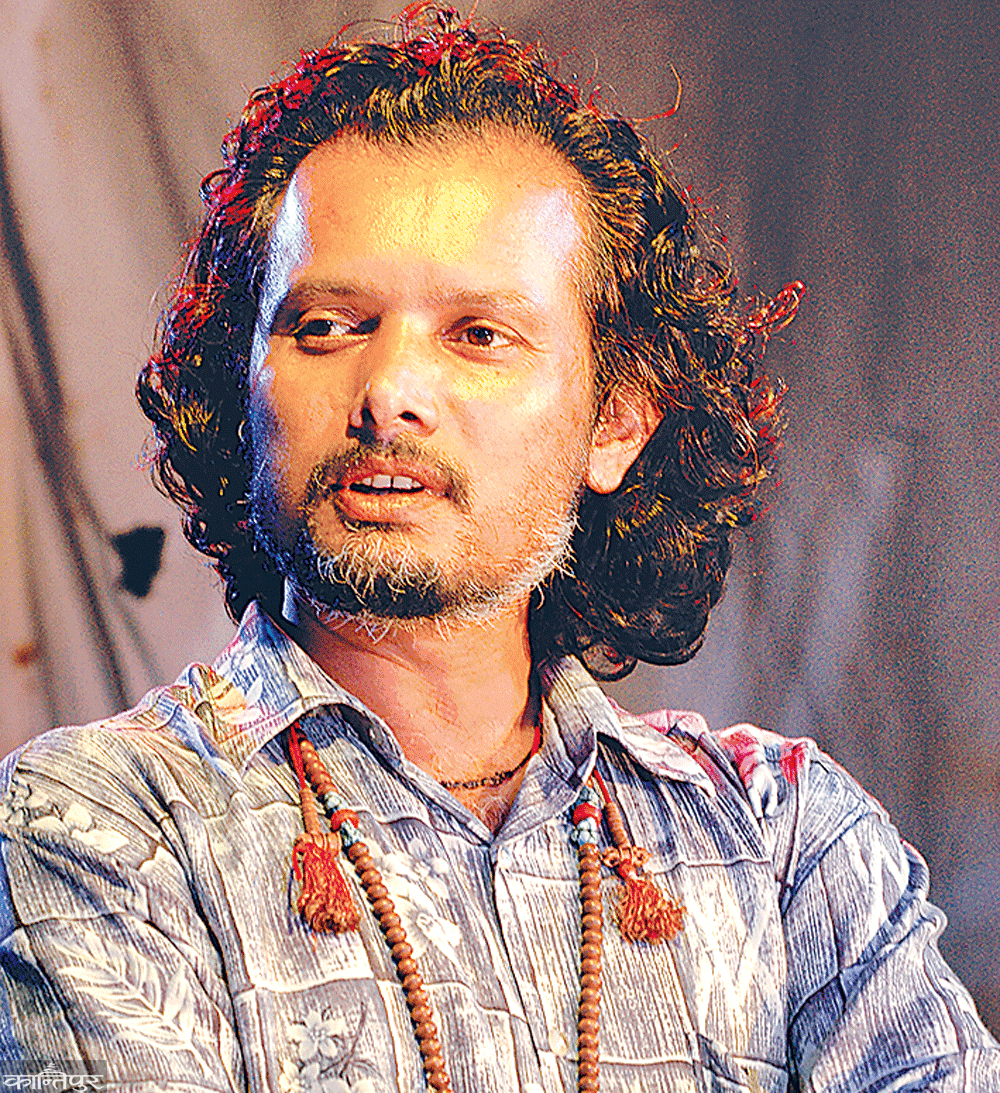
Anup Baral was entering Smriti Math. And, he became a young student again that day. He visited the classrooms where he studied. Stages were shown where NSD meditated and practiced drama. He shared the lost memory of that tree, the old bench, where it was stuck - his youth, enthusiasm and golden time of life. Bringing the memory to life, he said, 'In this class, I used to read plays, practice on this stage, sit under this tree on sad days and remember Pokhara.' New place, new friends, new discipline - he used to live in a fast-forward feeling. NSD class unique exercises, body-mind breaking exercises and ragging session by seniors! However, the place seemed like a huge temple of creativity to Anup, where he would tear himself down and build anew every day.
The atmosphere of NSD Serofero was also breathing with art and culture. On his days off, Baral would visit Lalitkala Akademi, Triveni Art Museum and Art Heritage Galleries, which were gradually becoming his favorite haunts. He would lose hours in those art galleries, searching for stories within the silence of the paintings. Sometimes, lost in the depths of the pictures, time did not pass.
Perhaps the countless feelings hidden in those silences made his acting-consciousness more sensitive. For Anup, Saturdays and Sundays weren't just days off—on those days he went on a journey of self-discovery. Sometimes they used to go to Pragati Maidan, where the best movies from all over the world could be seen. And sometimes wandered to old historical places, old forts and minarets of Delhi.
An old, cold day in February is still etched in Anoop's memory. A chance meeting with famous writer Nirmal Burma at a film festival. Anupal watched the movie 'Three Magi' (1954) sitting next to him. Burma's simple personality and deep perspective inspired Anup throughout his life. "That moment became an unforgettable memory of my life," Anup was reminiscing amid the hustle and bustle of NSD's colorful color festival.
NSD for Anup - a living world! Anup feels that every street, every corner of that magical world is full of creative energy. He recalls the deep discussions of art, life and the future with his friends in the dim flickering of evening lights, which he says broadened his thinking. The library seemed to him as sacred as a temple. While flipping through the dusty old scripts of the library, books on drama, he not only gained knowledge of drama, but also found a new perspective to understand life.
Anupka recounts the most memorable moments of NSD in his memory-reel, “I was mesmerized by the magnificent productions directed by Ibrahim Alkaji Sir.” He was moved by the huge sets, subtle moods of the characters and grand structures on stage for the plays 'Yarma', 'Three Sisters' and 'The House of Bernard Alba'. As he continues, under the guidance of Alkaji Sir, he gained a vast knowledge of life - theater is not just a medium of acting, it is a recreation of life.
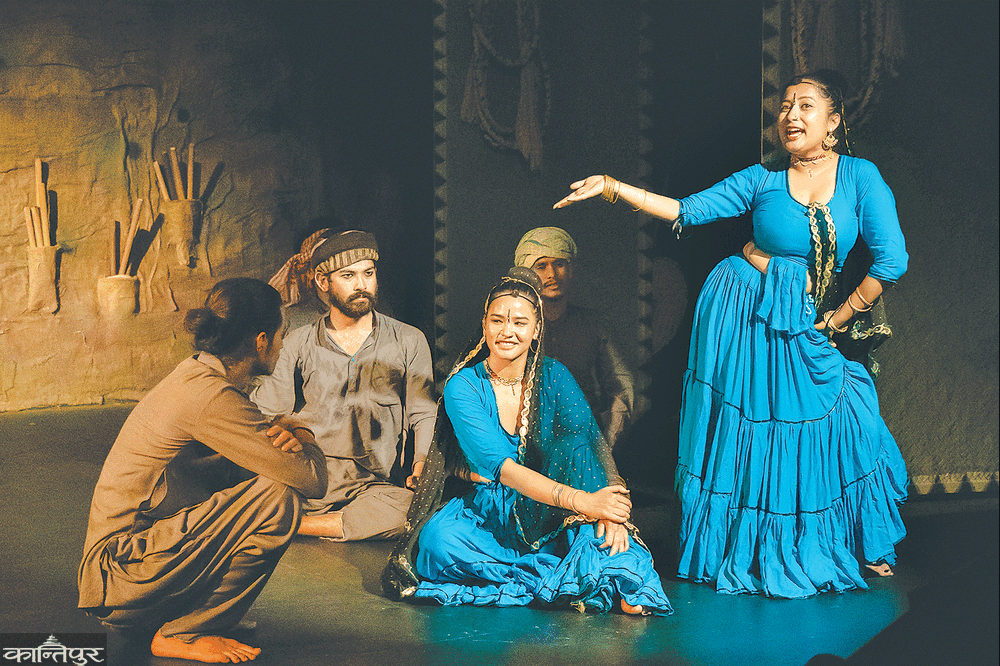
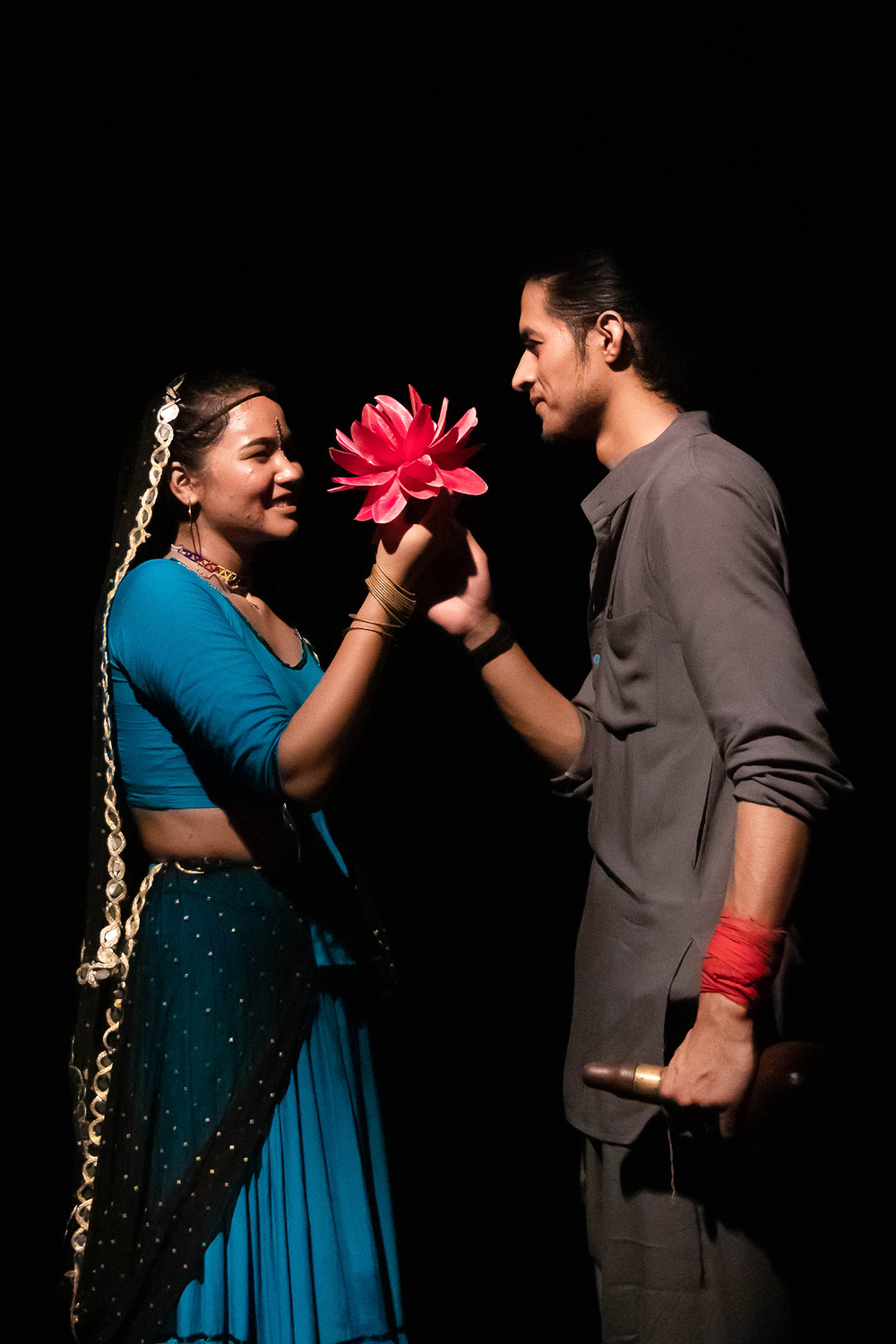
A scene from the drama 'Katha Kasturi'
In 1993, Anup got an opportunity to watch Pina Bausch's 'Bamboo Blues' production. That was one of the most memorable moments of his life. That play taught - how can the art of narration through body, movement and silence be wonderfully expressed? That visual beauty touched his soul deeply. They say, 'The artist in me was reborn that night.' How many plays? How many forms? How many styles? Regular practice to expand the experience of all of them opened the door for them to understand the vast world of drama.
 Anup became many friends at NSD—Nawazuddin Siddiqui, Rajpal Yadav, Chittaranjan Tripathi (who is now the director of NSD). He was often amazed by the performances of seniors like Adil Hussain, Kumud Mishra, Ashutosh Rana and Yashpal Sharma. After seeing their dedication and hard work, Anup's passion for acting deepened. By that time India had not entered the open market, those friends would ask him to bring back jeans pants, knickers or sports shoes when he returned from Nepal. At that time, gatila was more common in Nepal than in India.
Anup feels that countless lessons taught by drama teachers Anamika Haksar, Robin Das, Anuradha Kapoor are still traveling with him today. One day Nasiruddin Shah came for training. Baral took 45 days of classes with Shah in three seasons. Anup understood from Nasiruddin's deep understanding and experience towards acting - acting is not just a skill, it is a way of feeling life.
Anup considers it a 'luck' to get a chance to work on the 'Thumbalnu' project under the direction of Ratan Thiam. "That's where I got the knowledge of how a combination of folk culture and modern theater style is possible," said Anup, looking towards the play-house from the colorful NSD premises. For acting, Anup not only had initiations from Stanislavsky, Meisner, Michael Chekhov, but also - Gretovskian and Suzuki Method-style workshops, which taught him to understand the relationship between body and soul. How does physical discipline and mental awareness blend into acting? Anup learned there.
Dixit Anup Baral from NSD, who thinks that 'a city without cultural dialogue, has no soul', is now filling the city of culture with a new tune of drama - with the new drama theater 'Hanshadhwani'.
...
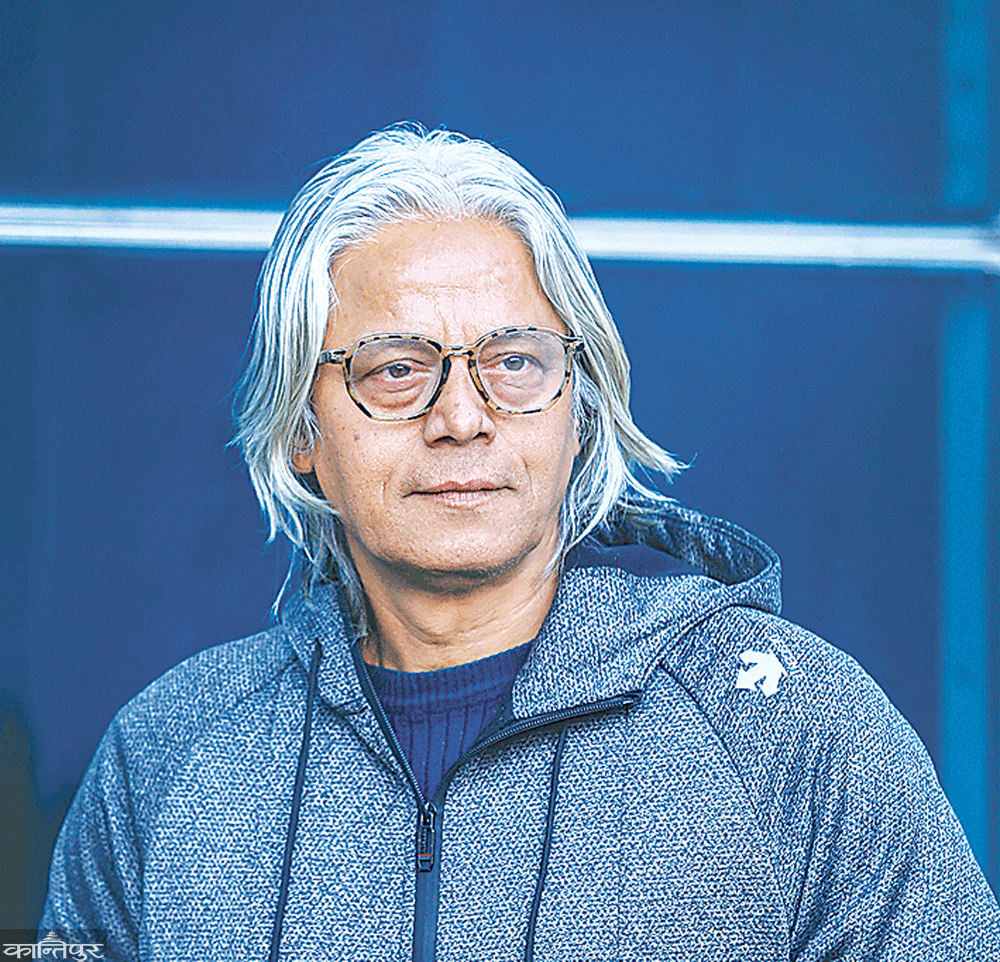
Sunil Pokharel, who is killing NSD Funko, is completely drenched in the memory of his student days. He belonged to the 1984-1987 batch of NSD. Black and white posters of old dramas were hung in the school premises, where there was a black and white photo of Om Puri, Naseeruddin Shah, Irrfan Khan and Sunil in Laskar.
Sunil looked at the old tree standing in the school yard for a long time. He thinks that tree has seen many changes in the drama school. One day Irfan said to Sunil - Look Sunil, this tree will continue to look at us like this even when we are old and come here leaning on a stick. Sunil, a first-year student, used to play drama with third-year students, he was also awarded 'West All Rounder'.
Sunil has a close relationship with the polygamous hall of Natya Vidyalaya. When he reached that hall, he snorted for a while. Said, "I bow down to this hall that inspired me to take up theatre." It is the old theater hall where Om Puri, Naseeruddin Shah used to perform. Sunil slept in that hall for many nights. Later, Sunil and his friends staged the play 'Ascent of Fujiyama' in that hall.
Sunil was accompanied on the stage of NSD by some of his friends, i.e. batchmates, who were engrossed in the memories of their school days. He was remembering beautiful, funny, funny stories. Sunil's batchmate, Bhawani Basiri Asir from Kashmir, who had previously come to Nepal in 2012, met at the Gurukul's drama festival.
Sunil also met another batchmate colorist Bharti Sharma at NSD, who lives in Delhi. Also met friend Ashok Lokhande (who lives in Bombay, plays serial-films) who studied together. After hearing that 'Sunil is coming to Delhi', Ashok left the shoot and came to meet his friend. Sunil also met Bombay-based Meeta Vashishtha (who directs plays, acts, makes documentaries, films, serials) who studied with him at NSD. While studying NSD, all of us friends stayed together for three years, in the hostel. Sometimes we used to fight. Even so, my friends used to say to me, 'This is a quiet man',' Sunil remembered his friends, 'We studied like a family for those 3 years. They love it.'
National Drama School
 At that time, Sunil's batchmates used to read 'Natak Nai Kyone'. Perhaps now NSD students reach Delhi with the elusive dream of going to Bombay, acting in serials and films. Among Sunil's friends, Irrfan was 'clear' in his dreams. He used to say to Sunil – I will go to Bombay. In Sunil's memory, his friend Ashok also dreamed of going to Bombay and acting in films. Two friends reached Bombay, all others sought life in drama.
What kind of love Sunil had in the batch, if they are separating after 6 months, then the crying would have started before 6 months. After completing his studies, Sunil returned to Nepal and went to NSD again for the convocation ceremony of the next year. That's when the friends met, embraced each other and wept bitterly. And gifted the book. Sunil's friend Irfan and his wife Sutapa came to Nepal to participate in the Gurukul's drama festival. They went to visit Pokhara.
Sunil had reached a television program in Bombay. On television, he sat down with his dear friends Irfan and Ashok and narrated old memories of NSD. And, he stayed at Irfan's house for a week, reminiscing about his student days.
6 friends of Sunil who studied in the same class have left this world never to return. Friends who survived this year sat on the stage of NSD and advised - as many of us as are alive, let's meet in Kashmir or Nepal in May. Basir will host the friends if they meet in Kashmir, Sunil-Nisha Sharma will host them if they meet in Nepal. After reminiscing about the old days surrounded by lights in the evening at NSD, all the friends were united by the same experience/feeling of growing old. Looking at each other, Sunil's batchmates asked - 6 people have gone, friends, whose turn will it be now?
Sunil feels that when he comes to this age, the memory of the past days comes quickly. The memories of friendship, quarrels, and ups and downs are more important. Sunil is haunted by the memory of his lost shadow in the streets of Delhi these days.
...
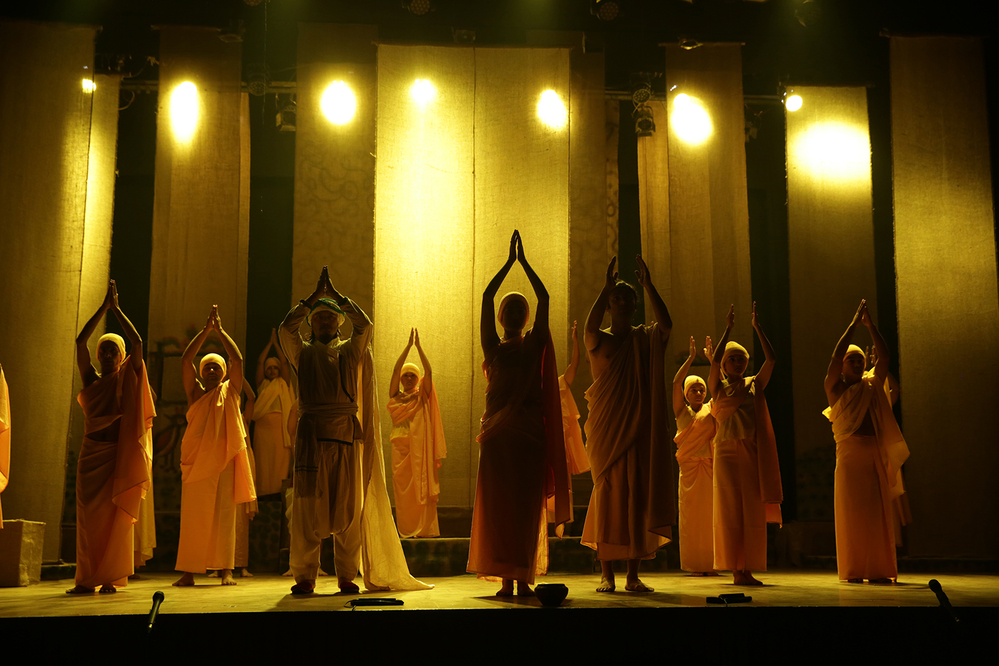
Bharat Rang Mahotsav- 2025, on the day after Valentine's Day, the Nepali play 'Gachchami' based on the life of Buddha, which was staged at the National Drama School (NSD), had a serious discussion on love and life. 'Gachchami', a joint performance of Nepal Sangeet and Natya Pragya Pratishthan and Arohan, says - We must understand the true nature of love. If our love is based on the selfishness of gaining rights over others, we will not be able to give them happiness and peace, on the contrary, they will feel wrapped in our love like a web. What can be such a love apart from prison?
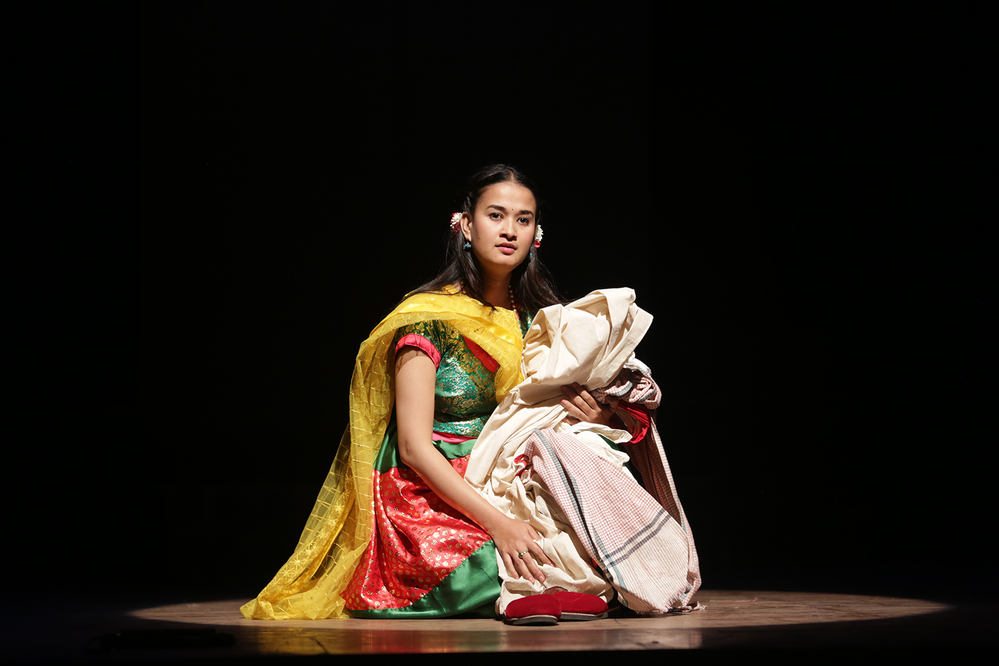
Yashodhara of 'Gachchami' is thankful - to land, indebted - to water, grateful - to air, blessed - to fire. Yashodhara's face is calm. The face is bright. With her hand on her chest, she keeps questioning the Buddha, looking down-up, forward-backward in a calm voice.
Yashodhara's powerful questions about life and the world are scattered in the auditorium. She asks the Buddha, 'O Buddha, the supreme truth is water, earth, fire, air and sky, all are the same. Kuti, Rajmahal and inside the house. It is in the village, it is in the city. It is in the mountains, it is in the mountains, it is in the plains. Why did you choose to leave your home and live in the forest?'' Yashodhara's monologue echoes in the dim light of the stage - 'Motherhood is a feeling mixed with extreme biological pain, supernatural spiritual knowledge and ultimate heavenly joy. What else is as big austerity as a woman's life! Buddha was silent, listening to my questions and doubts.'
'Gachchami' says - those who are promoted should give up two extremes - being attached to Panchakama and doing habits by putting too much strain on the body. Leaving both extremes, one should follow the middle path. The world is full of sorrow. There is a reason for suffering, there can be an end to suffering and there is a right way to get rid of suffering.
colorist Anup Baral
Directed by Sunil Pokharel, written by CK Lal, the play 'Gachchami' discusses the impermanence of life. The gist of the play is - Don't believe something because people have traditionally believed it that way. Don't believe something just because everyone else believes it today. This is what is written in some scriptures, this is what our Guru said, do not accept anything on the basis of etc. The truth that your intellect accepts, that which you think is true, believe it, act accordingly.
 ...
...
The play 'Katha Kasturi' directed by Diya Maske, written by Nayanraj Pandey was staged on 13th February before 'Gachchami' in Bharat Rang Mahotsav-2025 which ran from 28th January to 16th February at NSD. The play is a theatrical adaptation of Pandey's story 'Sarpadamsh', which tells the story of the lives and experiences of the Sapera caste of Terai. The drama tells the story of the complexity of life of the Sapera tribe of West Terai of Nepal and also presents a list of the dirty politics done by the politicians on the Sapera. Diya has portrayed the society that is clouded by politics with great sensitivity.
Painter Sunil Pokharel
In NSD's Bharat Rang Mahotsav, dozens of dramas from various places in India and other countries were staged. Before reaching Delhi, 'Gachchami' and 'Katha Kasturi' were also staged at the 6-day Nepal-India Color Festival in Kathmandu organized by the Nepal Sangeet and Natya Pragya Pratishthan. The festival, which is a collaboration of the National Theater School, was held at the National Dance Hall Jamal. Thus, along with India, Kathmandu was also painted with the colors of the drama festival. "The festival has made the cultural relationship between Nepal and India more alive for years," Nisha Sharma, Chancellor of the Nepal Music and Drama Academy, said about the festival.
 ...
...
After staging 'Gachchami' and 'Katha Kasturi' in the theater where they studied, Sunil-Anup was right to swim in the pool of nostalgia. In fact, NSD was an integral part of the soul of both these dramatists. That was an important chapter in Sunil-Anup's life, where he got an opportunity to know himself in a new way.

