Chungba Sherpa had to wait two weeks to photograph the snow-leopard, but he was undaunted by the inclement weather in the high mountains.
We use Google Cloud Translation Services. Google requires we provide the following disclaimer relating to use of this service:
This service may contain translations powered by Google. Google disclaims all warranties related to the translations, expressed or implied, including any warranties of accuracy, reliability, and any implied warranties of merchantability, fitness for a particular purpose, and noninfringement.
A snapshot for us, a priceless asset for them. No matter how difficult the situation, geographical difficulty, mountains or high mountain areas, he used to take beautiful pictures of wild animals and birds. He did not depend on anyone for expenses. He used to spend what he had, but he relied on his father. Should you charter a helicopter or take a porter? All used to do things.
Chungba Sherpa, who has been taking the best photographs of the conservation area, will no longer press the trigger of the camera with his fingers. Manually zooming in and out of the camera lens will not even take pictures.
Chungba Sherpa, a 64-year-old senior wildlife photographer from Solukhumbu's Khumbu Pasanglhamu Rural Municipality-3 Chaunrikhark, will never be found in a hurry. Nor can one hear the many anecdotes of his experiences in wildlife photography. Sherpa, the leader of the conservation throw lens, has physically left us forever. With his passing, wildlife photographers have lost an accomplished mentor and an invaluable asset to those working in the field of conservation. The death of Chungba, who has risen to the top in a short time in wildlife photography, has shocked many.
Those 15 days spent for photos, we had to wait two weeks to take photos of snow leopards. Extreme geographical situation. uninhabited hill. The changing weather. He was not at all bothered by the adverse climate of high altitude. After putting up a hiding tent, he ate, sat and slept in the tent for photos in the difficult weather of the high Himalayas for 12/13 hours a day. Even after staying for two weeks, he was not disappointed when he could not complete the work he wanted.
His aim is only to take a photo. Climbed up to 4,600 meters around Manang in Annapurna Conservation Area for the second time to photograph snow leopards. The target was not reached until the 15th day, the snow-leopard was not seen. However, stress and anxiety did not take. On the 16th day of October 3, 2019, one evening at 5:20 p.m., a snow-leopard suddenly appeared to the northeast of the tent, and he was very happy. "The finger was running the trigger of the camera," he told the columnist, "The shy snow-leopard was coming down the catwalk from the habitat." The leopard didn't get it. Camo flak (blending into forest and wildlife) was on dresses and tents. Gave a chance to shoot for 7 minutes. The pain and suffering of more than two weeks disappeared suddenly when I was able to take pictures. Took 42 snaps from different angles. 18 excellent ones came. That same photo has now become the best photo of snow leopard in the country.
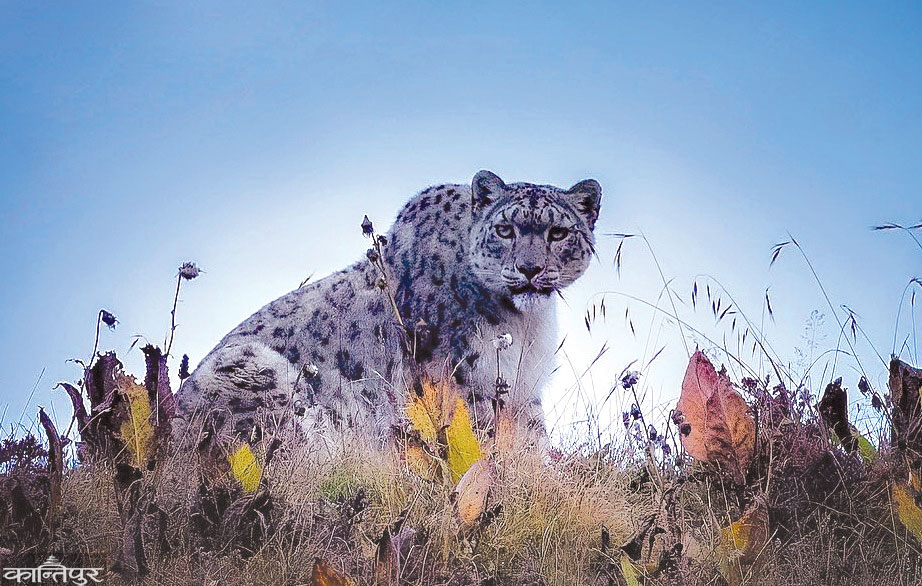
Snow Leopard's natural habitat photo has been applauded by everyone. The photo of snow leopard is one of the photos that he has taken so far. In November 2079, American photographer Kitia Pavlobsky, who gained popularity on social media, after the fact that the photo of the snow leopard taken in Nepal was revealed to be a 'fake', the photo of the snow leopard taken by the Sherpas became popular.
His exciting photos suddenly went viral. Even Nepalese showed their art to the world that they can take good pictures of snow leopards. He first went to Annapurna Conservation Area for 8 days in April 2019 to photograph snow leopards. However, he returned to despair after not seeing the snow-leopard.
He had a keen interest in photography from an early age. However, as he had to run the household and educate his children, he started the tourism business. Lately, he has been active in wildlife photography since his daughter was on her feet. Read and learned the basics of wildlife photography since 6 years. Then took online classes from various institutes in India, America and Malaysia.
'I spent 4/5 lakhs just to learn,' he said with this columnist, 'It enhanced my skills and abilities. A wildlife photographer should be able to take good photos in any situation, any light. That's the only beauty a wildlife photographer should have.' He has captured pictures from water otters in Jagdishpur Lake in Kapilvastu at 90 meters above sea level to wild yaks in Limy Valley in Humla at 4,800 meters.
The happiness of wild yak
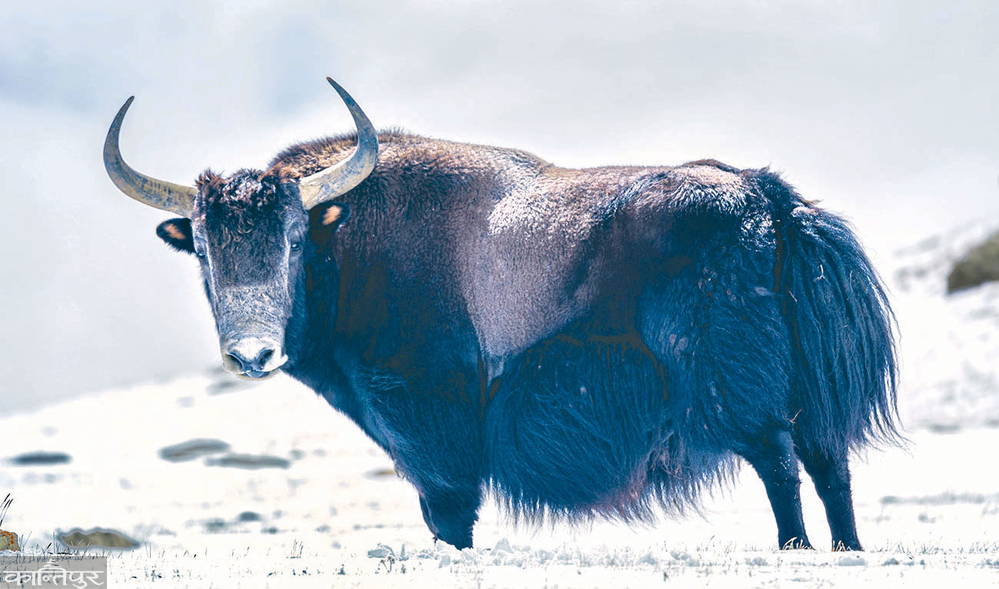
In October 2079, when he reached the Limi Valley of Humla bordering China and took a picture of a rare wild yak, he shared the joy that became an unforgettable moment of his life. He photographed a wild yak for the second time in Nepal. The yak was previously photographed by researcher Naresh Kushi in 2014.
It was marked by the government in five rupee notes. "I have to say that luck is strong," he said, "In a short time I got a chance to capture a wild yak on camera." He reached Thakchi by helicopter from Simkot. They pitched a tent at 5,100 meters above the Shakya River near Lapcha on the Chinese border and stayed for three nights.
There, at an altitude of 4,800 meters, he captured a photo of a wild yak from a distance of 15 to 20 meters on his camera. Taking that photo is unimaginable for the common man. He spent 4/5 lakh more just to take that photo. It has informed that there is an opportunity in Nepal for those who come to study wild yak.
300 birds and 35 wild animals
It takes a lot of patience and skill to photograph birds and wild animals. "Movement of the second second is important," he said, "you have to sit and watch." You have to be able to catch the best movement. The different angles and colors taken by others make the photos equally attractive. So far, he said that he has captured pictures of more than 300 species of birds from plains to high Himalayan birds. From the wild cat of the plains to the yak of the mountains, they have been exposed to the camera. And, more than 35 species of wildlife have taken excellent photos.
Saw 65 tigers, photographed 46
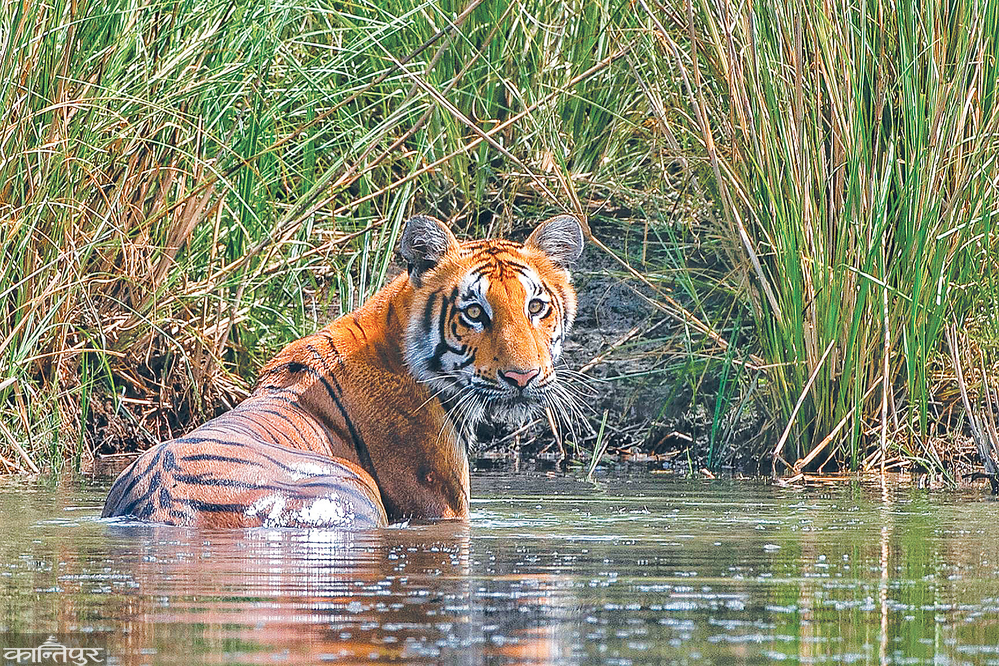
He used to take pictures of tigers. He used to take risks and challenges for that. "Saw 65 tigers in Chitwan, Bardia and Shuklaphanta in 6 years," he said, "I was going to take 46 pictures." He also took pictures of 7 tigers with a drone. However, there were different tigers. A tiger was framed by the camera for 15 minutes.
He used to say that he will never forget the thrill of photographing 4 tigers at the same time in Chitwan. He shared experiences, went to Shuklaphanta National Park in Kanchanpur 15 times, Bardia Park 16 times and Chitwan National Park 35 times to take pictures of tigers. Tigers were rarely seen in normal conditions. That's where he used to shoot saying that he should create the best situation and frame it. He used to say that he is one of the best photographers of many tigers. He used to say, 'Your picture should look better to others than to yourself'.
Once was crossing the Bagheni River at Bardia. Took a photo of it. He shared that he felt as if he had fallen off a cliff after the expert said that it was a rare picture of Damaru feeding milk and going hunting. Similarly, the picture of another tiger leaping into the river was equally impressive. The hoarding board of this photo had beautified the National Parks and Wildlife Department premises in Kathmandu for some time. Everyone looked for him when they wanted a good photo of a tiger. The pictures of tigers taken by him from various angles were loved by everyone from young to old.
What will be the last of him who took thousands of pictures? The last picture he took was of a bird. He took a picture of a green-headed duck in Nagdah, Kathmandu on 11th of January. He sent another wildlife photographer, Pemba Sherpa, to find out what his pictures looked like.
A Good Guardian of Conservation
There was hardly a Nepali who would not see the pictures taken by wildlife photographer Chungba. Every picture he took would get the same buzz. That's why he is a pioneer photographer of conservation in a short time, senior wildlife expert Dr. Hemsagar Baral said. He used to give pictures of wild animals for free, which he had taken for conservation purposes. Even in his old age, he is a very dedicated wildlife photographer who is passionate about photography. Ghan Gurung said.
Repeated attacks
While taking pictures, he had to take risks and attacks many times, but he did not give up. He was sitting at the tiger crossing in Bardia, preparing to take pictures. A chile attacked a nearby beehive . "The bee got angry and came to attack us. 20/22 bees caused injury by stinging throughout the body.
I ran a km and went to the car and hid. Similarly, in Shuklaphata, there was a sudden encounter with a tiger at 40 meters. 'I don't know where we escaped to safety,' he said, 'but we remained safe.' Last March, a wild elephant in Shuklaphanta made a hiding tent and two expensive tripods to take pictures. He said that he escaped and survived by climbing a tree.
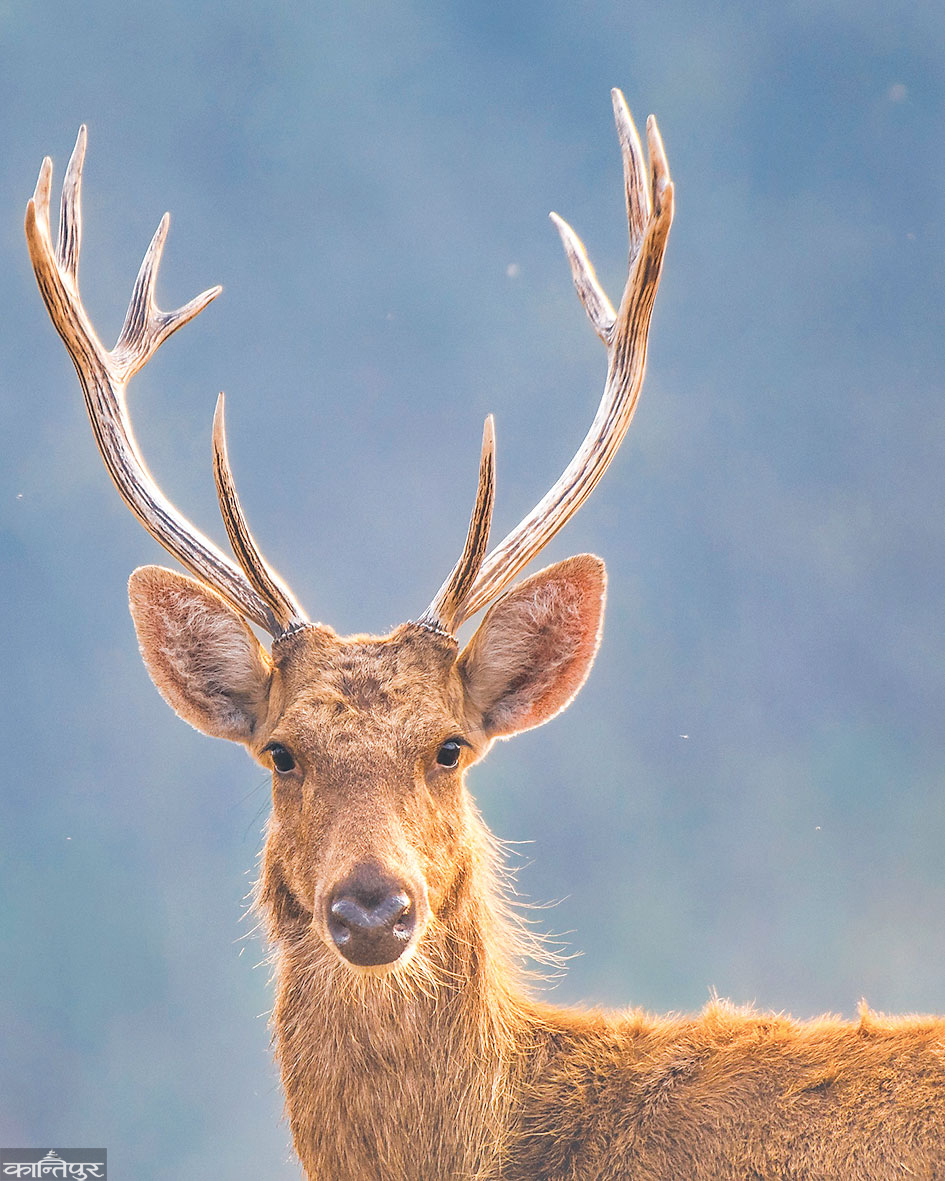
He was no less than a celebrity. He used to post the landscape, charm and beauty of the places he visited on social media. He used to post pictures of the routine, behavior, food and habitat of wild animals. His every activity was watched from the young to the old. Pemba Sherpa, another wildlife photojournalist, said that he learned a lot about photography from the Sherpas. He said, 'He is my guru.' Pemba, a 6/7-time Everest climber, has taken pictures of many birds found in Nepal with Chungba's help and inspiration. Pemba is the country's best wildlife photojournalist.
is stored at home Nepal
Yak is found smiling on the wall of his house. The mountain seems to be laughing. The mesmerizing scenery of natural shades and splendor feels equally intoxicating. Wildlife and birds can be closely observed. Pictures have decorated the house, from where the 'thirst' of seeing the mountains and valleys is easily quenched. All the beauty and charm of Nepal are in one house.
The pictures hanging on the wall of his house near the shoe factory in Dhumbarahi, Kathmandu, makes one happy to visit Nepal. He had immense love and affection for nature. "The dream of becoming a wildlife photographer has come true," he said, "Hunger has not completely disappeared. The diversity of the entire Nepal will be captured in the overall picture.'