The concert culture was about to disappear due to covid. But now cities are becoming concerted. After a long time, the audience is enjoying the same place. The city is mesmerizing with its musical atmosphere. How did this spring of music come back?
We use Google Cloud Translation Services. Google requires we provide the following disclaimer relating to use of this service:
This service may contain translations powered by Google. Google disclaims all warranties related to the translations, expressed or implied, including any warranties of accuracy, reliability, and any implied warranties of merchantability, fitness for a particular purpose, and noninfringement.
Kahalilagda floods and landslides bid farewell to rain. The wind blowing in February is a bit far. The sky has started to open as the sun pushes away the cold clouds. The days are getting shorter, farmers are free from farming. This weather waiting for spring is breathtaking.
The weather is causing amusement. If you look at the city, this time can be called concert season. Event organizers are calling this season - 'concert season'. That's why concerts are happening everywhere you look, the city is full of joy.
Kathmandu became a concert last Saturday. In Kirtipur, the band 'Kutumb' and 'Karma' won more than 11,000 viewers under the title 'Ekay Swarma Kirtipur'. On the same day, while 'The Elements' did not entertain the young audience at the Bhrikutimandap, the people of Bhaktapur were swaying to the music of many bands including 'Mantra' at Sallaghari Chowr in Bhaktapur. Two weeks ago, 13,000 spectators flocked to listen to Sajjanraj Vaidya's song in the same square. Sajjan's concert has so many visitors? The organizers did not notice. That crowd at Sajjan-concert is the biggest after Indian artist Arijit. Sajjan gathered around 50,000 spectators in five cities for his concert this year. Even when Honey Singh was live in Nepal, so many viewers were not seen. More than 13,000 people gathered at Narayanghat in Chitwan, 6 in Butwal, 8 at Lakeside in Pokhara, 9 in Itahari and 13,000 in Bhaktapur to hear Sajjan.
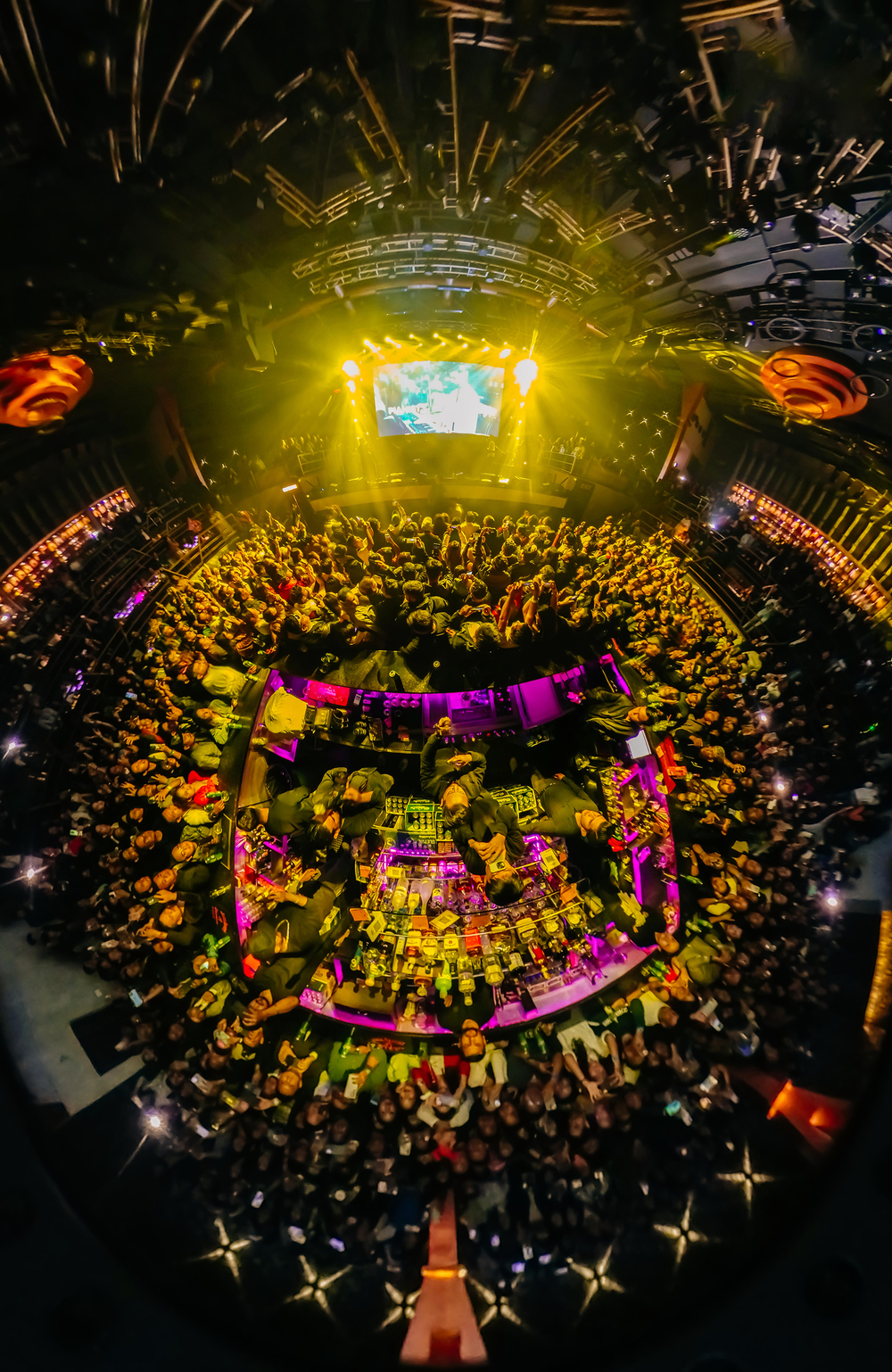
These scenes will document the time when the concert is taking place. These scenes are a reflection of the musical atmosphere that the concert season has ushered in across the country. Is it only the weather that has brought back this kind of spring in music? That's definitely not it. Yes, concerts warm up cold weather. However, this activity also shows the widening market of 'concert culture'. After a long time, the audience gathers together and is ready to dance, ready to enjoy. It shows the 'post-covid' psychology as well as the future of the growing 'event industry'.
It was difficult to see such a scene before covid. At that time musical events were limited to clubs. In 2019, Karma Band did a 'Nepal Tour'. In fact, it was a tour in name only! Having to sing/play only in clubs, Surendraman Singh, the lead singer of the band, felt that the concerts were becoming cramped. He did not think that the comeback of the band would be like this, but the experience of singing in the club made him sad, inside he was also hurt.
However, last week's Kirtipur-concert made Surendra feel that this kind of musical atmosphere has started to wake up. After the announcement of our concert, other big concerts took place in the meantime. Those big concerts gave me confidence. The concert culture is not dead, I thought that it was limited to the club only by those who organized the event," Surendraman shared new experience, "The audience understands that the fun of the club and open concert is different. In terms of artists, the enjoyment of club and open concert is different. We grew up doing open concerts. So the Kirtipur concert has given us the feeling that we are back at the right place again. Karma is now preparing for concerts in Bhaktapur, East Damak and Itahari.
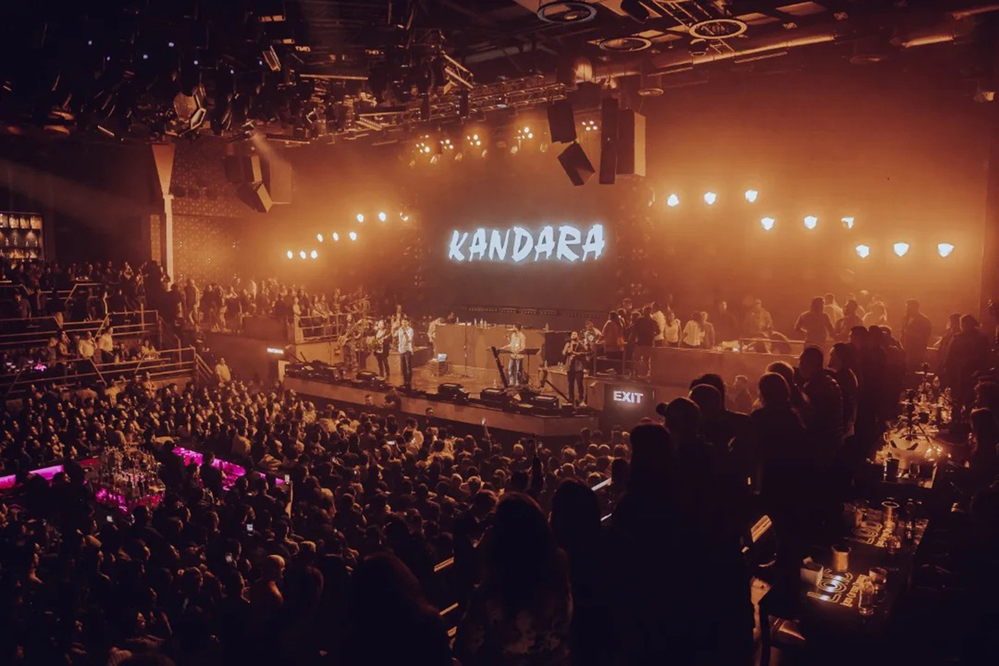
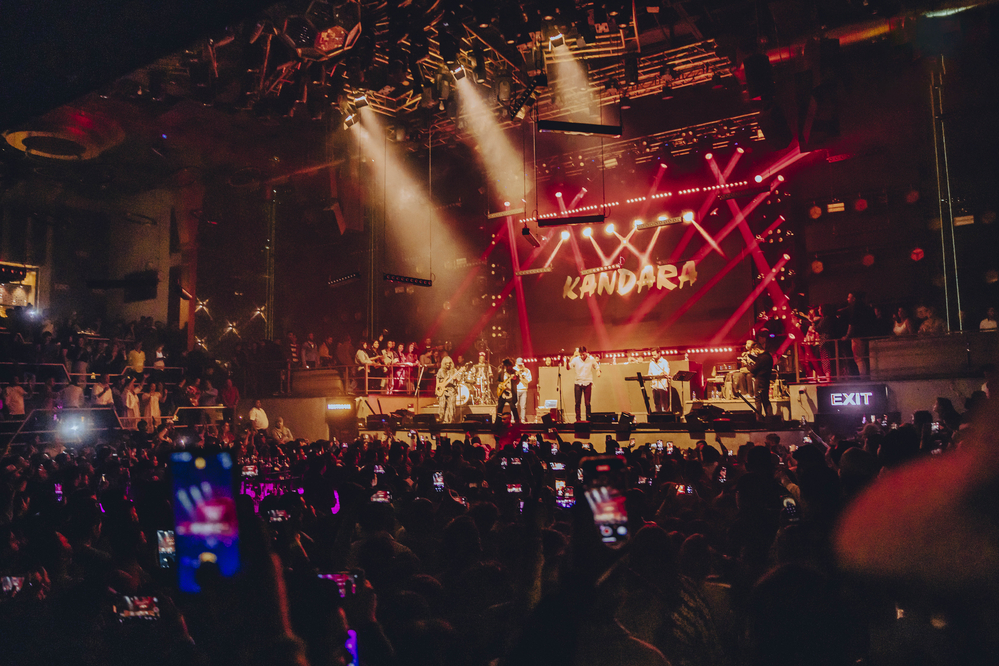
Vivek Shrestha, the lead vocalist of the 'Kandara' band, also did not see a big concert before Covid. Meanwhile, with the concerts of foreign artists starting to take place in Nepal, he felt that the atmosphere of concerts has returned again. After covid, famous Indian singers Arijit Singh, Atif Aslam, Honey Singh, Prateek Khuhad and others performed concerts in Nepal. Rasik Bhattarai of Garaj Entertainment claims that since they brought in Arijit Singh, open concerts are on the rise in Nepal. A year ago, Arijit's live concert was held in Nepal under the joint initiative of Garage and MN Productions. 15 thousand spectators came to see Arijit at Hyatt Regency. Now the garage has started preparing for Sushant KC's concert soon.
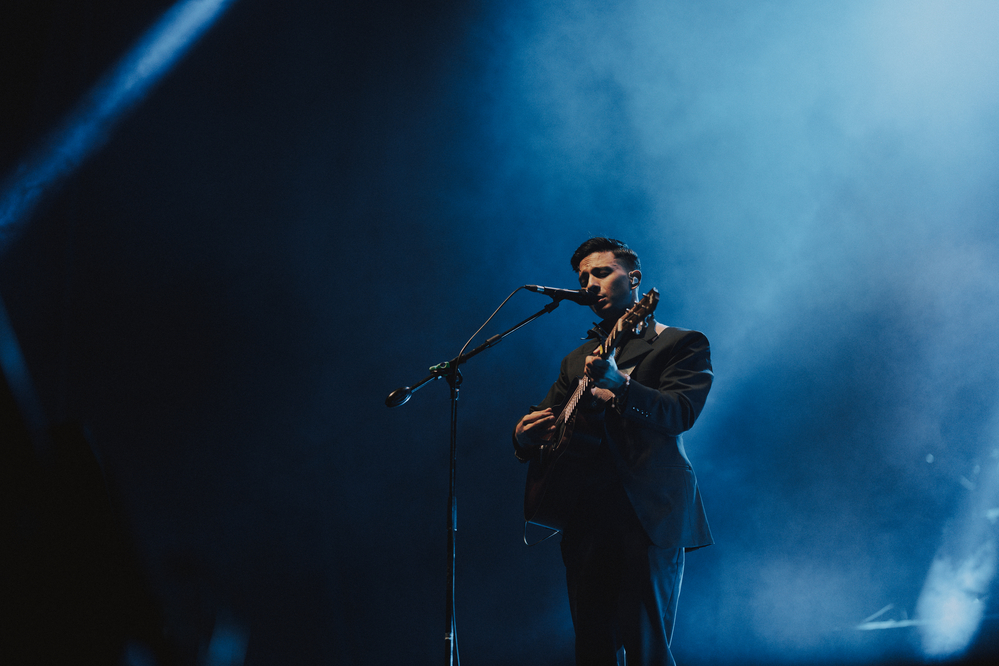
Lately, the performance of Nepali artists is increasing not only in Nepal, but also among the Nepali audience abroad. Garage managing Swapn Suman, The Elements, Sushant KC, Praveshkumar Shrestha, Vekcha, Sameer Shrestha, Akash Khadka, Sushant Ghimire says that these artists have been doing 20-40 shows in a year. According to Rasik, 'The Elements' played more than 50 shows in the last one year. According to Pooja Dhami, who has been handling the events of Khalti Digital Wallet, which has been increasing collaboration with various programs, now Khalti conducts more than 500 events in a financial year. Among them, more than 200 programs are musical. Dhami claims that the biggest concert held in Nepal after Arijit belongs to Sajjan. "Arijit sold 11,000 tickets, Sajjan sold 11,000 tickets in Kathmandu alone," Pooja said. According to Pooja, now the number of concerts has increased dramatically.
Is the concert culture growing?
Kandara's Vivek admits that concert culture has grown in Nepal now. In addition to the influence of western music on the youth of urban areas, Vivek says that concert culture has developed among them. The development of technology is also in concert. There are viewers who want to go to the program to get the same feeling of the concert.' According to Surendraman of
Karma, the audience rushes to the concert to experience the live concert. Music attracts people. We experienced that in Kirtipur. Audiences come to concerts even to listen to just one song," says Surendra. "Audiences are also ready to experience open concerts. This kind of event has started to grow in Nepal with the organizers daring to hold open concerts. So now, from the artist management, the event organizing organization has grown, and the production company has also started to flourish.
Rasik, who has been managing artists through Garaj since 2019, says, 'There is no special schedule to do in free time in Nepal. How much to visit? The ability of young people who are studying can also be concert-expenses. Traveling abroad is difficult. While eating and drinking, the concert became easy to listen to the songs of the favorite singers. He argues that the youth will be attracted to the concert because the young generation will mix the feelings of the youth with the music. Concerts are becoming a good source of income in the music industry which is becoming professional. During the time of Vivek Shrestha, there was no reasonable remuneration for doing concerts. How many concerts for passion? 1/2 times I used to do music for fun, but concerts were not professional at that time,' Vivek recalled the past.
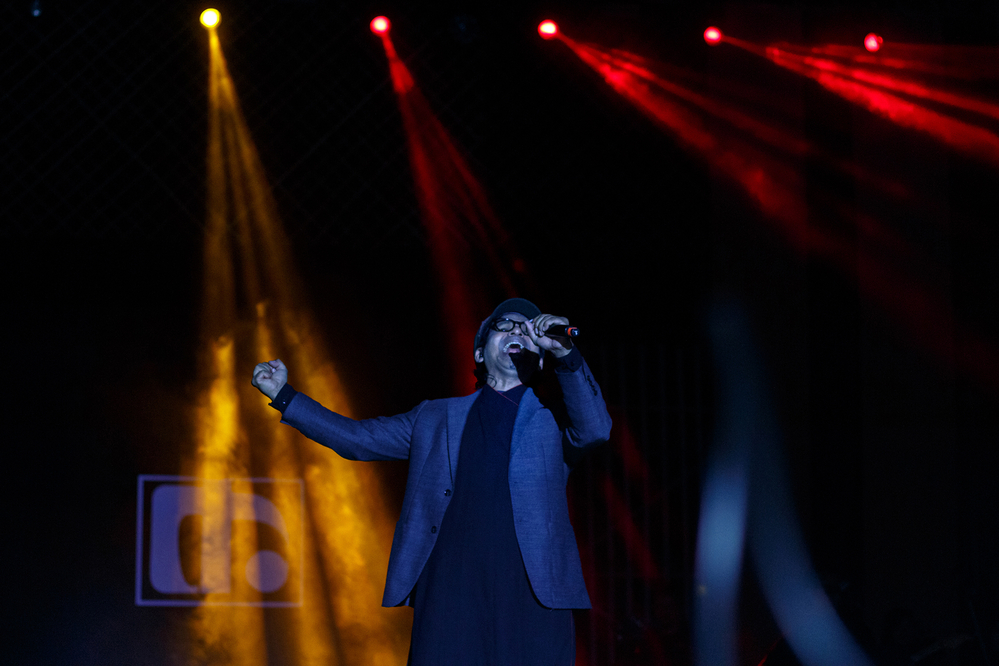
The perception of concerts has changed over time. Society was not positive about the concert at that time. Families were not allowed to send their children to concerts. Concert going was a spoiled standard. But, now the society has started to open up, says Ashish Parajuli of 'Aadi' group. He has been active in artist management for three years and says that concert culture has increased in Nepal. He managed Kandara in 2015 and made a come-back with an album called 'Vedigothaima'. Kandara's come-back concert in Pokhara was done by 'Aadi' group. Ashish, who is now associated with 'Karma', is active in artist management from concert projects, giving priority to artists from Nepal.
view: before and after covid
After covid, concerts have started to increase globally, Taylor Swift will be a vivid example. Even in India, Diljit Dosaj's concert has gathered thousands of spectators. British music group Cold Play is doing an 'India Tour'. Ed Sirin is going to perform in Bhutan. Before covid, except for one big band, this level of concert was not heard. Now the scene is completely reversed. It seems like the whole world is on a musical tour. Nepali artists are also touring different countries every month.
Before Covid, there was no such craze for concerts, says Bipin Nakarmi of Arbitary. Honey Singh was brought into Nepal by the arbitration itself after Covid. Arbitary, which has hosted more than 200 musical programs, was hit by Covid-19. Arbitrary was doing 10 shows a week before covid. However, with the lockdown, concerts and musical programs were stopped. This is not only the case of arbitrators, but the experience of most areas. In the music sector, many shows of most artists were cancelled. Foreign tour programs were stopped. 170 major music events in the world were affected. The world-famous company 'Live Nation', which is organizing big live events, had 40,000 events in 2019. However, when it arrived in 2022, it dropped to 8,000. However, after Covid, 1.5 million tickets were sold for 100 tours. Grammy.com has mentioned that it is the maximum of 2019.
Even in Nepal, the number of concerts is increasing after Covid, says Khaltiki Pooja. It seems that the event industry has developed in Nepal after Arijit. Now the global trend has become the same, of concerts. "Social media has also affected," said Pooja.
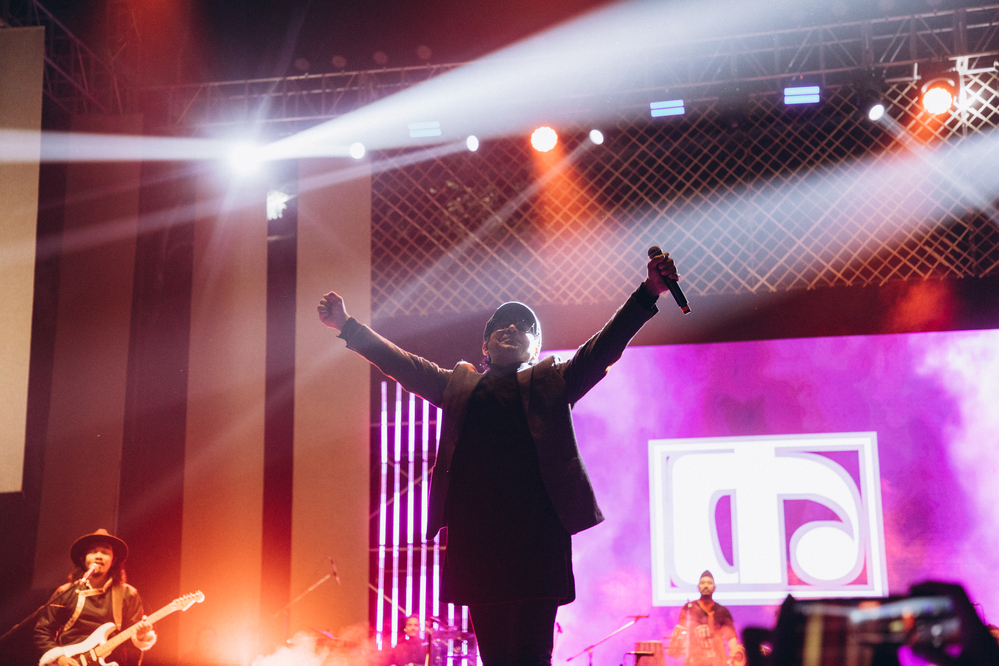
With the growing demand for live music, California's Sophie Stadium expanded its seating capacity from 70,000 to 100,000. Big stars such as Taylor, Beyoncé, Metallica, Ed Sirin announced a concert on the same stage in 2023. The number of spectators at such big concerts in the world has increased after covid, according to the tickets sold. Such a scene was seen in the post-Covid concerts of 2022 and 2023. A big stage like Coachella was an everyday event. The Grammys noted that 220,000 spectators participated in the event held in San Francisco in 2022. The tickets for the event on the stage with a capacity of 56,000 spectators were being 'sold out' within 70 minutes. The fact that tickets for the concert announced in 2023 sold out immediately shows that audiences are eager for entertainment after Covid.
Such a scene was seen in Sajjan's 'Ekadeshma' tour. According to Arbitary's Vipin, tickets for the first leg of the tour were 'sold out' within five days after the tour was announced. Bhaktapur-concert had more audience than capacity. Due to the increasing demand of the audience, they built 40 women's toilets at the venue, but they were not enough for the audience. Tickets for the event were so sold that even the families of the band members and the organizers were unable to buy tickets. Sajjan's father was also complaining to Bipin about not getting a ticket. Seeing that tickets worth 50,000-70,000 were sold immediately, a music lover wrote on social media, 'Those who have been staying at home for a long time during Covid now want to express themselves and exchange conversations with each other. This is a sign that they want to enjoy together.'
The audience participation at last Saturday's concert shows the psychology that people are now ready to have fun with each other. Bipin, who saw the crowd of gentlemen, adds, 'This kind of concert has never been seen in Nepal. Nowadays, the trend of buying tickets has increased among the young audience.' "Audiences are rushing to concerts not only to listen to music but also to celebrate," she says, "Young people are listening to different genres of music."
Those who dance to Sujan Chapagai's song are also found dancing to Sushant KC's song. The only thing that young people spend now is entertainment. Concert tickets come at their own pocket expense. So they are buying tickets. Now the market of the event will increase, said Pooja.
The wave brought by the comeback of the band
At one time, concerts in Nepal were at a standstill. When the Maoist conflict was at its peak, there was no concert atmosphere. Music had not become professional, there was no career in music. Many artists migrated abroad. At the peak of discussion, Vivek of 'Kandara' flew to Britain, Surendra America. Mohan Bhusal, Karandas, Nima Rumbas also went abroad and the concert culture was celebrated.
In the year 2000, forty-five thousand tickets were sold at Dasharath Stadium concert of '1974 AD Rakyatra'. Lathicharge happened in that concert, which is considered to be the biggest in Nepali history.
After that concert, the big concert stopped. Since then, none other than Nepathya organized such concerts, events were held in clubs and restaurants. And, the atmosphere was mostly deserted. There was no environment for outdoor gatherings in Nepal. Now is a fertile time for concerts,' says Vivek.
It took more than a decade for the splintered bands of the mass movement to coalesce. Ashish, who made the comeback of 'Karma', sees the gap of more than a decade in the concert due to this reason. "20/25 years ago, there were many big concerts. Gradually the artist went abroad. There were no people organizing the event. That's why there was a decade of silence," says Ashish, "After Covid, the mentality that we can sit together and have fun started."
Meanwhile, platforms like YouTube gave birth to new artists. 'From 2007 to 2014/15, the concert seemed to have disappeared. After YouTube again gave a platform for music, artists established themselves in music from this platform. After that, their fans grew,” says Rasik, “slowly the concert culture started. But, now the practice of having a concert with a band like foreign artists has started.'' John Rye, Complete Ryes.
'During Covid, the artists made music at home and that's when they shined. Those who came to hear him were drawn to the concert,” Rasik said. After the war, it took time not only for concerts, but also for new artists to be born. Vipin of Victory, who once ran a club on Durbarmarg, remembers that there was a dearth of artists at that time. However, slowly YouTube gave birth to artists. Around the year 2015/16, he tried to connect the artists emerging from YouTube to the mainstream through channel arbitration. From there, 'Nattu', 'The Elements', 'Trishala' emerged in the mainstream. The attraction of those artists emerging from the new platform is the crowd of 13,000 seen at Sallaghari in Bhaktapur.
bands continue to make a comeback. Meanwhile, from '1974 AD', 'Kandara', 'Karma', bands that had broken up at some point started coming together. His activism has also boosted the concert culture. Meanwhile, it was very common for artists to give solo performances. But now the band culture shines. Vivek of 'Kandara' says, "Nowadays, solo artists have also started coming with bands. As the concerts started to increase, the band culture has started because Pramod Kharels, who used to sing alone, have started singing/playing with a band. Even globally, BTS, Blackpink, have grown the culture of singing/playing in bands. "It's like the concerts of rock bands in the 80s/90s have started again," says Rasik.
Vivek says that there has been a lot of change in terms of technology from the stage made by cutting bamboo to the LOD. The same technology is being used in Nepali programs as in concerts anywhere in the world. The current generation has become enamored with the same quality of concerts.' When Vivek came to Nepal from Britain in 2012 with preparations to revive the band, Vivek thought of creating a concert with the same kind of stage with world-class sound and lights. He has seen the same level of technology development in Nepal now. Garajka Risak adds, "Early on, even the speakers were not of good quality. Now there are speakers from Myer, Adamson, RCF and Bays. The material used on the world's biggest stage has also started to be used here.'
As Vivek-Rasik said, the quality of concerts has increased with the development of technology. At the Kirtipur concert, 'Karma' gave a beautiful performance on stage. The lyrics of the song were projected on the LED, the audience sang along with the artist. The use of light was also amazing. It is Vivek's experience that world-class technology has entered Nepal as foreign artists have started performing in Nepal. If Rasik's claim is to be believed, the technology used in Arijit's live had not been used in Nepal until then. Stage, sound, light and production side of the event was very grand.
At that time, fights at concerts were very common. Now he sees a change in that scene - Surendraman. "Earlier, there used to be a fight somewhere, there would always be stone pelting. Now, the audience comes to concerts only for entertainment,” says Surendra. With the development of
concert culture, this sector is facing many challenges. Rasik says that 'event industry' should also be looked at in terms of tourism. He is of the opinion that tourism can be promoted by bringing artists from around the world to Nepal, 'If artists like Taylor Swift are brought to Nepal, what effect will it have on tourism promotion? However, Nepal has not created an environment to bring global artists. He complains that the Nepalese government does not have a policy regarding this sector. Nepal is not ready for big concerts. There is no department, ministry to watch this kind of concert program. Event tourism is happening all over the world. "Singapore took the rights of Taylor Swift's concert, Thailand didn't get it," Rasik said, "Now people have to come to Singapore to see her concert."
Arbitary's Vipin agrees with Rasik. They say, 'There is no place to hold a concert, we don't have a policy either. The government does not understand this event industry. There is no toilet when it is essential for some event. Three mobile toilets can reach 15,000 spectators?' Vivek is of the opinion that this area should be developed by increasing the services provided to the audience at
concerts. He says, 'Concert is now only aimed at the youth. From young to old, they should be drawn to the concert. Attention should also be paid to the service facilities of the audience.'

