Nowadays, Narayangadh is so busy and full of commotion that one has to keep one's ears alert even to hear someone talking nearby. Ramu remembered the time when his father was a bitter man and said, 'The news of Bae standing in a square and shouting was heard all around.'
We use Google Cloud Translation Services. Google requires we provide the following disclaimer relating to use of this service:
This service may contain translations powered by Google. Google disclaims all warranties related to the translations, expressed or implied, including any warranties of accuracy, reliability, and any implied warranties of merchantability, fitness for a particular purpose, and noninfringement.
From the black and white scene of Bharatpur Nagar Panchayat to the flint light of Bharatpur Metropolitan City, all scenes are memorable, with Ramu Periyar.
In the year 2022, his father Nirmal Wahidkoti (Pariar) came here from Manpang in Tanahun in search of opportunity. He became a Katuwal in the then Narayangadh Village Panchayat and told a lot of news to many people. Ramu, the youngest son of Nirmal, has now witnessed the changing city.
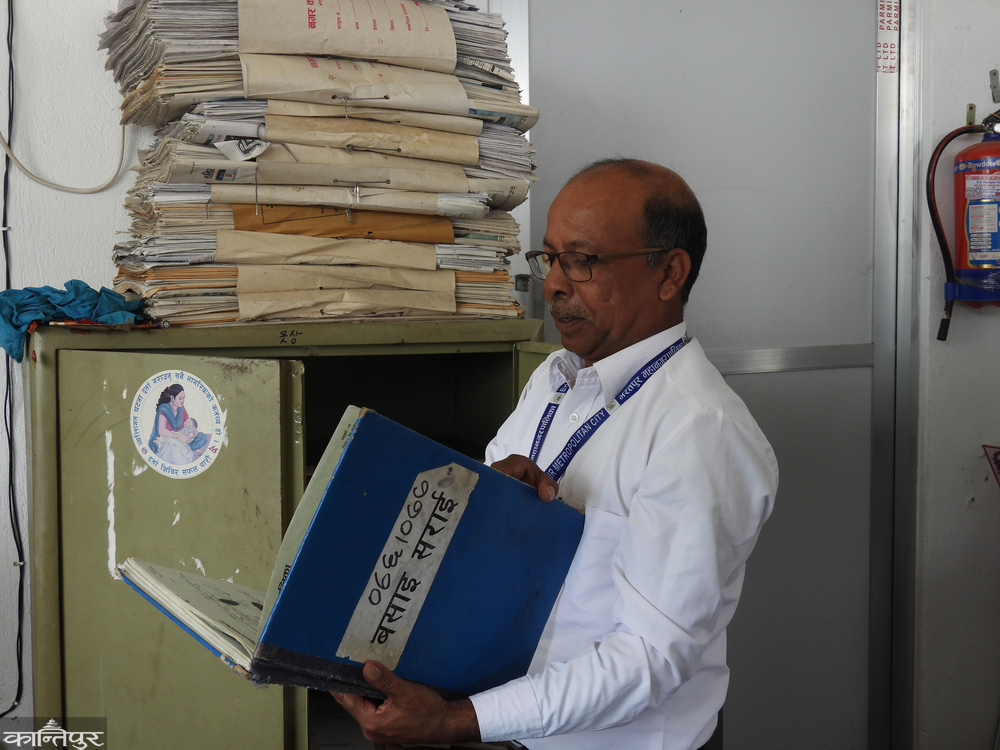
In the year 2047, Ramu took the job of forest heralu in the city forest where trees were planted by the then city panchayat. After three years, he changed jobs . The Bharatpur Municipal Corporation-3 office is about one and a half kilometers west of the busy Pulchok of Narayangadh market. Now, 55-year-old Ramu has been working as an office assistant in this office for four years. Before he was transferred to the ward office next to his house, he was in the Bharatpur Municipal Executive Office.
He registers the letter that comes to the office, keeps the invoice number, completes the instructions from the branch . But while doing this work, he has observed the changing dimensions of this city which has changed rapidly. He has kept all the accounts of how the chowk changed, how the city spread to which part and which Gulzar Chowk became desolate.
An old square that is about to reach six centuries near the west river bank road of Pulchok. He has memories of how many pedestrians and porters once used to sleep on this square to how many houses were around the busy Pulchok. As far as I know, there were only 6 houses. Two are covered with tiles and others are thatched,' he remembers the old days .
One of those 6 houses belonged to Ramu . About Born in this house in the year 2027, Ramu spent his childhood in the company of this Chautaro and Narayani River. Narayani's kanchan boiled water in a garri and brought it and ate it. He said, "We used to drink water from the river in Barkha". We used to put a cotton cloth in Gagri's mouth and filter the muddy water . It used to be purified by putting alum in the filtered water.' But this same Narayani river that he used to drink became different when he looked at it. He said, "Now, what about Narayani, which is cloudy during the rainy season, there is no potable water even in winter." Nowadays, people don't even wash their hands and feet in the water of Narayani regularly.'
Nowadays, Narayangadh is so busy and full of noise that you have to keep your ears alert even to hear people talking nearby. Ramu, remembering the time before his father was a Katuwal, said, "The news of bae standing in a chowk and shouting was heard all around." His bae used to shout loudly at Belchok, Sahid Chowk, Leela Chowk, Putli Bazar, where Alik Zhurupp's house was. ``There is only a rumor now,'' says Ramu.
As there is no bridge in Narayani, we had to go back and forth by big boat. Ramu also boarded the same boat carrying 30/35 people and sometimes went to Narayani . As a ward employee, Ramu also has a fond memory of his father once collecting boat tax. According to him, at that time the then village panchayat used to collect 20/25 paisa tax from a boat.
In the year 2042, before the bridge was built on the Narayani river, there was a lot of activity in Leela Chowk, one kilometer east of it. Passengers used to go across the river by boat from Leela Chowk. A memory of the time when the buffaloes were taken to live in Narayani river is still fresh in Ramu's mind. He does not remember the date, but on that day he saw the boat in the Narayani river from the bank of the river and had an accident. According to Ramu, at that time, work was being done to make pillars for a bridge on the Narayani river.
Due to migration from Bandipur and other hilly districts, the charm of this city started to change . Ramu narrated how Pulchok was turned into a market area. In the beginning, there were only small houses. He has seen that the moneylenders who came from Bandipur built a house with mud bricks. As the market grew, houses with ``kadi patte'' roofs, which were made by placing mud bricks, wooden laths and thick chooks, gradually started to be built. He said that only after the year 2050, the addition of concrete houses in the city started to increase and land buying and selling started to increase and said, 'After that, Narayangarh started to change rapidly.'
Until the 40s, there were more bicycles than motor vehicles and the number of bicycles and rickshaws gradually decreased in the city where there were three-wheeled rickshaws that were driven by pedals to carry people. The number of vehicles, auto rickshaws and motorcycles have been increased. A witness to this changing scene, Ramu has witnessed many other changes here closely . Like, once upon a time, he used to see a bird of sky blue color near Narayani. He used to see spikes in the cornfields and he didn't have to wait long to see a herd of latocosero . But now people find it difficult to believe such memories. He said, 'People have increased here, but birds have disappeared.'
The area of Narayangadh Asapas, which started to change after the start of the slum development program in 2013, has changed more rapidly after 2074. The small paths are wide and the black-paved road extends to the villages. 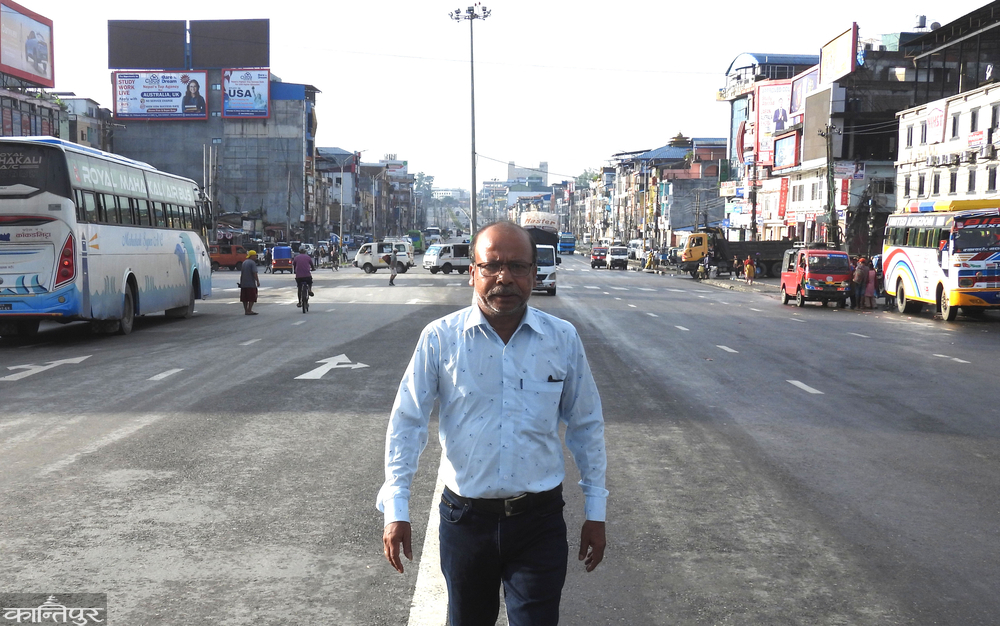
He has also seen that the water sources around Narayangadh are drying up after rapid urbanization. After moving to the house in Narayani Chhewai in 2042, Ramuka Babu buried a 24-feet pipe and installed a tap. But it's been 6 years and that stream has started to dry up. Now water comes from the government stream, but when he sees that the birds have disappeared, the water has dried up and the water in the Narayani river has started to become muddy, he thinks, is this development or the will of man?
A lot of things that have changed make her heart tickle . But he feels happy about one thing. As before he used to experience the unpleasantness of touch at every step. He said, "When we went to someone's house, they used to bring us six times to climb up the generation by saying that we belong together". If you touch the rent, you have to wash it, even if you drink tea in the hotel, you have to wash the glass and dry it separately.' But he thinks that this extreme form of discrimination has changed now.
Narayangarh changed Kanchuli in time . The people here changed . Even in Ramuk's life, the sun continued to shine. Ramu is happy that his eldest son has graduated and his youngest son who has completed class 10 has joined the municipal service. But he is worried that the pains and struggles of his life have not changed as fast as this city has changed. He interrupted the conversation and said, "Where did the market come from?" But our condition is like a frog under the same ear.

