There were two mothers in Vishwaprakash's life, on one hand Savitri Sharma was the birth mother and on the other hand Deukumari Shrestha was the mother who brought up the minor. Even though both of them are not mothers now, both of them have qualities in the light of the world, as soft as Savitri and as hard as Deukumari. Vishwaprakash, who had a teacher at his father's, was fast in reading, his parents supported him in politics.
We use Google Cloud Translation Services. Google requires we provide the following disclaimer relating to use of this service:
This service may contain translations powered by Google. Google disclaims all warranties related to the translations, expressed or implied, including any warranties of accuracy, reliability, and any implied warranties of merchantability, fitness for a particular purpose, and noninfringement.
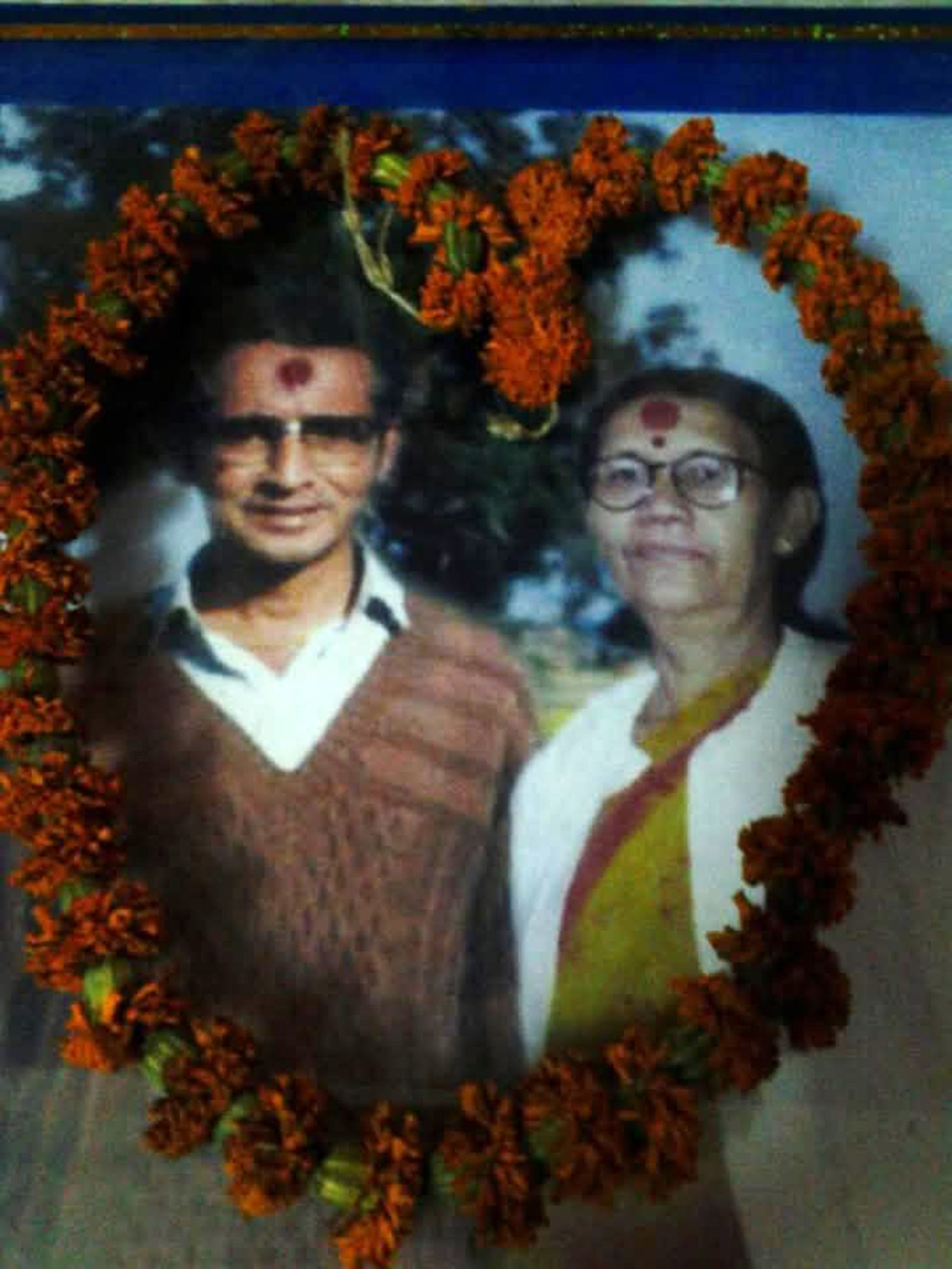
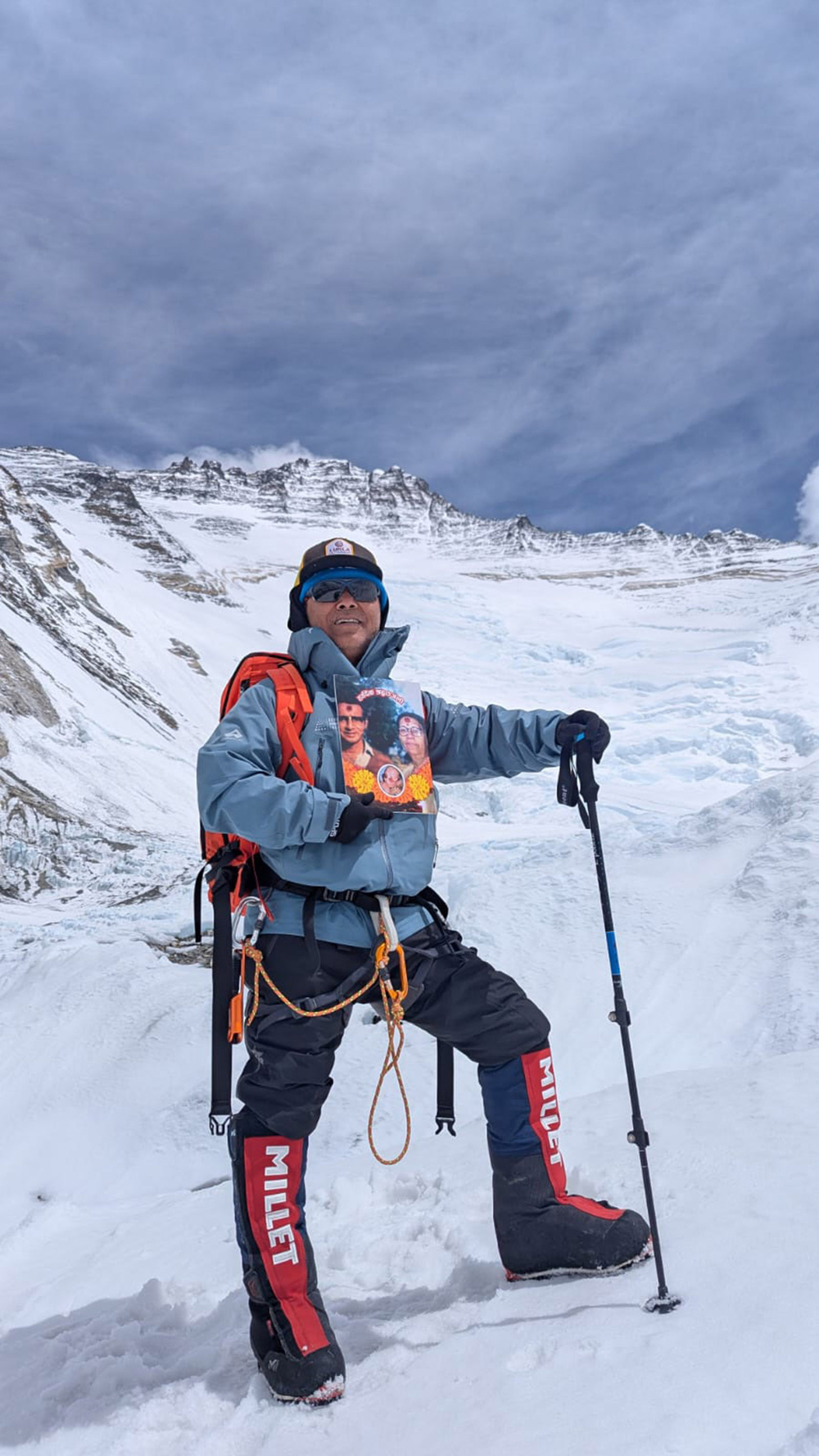
Vishwaprakash Sharma remembered mother Savitri Sharma's 82nd birthday in a different way. This time he remembered his birthday on June 6 from the mountains. He was climbing the snowy path to listen to the stories of the mountains. After reaching Camp 2 (6,400m), Vishwaprakash took out the photo from the bag. He clasped the picture to his chest and expressed his affection with reverence.
Savitri was one of the three people in the picture. He was extremely happy to 'celebrate' his mother's birthday from the height of the mountain. The second person in the photo was Baa Parshuram Sharma. And the third? The third face was equally warm and intimate to him. The one who fed me not just for a day, but for a year and a half. That mother's picture,' Vishwaprakash reverently remembers his mother Deukumari Shrestha, who is sitting quietly in his heart. No matter the rush hour or the restlessness and sadness. For him, those faces are a shining ray of weariness and despair. To whom he pays homage every morning in the puja.
After returning from the mountains, Vishwaprakash vowed to tell his mother's story. Finally he fulfilled his vow. In a quiet room at the party office in Sanepa, he lovingly shared his memories. Vishwaprakash was Jhapa's sidekick during the campaigning for the 2070 House of Representatives elections. While sitting next to Mechi Jansagar Mavi of the then Bahundangi village, he remembered, "I have an emotional love for this village. Because my mother taught in the school of this village. The locals were proud of the emotional love that the influential leader of Nepali politics had for his village. At that time, Keshav Prasad Khanal, who was 5 years old, said to Vishwa Prakash, 'Vishwa Babu, you only remembered the school where your mother taught. You have also played in this school square.'
Vishwaprakash was shocked by this revelation. Keshav added, 'At that time your mother used to come on a horse. She used to bring you tied with a cloth on the back. She would sleep on the bench of a nearby tea shop and then go to study. When she heard the baby crying, she would come and feed him milk and put him to sleep again. Vishwaprakash started looking at the square, the school, the balcony with his eyes that were becoming fond. He asked Keshav affectionately, 'And how did you know all these things?' Keshav opened up more suspense, 'Dad, when your mother used to teach in this school, I also used to teach in this school.'
This was a story around 2027/28. While mother Savitri and father Parshuram were both permanent teachers. Ba was jailed in the Rajkaz case while he was in the political movement from the Congress. Savitri had to face a struggle after she was imprisoned in Chandragarhi Jail during the movement against the harsh panchayat regime. The then magistrate transferred the mother from Dhulabari to Mechi Jansagar Mavi in Bahundangi. "I was transferred saying that I would resign, but I didn't," the mother told Vishwaprakash of her stance.
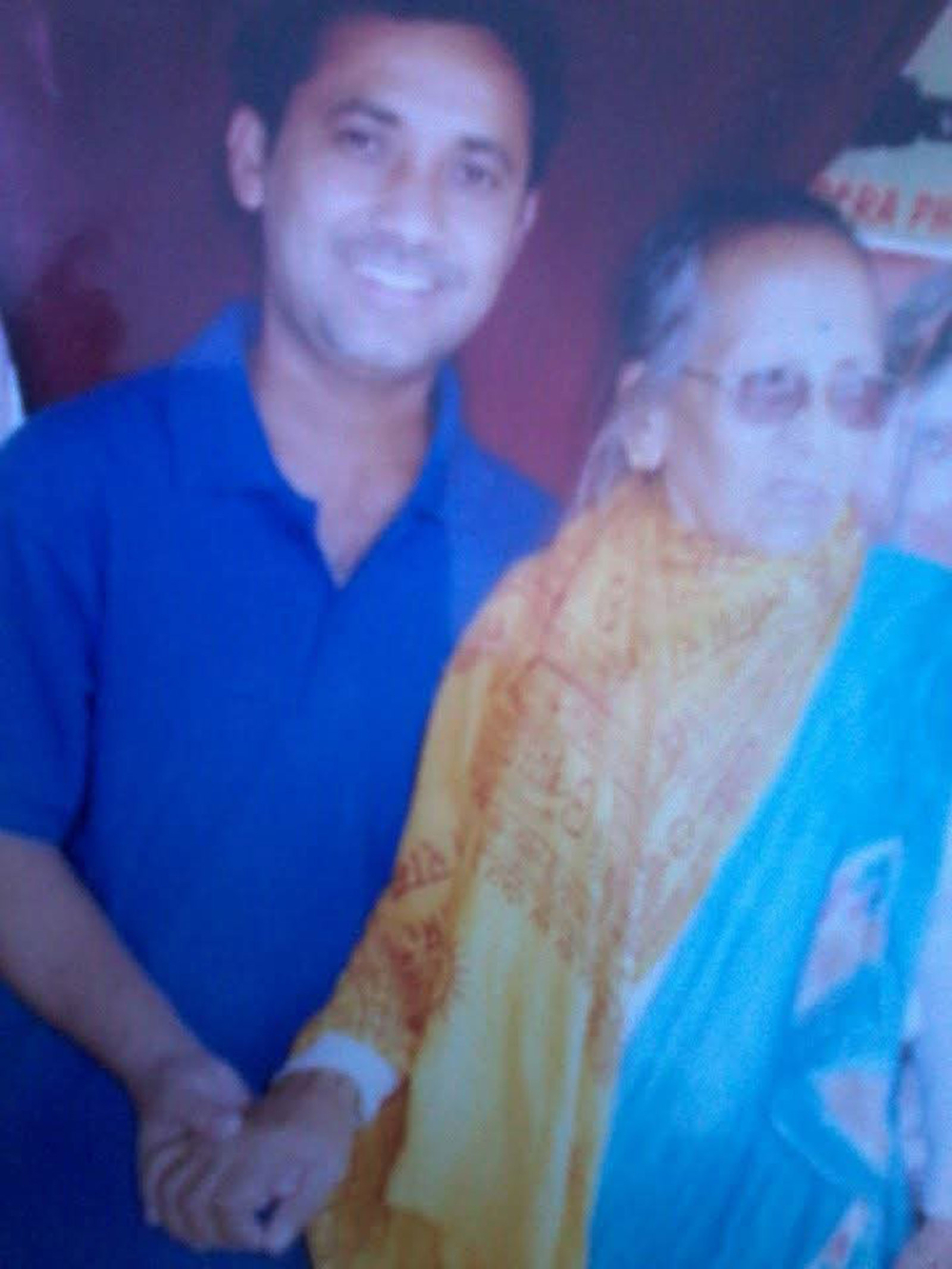
When going to school, Savitri used to carry 8-month-old Vishwaprakash on a horse from Dhulbari. Bishwaprakash's brother Rajyaprakash still hasn't forgotten that scene, "I still remember how my mother carried my brother on a horse for a long time." After Bishwaprakash lost two consecutive elections, his friends suggested him to stand up from Kathmandu in the 2079 election. In the beginning, I thought about it. Later, Hriday said, "When I leave Jhapa, I have to leave my brothers and sisters in the tea garden, I have to leave Dhulabari and Kakkadvitta." You should leave that mud where you played with mud.' Then he changed his mind. He was elected as a member of the House of Representatives from Jhapa Region No. 1. He was warmly welcomed by his soil this time.
Vishwaprakash is the third child born in 2027, he has an older sister and brother. "After I was born, I cried for 7 days," he tells the story he heard after he understood, "I didn't have enough milk." At that time, Deukumari, the mother who gave birth to Niraj, was producing plenty of milk. He strengthened me by continuously feeding me for one and a half years.'
He not only went to Savitri guna, but also took Deukumari's guna. He knows, 'How far is the invisible effect of milk!' If he has to be soft, he can become like Savitri and if he has to become hard, he can become like Deukumari. "Every single drop of the mother's milk I drank was precious to me," he says, "I am happy that my body is flowing with the blood of my mother and the milk of my tribal mother." Friends and colleagues called him to Kathmandu at that time. But he was sinking into another great grief. It was the tenth day since the death of mother Deukumari. Like other brothers, he shaved his head and joined the Kiriya Karma, he told his friends, "I can't leave my mother's work for 10 days." On my behalf, I will offer flowers to him. Deukumari remembered Vishwaprakash very much after her mother passed away. Deukumari mother and family were equally important to him. Even that family never considered Vishwaprakash an outsider. Even Deukumari used to add Vishwaprakash's name to the list of her children. Vishwaprakash was as dear as mother Savitri's arms, Deukumari's arms too.
Mother Savitri spent 35 years of her life in Dhulabari Secondary School. Towards the end of the school she became the principal. Savitri's health did not support her since becoming a prince. Before retiring in 2060, she said, 'If the teacher gets sick, the classroom gets sick. If the principal gets sick, the whole school gets sick. The school will not be inconvenienced because of me.' Then she resigned. Vishwaprakash used to study in the school where his mother used to teach. She taught English and Geography. Other friends were scared when mother entered the classroom. But Vishwaprakash never saw his mother as a guru, he saw himself as his mother.
Vishwaprakash's family was middle class. Mother and son easily got the opportunity to study BA. Bale studied at Kharsang in Darjeeling. Later Dai was also taken there. There was talk of taking Vishwaprakash to Kharsang after class 3. At the school in Kharsang, the principal took Vishwaprakash's oral test. Seeing his bright mind, the principal said, 'It's brilliant.' But the smell of coal coming from the house where he stayed the previous day, the muddy water and the fact that he was away from Baama made him very worried. He deliberately spoiled the next day's entrance exam. “How did such a brilliant man screw up?” the principal was shocked. Ba scolded angrily. Mother asked affectionately, 'Did you spoil it on purpose?' Vishwaprakash nodded yes.
Savitri was also active in social work. She was interested in helping someone in the society when they are suffering, speaking the voice of the weak, raising awareness. Apart from school, she used to give free tuition to students at home. She played the mouth harmonica. The songs hummed by mother and the music made by her mother still resonate in Vishwaprakash's ears. Remembering it now, Vishwaprakash is left with a lack. "Mother hummed songs, mouth harmonic tunes and her voice was not recorded," recalls Vishwaprakash. Vishwaprakash got interest in music from his mother and knowledge from his brother Tika Bhandari. Father and uncles had influence in politics.
Savitri was adept at preserving. She carefully kept the copies that Vishwaprakash had taught her to write. Cards printed during the wedding and Ubela's letters were preserved. Savitri never allowed her children to spend unnecessarily. She bought a khutruka, every child used to collect money in the khutruka. On the day of Lakshmi Puja, there was a custom of breaking khutruke. "At that time, my mother used to add whatever she had and deposit it in the bank," recalls Vishwaprakash.
Vishwaprakash became active in politics from 2040. While studying at Mechi Multipurpose Campus, he lived in a tent in Bhadrapur. At that time, he had support from his father and mother not only in studies but also in politics. "I used to come home every Friday, after dinner my father, mother and I would sit and review," recalls Vishwaprakash. He was never pressured by his father and mother to be first in studies. His mother's opinion was, 'You have to be good before being successful.' Vishwaprakash now tells his children the same thing, 'It is not necessary to be first, it is necessary to be the best. I don't want first marks, just don't raise questions about you.'
Friday's meeting continuity is now maintained by him in his family as well. Every week there are wife, son, daughter and Vishwaprakash in the meeting. Household budget and activities are reviewed in the meeting. The daughter is the president and the son is the secretary. wife and he member. "I haven't had the opportunity to become the president yet," he laughs. Another thing that mother taught Vishwaprakash was, 'You have to learn to lose, you have to learn to endure, you have to learn to lack.' He continued to use this mantra in his political life.
In 2045, Vishwaprakash was the President of the Navy Association at the campus. Before that, it was a custom to beat Akhil when the Union lost in the Swaviyu elections. This was repeated every time. During his tenure, that situation changed. "When Akhil won in 2045, we honored him by standing in line, not beating him," he remembers.
Mother always used to say, 'You should never be greedy. If one falls into unnecessary greed, one will go on the wrong path.'' Mother used to give the example of Ba Parshuram. After the 2046 change, money was allocated on a year-by-year basis to those who had been in prison before that. Parshuram would get 50 thousand at that time. "But he told me not to take rent while I was in jail," my mother used to say.
After Ba's death in 2057, he transferred all his land in his brother's name. Mother was very happy to see the trust and faith in her brother. It did not covet. Even in politics, one never gets greedy,'' said the mother with firm conviction. Various problems started appearing in Savitri's health from 2056. Various problems including heart, lungs, uterus were added. Rajyaprakash says that after the loss of his father, his mother's health was affected more. "My mother used to live with me, but after my father passed away, it became more difficult for her. The wound continued to grow. The disease kept getting worse,” he says.
After spending a long life in school, her days became more and more painful. In 2064, after his health condition became complicated, he was kept in the Medicare Hospital at Chabahil, Kathmandu for 28 days. Those 28 days were very painful for Savitri. For 22 days, Vishwaprakash stayed in the regular hospital. Life partner Kavitha kept her eyes open for 28 days and prayed for her mother's recovery. Mother was melting more and more.
When the mother was discharged from the hospital and transferred to the camp, oxygen was administered in the room as well. In the eyes of the world, some glimpses of the mother's last days keep coming. On the day of Lakshmi Puja, the mother lit the lamp with the help of her son and daughter-in-law. Then the mother sat down. The last cremation of the mother took place on the banks of the Nindah river in Jhapa. Even now, the scene of sitting on the banks of the Ninda river and watching the burning of father and mother makes Vishwaprakash serious. However, Vishwaprakash has tried to understand one truth from his heart, 'Death is natural.' But the emptiness after death?
He felt that he had never lost or won in life. 50 friends must have been waiting in the courtyard the moment the district chairman of the party returned after losing or losing twice. But there was neither mother nor father in that crowd. "Even in that crowd, even if the father loses, there will be a day when he will win nothing, there is silence because there is no mother's arms, father's hand to support him," Vishwaprakash was heard with deep emotion. Even at the moment of victory, if she was a mother, she would have said, 'I told you that one day you will win.' If you feel any emptiness at the moment of winning or losing in life, it is because you remember your mother. But Ekman also thinks, 'how long will it be physically? They have gone, one day I will also go.'
But there are many things to do before going. Which are connected to the soil, connected to the spirit. are connected with life. He had to do good deeds to be the good son his mother thought he would be. Had to keep up the good behavior. Even with his mother's prayer that he should not take the wrong path in life, Vishwaprakash continues walking on the right path. "And, while walking on that path, I am walking along with my father and mother (s)," Vishwaprakash sounds firm.

