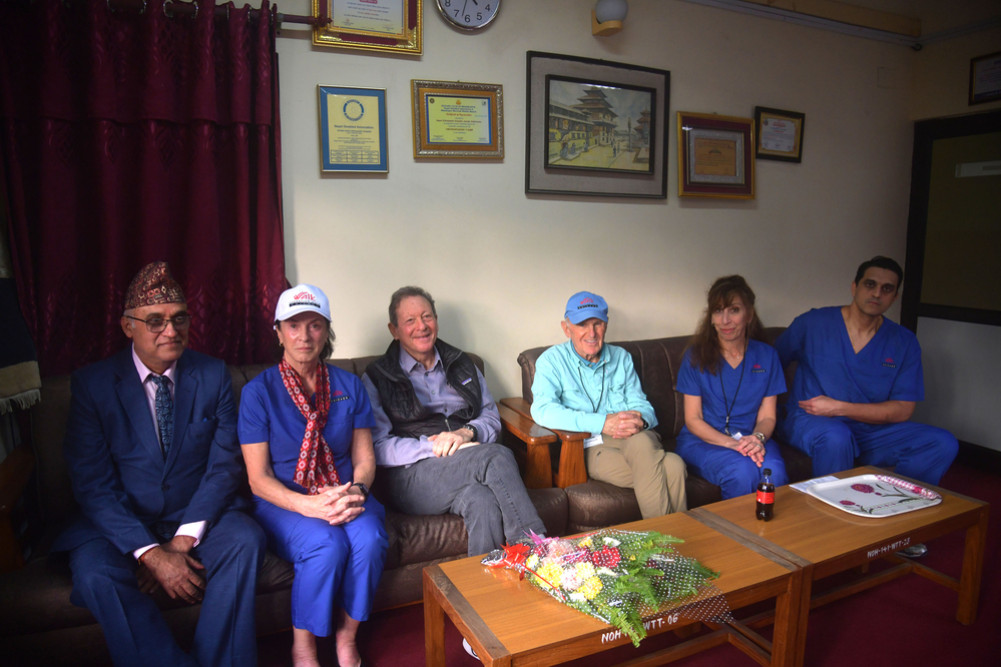
Since 2009, ”Operation Walk Chicago” in collaboration with Nepal Orthopedic Hospitalsag has been helping underprivileged patients in Nepal with urgent care.
We use Google Cloud Translation Services. Google requires we provide the following disclaimer relating to use of this service:
This service may contain translations powered by Google. Google disclaims all warranties related to the translations, expressed or implied, including any warranties of accuracy, reliability, and any implied warranties of merchantability, fitness for a particular purpose, and noninfringement.
Philanthropic couple Tom and Margot Pritzker first came to Nepal 50 years ago. It is at that point that this couple found a deep love for Nepal and Nepalese. While pursuing professional work, they also continued to do charity work together.
Tom is the executive chairman of Hyatt Hotels Corporation. And, Margot is the Chair of the Aspen Institute Board of Trustees. They are also serving humanity in other organizations. Together, the two are involved in many other charitable services. They are so humble and modest, one would think by looking at their nature - how modest, how simple. Their friendly behavior is felt to further strengthen their professional stature. They who can easily live in materialistic comforts are giving their lives to charity and community. They are more devoted to charity than enjoying pleasure.
Margot recounts her early experiences in Nepal. Her voice sounded full of emotion as she continued to speak. She said, "Decades ago, while trekking in the attractive Himalayan region, we met many Nepalis suffering from complex diseases. They have been struggling with back problems and joint problems. As a result, they were unable to move around normally and had to remain confined to their homes.' That made them want to make a difference in the lives of the people they met. Since then, Tom and Margot have been devoting themselves to charitable efforts aimed at improving the condition of Nepalis.
Margot Pritzker .
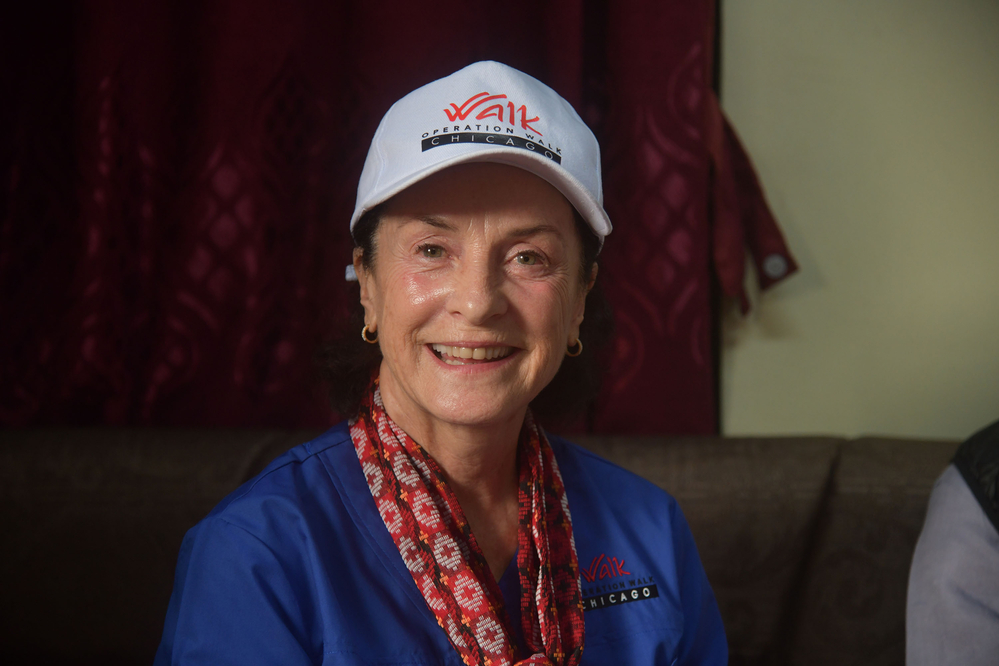
In 2009, Margot suffered a serious neck problem. He was treated by Dr. Chicago, USA. Victoria was taken to Brander. Dr. Brander Dr. He co-founded Operation Walk Chicago in 2005 with David Stulberg. which provided free hip and knee replacement surgery. It is a non-profit medical organization.
The goal of 'Operation Walk Chicago' is to improve the quality of life of patients worldwide by reducing disability. "Since its inception, it has changed the lives of patients from many countries by treating them according to their needs," said Dr. Stuhlbarg said. The team of this organization has been coming to Nepal since 2009 and performing surgery on patients here.
dr. During her treatment with Brander, Margot learned about the organization's humanitarian work. The work done by the organization in Nepal also caught Margot's special attention, an organization that Margot already had in her heart. She was impressed by the organization's dedication and the work it was doing. Because of that motivation, Margot pledged to actively support 'Operation Walk Chicago'. Margat's involvement with the said organization has deepened Margat's relationship with Nepal. After that, Margat continued to strengthen her love for Nepal and Nepalese.
Since 2009, Operation Walk Chicago in collaboration with Nepal Orthopedic Hospital has helped to provide essential care to underprivileged patients in Nepal. Nepal Orthopedic Hospital was established in 1998 as a charitable organization with the aim of providing quality orthopedic care in Nepal, which has been helping the needy and especially the underprivileged.
"Since its inception, the hospital has aimed to make the state-of-the-art orthopedic treatment accessible and convenient for the people of Nepal," says Dheeraj Mainali, the administrative head of the hospital, "many of whom are already deprived of such medical services." The hospital was launched to meet the growing demand for orthopedic care in the country in particular. Its capacity is one hundred beds. It has a special focus on being accessible to the low-income population of Nepal and providing high-quality care.'
It has been playing an important role in providing healthcare services to provide easy availability of hospitals to many Nepalis who are struggling with limited resources and living in poverty.
The Pritzker couple has been establishing and operating the 'Pritzker Orthopedic Fund' to support the initiatives of health care reform in Nepal. This grant program is specifically designed to address one of the most significant barriers to joint replacement surgery. Victoria Brander said. It specifically addresses the high cost of hip and knee implants. "This program will help ease the financial burden and enable access to life-changing orthopedic care for the very poor," said Dr. Brander said. The aim of the
fund is to make advanced medical treatments, such as hip and knee replacements, more accessible to the vulnerable, helping those unable to afford them. Brander explains. "From January, the program will start distributing grants to subsidize the cost of these necessary implants and to ensure that surgeries can be performed at the Nepal Orthopedic Hospital," said Dr. Brander said.
Tom Pritzker .
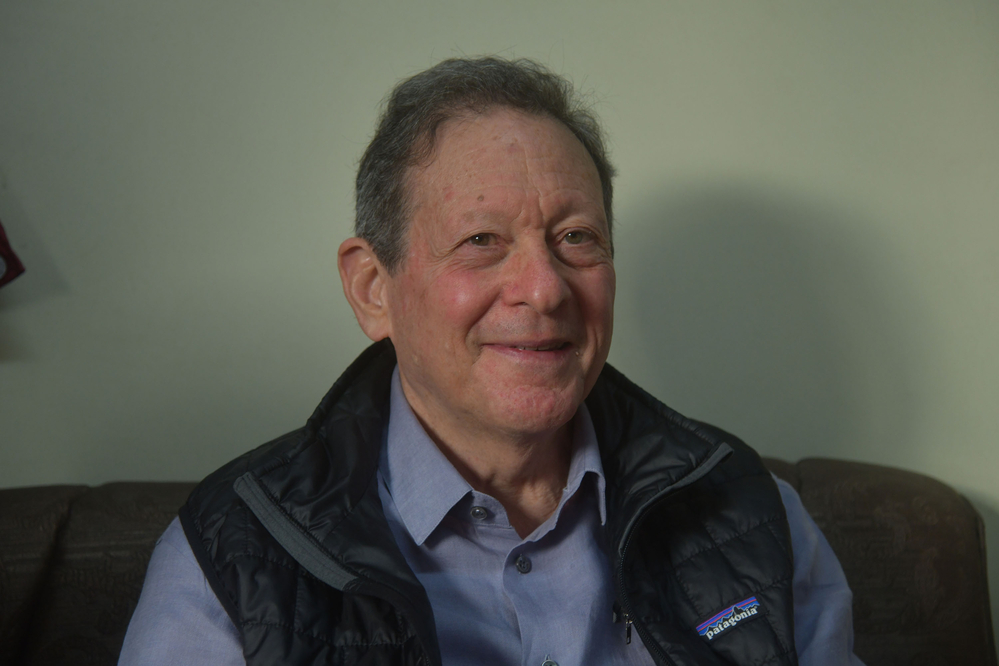
ten years ago Dr. Stulberg and Dr. Brander felt that in order to continue this program in Nepal in the long term, surgeons should be trained here. Which was a suitable way for Nepali to take care of Nepali. “Teaching is not just sitting with a book and showing you how to do surgery. First, we review the X-rays and the patient's exam. And, we discuss what we can expect to see. Then we work on cases together. So we use different techniques and approaches during surgery. Then we review what we did and what we saw again. In this way, we give Nepali doctors a learning experience," said Ravi Basyal, an orthopedic surgeon from Chicago, Illinois, who came as a volunteer at the Nepal Orthopedic Hospital. As a result, Nepali surgeons trained by them in the past years are now fully capable of performing hip and knee replacement surgery.
Sanju Thapa, who is being treated at Nepal Orthopedic Hospital, was suffering from knee problems since two decades ago. She went to many places hoping to get the right treatment for her knee. But to no avail. "When I was brought to this hospital, I had an operation on my knee. And, I am living comfortably now. After two decades, I am now able to walk properly,” says Thapa.
Tom comments that this is one of the most effective charities they are running in Nepal. "People who never thought they could walk can stand up and walk," he said, "this is really a life changer." Brander claims. "If you take me for example, I would have no problem getting my hip replaced here," he said.
When we perform hip and knee replacement surgery in America, it changes a person's lifestyle. But in Nepal it saves not only a person's life but also their family's life, says Basyal. "That's why the impact of surgery is greater here," he said. "Healthcare, education, etc., all sectors—I think philanthropy plays a very important role in that." The government still has to do its job. But when philanthropic support is added to it, it's even more extraordinary, says Margot.