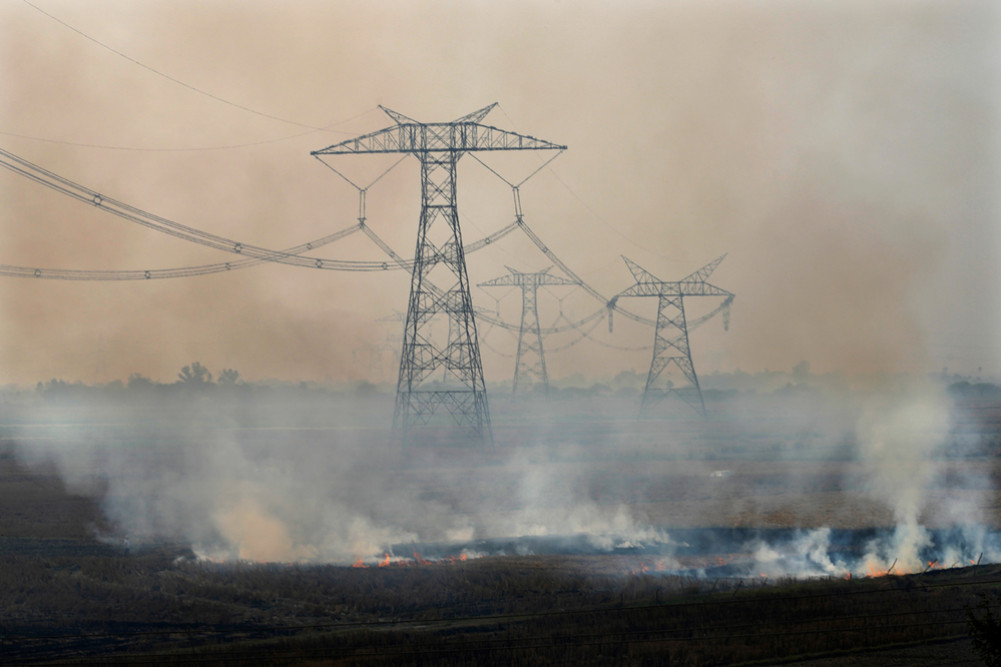
Now in the evening and in the morning, Kathmandu valley and especially Terai region is experiencing cold weather with strong smoke and toxic fumes, due to which people are experiencing health problems including burning eyes.
We use Google Cloud Translation Services. Google requires we provide the following disclaimer relating to use of this service:
This service may contain translations powered by Google. Google disclaims all warranties related to the translations, expressed or implied, including any warranties of accuracy, reliability, and any implied warranties of merchantability, fitness for a particular purpose, and noninfringement.
The effects of air pollution spread from India's Punjab, Haryana and Uttar Pradesh for two weeks have also reached Nepal. Due to the use of firewood, brick kilns and high fuel consumption by the farmers after the crops have dried up, air pollution reaches its peak every year with the onset of winter.
This week, various cities, including New Delhi in India and Lahore in Pakistan, have recorded the highest air pollution of the year. The impact of which has reached the Terai cities of Nepal and the Kathmandu Valley. Now in the evening and in the morning, the Kathmandu Valley and especially the Terai region are experiencing cold weather with toxic fumes. Due to which people are experiencing health problems including burning eyes.
Apart from sporadic rains in the eastern Terai, there has been no rain in the entire country including the Kathmandu Valley for a few weeks. Lack of rain and strong winds have directly affected air pollution. Meteorologist Vinod Pokharel said that the impact of the pollution in India last week has reached Nepal.
'While the air pollution in India was high, even though it was little, Nepal benefited because of the westerly air. Otherwise, it could have been a more worrying situation," said meteorologist Pokharel, "but it is not a satisfactory situation." He predicts that there will be light rain in Eastern Terai on Thursday and light rain may also occur in Kathmandu Valley on Friday. After that, air pollution will also improve further, he said.
Inspector Prakash KC of the Environment Department says that the increasing pollution in Nepal is not the only Indian influence. "In India, just as farmers burn taps of crops, we also have an increase in burning and setting fires due to the cold weather, so the air pollution seen now is not only the effect of pollution in India," said KC, an environmental inspector, "when it increased in Delhi, it increased here as well." But it cannot be said that pollution has spread here only because of that. But there is some effect. According to him, the emission of sources in one place causes air pollution in another place. But there has been no study on the impact of increasing pollution in India from Nepal's Terai to Kathmandu.
While it is being commented that agricultural activities in and around Punjab have affected Delhi and Pakistan's Lahore and even Nepal, joint efforts have not been made for the prevention and control of air pollution across borders. In addition, 8 South Asian countries, including Nepal and India, issued a declaration on control and prevention of air pollution and transboundary effects through a conference in Male, Maldives, in 1998. It mentions cooperation, partnership and cooperation programs to reduce the international impacts of air pollution. But these countries have not shown interest in their implementation.
According to environmentalist Bhushan Tuladhar, the government should communicate with the Indian side about the fact that emissions from sources on Indian land cause air pollution to Nepal's Terai and Kathmandu every year. 26 years have passed since the declaration of Male. But in its implementation, there is no great interest of the countries that contribute more to the emission of pollution. Even Nepal has not taken any initiative for that," says Tuladhar, "Now is the stage for us to be cautious. We should be aware of the situation we have seen in Delhi and Lahore this year and take initiatives not only within the country, but also for international initiatives.
He says that the emission of resources on Indian land is not the only culprit in the increase in pollution every year after the onset of winter. The way pollution has increased in India, it definitely has an impact. But that is not the only main reason, we have not been able to reduce the pollution from within Nepal," he said. yes This is not only affecting public health, but also affecting the country's economy. If everyone really thinks sensitively, air pollution is a crisis situation. He said that the government is aware of this and does not take effective measures.
It is not that the government is not aware of the impact of air pollution, some work has also been done. But due to the lack of willpower of the political leadership, the work expected for this has not been done," he says. "We have made Air Quality Action Plan 076 But we have not implemented it for five years. Garbage is burning in the city itself. A fire is raging. The brick kiln is still running. Pollution caused by industries has not decreased. We have made laws and norms for all these things. But in the absence of a concrete initiative by the government to be implemented, the achievement is equal to zero.'
Similarly, plans have been made to control air pollution even in the long term, but they have not been implemented, he said. From creating a green city to increasing the use of electric vehicles, the state's policy has already been made. But who will invest there? Instead, diesel vehicles are added every year," he says.
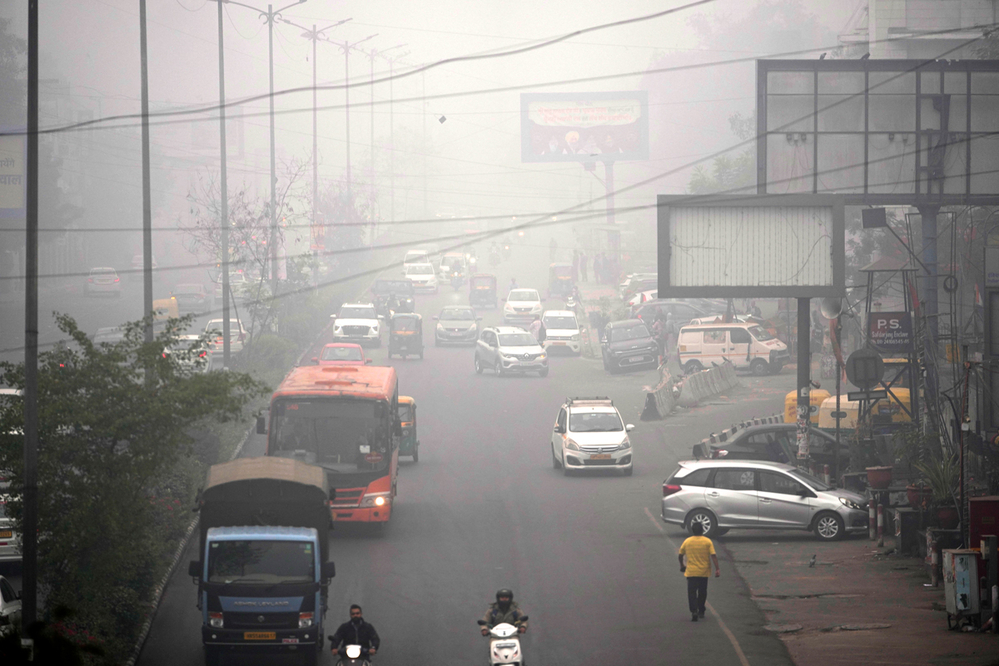
Due to air pollution in India, life has become difficult especially in Delhi and Lahore in Pakistan. In Lahore, the market has to be closed, while in Delhi, schools are still closed. Due to pollution, the Delhi government has closed physical classes and started teaching online. After measuring excessive air pollution, the Delhi government has banned all activities of burning coal and wood and has appealed to reduce the use of fuel including diesel.
Air is polluted by human activities. Rapid pollution spreads in the atmosphere due to the fuel used for driving vehicles, cooking, industries that emit dust, infrastructure construction, and fires. In winter, there is less wind and colder weather, which increases the pollution. Particulate matter (PM) is a mixture of dust, smoke and liquids with iron, sand and lead spread in the air. If these particles are smaller than 10 micrometers in diameter, then those particles are considered harmful. But while measuring air quality, particles with a diameter of 2.5 micrometers and less are considered as the basis. These particles, which are three times larger than hair, cannot be filtered by human lungs during inhalation. As a result, they stick directly to the lungs, and even join the blood stream.
According to the standards of WHO, as long as the amount of PM 2.5 particles in the air is less than 100, it is okay to breathe. Above 150, the air is considered unfit for breathing. But when it exceeds 300, it is dangerous for human health. According to the Swiss agency IQAR, which monitors air pollution in real time around the world, the air quality of some cities, including Delhi in India and Lahore in Pakistan, has reached 1200 in the last week. At the same time, the air quality in the Kathmandu Valley also decreased and reached around 250.
Even on Thursday, Delhi and Lahore are among the most polluted cities. But the amount of pollution is less. Kathmandu is the 14th most polluted city on Thursday evening. According to the data taken at 7:45 pm, the most polluted city Delhi has 235 PM 2.5 while Lahore has 211, Dhaka (Bangladesh) 168, Mumbai 149, Shanghai (China) 153, Kolkata 139 and Kathmandu 115. According to the records of the Environment Department, the amount of PM 2.5 on Thursday evening is 126 in Ratnapark in Kathmandu, 170 in Nepalgunj, 157 in Bharatpur and 109 in Bhaktapur.
According to the World Health Organization (WHO), air pollution is the second leading cause of human death. 99 percent of people in the world live in places with polluted air, and 8.1 million people die every year due to air pollution. 90 percent of them are people from low- and middle-income countries.
'State of Global Air' states that 19% of all deaths in Nepal are caused by air pollution. According to the Ministry of Health, 66 percent of deaths from chronic lung disease are caused by air pollution. Similarly, air pollution accounts for 34 percent of deaths from heart disease, 37 percent of deaths from stroke, and 22 percent of deaths from lower respiratory tract infections.
Chronic respiratory patients, children and the elderly are the most affected due to pollution. Foreigners say. Children's lungs are not fully developed. He says, "Pollution affects everyone, even the chronically ill, who have already had an infection in the lungs, will be affected by a little pollution." Breathing in polluted air and breathing in clean air has a lot of meaning in the long run.
Staying in a place with highly polluted air causes not only lung and heart problems but also skin, eye, digestive system and various mental diseases in people, he said. He says that pollution should be reduced to avoid air pollution. Also, the government in Nepal has been making various efforts to control air pollution and protect the environment.
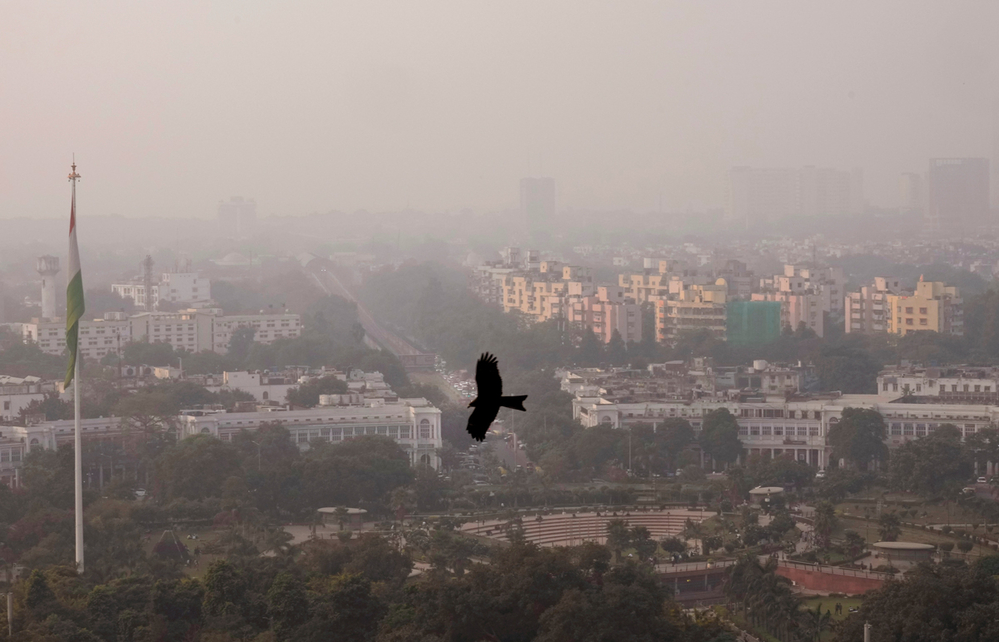
Article 30 of the Constitution not only provides for the fundamental right of every citizen to live in a clean and hygienic environment, but also acts, rules and standards have been made according to its provisions. It is mentioned that air pollution should not be done contrary to the standards set by the Environment Protection Act, 2076. Effective implementation and monitoring of the various legal arrangements introduced for pollution control in the Strategic Action Plan for Environmental Sector Improvement, 2078 and the Kathmandu Valley Air Quality Management Action Plan, 2076.
Regular monitoring and action mechanisms are not effective, from factories that emit polluted air to vehicles that are operating against standards on the road.
According to the Department of Environment, 77 percent of the vehicles running in Kathmandu emit more than standard smoke. But no initiative has been taken to ban those vehicles. The department that has the authority to monitor the implementation of the standards does not have the authority to take action. In a writ petition related to air pollution control, the Supreme Court on 30th January 2074 ordered to create a separate mechanism for regular inspection of vehicles and action against those who do not keep the city clean to reduce pollution. The then joint bench of Justices Deepakraj Joshi and Cholendrashamsher Jabra had ordered the government to implement the National Air Quality Standard, 069 and Nepal Vehicle Pollution Standard, 069 to prevent dust from flying on the roads. But the government has not implemented it. Another cause of air pollution in Nepal is indoor smoke. Even though the government has launched a campaign to eliminate smoke inside the house, it has not been able to eliminate the use of firewood.
According to the 078 census, there are 6666 thousand 937 households in Nepal. Out of that, 51 percent of the houses are still burning firewood and 3 percent of the houses are burning wood. More than 60 percent of premature deaths worldwide in 2012 were women and children. A chest specialist says that there is no other way to avoid air pollution except to go to a place where there is no pollution. "The only way to avoid this is to go to a place where there is no pollution, because we cannot live without breathing," he says.