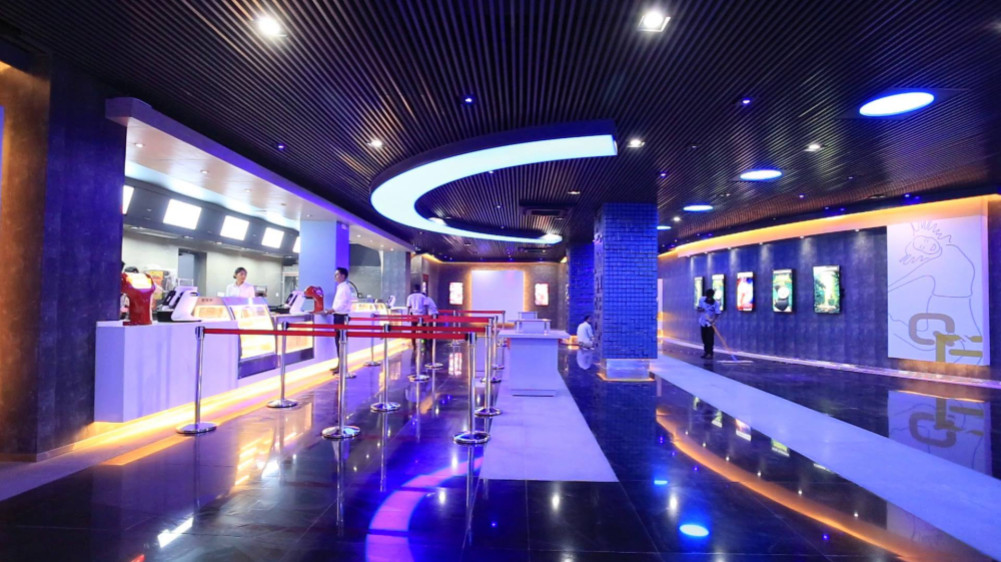
Due to the small number of theaters, most Nepali films have to compete for the same release date. Not only Nepali films, but also foreign films from big banners have to compete for the same release date.
We use Google Cloud Translation Services. Google requires we provide the following disclaimer relating to use of this service:
This service may contain translations powered by Google. Google disclaims all warranties related to the translations, expressed or implied, including any warranties of accuracy, reliability, and any implied warranties of merchantability, fitness for a particular purpose, and noninfringement.
'On the one hand, we are happy, the film sector is getting a bill, a law. But, how much did we include in that happiness? The number of theaters has decreased from 450 to a total of 168. What did the bill include to increase the number of theaters?'
This is the question that cinema entrepreneur Narendra Maharjan asked Minister for Communications and Information Technology Jagdish Kharel during a tripartite discussion with stakeholders on the film bill in the Legislative Management Committee. This question by Narendra, who is also the president of the Nepal Film Association, the umbrella organization of cinemas, reflects the current state and challenges of the Nepali cinema industry. The decreasing number of cinemas also shows that cinemas are operating at a risk. However, cinema entrepreneurs complain that the state has not yet paid attention to this sector.
After all, what problems have been addressed by the bill to amend and unify the film-related laws? Does the bill, based on the 2026 Film Act, have the objective of increasing the number of cinemas, improving quality, and promoting their business?
There is no goal to increase the number of cinemas
 Filmmakers are not getting the market that Nepali films are currently being made in. Data from the Development Board shows that more than a hundred films are being made annually. However, those films are not getting the proper screenings at the box office. The reason? The number of cinemas. Due to the small number of theaters, most Nepali films have to compete for the same date. Not only Nepali films, but also foreign films from big banners have to compete for the same date for screening. Even though the number of film productions has increased, the number of theaters is decreasing, which seems to have affected Nepali filmmakers. However, if the number of theaters is increased, the market for Nepali films will also increase. For example, 'Purna Bahadur's Sarangi' did half a billion at the domestic box office. If this film had been shown in 450 theaters instead of 168? Where would the business of 'Purna Bahadur's Sarangi' have gone? However, Chairman Maharjan says that the bill has not been able to address this problem of decreasing theaters. 'When I came to this area, there were 450 theaters. At that time, the audience capacity of the theater was up to 1,000. Now, there are only 200 theaters, and that too only 168,' Maharjan said. 'Why did the bill reduce the number of 450 theaters at that time? Now, it should address what needs to be done to increase the number of theaters.'
Nakim Uddin, the director of QFX, the largest channel of multiplex halls, believes that more halls should be added to increase imports from the domestic market. 'The number of films is increasing at the same pace. Cinema halls must increase accordingly. Otherwise, there will be competition among Nepali producers for it and the halls will have to be abused,' said Nakim.
According to hall businessmen, the number of halls decreased sharply during the Maoist conflict. Gradually, the concept of multiplexes came from single theaters. When they could not be converted into multiplexes, some halls became warehouses and some became party palaces. Some halls that collapsed in the earthquake were lost and never rebuilt. Even during the lockdown, some halls were 'locked' forever. However, Maharjan says that the bill has not been able to make any long-term plan to save the halls. He says, 'The bill or law should think long-term, it should think for the future. I have brought my son into my business. However, this bill does not include any kind of provision to give energy to my sons.' Not only is the promotion of the hall with
, but the government has not given any concession to start this business in places where there are no halls, says Nakim. Recently, stories and characters from Karnali have appeared in Nepali films. But, where is the hall in Karnali that shows these films? The number of halls is low in Madhes, which has a large population. There are only three halls in the far west. It seems that the number of halls will increase if the government gives concessions or grants to those who open new halls in rural areas where there are no halls. 'Tax holidays can be given to those who open new halls for 5-10 years. If the government says that it will give this and that concession where there are no halls, would the number of halls increase? Will customs exemption be given when building new halls?' Maharjan suggested a solution, saying, 'Film technology keeps changing, if we were given customs exemption when installing and changing it, we would be encouraged.'
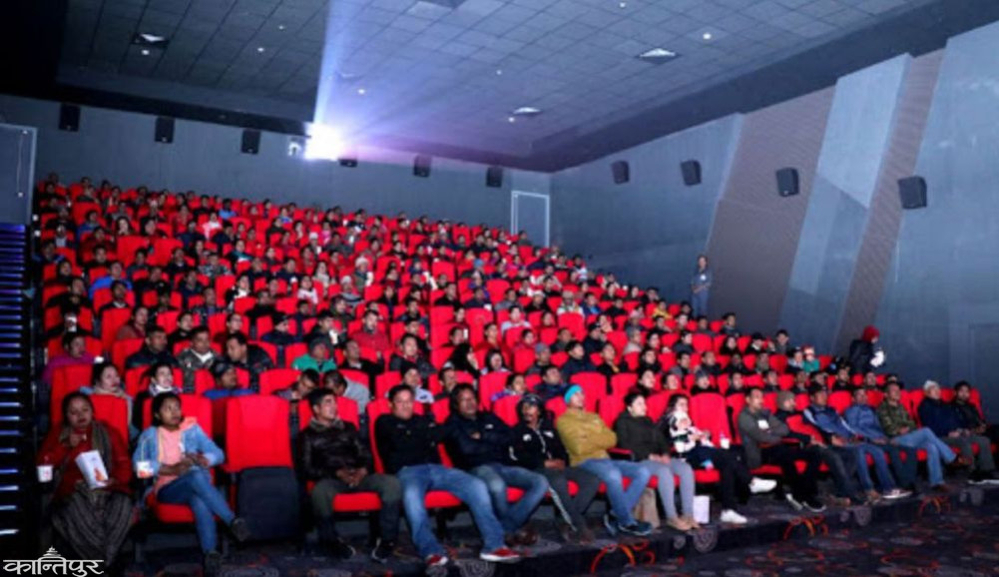
In neighboring India, there is also a system of giving subsidies and tax exemptions to those who open halls. To encourage the construction of new halls, the state and central governments provide a certain percentage of tax exemption. For example, in Meghalaya, the government provides a subsidy of Rs 10 million to those who open a hall with a capacity of 200 spectators. But in Nepal, even when a hall is opened at a cost of crores, the government has not given any such exemption, says Nakim. 'People from many places message me asking me to open a QFX in our place. There is no market in the place they say. If the government were to provide concessions when opening a new hall, there would be enthusiasm to open halls in such places. However, the state is still not paying attention,' said Nakim.
 Actress and director Deepa Shree Niraula, who is involved in the hall business, believes that there should be a subsidy arrangement from the government when they open a new hall. 'We did not receive any subsidy when we opened a hall. When someone opens a new hall, the government gives subsidy. However, there is no such arrangement here. However, the government should make a system for providing subsidy,' says Deepashree.
Heavy tax
During the Covid pandemic, the film halls were closed for almost 18 months. At that time, the exhibitors suffered huge losses. At that time, Maharjan, the president of the Nepali Film Association, thought, 'The movie theater business is not an industry.' Why? If it had been an industry, we would have felt the relief provided by the government like other businesses. However, when the business itself came to a standstill, Maharjan recounts his experience of having to bear only losses. 'Our theaters were closed down at the beginning, just like Corona. Our business was the last to open. We were able to open the theater only after we reached the Prime Minister,' Maharjan recalled. 'While the tourism industry got all the facilities it needed from the government. They were able to resume business, they easily got started. But we were asked to open our business only at the end.'
Maharjan says that they did not get the services and facilities provided by the government because they did not see this sector as an industry. Agreeing with Maharjan, Nakim says that they did not get any concessions in taxes either. 'The government has imposed a lot of taxes on movie theaters. There is a big difference in taxes for domestic and foreign films here. Now this business is surviving because of Nepali films,' Nakim said.
In Nepal, cinema hall operators have to pay about 33 percent tax, excluding corporate tax. 13 percent VAT. The local government has to pay 5 percent entertainment tax. There is a 15 percent film development fee. If a viewer buys a ticket of 300 rupees and watches a film, 100 rupees goes to tax. Out of the remaining 200, 100 filmmakers would get it. The remaining 100 rupees goes to the cinema hall operator. With that income, the hall rent, electricity, salaries to employees, and bank loans have to be paid. On top of that, the 'operating expenses' of the cinema hall are equally expensive. For example, whether 5 people watch a film in a cinema hall or a hundred people watch it, its 'operating expenses' are the same. Just because the number of viewers is low, it does not mean that the 'operating expenses' are low. No matter how many viewers come, the AC is turned on inside the cinema hall, and the sound is turned on. Maharjan says that cinema halls are surviving despite such risks by taking on challenges. 'You must have heard that even after so many days of the film's run, the cinema hall workers have not received any money from the cinema hall. We cover the expenses of the hall with the money from the films that are running. And we give it to the filmmakers,' he said. 'But if one film is a hit and the other films are flops, the payment will be delayed. For us, every film has to be a hit, for our hall to run.'
Nakim says that this business has not attracted the attention of business houses because it requires taking a lot of risks. 'If you open a hall with 2 screens, it will cost 15-16 crores. You have to pay salaries to 25-30 people to run that screen. The maintenance cost is the same. That is not much benefit to our business. And why should billionaires be attracted to this sector?' Nakim asked.
Chairman Maharjan demands that this sector be given industry concessions to protect such sensitive businesses. 'While hotels and tourism are getting industry recognition, they get concessions on electricity bills. It is difficult for halls to get that. After becoming an industry, we should also get such concessions,' Maharjan said. 'What special grants and facilities can be given to secure the investment of businessmen who will invest in this sector tomorrow? The bill does not say. Why did private organizations not come into this business? Did the bill say to bring them into this sector?'