The play presented at the Sushila Koirala theater portrays the Nepali society 70 years ago and brought to life issues such as post-democracy progressive ideas, caste discrimination, superstition and gender inequality through the characters' dialogues and conflicts.
We use Google Cloud Translation Services. Google requires we provide the following disclaimer relating to use of this service:
This service may contain translations powered by Google. Google disclaims all warranties related to the translations, expressed or implied, including any warranties of accuracy, reliability, and any implied warranties of merchantability, fitness for a particular purpose, and noninfringement.
Painters of Biratnagar's Arohan Gurukul staged Hriday Chandrasingh Pradhan's famous psycho-social novel 'Ek Chihan'. Presented on the stage of Sushila Koirala Theater, this play depicts Nepali society seven decades ago.
'Ek Chihan', included in the compulsory Nepali curriculum of Madhyamik Shiksha Parishad, was a story confined to the pages of textbooks for many students. However, this novel has now been transformed into a play with the imagination and direction of young artist Dipesh Bhandari.
The rehearsals conducted after the workshop with the new and old actors of Gurukul have made the play natural and effective. Here the characters are not talking, they are becoming the voice of the society. The
drama takes the audience back to Nepali society seven decades ago. Post-democracy progressive ideas, caste discrimination and superstition, gender inequality and the view on women, all these topics have been brought to life in the play through every action, dialogue and conflict of the characters. In the
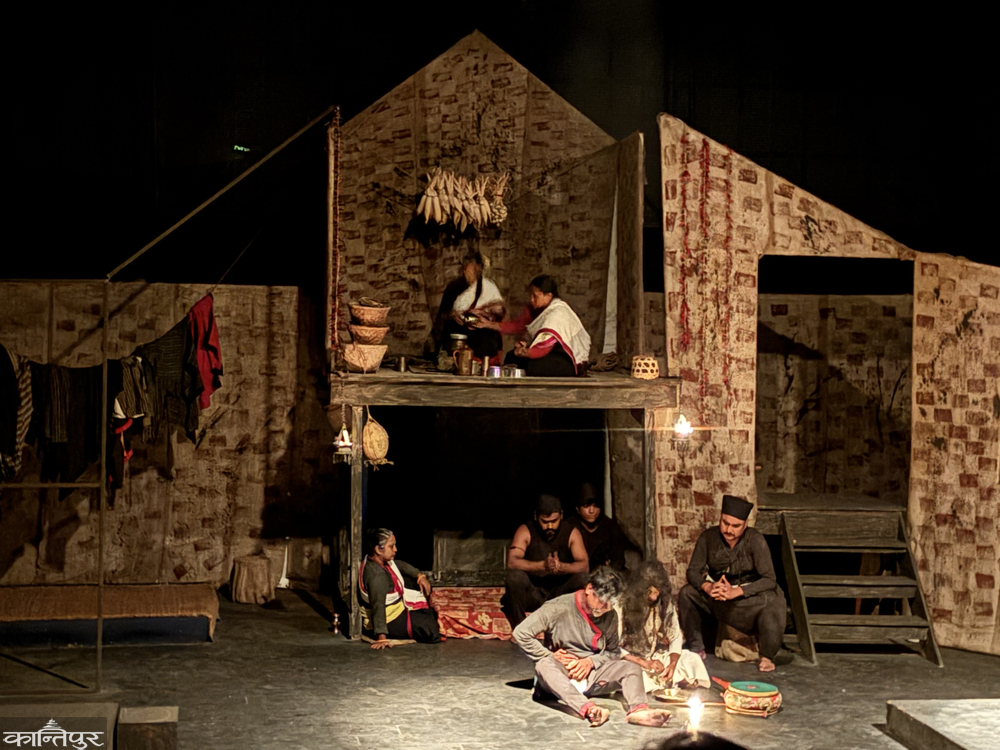
drama, the same mentality of the society is revealed, where progressiveness is talked about but traditional net binds its feet. Therefore, the audience is forced to look for today's reality in the scene of the play. The actors of
drama have given natural life to the characters of the novel. Ashtanarayan (Mahesh Paswan) has left a deep impression as a character with conflict and self-struggle. Latmaya (Sangita Yadav) brings to life the struggle between sensitivity and rebellion.
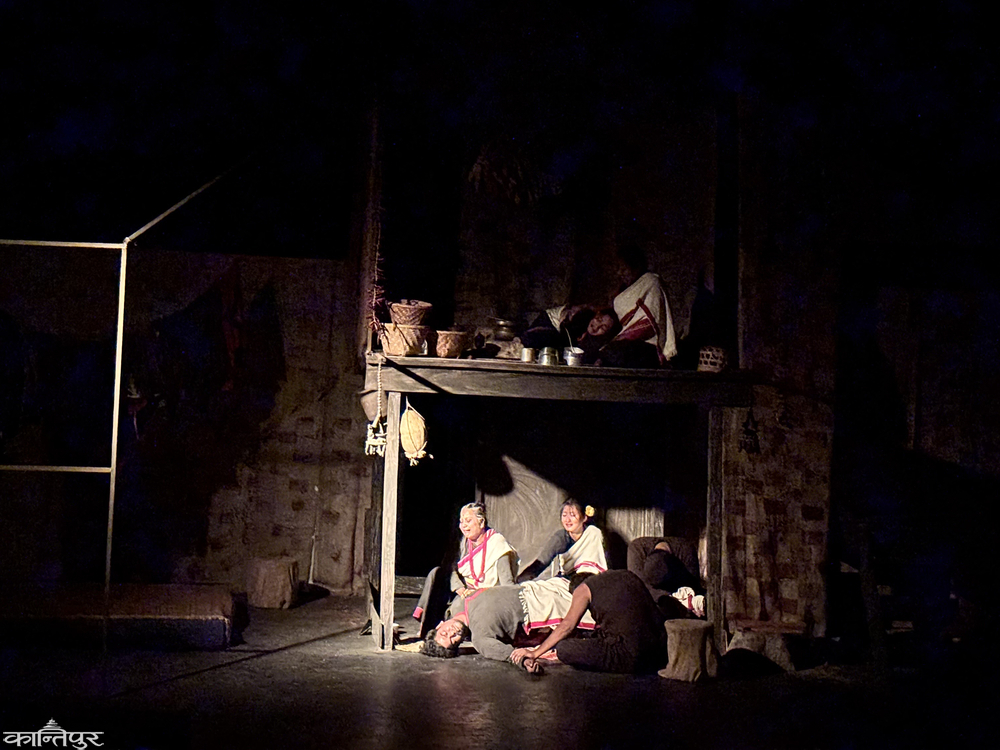
Shivnarayan (Uddhav Sapkota) Hakumaya (Diksha Chaudhary) has become a symbol of the mentality of the old society. The acting of both is commendable.
Gaurav Khatiwada, Upasana Rai, Shivraj Bhujel, Pradeep Dahal, Amisha Wagle, Divyanka Khadka, Sagar Ghimire, Nishan Chauhan Rai have also done justice to their roles.
characters have not only uttered dialogues, they have also expressed the pain, rebellion and desire of change in the society.
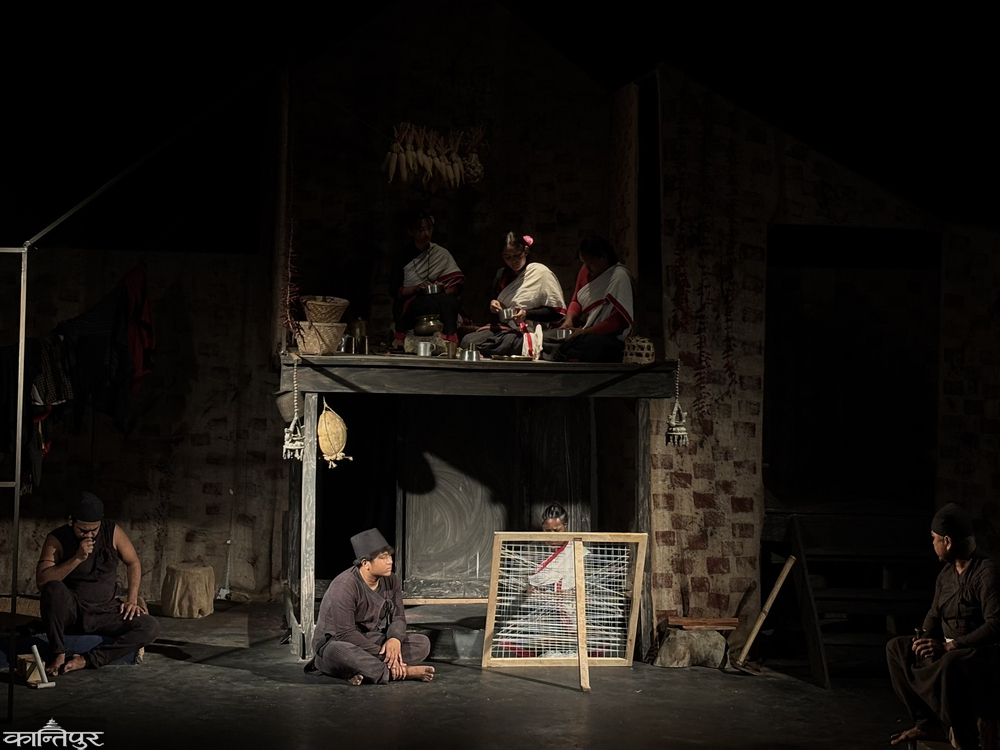
Vikas Parajuli has brought the rural life of seven decades ago, through the stage. The smell of the soil, the shape of the hut, the utensils and the traditional dress take the viewer on a journey to that time.
Bharat Karki has managed the ups and downs of emotions with color. Rameshchandra Adhikari has become an emotional bridge between the story telling and the events through the background voice, forcing the audience to dive into deep sorrow.
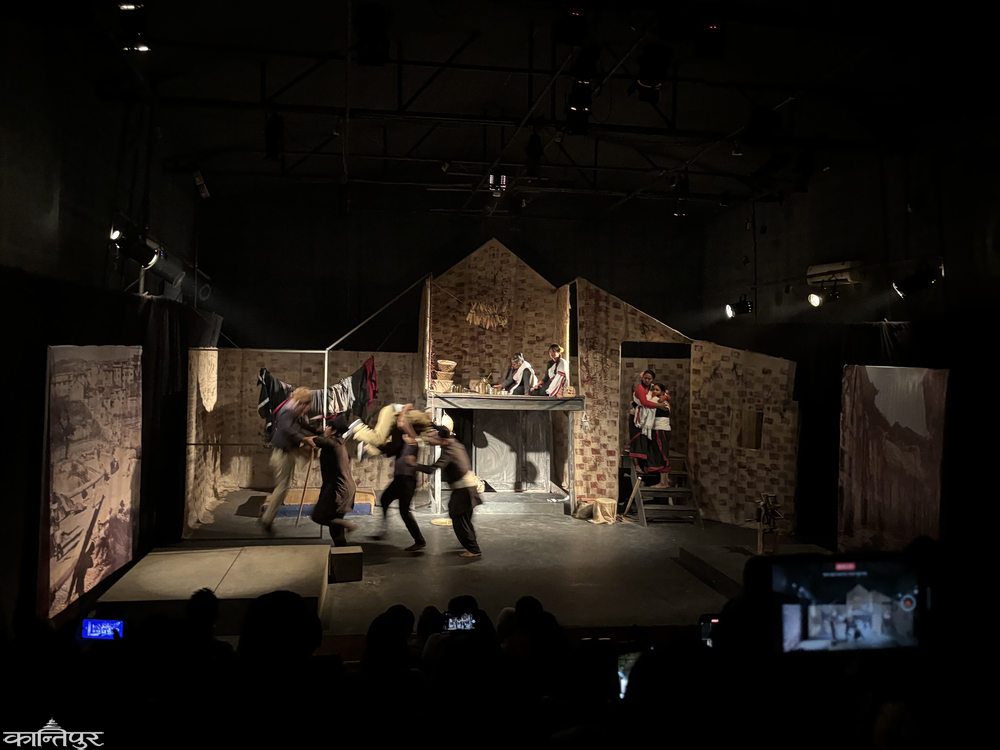
drama has not only revived the history, mentality and sensibilities of the society, it has also become a bridge between artists and literature.
After watching the play, writer Seema Abhas said, 'Through a graveyard play, the artists have not only cultivated the literary taste, but have also vividly depicted the history, mentality and feelings of the society.'

