'Rajaganj', which has Madhesh issue as its background, questions the discriminatory policy, structure and politics. Showing the inconsistency of the society as a whole, it hesitates to be sensitive to the Madhesh issue.
We use Google Cloud Translation Services. Google requires we provide the following disclaimer relating to use of this service:
This service may contain translations powered by Google. Google disclaims all warranties related to the translations, expressed or implied, including any warranties of accuracy, reliability, and any implied warranties of merchantability, fitness for a particular purpose, and noninfringement.
What can't a film say? A beautiful love story of sexual and minorities can be told in melodious rhythm. That too without making the characters of that community a subject of laughter! To raise their issues, it is not necessary to make big speeches in the dialogue, nor a big message. Their love can be told through visuals without dialogue.
The power of visual language is not limited to this. It can tell the story of two mothers in a parallel style with themes of sexuality and minority. By capturing the conflict between mountains and Madhesh, it can be called the love of two mothers for their children, it can explore the complicated aspect of being tangled between justice and injustice. And can say, the political situation of the country . Can show, corrupt police administration and media! Within 1 hour and 48 minutes, the film shows the complex aspects of Nepali society and shows many dimensions of discrimination, injustice and conflict experienced by Madhesh. Thus, a strong example of how a film can express many sensitive issues in a single voice through a single film is 'Rajaganj' meaning 'Pooja Sir'.
is, the film can show the finer aspects of the society in the newspaper. Therefore, the film is considered as a mirror of the society. However, the director should be aware and sensitive about what he says to show the society well. Director Deepak Rauniar is clear, what issues will be raised through the film - what will be shown? Therefore, the story of 'Rajaganj' has not been diverted to other subjects. 'Rajaganj' is not painted with exaggerated colors to tell the story of Bhuin Manchhe, so there are no forced scenes throughout the film. In one punch of Pooja, 10 gangsters are not killed at once! In that sense, this film is close to human life, it is close to Nepali society and the sufferings and sufferings of the people here.
A tight screenplay and a simple style of narration captures the audience's attention in 'Rajaganj'. The story of the film is simple. Two children are kidnapped in 'Rajaganj' (fictional name). The incident is from 2072, the movement is raging in Madhesh. At that time, Inspector Pooja Thapa (Asha Magrati) is sent to Rajaganj from Kathmandu. The two abducted children belong to different classes. Assembly member Pravin Yadav's son, Alok . Alok's mother (Richa Sharma) is the headmaster of the local school. Amrit's mother Bhuinmanche . How did Pooja, who reached Madhesh to rescue two kidnapped children, solve this issue? Through which struggle will his journey proceed ? The story of 'Rajaganj' is Madhesh seen through the journey of Pooja Sir of the hill community, the discrimination and injustice endured by the Madhesi community .
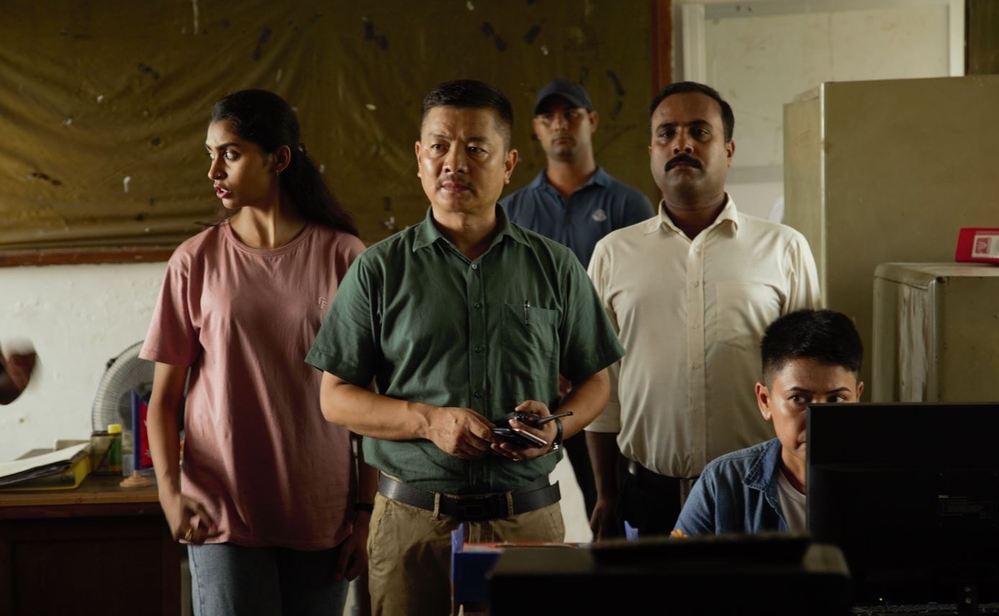 However, the film does not touch only these aspects . From the misogynist perspective, gender discrimination in the workplace also shows the struggle of women in a patriarchal society . As the suspense unfolds in this film of the 'Crime Thriller' genre, the complex issues of the society will be explored . What kind of discrimination should a character like Pooja face in the field of work because she is a woman? The scene speaks beautifully. Be it Pooja or Mamta Gupta (Nikita Chandak), the theme is presented that women still have to fight for their place in society and prove themselves every time.
They are underestimated by their male colleagues in the workplace, even if they don't believe in many things . A scene from the film clearly shows this. When it comes time to give credit for the final outcome of the case, most of them do not worship, but extend their hand to the higher-ranking policeman. Equally capable, batchmate Madan (Dayahang Rai) has been promoted to a higher position in Pooja's ranks . The suspension of Inspector Mamata for no reason shows how tribal, marginal, Madhesi and Dalit women are excluded during disaster/crisis.
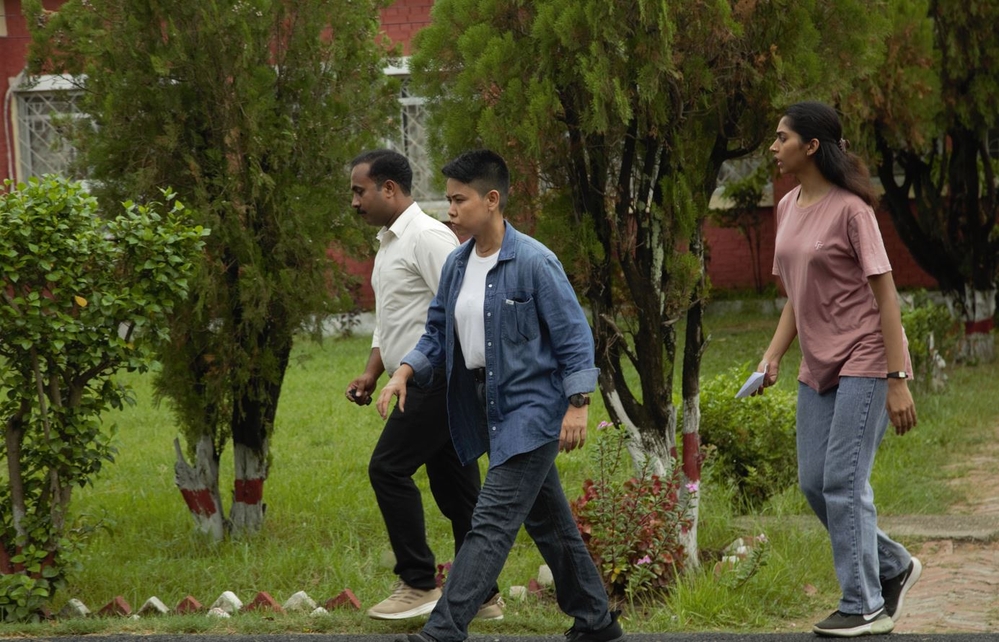 However, Pooja has the courage to fight such gender discrimination, she can say, 'call me sir' . Because she is a woman, she has seen discrimination in the use of the word 'Ma'am'. 'Rajaganj' is also the story of a female police inspector, who has the courage to fight for injustice by being diligent and honest. Another example of how tight the film's screenplay is, is the character's personal life. For example, Pooja goes to Madhesh to search for a kidnapped child, but at the same time she is dealing with her family problems . Keeping Rama (Gaumaya Gurung) at home to take care of her sick father, she reaches 'Rajaganj'. Meanwhile, the sick father and Rama are not getting along, she is trying to be the bridge between the two. While writing characters from 'Chaukathi', 'Highway', 'Seto Surya' to 'Four Nights', Deepak tries to present them in a realistic manner by covering their different dimensions. Women are playing the main roles in the
film, and the Madhesh issue is also shown in a strong way. Telling the story of two mothers, the director Through 'Rajaganj', he has tried to explain the Madhesi issue to the audience in a simple way. From Inspector Pooja's trip to Madhesh, the director advocates for the people of Bhoon. After all, the oppressed people got justice, or are they getting it? Who will advocate for justice for the unreached? When will they get justice? Through the pain experienced by female characters like Saraswati (Aarti Mandal), the film questions, - Did the Madhesh movement bring Madheshi access to justice? Can the Constitution guarantee them inclusive and social justice? Is identity and rights limited only to the constitution? 'Rajaganj' raises questions on many such deep issues together with the two kidnapped children and the investigation to find them.
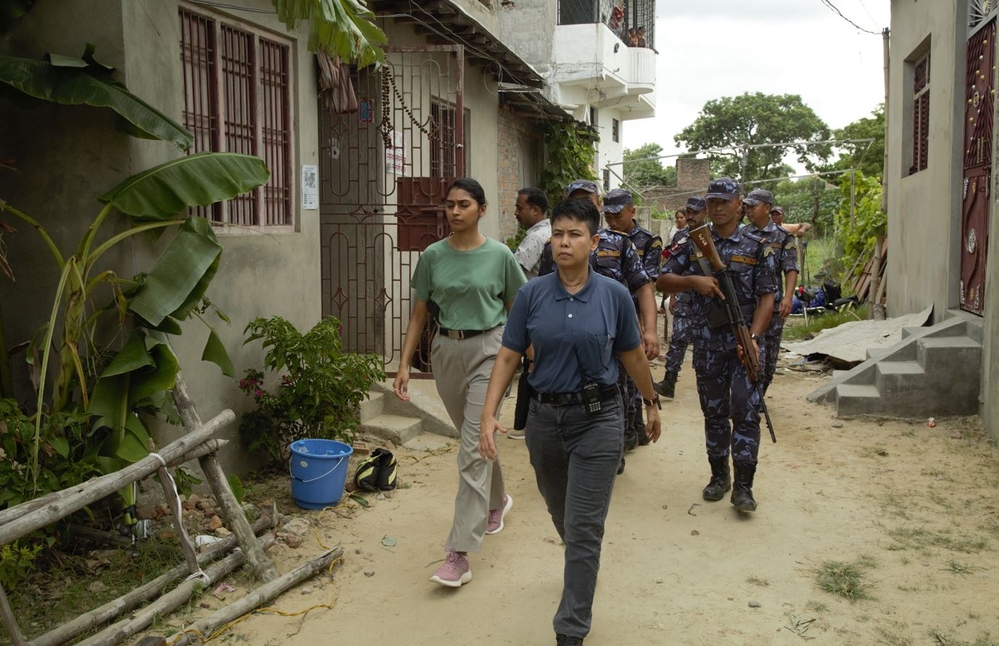 There is a scene at the very beginning of the film, where Rama (Gaumaya Gurung) runs out of the kitchen saying 'Bhaiya'. This scene of the film satirizes the discriminatory thinking of seeing Madhesi only as 'brothers'. He questions those who discriminate on the basis of color. Born in Madhesh, Amar (Vijay Baral) does not want to be known as Madheshi. During the investigation, when Pooja and Amar reach the interior villages of Rajaganj, they speak Nepali language to everyone they meet there. However, most of them reply in Maithili . Then Amar says, 'He can't speak in Nepali.' The film has also exposed the linguistic discrimination that has been experienced for a long time. Is Maithili not a Nepali language? A single view raises powerful questions here. After all, art will warn about such matters. The use of language in the film is beautiful. Whenever the Maithili-speaking characters of Rajaganj bump into people from the hill community, they speak in Hindi. After all, why? In the beginning, the people of the hill community were speaking to the Madhesi in Hindi. Director Rauniyar is sensitive by showing Hindi as the language of communication between hills and Madhesh.
The Madhesh movement was not prioritized by the so-called mainstream media. Be it 2062/063 or the movement of 2072. The film satirizes the issue of how the 'mainstream' media ignored the news of Madhesh. Saraswati, who is anxiously waiting for a news to be printed in a newspaper, looks at her husband Ram and says, 'There is no news about us on any page of the newspaper!' Ram says, 'three protestors were killed here, their news was printed ? What's our printed ?' What role did the media play in the Madhesh movement? This scene satirizes in a subtle way . In the film, it has been shown how the media deviates from its duties along with the corrupt bureaucracy, politics and police administration. The film unmasks the reality of the mainstream media. The film also attacks Nepali politics, the Center speaks of Madhesh's view. 'Rajaganj' is a beautiful story with strong political expression on the Madhesi issue, the portrayal of the characters of the Madhesh and their experiences. Not only the composition of
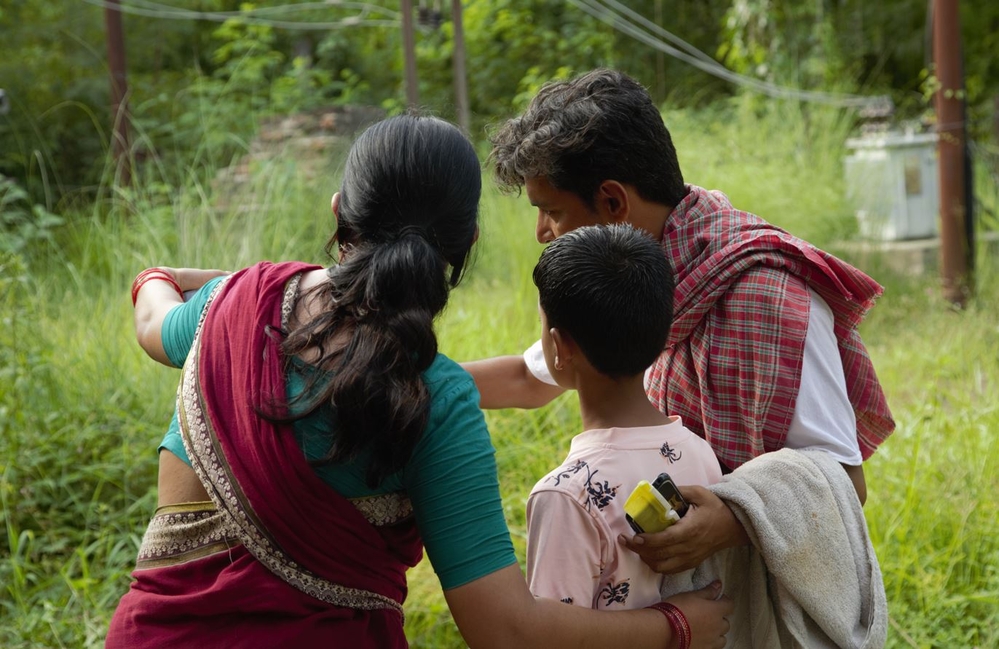 scenes, Rauniyar has strengthened the narrative craft of the film by mixing the elements of filmmaking. There are no flashy scenes in the film, the film has been shot in the same way as the life of ordinary people. Along with the narration, the sound of the film is strong. The sound plays a role in conveying the mood of the characters, the situation and the events of the film. This film is very amazing in terms of editing . Efforts are made in the art of editing to make the story flow smoothly . The story of the film moves forward at a fast pace . The actor's performance in the film is equally strong.
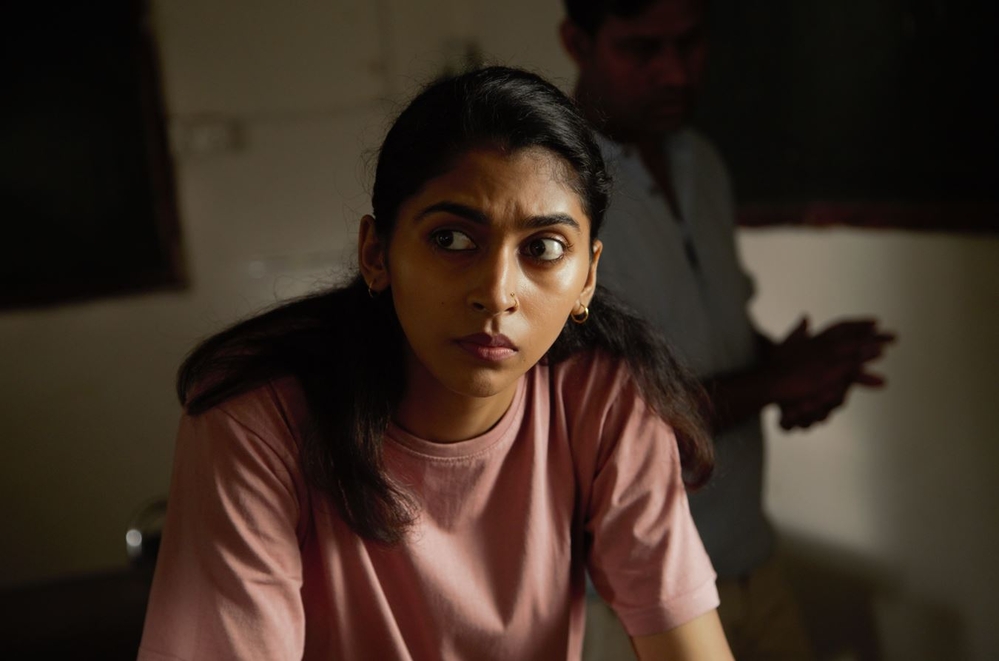 Former Miss Nepal Nikita Chandak gives a 'surprise' to the audience through the role of Mamta. Be it Richa Sharma in the role of headmaster or Pashupati Rai in the role of a simple mother, Gaumaya seen in the role of Rama. This actor has proved his presence strong even in a short role . After a long time, Asha, who appeared in the role of Pooja sir, has stood tall again on the screen. Pooja's harshness, the complex aspects of her character, she has lived in the film .
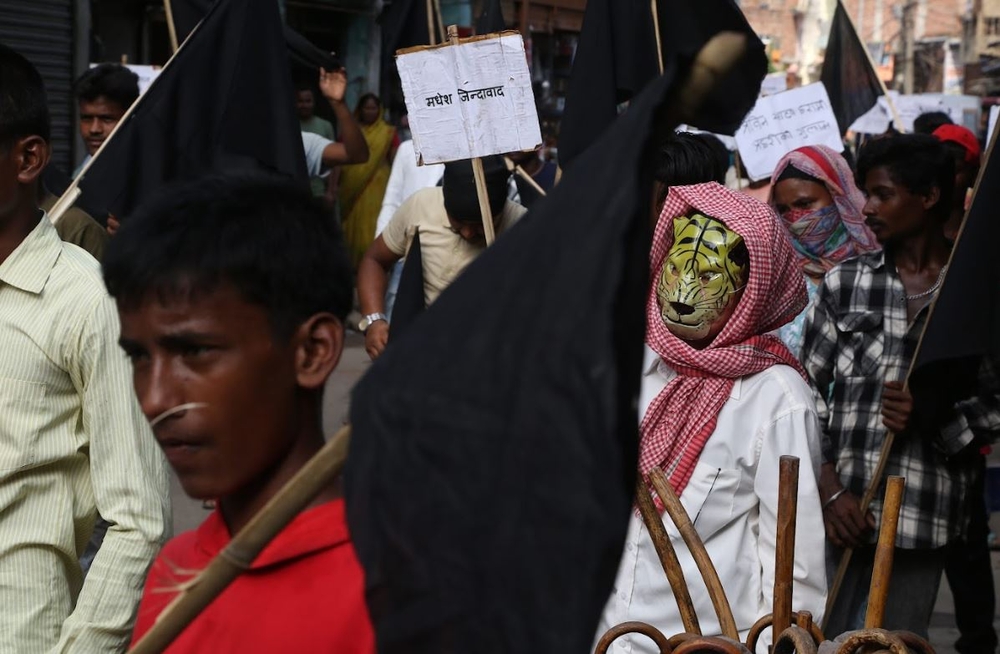 Finally, 'Rajaganj', with the Madhesh-issue as a background, questions the discriminatory policies, structures and politics . Showing the inconsistency of the society as a whole, it hesitates to become sensitive to the Madhesh issue. And, it makes one think - did the movement in Madhesh really change the problems of Madhesh? Has Madheshi's life changed? Where did we go wrong on inclusiveness and proportionality? Are people realizing the essence of federalism mentioned in the constitution?


