Why would anyone be happy with a very low dose of poor subject matter, presentation, language and craft? Satire on the identity of a person or a community is a social cause for a comedian to become a 'profession', have we run out of satire 'content'?
We use Google Cloud Translation Services. Google requires we provide the following disclaimer relating to use of this service:
This service may contain translations powered by Google. Google disclaims all warranties related to the translations, expressed or implied, including any warranties of accuracy, reliability, and any implied warranties of merchantability, fitness for a particular purpose, and noninfringement.
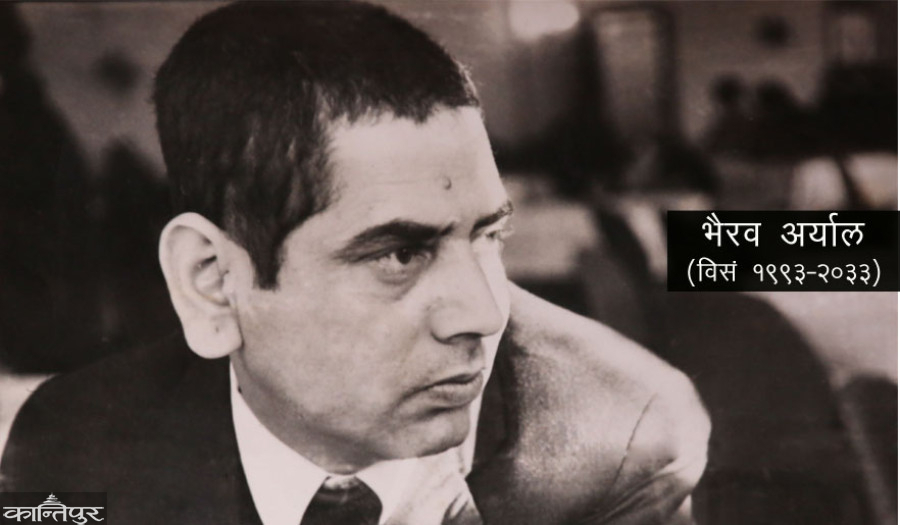
What should comedy be? Bhairav Aryal, the pinnacle of satirical writing, has said, 'The goal of today's humorist should be to raise satire from the light level of farce to carry and nourish serious and profound feelings of life and the world.' But, looking at Nepali humor, a serious question arises - why are we still stuck in the tradition of making fun of those who are at the bottom of the society? Look at television serials, movies, Gaijatre Farhasan and comedy-shows - 'jokes' based on marginalized communities, linguistic accents or lifestyles are mainstream. The real purpose of satire is to question the ruling and powerful, not to mock the weak and disadvantaged. What should be the path of humor today?
00
This time too, the Gaijatra festival- 2082 proved to be lifeless. Pragya Pratishthan and Cultural Institute's Gaijatra was not a new performance - as if the same story is repeated every year, that is, the same.
, that is, insulting the ruling leader, uncreative satire, attacks on proportional parliamentarians, superficial understanding of the state system, and a cheap farce! And the re-performance of the weak script that was made with the desire to "come clapping"! If artless roasting and craftless performances continue to increase, there is a greater risk of criminal charges rather than humor.
actually travels in the same fertile alleys of comedy and satire. However, that street is found separately in Gaijatra festival. The
dissolves in one of the literary tropes of humor—laughter and sarcasm. Those in the know say — laughter is the music of the soul. And, yes, that—the innocent song of man. Medical science, which says that 'a warm smile on the lips of children is the most beautiful gift of the world', also says, 'Laughter makes life happy, adds spring to life.' Therefore, there are many 'Laughter Clubs' and 'Laughter Yoga' in the world, where people get together to have a good laugh. 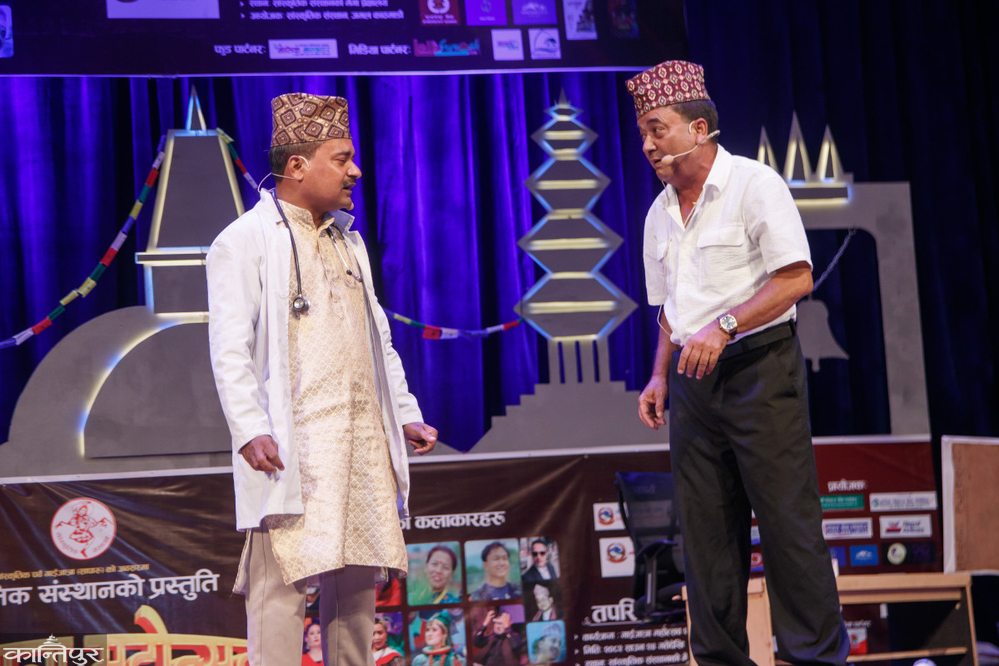
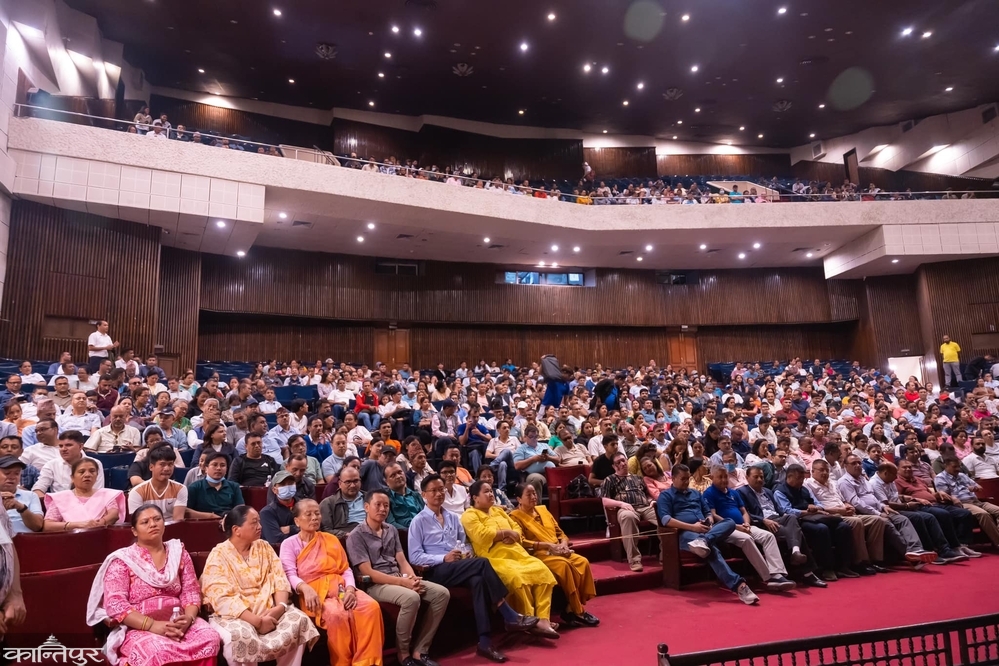
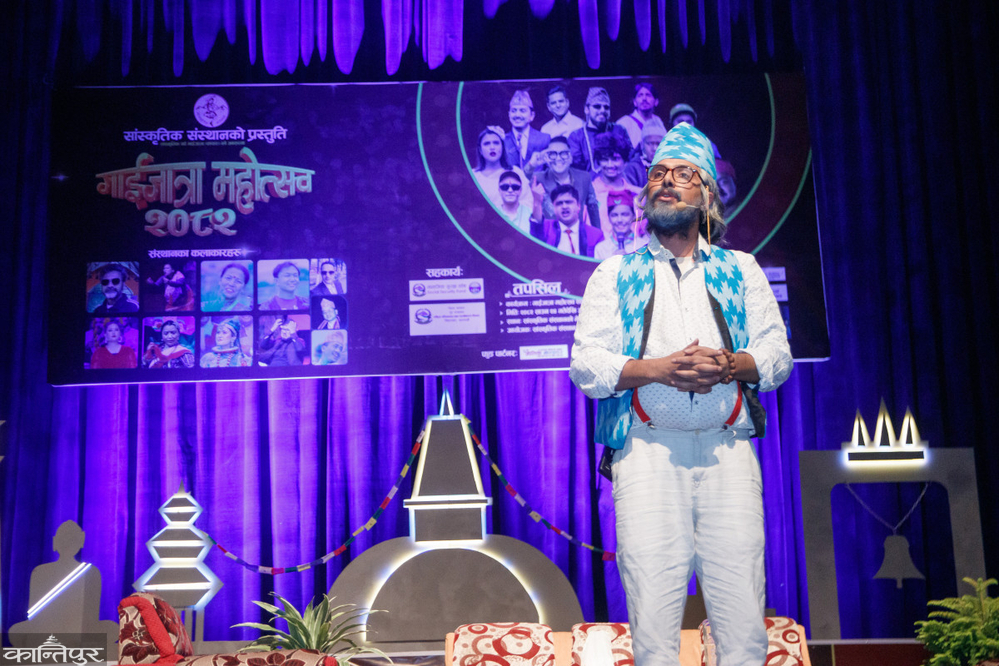
Throwing away heavy bags of burden, people have gathered to laugh at a corner of 'Estre Kathmandu' (Cultural Institute: Rashtriya Nachghar, Jamal) - after Gaijatra Festival - 2082. The ongoing '82 year Gaijatra' at Pragya Pratishthan has just ended, where Manoj Gajurel and other comedians were engrossed in satirical performances. However, the audience is 'laughing' at the Gaijatra - the artist is sad-sad, 'Leaders do the Gaijatra throughout the year, what should we do during the one-day Gaijatra?
is a sharp and curved weapon to guide society in the right direction - satire (as it should be). Laughter is not always mixed with flowers, sometimes it is mixed with thorns. Satire is the best art of poking at the incongruous aspects of life and the pretensions of society, covered with a smile, and with sharp words, which also heals people's wounds. If it's just humor, it's light entertainment, if it's just sarcasm, it's the hardest blow! So it is the grandest and most beautiful confluence of both sides—comedy, life—a contemplation mixed with philosophy. Gaijatra in the name of
is a different genre — comedy and satire, but its soul is the same. In the world of art and literature, the coexistence of these two is the path to perfection. There is the sun of humor, the shadow of sarcasm!
humor is not an arrow, not a bullet, not a stone. It has the power to be creative in a few words and to be immortalized through a dynamic 'blow' or 'punchline'. But, surrounded by question marks, our humor is engrossed in tearing people apart with arrows, bullets, mimicry and stones. In some of the comedy quality which is increasing rapidly, Dubla who suffers from Sukenas appears.
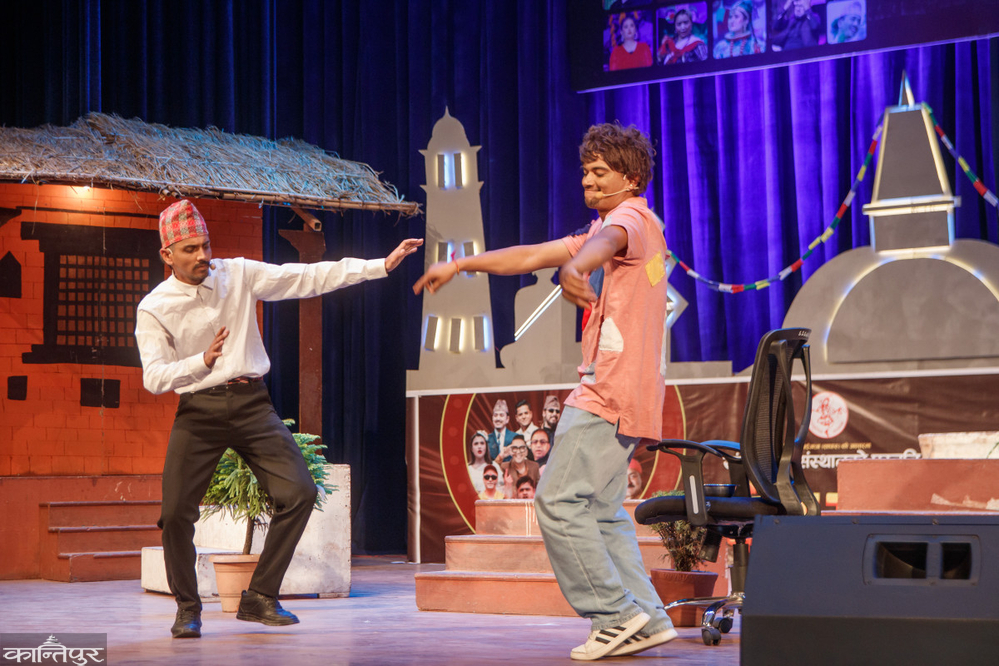
Why do we need humor? Freedom from stress - purpose! sarcasm? By finding the distortions and inconsistencies in the way of life, strike for the sake of building a healthy society! But, according to 'veteran' humorist Manoj Gajurel, our humorists are enjoying roasting. After the aggressive advent of social media, the society is stuck on short presentations of reels and Tik Tok. Earlier it was satirized in a vulgar and roundabout way, now it has reached the level of roasting. The format of television and the style of entertainment changed. People stopped watching long satires, they started enjoying roasting and short content. When the audience started enjoying the same thing, which satire, which insult, which roast? Humor is confused because it cannot be distinguished,' says Manoj.
Manoj feels - just like the constitution of a country, the content of artists should also have an editorial. This is the time when the content of the creator is confused - a time of serious help. A new—new youth—is entering the world of satire. However, they are not aware of social responsibility. At that time, comedy was not only entertainment, but also a responsibility. Now there is little sense of social responsibility, there is only cheap entertainment,' says Gajurel.
How powerful is a comedian if his single content can 'divert' the society. Not government-controlled or censored, self-editing should be the comedian's way forward.
There would be no satirical literature without humor, there would be more shootings. In the city, the shooting of humor is going on unaccounted for. However, the critics are saying - the comedy genre is now suffering from sukenas and taxed, Nepali comedy is popular. Satire has now left the clothes of literature and has taken the form of stand-up comedy, caricatures - where there is less satire, more profanity. In the experience of
artist Harivansh Acharya, the form of satire in his time was 'satire', now there has been a change. When we satirized the society was narrow, we had to satirize by twisting or using images and symbols. Now you can directly satirize. It has no art, rather than directness without twists and turns. And, that is transient.'
Therefore, the path of current satire is the path of anger.
Comedian Jitu Nepal is extremely sad. It is the reason why he is suffering in the midst of the hustle and bustle of life - now he started saying it directly, not sarcastically. "To do satire is to attack distortions in a roundabout way, which helps to guide the society in the right direction," says Jitu, "but now there is no humor in satire, there is no satire. All that changed with time. Earlier satire was polite and social. Now those days are long gone. Sarcasm is now roasted. This is going to harm us satirists terribly.' Why is
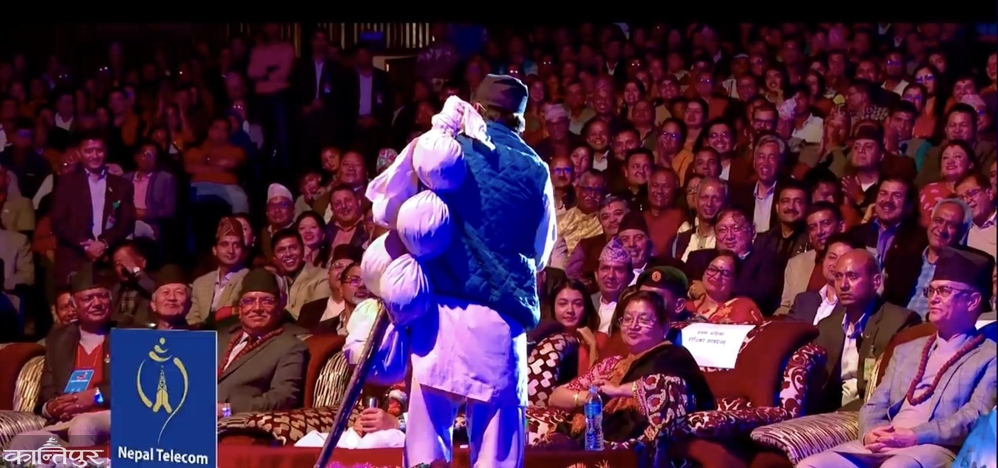
satire no longer 'satire'? Why is it roasted? Why aren't our humor sharp and twisted? Why is he not mixed philosophy of life? Why is it limited to low level profanity and banter? Why is there only sarcasm in sarcasm? Why is that not artistic? The Nepali society is revolving around this debate, just as satire has lost its guise and is wandering aimlessly on the streets. Writer/journalist Vijay Kumar has written in his book 'Khusi', 'Let's say my problem is stupidity, or professional integrity, I lived in such a dream, which always told me - Nepal Television is run by people's money, so it should be run as a public broadcasting medium, not a government one. For this reason, if the rulers there had encouraged positive thinking programs instead of flashy programs over the years, Nepal would not be the only country in the world where clowns are bigger than heroes today (page: 127).'' Instead, the flood of 'Khitkhite' continued. According to Vijay Kumar, why would anyone willingly become a 'clown'? What is the responsibility of true humor? This remains a tricky question, which is debatable. Perhaps it is Vijay Kumar's dream to comment on comedy as a 'hot program' - cultured Nepali satire - the dream of the world - imagination!
Humor is born from the sanctum sanctorum of society, powerful men and politics. And, in principle, humor satirizes them. Cartoonist Ravi Mishra is of the opinion, 'The rulers keep coming up with new plans every now and then. Be it by telling them the plan to bring watercraft or the plan to sell electricity from the air, they are sharing such dreams to the people from time to time. However, the daily problems of the people are the same. Due to this, it seems that the trust of the citizens towards the government is disappearing. That's why contemporary satire has taken the disbelief of the same citizens into satire and caricatures. In his opinion, the leader's tendency to talk about development and prosperity, but not doing anything, is reducing his popularity and he is becoming a comic character. "Satire should be on them, not on the common man," says Mishra.
comedy has a philosophical aspect - to present a view of life and take a serious look at the joys and sorrows of life! Comedy takes an optimistic view of life. But, are our comedians hopeful? In the opinion of film director Manoj Pandit, our satires do not sow the seeds of hope, they have not been able to make people laugh, they have only made people laugh. "Nowadays, the vision of comedy is moving in the direction of absolute roasting, that is, it is focused on making fun of others," says Manoj, "We are calling making fun of others comedy." Comedy, which easily looks at many dimensions of life and gives a perspective, has now become the main part of making fun of others and we have accepted it as entertainment. We are happy to blow others away.' 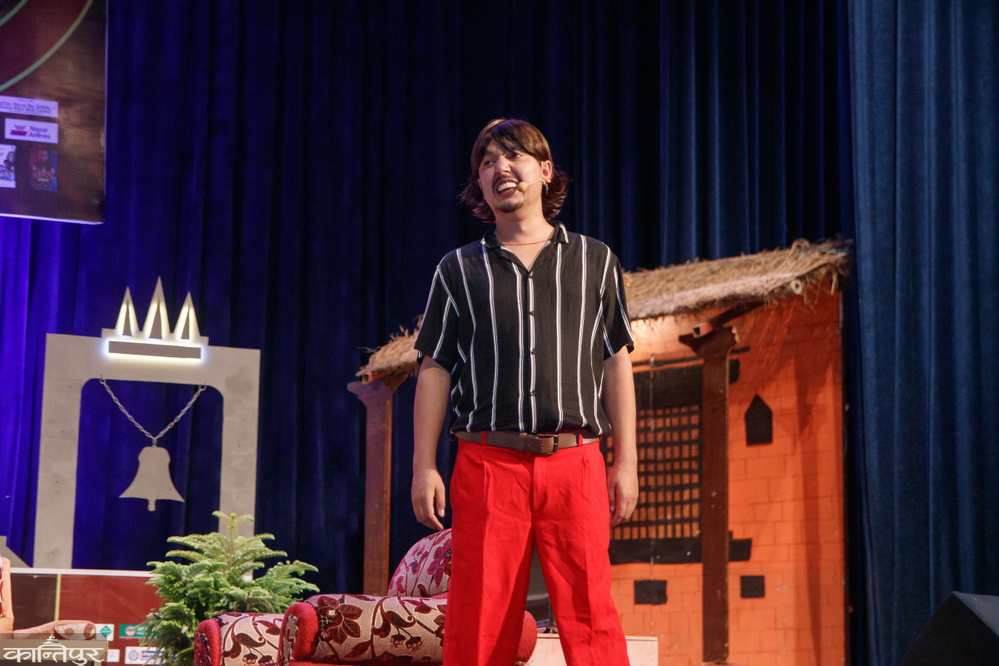
The language, presentation and style used in today's humor seems to be just a joke with less humor, not a specific art. Why do we need satire? Bhairav Aryal, the top writer of Nepali satire, said, "The purpose of satire is only to explore the truth." In his opinion, the goal of today's comedians should be to raise satire from the light level of farce to carry and nurture a serious and deep feeling of life and the world. He thought that "creative work is a social responsibility." There was a deep ideal hidden in Aryal's satirical world - a sharp attack on political inconsistencies and reform within the attack! He used to show a mirror to leaders and rulers and suggest them to improve. However, the conscious satirist is very sad that today's satirical path has become only 'Khisitiuri', 'Roasting', 'Distortion' and 'Exaggeration'!
Current humor relies on the foibles, imperfections, and innate differences of others. Satire has become the focus of satire—the denigration of people's mannerisms, accents, body-culture. When the same community, group, or identity is repeatedly exaggerated and distorted, it stops laughing—there is a long echo of insult. This week, artist Nazir Hussain shared his feelings about the treatment of Madhesi in the film at the 'Celebration of Diversity' organized by the Dalit Lives Matter Global Alliance in Kathmandu. I took many measures to be fair to be accepted by everyone. Madhesh was restricted to the role of comedy, goon and panipuriwala in the film. But, please understand - people from Madhesh are going to love, not just angry. They are not only black, they are also white, they speak Nepali and English. Don't look from the same point of view as a bridle horse.'
is no different from Hussain's feeling, Nepali comedy. Derision of a particular caste or its lovers still shines on the pink screen of the TV. The same content is repeated countless times from the Gaijatra stage to the social media timeline.
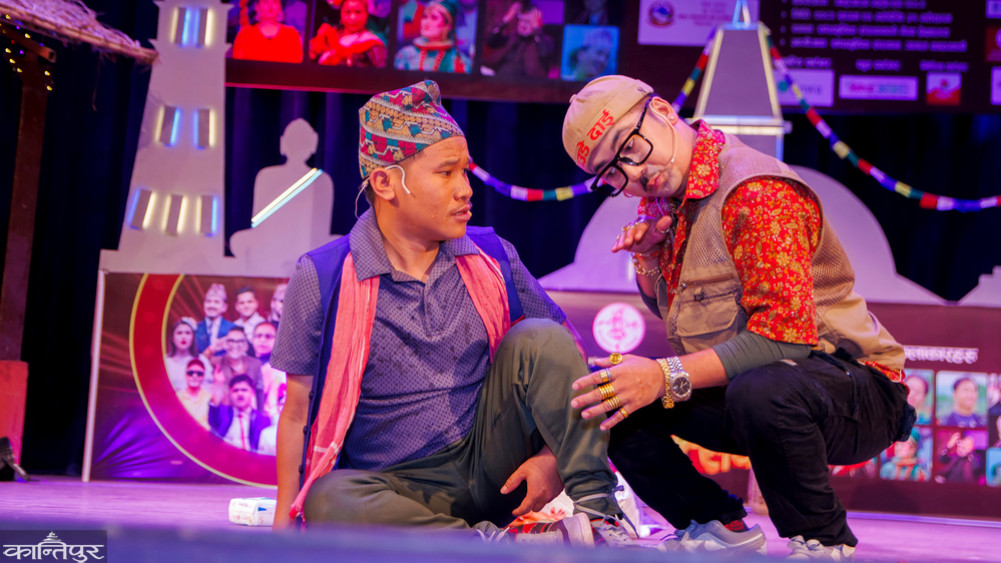
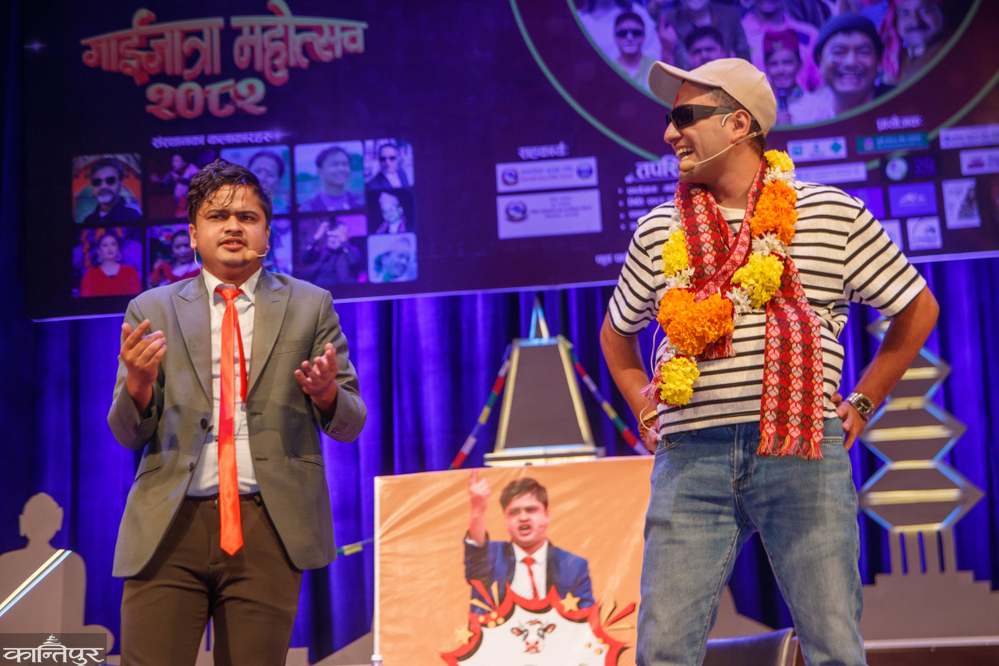
After watching the 'Gaizatra' - 2082 going on at the Cultural Institute, it is roasting and only roasting, where there is no humor. There's just that—low-grade sarcasm. How many vulgar and ambiguous dialogues are spoken at the festival! In such a farce, women MPs elected by proportional system are portrayed as very weak characters, insensitive in the crowd, unable to read and speak and to make speeches. Such MPs, who hail from communities with less access and opportunities, have often been satirized by comedy shows before.
Satire on a person's or a community's clothes, lifestyle or birth conditions is a product of racist mentality, which will plant the seeds of discrimination in the name of humor. This is bias, not creativity. Serials or farces based on superficial observation without understanding the real diversity of the multi-colored society do not give awareness to the society, nor the height of art and literature. This is rust on satire.
Cultural Institute has a dialogue in another farce of this Gaijatra, 'The common problem of wives is to fight with their husbands!' From the idea of a private police station to re-open the files of the Madan Bhandari accident and Darbar murder case to the cheap satire of leaders covered in their own dung, the themes of this Gaijatra were entirely focused on roasting the leader.
Therefore, satire, as Bhairav Aryal said, was a way of social reform, as Nazir Hussain said, now it has turned into a means of rubbing salt and pepper in someone's wounds.
Why does another person laugh at people's weaknesses and imperfections? What kind of joy will you get by flying someone different from you? "Look at the Gaizatra program or the reality show, it seems that blowing others is the way to happiness," says Manoj Pandit, "It's a terrible system." It gives people a confession - if we want to be happy, we have to make others happy. We find joy in teasing, blowing up, finishing, hitting others. Now comedy is going in the form of violence.'
000
What is the history of satire that revels in roasting others in TV panaches and Gaijatra farces? Looking at the ancient alleys of history, it is seen that even in the dark days, humor played a rather social role. He was honest and committed to change.
In those days, there were Nepali comedies- Panchaibaja jokes, Gaijatra dances, farces staged in palaces and doubles...! Dreamers used to show the weakness of power and society in plays or notes on the royal theaters of the ancient
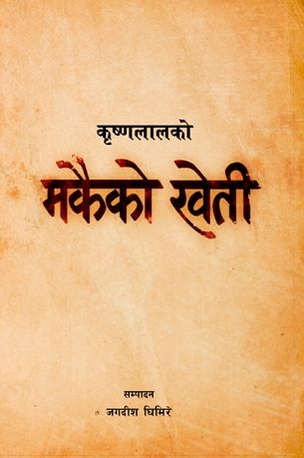 palaces. The Ranas accused Krishnalal Adhikari, who wrote the book 'Maikko Kheti' - Maize means the people and the diseases or insects that affect the Maize means the Rana ruler! He was sentenced to 9 years in prison, considering the word 'insect' to be 'sarcasm'. And Krishnalal died in prison. This was the story of power desired by 'satire'. However, the first traveller, the writer of Nepali comedy, was Shaktiballabh Arjyal. His play 'Haasya Kadamba' (Nepali translation in 1855) is considered to be the first humorous drama of Nepali literature. History says that Shakti Ballabh is the first Nepali writer to create humor in a conscious and planned manner.
After Shaktiballabha, came up strongly in comedy — Bhanubhakta Acharya. Bhanubhakta wrote little, but lavishly, in humor. Those compositions are mixed with life experience and feeling, there is laughter, there is shock. Bhanubhakta is extremely angry – against reality. They seem to be rebels too. As he has written about the slowness of the administration—
How much should I plead with Ditha Bichari? They stay silent and don't speak.
This poem by Bhanubhakta is not only entertainment but also a sharp satire on society, power and structure. Keshavraj Pindali's 'Khai Khai' strengthened modern satire. Bhairav Aryal took it to the top. Then in comedy there is a long list of Dataram Sharma, Mohanraj Sharma, Dhach Gotame, Shyam Gotame, Sridhar Khanal, Badepa, Ramkumar Pandey, Bimal Niva.
Bhairav Aryal has an effective essay - 'Leader Number One Hundred One'. This humor is still relevant in Nepali society today. He writes, "I accompanied a hundred leaders, carried shoes, and finally came neither here nor there." I have also opened a party with the help of Mavali, whose name is 'Akhil Nepal Bhasyangbhusung Dal'. No matter what anyone says, in the end I will also become a leader....'
Bhairav's essays are still relevant today, perhaps for decades to come. His 'text' contains a serious analysis of society, politics and human character. 'Kaukuti', 'Jai Bhundi', 'Galbandi', 'Itishree', 'Dash Autar', 'Cigarette : Some Flickering Memoirs', 'Alu' are permanent in Nepali literature. are
columns. His style of writing was mixed- aphorism, theago, alliteration…. There is life – the rhythm of the words and the combination of sounds. Let's look at it like this - 'One morning, without crows nesting in the pond, I went out to be with the great man after washing my hands and arms with the stale water of the cow.' The only thing left is – Khisitiuri, Gizyai…. With the cultural wave of Gaijatra, satire came in journalism. Newspapers started printing cartoons, parodies. Even during the Panchayat period, cartoon journalism remained strong. "Today, the popularity of Nepali cartoons has increased due to the complex attacks on political-social problems and anomalies with the highest artistic sense with humor," says Ravi Mishra.
Laughter and sarcasm are the two voices of life. The combination of the two creates a composition with great consciousness and art. What do we look like when we stand in front of the mirror of history in the art of consciousness? "Currently our comedy has gone the way of violence and we have accepted violence easily. It only creates a sense of war and confrontation in the society over time. Today's roasting comedy is leading us to decay. Laughing at violent comedies is creating an atmosphere of rejoicing in violence', says Manoj Pandit, 'now there is no artistry in comedy, it is stupid. Throwing a politician in front of him is not comedy, it is blasphemy. Aren't we labeling corruption, lawlessness, ugliness as an entertaining confession? Gaijatra is burning comedians but Gaijatra festival itself is being ridiculed. The problem lies in the basic philosophy of comedy. In comedy the point of view is gone, only the farce remains.'
Today's comedy has taken life away from reality. The line between comedy and thriller is thin. Because life itself is a thriller story. But, there is no thrill in our comedies. There is a thriller in the reality of life, so comedy is needed, but here the comedy has become a thriller. And, it is unfortunately, "says Manoji," says Man.
is right to be a question of the Commentation of the Commentation of Camedian with artinary Koaddia? "Not OK," Rajatra, 2082, says that the announcer and comedy of 2082 currently in the Cultural Sectarium says, 'Timials are the form of time, even the need, the need. Before before, a stark dry was used. People now show interest in 15 seconds video. The presentation is a difference in how artwork of the presentation is in which society is open. Artistic Presentation in the old presentation of the honey pair of honey is habibi. Now the society began to take place directly, and artistry is not essential. 'Strength 00 00 Strengths, to take entertainment by flying the weak. Of the days of the days of this 'Kutiitiuri Cultivarian'; World-BREAK Nepal Televilvinity showed a vessel in 'Merry Blog.' Seitara Kuttel was 'Dermous', who remained in the role of the palate, and distract another. "September community extended by the community," that the character performed a whole piece of wars and the palate. However, he did not stop sagrating. & Nbsp; Story-Brezir Hussein recently said that sargen through the lifestyle of the Madhesi community like television and film, are abundant. This trend does this tendency to 'haumililes' in Professor Secretary. The 'Popular media is' Humalitic' Way to present Madhesi community, but the manufacturers forgot. Only from one's point of view is that the community is the result of deep humiliation. 'In Hostlier Retherns', the Madhesi character was made the character of the main potentially comedy of the main character. "At the same time, Madhesi activist was shown in view of the goat in Philali," said Stere Subba, Navin Chilk. It is 'standard'. Suppose this is a immovable ideology. The tendency of cunning, fraud is imprisoned, swindlers, bullying, and a poor role in the cummy film, fraud. What kind of society does such 'uncivil sarotic' build? Why does not irregularity on others does not feel the pain of another community?
'ethnic subject is very sensitive. To make fun and laugh is to strike the spirit in the language, "says Herivanname Acharya, not a fairness of others. '& Nbsp;
movie, serial, serial man in charge, Magar, Tamang, Tamang, Barpa, Madar, Madar, is a shameful blowing on all these weaknesses and marginalized. "Not only don't blow for entertainment. But presenting language, culture and sensitivity, presentation does not make a problem, "says Manoj Gazorl. & Nbsp;
enlightenment makes it just a way that questions the powerful, not the weak. Speaker of Valibati Vimatu, Yatadi, Payer, Poverty, Poverty, Poverty, Poverty, Bhuga, Bhurtha, Payh, publishment, promoting the social impection of the character, community community, community establishment of Nepal. "There is no sarcasmous thoughts, but satiratima, carrying a balanced critical consciousness. That can be positive. It is carrying the creative spirit. He says his satire, servant, a slave, the poor, says herself before satire of satire to death, "says Thomal Philan, 'It is a distorted mind. It promotes the social impeaker of the weak. 'Nepali is the source of walking in a central old worldly enpheric tradition, neither "the temple' think to sarrenees. Over & nbsp;
-BREAK, butti may have covered the beautiful satire, but intellectuality and contemplation. Sarcastic 'Rosting' is not only, but also life perspectives and ideas. & Nbsp;
Why is anyone in Dharaka, now, for a high-bossed dose? Being 'occupation' on the person or community of the community is a scary social thorns. Was we sarrien centenantsapped?