Vrindadevi would always read in her head – Hindi, Nepali novels, stories of Premchand, poems of Rabindranath Tagore, who spoke beautiful 'classical' Bengali. She used to sing Bengali songs. ”I have some influence of Bengali culture from my mother,” says Kedarbhakt.
We use Google Cloud Translation Services. Google requires we provide the following disclaimer relating to use of this service:
This service may contain translations powered by Google. Google disclaims all warranties related to the translations, expressed or implied, including any warranties of accuracy, reliability, and any implied warranties of merchantability, fitness for a particular purpose, and noninfringement.
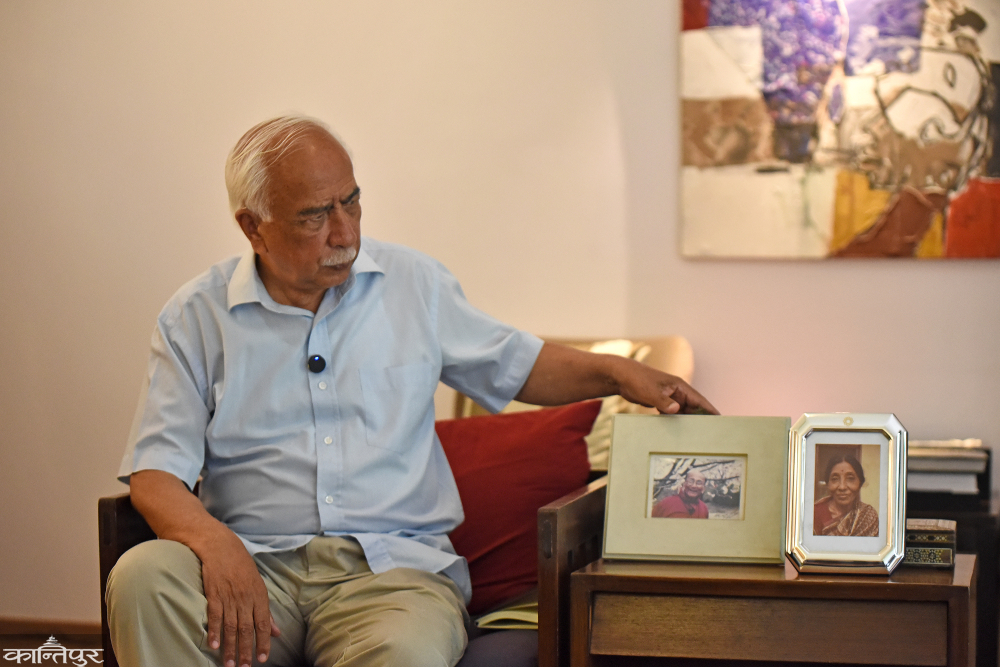
Digging through the museum of his memories, the black and white 'portrait' of mother Vrindadevi flashes in Kedarbhakta Mathema's mind. In his own melody, he calls out to the distant past, where the radiant face of Dhruva Bhakta Mathema, Father Dhruva Bhakta Mathema, appears. That face becomes brighter. The 'footage' of memories of Dharmabhakta, Dhruvabhakta and Vrindadevi brings joy to the face of Kedarbhakta.
Ubela was like a legendary character for us - a devotee. When I was young, I heard many 'legends' from my teacher about the pious Mathema. The devotee was sitting on the page of memory, like the cover of a beloved novel. When lost in the fog of life, the image of a devotee would appear on the screen of the heart like a faint star hanging in the sky of self-knowledge. "...and the devotee Mathema was taken out of the jail, taken to Dnyaneshwar at 10 o'clock in the night - put on a stretcher. He was blindfolded.... The branch of the tree from which he was hanged was broken....Finally, the hanging rope was put around his neck and he was hanged for the third time.' Thus he was - the hero of our hearts.
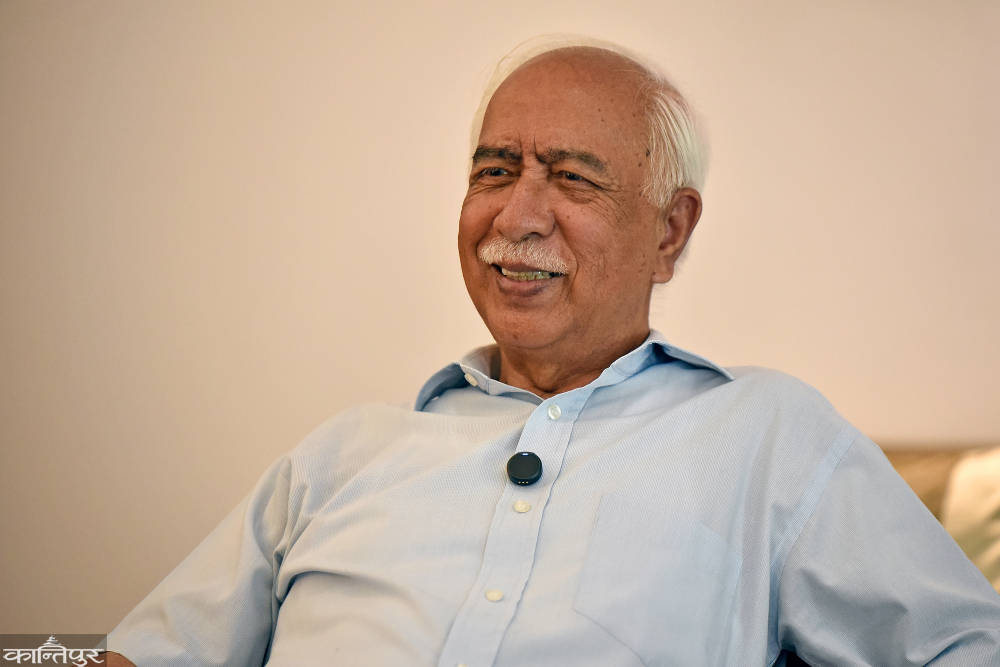 Kedarbhakta also had a hero - Dharmabhakta, whose stories he heard from his mother Vrindadevi. 'Hero' of intellectual society, professor, educationist, diplomat - Kedar Bhakta Mathema is remembered - interesting memory of mother Vrinda Devi. Mathema's entire family had to live in exile in India after the Ranas executed Kedarbhakta's elder brother Mathema on charges of 'treason' in 1997. Those devotees, who are dear martyrs, are still in Nepali hearts.
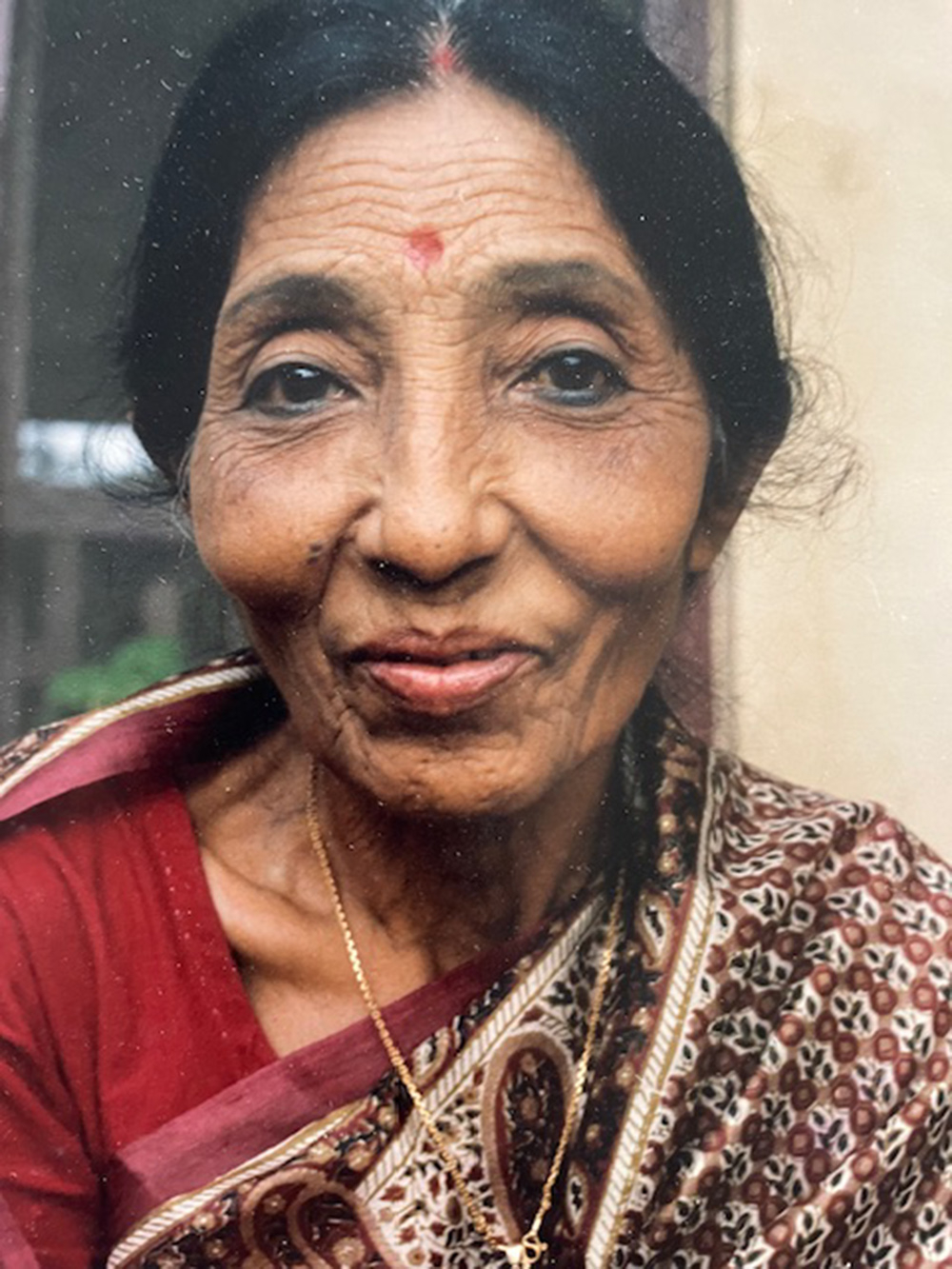 Kedarbhakta Mathema's mother Vrindadevi .
Memories of Mother Vrindadevi Mathema (1979-2049) at her residence in Sanepa, Lalitpur - Traveling across geography - Kedar devotees. She was a true admirer of Dharmabhakta, who took great pride in being a member of the martyr family. She was a teacher, who once taught a school opened by a devotee. Let's take a look back to the distant time before the Dharmabhakta-hanging. After the approval of Prime Minister Juddhashamsher, Dharmabhakta Mathema opened a school to educate the children of his own village - along with a gymnasium in Ombahal village.
There were 25 students, including 8 female students. Students were taught Nepali alphabet, moral education, health education and physical exercise every morning from 8 am. The Rana's order to the devotees was, 'If you want to teach children, teach them, but remember that we are not allowed to keep the signboard and name of the school, and we are also not allowed to keep the uniform of the students. And, the main thing is that we can't integrate the children and bring them to the streets.'' Devotees used to teach physical exercise, who were King Tribhuvan's exercise teacher, i.e. the king's courtier.
Sewing-weaving was also taught in that school. Sewing-weaving was taught by Kedarbhakta's mother Vrindadevi and her sister Kusum Kumari. Vrindadevi also taught social studies and Nepali, who was moderately literate at the time, having attended a mission school in Calcutta for some time. That school of devotees functioned effectively for one and a half years. Devotees used to tell the parents of the students - the Ranas do not allow the children of the common people to study, even those who have studied from India must work for the Ranas to get a job.'
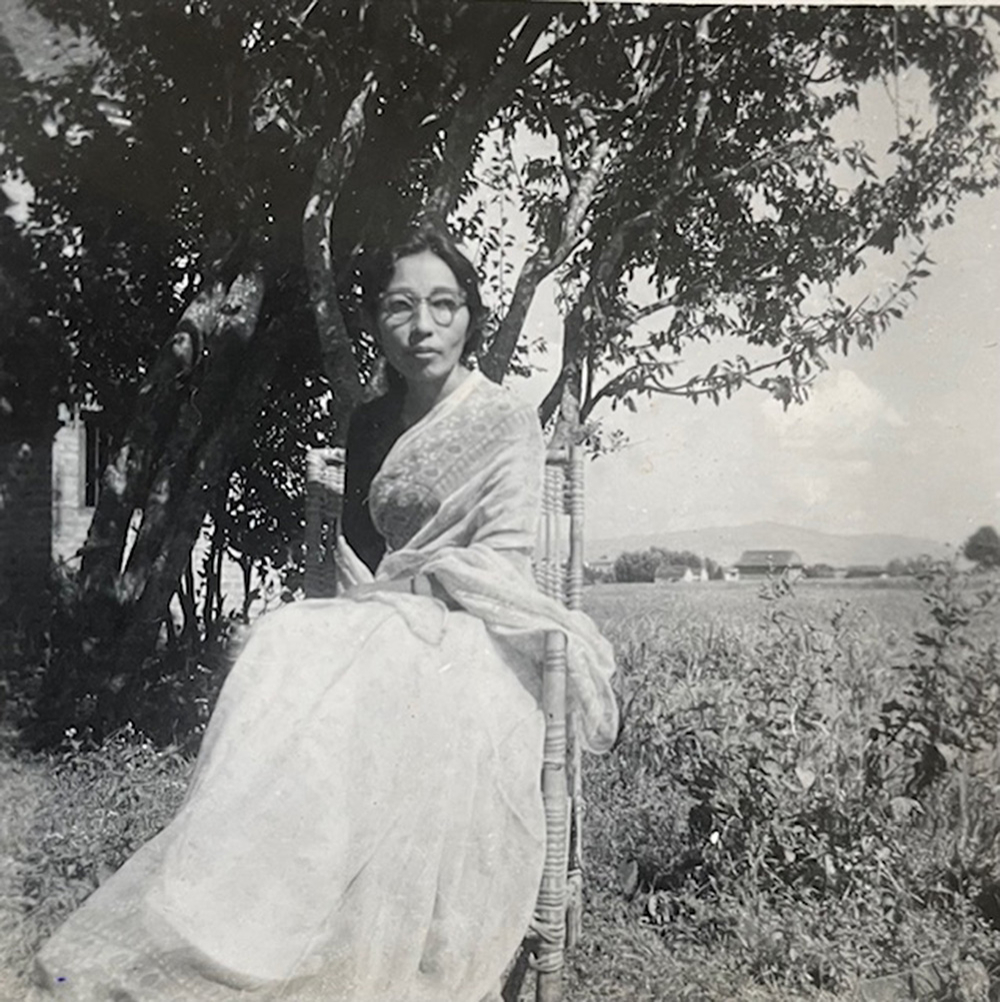 Every now and then, memories of the old days of 'Black and White' are so haunting - Kedarbhakt. He is the witness of Mother Vrindadevi's laughter, laughter, and pain. From time to time Vrindadevi used to take out some memories from her chest of memories before Kedar devotees. A story of a religious devotee was told by Vrindadevi. Devotee Mathema gave a chain-watch to Vrindadevi and said, 'Bride, keep this watch carefully!' But he never came to take that watch, he went to Mahaprasthan.
Devotees keep coming to Vrindadevi's dreams after execution. And kept asking her, 'Bride! Lost my watch? Is the watch in good condition? Is the time right now?' When the dream started recurring at the level of 'recurring dream', Vrindadevi donated that watch to someone in pain. Devotees never came to Vrindadevi's dream to ask about their beloved watch after donating the watch.
***
Rana was a loyal member of the court - Kedarbhakta's grandfather was Bhagwat Bhakta. Kazi Bhagavad-Bhakta had four sons (Ved-Bhakta, Adi-Bhakta, Hans-Bhakta, Lila-Bhakta). Prime Minister Veerashamsher gave Adi Bhakta, the son of Bhagwat Bhakta, the status of 'Subba' and the corresponding khangi with effect from the time he was in the womb. He is the son of Adi Bhakta – Dharma Bhakta and Dhruva Bhakta. After Veerashamsher's death, Prime Minister Chandrashamsher's evil eye fell on Adibhakta. Adi Bhakta's father was Bhagwat Bhakta - 'the man of Veerashamsher'. So Adi Bhakta fell under the wrath of Chandrashamsher. And then he went to Calcutta, India. It used to be said that what Calcutta thinks today, other places in India will follow it the next day.
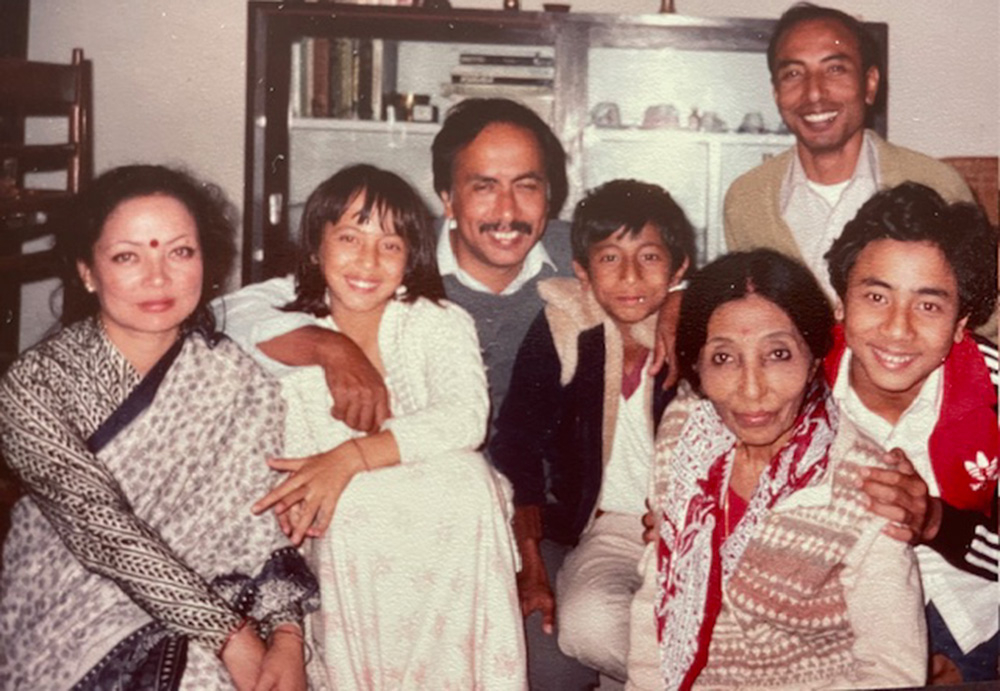 Adi Bhakta was given a loan of 3 lakhs by Chandrashamsher for business, he had to enter Mughlan after being unable to pay the loan, after Calcutta he had to stay as a squatter in Domnikhuti, Assam region of India. It was his good character not to be disturbed even at such times. Kedar Bhakta says, "Any narrator can write a grand novel about Grandpa's Tyo Zuni and his ups and downs." Born in 1971 in Yangal Village, Kathmandu, Dhruva Bhakta's life has also been full of sunshine. Dhuvrabhakta went to Calcutta from Domnikhuti after his father Adivhakta and studied at Pramod Memorial School. And helped his father's business. His education was stuck in class 10.
Dhruva Bhakta was in Calcutta when World War II broke out. The Japanese were invading Burma and chasing the British soldiers. Residents of Calcutta were also fleeing the city. Bhaveshwar Pangeni has written in the book "Sandarbha Saheed Dharmabhakta, Charsha Bhai Dhruvabhakta", "Calcutta was becoming deserted, Dhruva devotee kept telling the scene that he saw when the jackals began to howl in Calcutta city before it got dark. Dhruvabhakta family left for Kalimpong, fearing that they might be killed while staying in Calcutta.
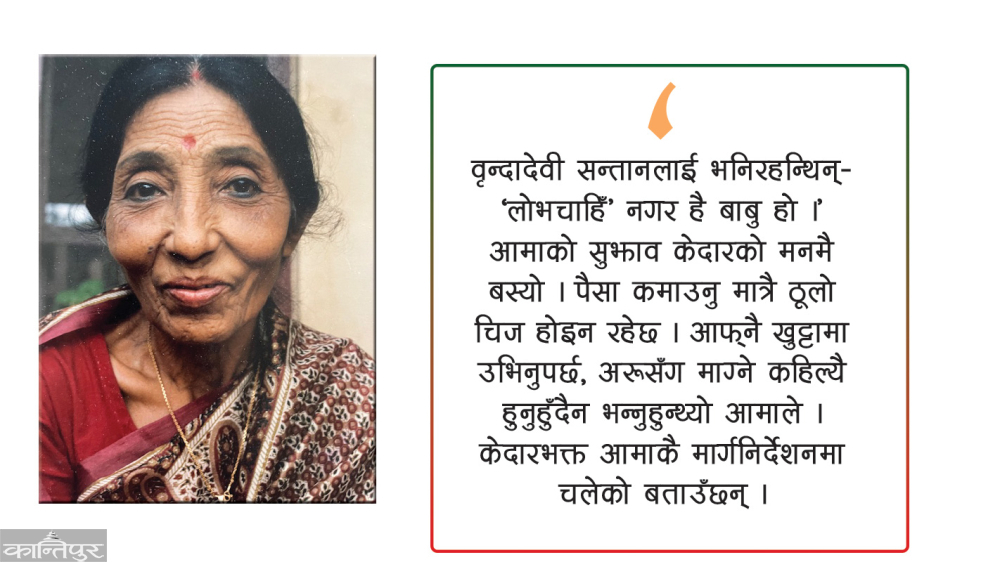 While he was in Calcutta, there was talk of Dhruvabhakta's marriage. A devotee from Kathmandu had also reached Kalimpong for his brother's wedding. He got married in Kalimpong in 1992, to Vrindadevi Pradhan. At the wedding, King Tribhuvan sent a vest coat of Tas, a Laweda Surwal of Resam and other gifts to the devotees. Vrindadevi's ancestors came to Sikkim from Bhaktapur. Born in Sikkim, Vrindadevi met Dhruva Bhakta in Kalimpong. Brinda Devi spent her childhood in Sikkim. His parents were zamindars from Sikkim. They had a trade, which was also granted the right to mint coins by the King of Sikkim. Therefore Vrindadevi's family was 'taxari'. Vrindadevi's father Tulsidas Pradhan was the local 'Raisaheb'. It was a big title, with some rights. After marriage, Kedarbhakta's parents (Vrindadevi and Dhruvabhakta) lived in Kalimpong and Calcutta. Kedarbhakta Mathema was born in Kalimpong in 2000.
“Growing up, we were in a nomadic state in Kalimpong,” feels Kedarbhakt. Says, 'After the loss of business in Calcutta, our family moved to Kalimpong forever.' Kedarbhakta was the Mavali - the prestigious head family of Kalimpong. Vrindadevi's brother Madan Kumar was the principal landlord, also a lawyer. He gave us a place to live there. That was our sad time,' Kedar Bhakta remembers.
In this way, Dhruva Bhakta did not have a good job in Kalimpong except for occasionally helping Tibet's trade. His family was able to earn a living with a small income, all property in Nepal had been confiscated. Kedar Bhakta studied at the Scottish Union Mission School. In her memory, even when she was in Kalimpong or even after coming to Nepal, her father Dhruva Bhakta kept coming to Calcutta, so Vrindadevi used to run the whole house. "In Kalimpong, the mother had to take care of the whole family - by sewing," says Kedarbhakt, "It was very difficult for Muwa in Kalimpong."
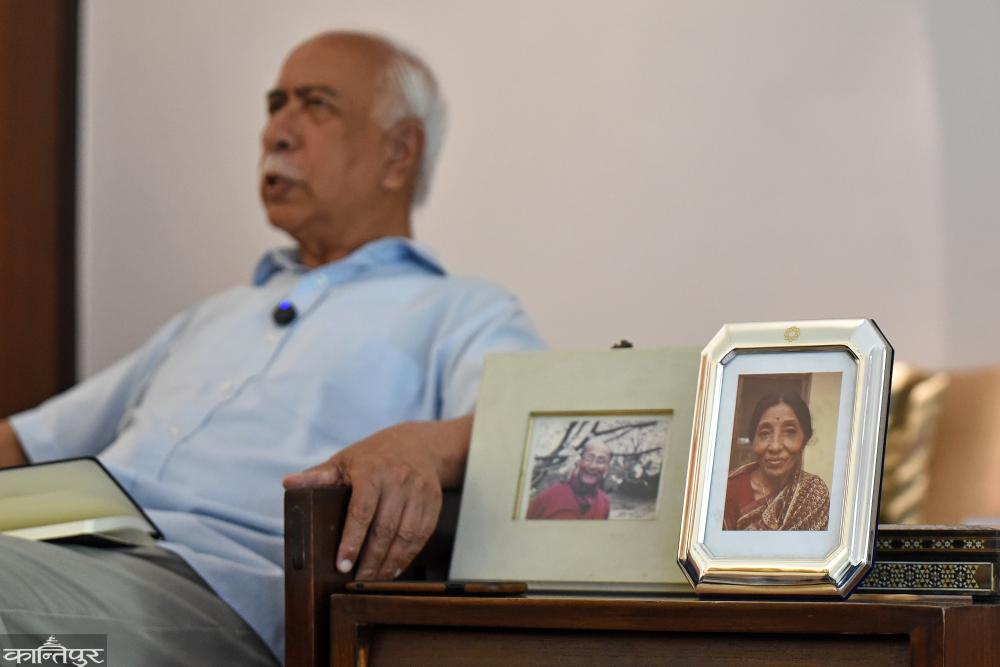 came to Kathmandu in 2010 - Kedarbhakta's family. From Kalimpong to Raxaul by train, then to Tamdan by way of Chandragiri. That scene is fresh in the memory of Kedarbhakta. "Didi and I were brought to Kathmandu by porters in Tamdan on both sides. This was after Hilary and Tenzing climbed Mount Everest, I remember they reached Kalimpong in a conquered posture after conquering Mount Everest,' says Kedarbhakt, 'After the Rana period, we returned to the country only because it was safe.' Kedarbhakt was 9 years old when he returned to Nepal. The ancestral home was in Jorganesh Lagan, but after coming to Nepal, his family did not go there, they settled in Sanepa. In Kedarbhakta's memory, Ubela's Sanepa says, 'At that time, there was only paddy fields from Sanepa to Balkhu, the whole of Pahenlpur.' And after passing MA, he started teaching college.
***
Vrindadevi had 5 children - three sons, two daughters. Renu, the daughter of the devout Mathema, was brought up entirely by Vrindadevi, after the death of Renu's mother. Later, Renu established a school in the name of her father in Nakkhu, Lalitpur – Shaheed Dharmabhakta School. A Home Science graduate, she worked at the school for 28 years as the founding principal. Vrindadevi used to tell her children every day - 'Study well, we can't leave you without anything, life is not complete without studying, your job is only to study, there is no other way of life except to become qualified' was her one point. A student's first job is to read, second job is to read and third job is to read. So the Kedar devotees just read, read and read.
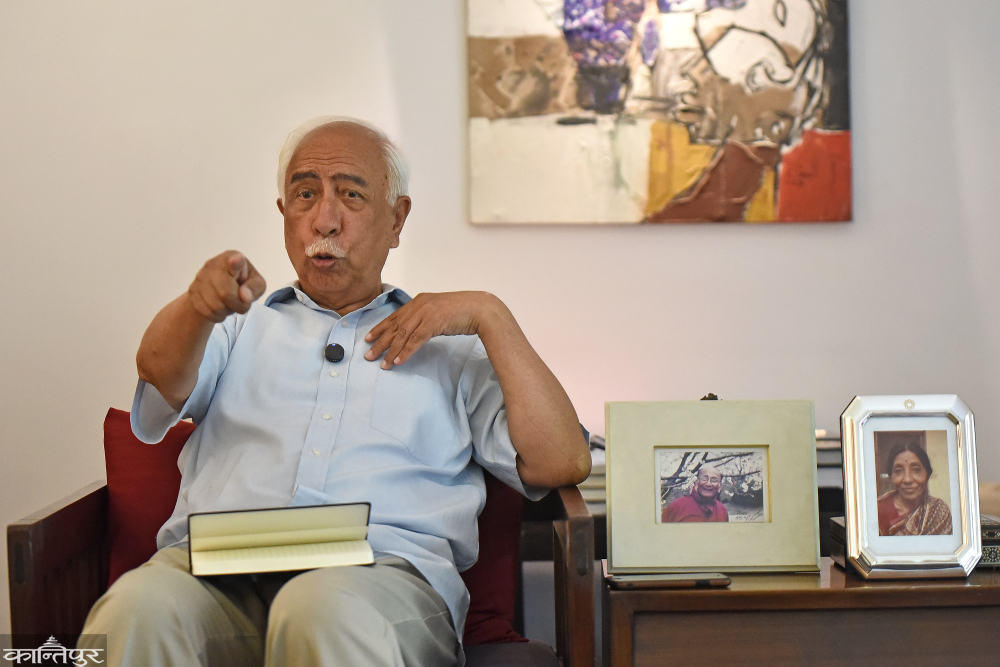 Photos: Angad Dhakal/Kantipur
'Father would sometimes throw away the books when he saw us just reading. He used to say - how much have you read? But, we believed what our dear boy said. That's why we used to read what we read all the time. How not to listen to the mouth? It is Muwa who taught us to work hard,' says Kedarbhakt. He feels that his mother's motivation - result - in all three brothers and two sisters leading a successful professional life after higher education. Kedarbhakta, who taught at Trichandra College at the age of 23, became the Vice-Chancellor of Tribhuvan University after the collapse of the Panchayat and restoration of the multi-party system in 2046, and later the Ambassador to Japan. "Whatever I have achieved is not all from my mother," says Kedarbhakt.
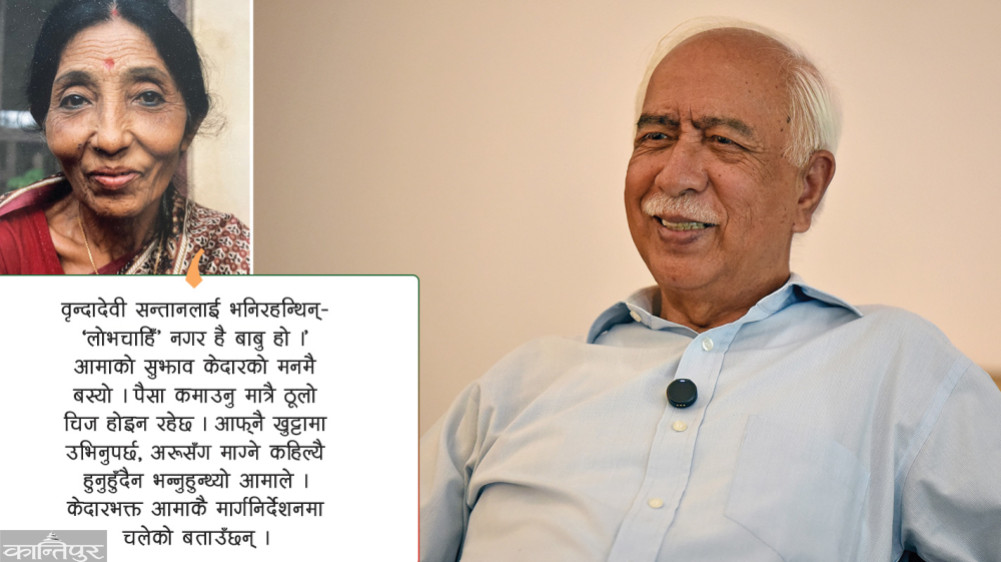
Vrindadevi too was always reading – Hindi, Nepali novels, stories by Premchand, poems by Rabindranath Tagore, who spoke beautiful 'classical' Bengali. She used to sing Bengali songs. "I have some influence of Bengali culture from my mother," says Kedarbhakt. A Kedarbhakta has only one memory of his mother - the mother who read Premchand's books till night and coughed continuously. Vrindadevi used to say to the children - 'Don't be greedy, father.' Kedar's mother's suggestion stuck in his mind - earning money is not a big thing. He used to say that we should stand on our own feet, we should never ask others. So far, we have been following our mother's guidance,' says Kedarbhakt.
***
Even after returning to Nepal from Kalimpong for a long time, Dhruvabhakta was very scared because he did not get a job. He later worked on a US government project – now USAID, Ubela's USOM. Kedarbhakta feels that his family grew up happily with the 400 IC salary that his father received at that time. Dhruva Bhakta and Kedar Bhakta used to say – I used to earn money by typing and selling cosmetics in Calcutta. He has also tried acting in Bengali films and plays. "We had a big house in Calcutta, everything collapsed after the business collapsed. That's why my father could not read much, but he knew how to read and write English very well,' says Kedarbhakt.
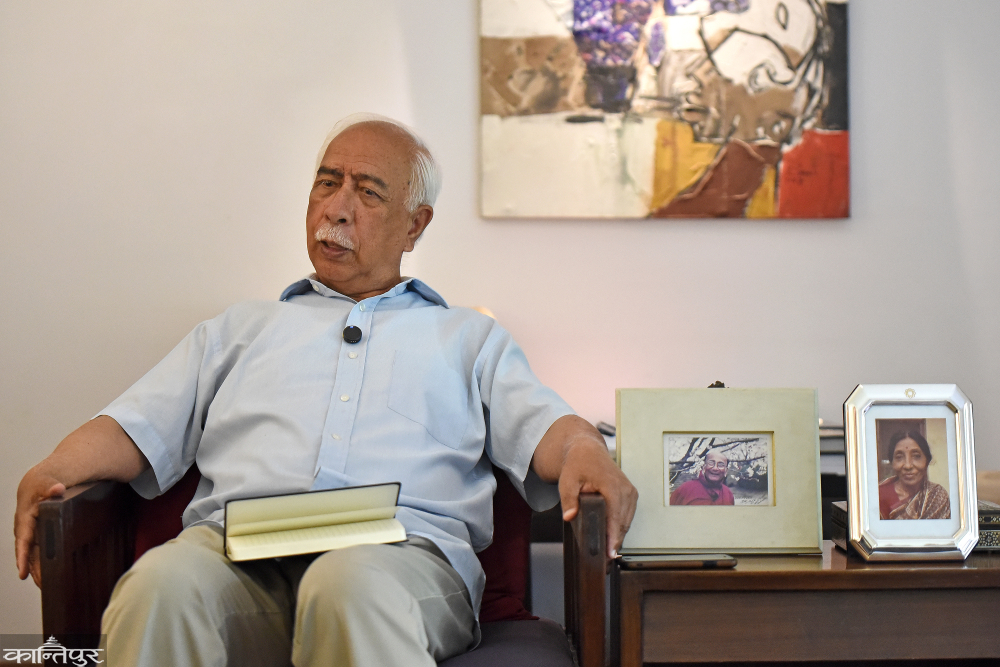 Vrindadevi was very religious, who fasted on Tuesdays, Sundays and Thursdays. In the evening, after lighting the lamp, she used to go to visit her father-in-law, she never ate fish and meat in her life, she always lived clean and tidy, she always had tattoos on her forehead. A devotee of Krishna, she used to spend long hours in the shrine, singing hymns. She used to tell moral stories to her children. Vrindadevi, who believed in Hinduism, was not as religious as she was fanatical. Kedar Bhakta recalls an incident. His dear friend was Abdul, who was a Muslim. Kedarbhakta asked his mother one day on the road, "Mom, should I bring him home?" She said, "I will take him or not." When Abdul came home, she behaved very respectfully - she sent him away with whole vegetables. 'How can you be so generous?' to Kedarbhakta's question, Vrindadevi's answer was, 'God is one. Everyone should be treated with respect.'
Kedarbhakta feels that his mother-in-law followed Shukraraj Shastri's Arya Samaj ideas, so she thought broadly. Kedarbhakta thinks that 'the Satsang of Dharmabhakta and Shukraraj also gave special awareness to children?' If father Dhruvabhakta scolded his children about something, Vrindadevi would stand up for his children. That is why the children were afraid of the father, they were very close to the children. Kedarbhakta has no recollection of being abused by Muwa.
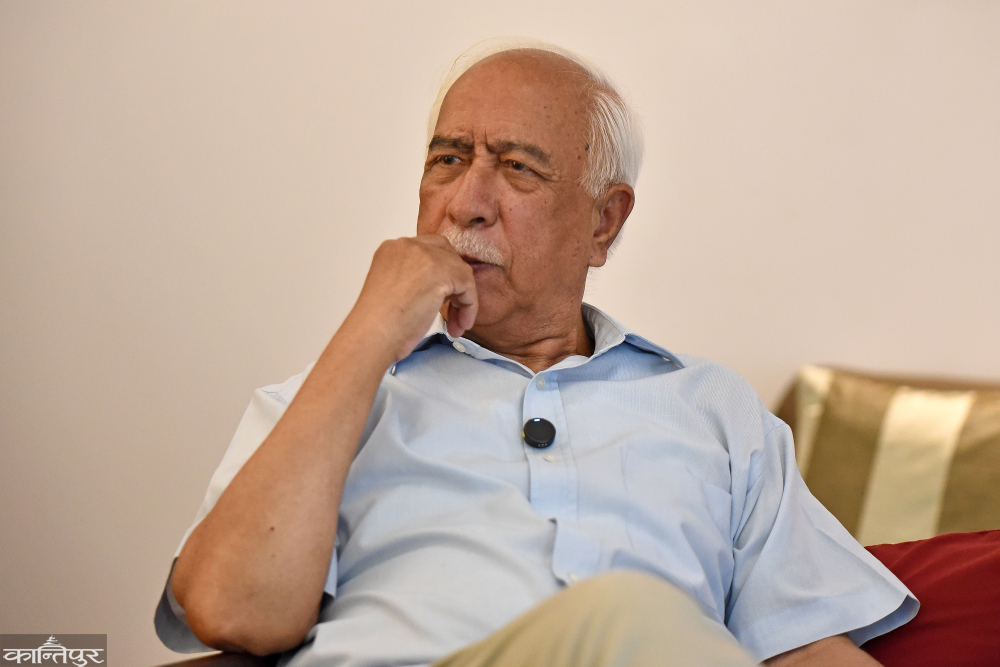 Kedarbhakta used to wake up at 4 am during SSLI preparation, Vrindadevi also used to wake up at four and make Horlicks for her son. Vrindadevi wanted her son to become a good teacher. Kedarbhakta was stunned when she bought the book and brought it home. "Our character, habits and behavior are formed by our mother rather than our father," says Kedarbhakt, "My father always helped the disabled." From mother we learned - don't chase after money, get educated and live a simple life. He was happy in the latter part of his life - that his children read a lot.' The Ranas used to send their own emissaries to keep a watch on Nepali students and businessmen living in Calcutta. Vrindadevi's job was to buy newspapers in which Dasharath Chand's articles were published and bring them to her residence and send them to Nepal. If any news about Nepal was printed, mother used to buy it and send it to Nepal for Dharmabhakta, Shukraraj, Dasharath, Gangalal. He used to tell many stories related to them,' says Kedarbhakt.
used to live with Balchandra Sharma, BP, Lakshmi Prasad Devkota, Ganeshman Singh in Vrindadevi-Dhruvabhakta residence in Kalimpong. Vrindadevi used to cook for them. Vrindadevi used to tell Kedarbhakta - Devkota was always smoking a cigarette, asked for paper - wrote something and it flourished. He was tired until later - if he could save that paper! Among the poems written on the subject of 'mother', poet Gopal Prasad Rimal's 'Amako Sapna' is very dear to Kedar devotees who read poetry a lot. He says, 'The biggest thing we should give to children is hope, as that poem has given.'
Mother used to tell Kedarbhakta that no one should live in the forest. She used to say - 'After living in the forest, we lost a lot of things, father! We have lost our old documents, we have lost our identity!'