This season, there used to be a crowd of tourists traveling via the Mechi Highway to see the biodiversity of Maipokhari in Ilam, to admire the beauty of Timbung Pond in Panchthar, and to visit the Pathibhara Temple in Taplejung.
We use Google Cloud Translation Services. Google requires we provide the following disclaimer relating to use of this service:
This service may contain translations powered by Google. Google disclaims all warranties related to the translations, expressed or implied, including any warranties of accuracy, reliability, and any implied warranties of merchantability, fitness for a particular purpose, and noninfringement.
The tourism industry of Ilam, Panchthar and Taplejung, which was shaken by the Gen-G movement, has been further affected by the recent disasters. The small hope of the tourism industry of these three districts under the 'Mechi Corridor' was washed away with the severe floods and landslides of Asoj 19. Domestic and foreign tourists used to reach Ilam, Panchthar and Taplejung using the Mechi Highway.
Tourists used to come and go via the Mechi Highway to see the biodiversity of Maipokhari in Ilam, to admire the beauty of Timbung Pond in Panchthar, and to visit the Pathibhara Temple in Taplejung. ‘The Gen-G movement broke out during the season and now the disaster has destroyed the entire tourism industry of the Mechi corridor,’ said Devi Poudel, a tourism entrepreneur from Ilam. ‘We are so devastated that we cannot get up. Let’s see what kind of support the state will provide.’
Tourism entrepreneurs say that the Asoj 19 disaster has destroyed both pillars of the economy of Ilam, including Panchthar and Taplejung, which is based on tourism and agriculture. Landslides have washed away roads. Bridges have collapsed. Some are at high risk. After the destruction of the infrastructure such as roads, bridges, etc., which are the backbone of the economy, the tourist arrival is almost zero, said Poudel, a tourism entrepreneur. ‘Until roads and bridges are built, there is little chance of tourists coming,’ he said, ‘this is a big loss for Ilam’s tourism industry.’
It is said that there has also been a huge drop in the number of tourists going to Pathibhara in Taplejung using the Mechi Highway. After the disaster, religious and natural tourism including Sandakpur, Maipokhari, Timbung Pokhari, Pathibhara Temple has suffered a major setback. According to Ilam’s hotelier Surendra Rai, hotel bookings have dropped to zero. ‘The smell of worry is not the aroma of tea and coffee in the shops of Ilam bazaar,’ says Rai.
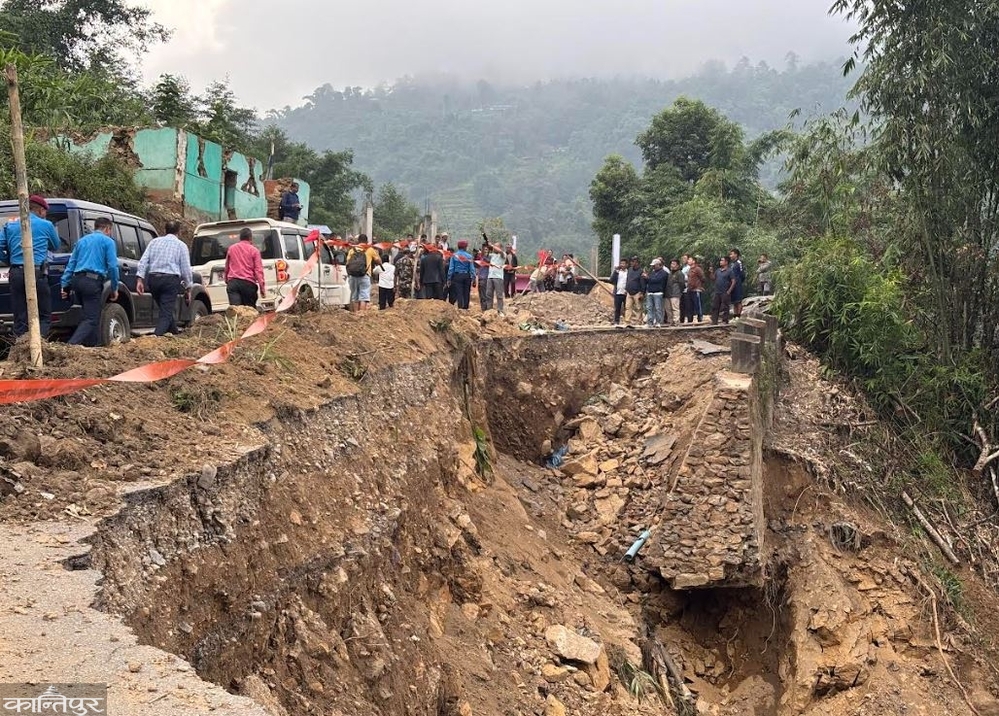
Homestay entrepreneurs have also been hit by the disaster. About 200 more are involved in the homestay business in Ilam, Panchthar and Taplejung areas. According to Maipokhari’s homestay entrepreneur Leela Bhattarai, the homestay business has collapsed in the season. She said, ‘There is no road to reach here, and it is unimaginable that tourists will come.’
Recently, tourism was being promoted in the Mechi Corridor through bike riding. Indian riders in particular used to enjoy riding from Ilam-Maipokhari to Sandakpur and from Phidim to Falelung. Niroj Kattel, Information Officer at the Tourism Office, Kakadbhitta, said, ‘Hundreds of Indian tourists used to come here every year through riding alone.’ This too has stopped.’
According to him, the entire economy of the three districts has been affected after the arrival of tourism has stopped. He adds, ‘The local economy, which is driven by tourism, seems to have been badly affected.’ The impact of the floods and landslides has also been seen in the trekking business. This was the time when domestic and foreign tourists would enjoy reaching the foot of the world's third highest mountain, Kanchenjunga. However, all that was shattered when the disaster struck, said Amir Rai, the operator of the trekking agency 'Trek 8586'.
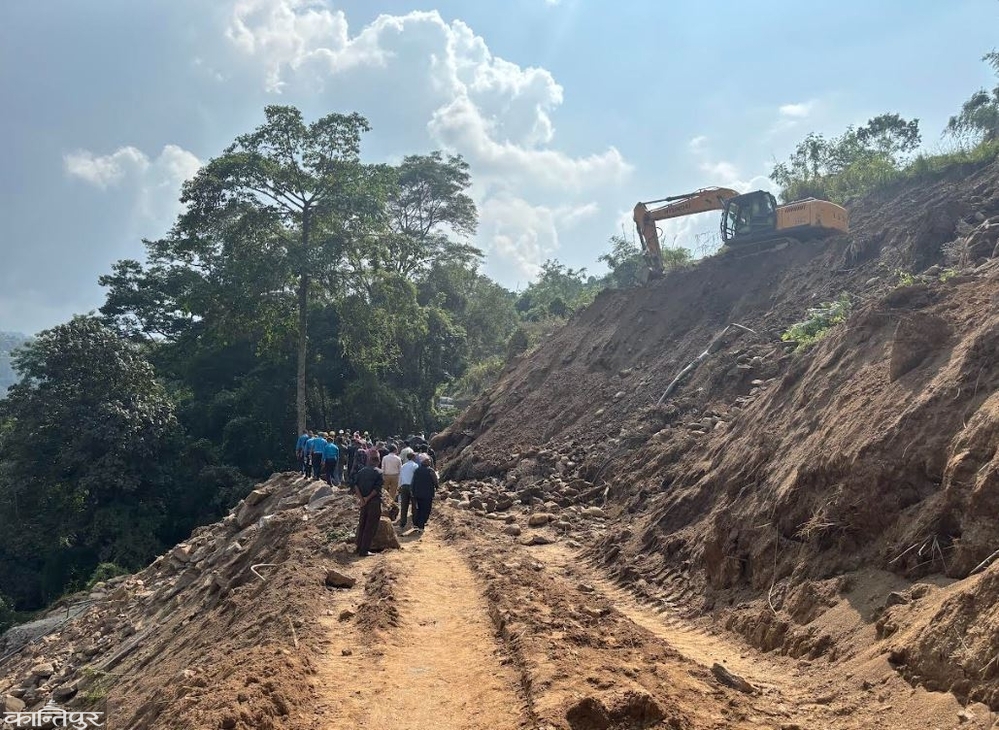
'The disaster that came during the season has destroyed the tourism business,' he said. The government has declared Ilam a 'disaster-hit area' and has taken up the work. However, the Ilam Chamber of Commerce and Industry has complained that the government has no plan to bring the business back to normal here. Krishna Poudel, the president of the Ilam Chamber of Commerce and Industry, asked, 'The state will build houses for flood and landslide victims, but who will build the 'confidence to return tourists'?'
...
The homestays and lodges of Falelung Rural Municipality-4 and 5 of Panchthar used to be full at this time. The high-mountainous areas of Phalot, Char Ratte and Sandakpur used to be crowded with tourists from India as well as Bengal and Punjab. These destinations, famous for sunrise and mountain views, are now mostly deserted.
‘It used to be packed with tourists from Ghatsthapana to Mangsir,’ said Shilp Rai, a tourism entrepreneur from Phalelung. ‘But, the floods and landslides of Asoj 19 ruined everything.’ According to Rai, on the day of Dashain alone, 20-25 tourists who came with motorcycles and 5 jeeps had to be turned back overnight after the Meteorological Department warned of heavy rain.
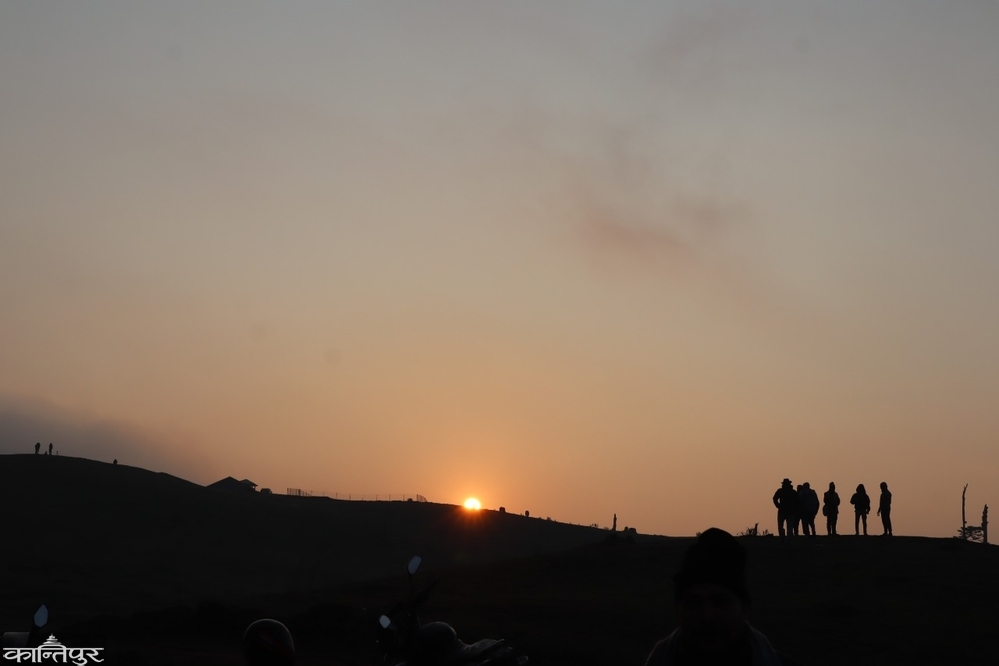
Even after the disaster, people who want to visit Phalelung from various parts of India are calling and trying to book homestays. But businessmen are forced to say, ‘The road is not safe, it is better not to come now.’ After the rainy season, the sun shines brightly in the Himalayan region, the winter is not too cold, and the mountains are clearly visible, so this time is considered the ‘golden season’ for tourists. Locals say that when the tourism industry, which had been stagnant for some time after the Gen-G movement, started to revive, the floods and landslides have made the area deserted again.
Not only Falelung, but also the hotels in Phidim, the district headquarters, are deserted. Especially due to pilgrims coming to visit Pathibhara, Phidim’s hotels were often full from Navratri to Kartik and from Falgun to Baisakh. ‘But this year, due to the disaster that occurred during Dashain, there was no hotel booking even during the main season,’ said Deepak Nepal, operator of Manaswi Hotel and central member of the Federation of Nepalese Chambers of Commerce and Industry.
According to Nepal, the business that had slowed down after the Gen-G movement has now been further affected by floods and landslides. Pilgrims and tourists usually stayed at the Manaswi, Sargam, Sagun, Batika and Ajima hotels in Phidim. ‘This year, the number of visitors has stopped,’ said Keshav Baral, the owner of Hotel Batika. ‘Even the stranded tourists had to be returned via alternative routes after the landslide closed the road.’
Shilaut, Sadhutar, Lavrekuti, Jorpokhari, Agejung, Kalapani, Chiwabhanjyang and Hilihang are all major religious and tourist destinations in the district. However, there is neither foreign visitors nor domestic tourists. The flood washed away the house of Lalmaya Shrestha, who lives near the Feme River in Phidim Municipality-1, along with her rice farm and cardamom plantation.
Last year, the flood on Asoj 12 destroyed houses and crops, while this year's flood on Asoj 17 destroyed what was left. 'The house we lived in was gone, now the rice and cardamom are gone, so the basis for survival is gone,' she lamented. Similarly, the 12-ropani cardamom field of Ratna Rai of Miklajung-4 was buried by a landslide.
'I had abandoned maize and planted cardamom, now both the field and the future are gone,' she said. A large amount of rice, cardamom, millet and pulse crops have been damaged in Miklajung and Falgunanda rural municipalities. According to Mahesh Chaudhary, head of the Agricultural Knowledge Center, preliminary data has been received from only a few wards of Phidim so far. According to which, cash crops of about 120 ropani area have been washed away in Ward No. 6, 7 and 8.
...
The Pathibhara temple in Taplejung should be crowded at this time. Every year, 17,000 to 21,000 pilgrims used to visit the temple daily during this season. But now only 2,000 pilgrims have visited the temple daily. After the Mechi Highway was blocked, they used the Tamor Corridor to visit.
According to the Pathibhara Area Development Committee, 2,100 pilgrims had visited in one day before the highway was blocked. Then, on Saturday, the day before the disaster, it reached 1,500 people, but since then it has been limited to around five to six hundred.
The disaster has affected not only hotel and transport entrepreneurs, but also everyone from farmers who supply vegetables to those hotels to those who set up roadside shops waiting for passengers. According to committee chairman Rocky Theba, the entrepreneurs used the income earned during this season to pay installments and meet their expenses for the whole year. However, this time that foundation has been lost.
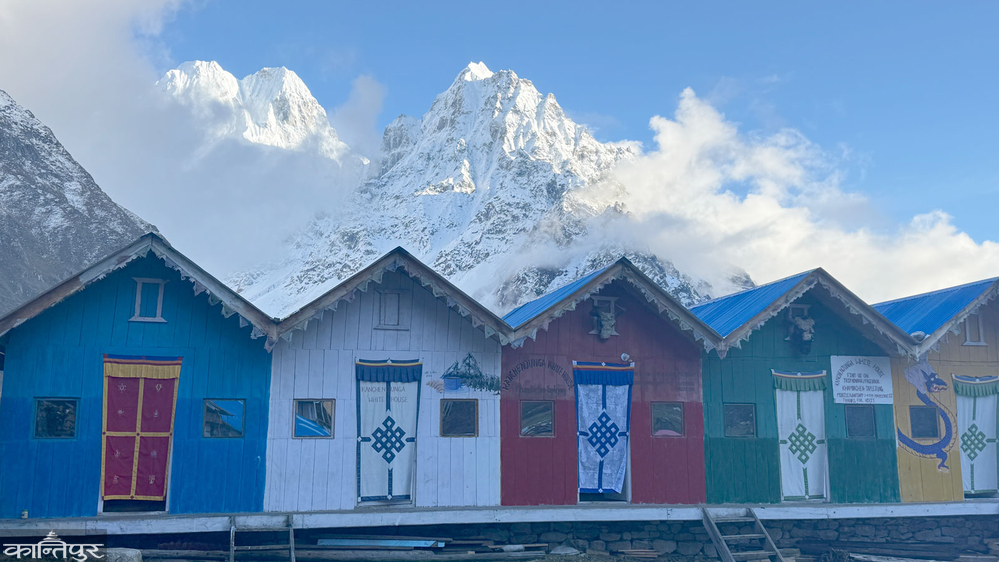
Many pilgrims, especially from Jhapa, Morang, Sunsari and Sikkim and Manipur in India, come to Pathibhara. That is why its impact has spread to Taplejung via Jhapa-Ilam-Panchthar. 'This year's impact has been felt in the entire business chain,' says Bikash Gautam, president of the Taplejung Chamber of Commerce and Industry, 'We don't know how much more problems it will cause.'
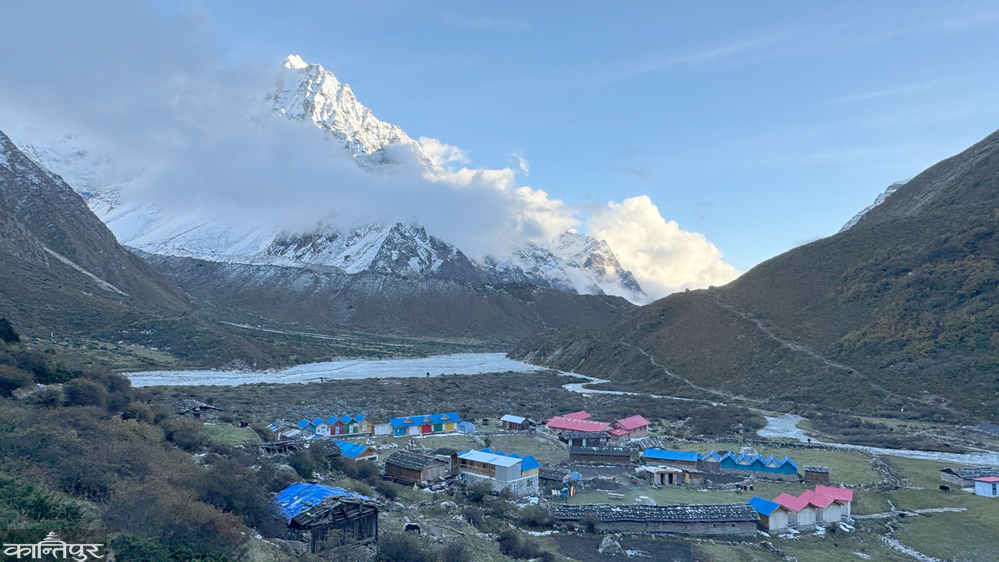
Similarly, another tourist attraction in Taplejung, the Kanchenjunga area, has also become deserted. ‘The weather was open, bookings were also good, tourists from countries like Israel, America, and Britain were contacting us,’ said Tshiring Sherpa, a hotelier in Ghunsa, ‘But, the Genji movement gave the first blow, and floods and landslides caused further crisis.’
According to him, tourists coming to Kanchenjunga were stopped in Fikkal in Ilam. Some had to be brought on foot, while others had to be taken to Taplejung via an alternative route. ‘When the route is closed, tourists who come with a fixed time have no choice but to return. Such an experience makes them hesitate to come again next time,’ said another businessman, Dandu Sherpa.
According to Tashi Sherpa, Ghunsa Tourism Assistant of the Kanchenjunga Conservation Area Management Council, not even 200 tourists have arrived this season so far. Last year, this number was more than 400. ‘The roads are open at the local level, but the obstruction on the highway has brought everything to a standstill,’ he said.
Tara Baral of Ashika Oil Supplies said that the problem was in the transportation of petrol and diesel due to the closure of the highway. ‘The inability to transport fuel from the Terai has directly affected everything from transportation to hotels,’ said Baral. The cardamom business, the main cash crop in the eastern hills, has also come to a standstill.
Bhadrabir Regmi, president of the Cardamom Traders Association, Taplejung, said, ‘The road was closed for a long time during the peak season, so it was not possible to export cardamom.’ The cardamom, which was being brought from the village to the district headquarters, Phungling, is now stuck in the warehouse. ‘Farmers, fearing theft and fire in the village, bring the produce to the district headquarters as soon as it is produced, but it has not been possible to send it to Jhapa from here,’ he said.

