We use Google Cloud Translation Services. Google requires we provide the following disclaimer relating to use of this service:
This service may contain translations powered by Google. Google disclaims all warranties related to the translations, expressed or implied, including any warranties of accuracy, reliability, and any implied warranties of merchantability, fitness for a particular purpose, and noninfringement.
Many people who remember the hijacking of an Indian Airlines plane 25 years ago have only one question in their minds, has the security of Tribhuvan International Airport improved now? In today's reporting, we will explain what changes were made in the airport security after that incident, how the security arrangements were made due to such changes and whether we are in a position to be sure about the airport security.
Many countries, including India, criticized the state of security checks at Kathmandu airport after the hijacking of the Indian Airlines plane.
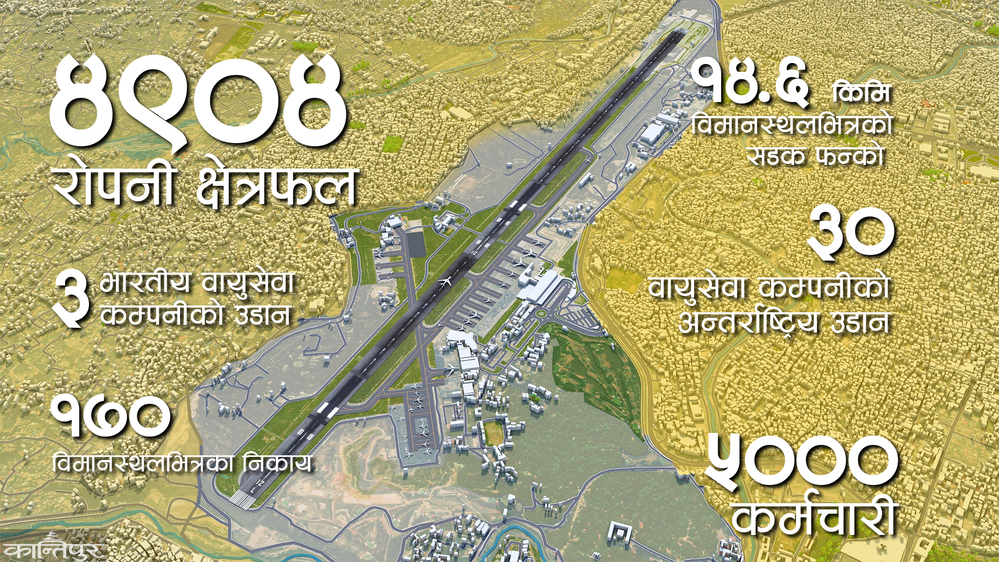
Currently, 30 airlines are flying international flights to Kathmandu every day. Three of these Indian airlines 'screen' passengers on their flights at the final destination before boarding. According to senior officials of Kathmandu Airport, India has been sending plainclothes commandos on every flight since May 2057.
They come on the ship as passengers and come back with weapons. This information is given only to the captain of each flight. This information is in the knowledge of Nepal. However, there is no need to give separate details to the airport every day about those who come as crew members on every flight. According to airport security sources, now Chinese airlines are also sending commandos along with the crew on board.
What did the inquiry committee say about security reforms?
The five-member high-level investigation committee formed by the then government on the hijacking of the Indian Airlines plane was given the main responsibility to suggest immediate and long-term improvements.
According to the then Home Secretary Khemraj Regmi, who was in the committee led by retired Inspector General of Police Hem Bahadur Singh, 'the inspection committee reviewed the security of Tribhuvan International Airport, the entire air security system, the structure and rationale of the agencies working at Tribhuvan International Airport, etc.' and suggested immediate and long-term improvements. The responsibility to be given was given .
At that time, it was suggested that only people with tickets and entry permits should be allowed to go to the check-in counter, security personnel with walkie-talkies should be placed at all entrances and departure halls of the airport, and they should be in constant contact with the Defense Command Post or Control Security Desk.
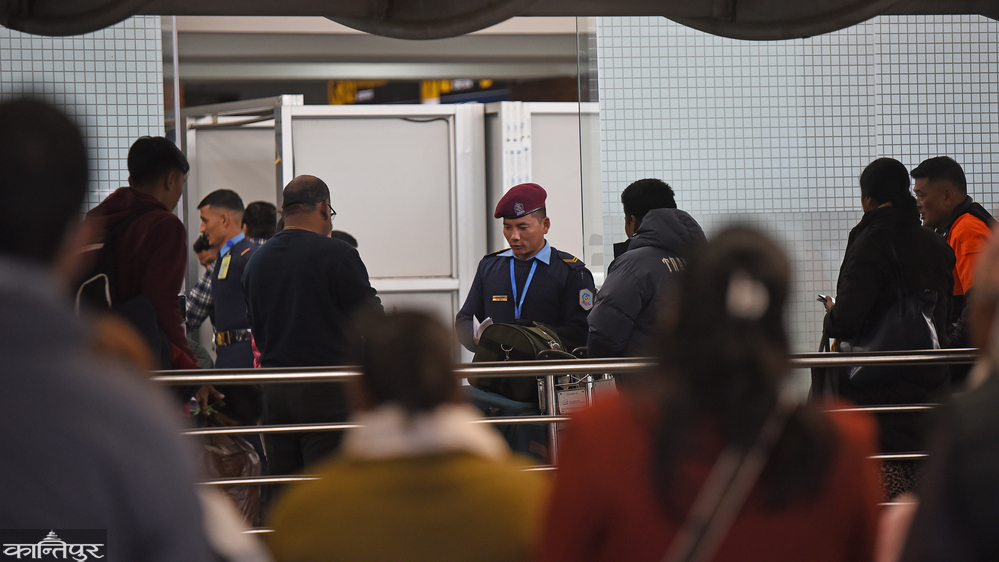
Similarly, the VIP entrance should always be closed, VIPs should be escorted to the VIP room by security personnel, information about them should be made mandatory at the terminal desk, ordinary visitors should not be allowed to enter the VIP room, passes should be distributed only on the basis of requirements, employees who are not on duty should go to the sterile hall where passengers are kept. It was also mentioned that details of taking visitor passes should be kept on record to be discouraged.
committee There should be at least four modern x-ray machines in the departure hall, there should be three x-ray machines in the arrival room, x-ray machines should be installed on the air side before the luggage is placed on the conveyor belt, there should be modern screening equipment for hand bag checks, x-ray machines should also be installed in the transit and VIP rooms. It was suggested that there should be screening points with walk-through metal detectors at various 7 sensitive locations, including in front of the departure lounge entrance.
Similarly, hand-held metal detectors of modern technology should be provided abundantly and used at the security check points of the departure lounge and transit point, the cargo hold of the aircraft and the airline staff and catering staff going to the aircraft cabin should also be fully checked with the help of these devices . According to the suggestion of the company of
security equipment, sufficient amount of security personnel should be trained, employees who have received such training should not be transferred for at least one year, the practice of security stickers on baggage should be stopped and reliable security strap binding should be arranged, for this, at least four binding machines and sufficient security straps should be available. As it is necessary to check baggage and cargo area of the airport with the help of dogs, the specialist bomb disposal unit has been activated immediately. The suggestion of the committee was that it should be
committee The boarding pass should be available through the computer system and the name of the mandatory passenger should be mentioned in it, the staff working in immigration should have mandatory formal training, there should be necessary signs and guides to prevent crowding in front of the immigration desk, passport inspection should be conducted with the help of modern equipment such as computer and other necessary ultra violet lights. He also suggested that it should be.
Duty Free Shop, Snacks Bar, Confectionery Shop, Executive Lounge should be moved from the last sterile hall where the passengers stay, Mudra sathi and duty free shop staff in the arrivals area should not be allowed to go to the departure hall, whether the immigration check is stamped/not stamped while checking the boarding pass Check-in by security personnel, checking whether/not by security personnel and immigration and boarding by airline personnel. There was also a suggestion that passengers should be taken to the aircraft by taking half of the pass.
Hand bag tags should be made mandatory on hand bags, walls should be placed on the walkways to prevent passengers from mixing in the departure hall and arrival hall, security personnel should be deployed, the way to travel through the conveyor belt etc. in the walkway used by passengers should be closed forever, both sides of the walkway According to the suggestion of the committee, there should be a transparent check wall, and the customs office should not allow the traders to come to the arrival hall to release the goods. is . According to the report of the
committee, the CCTV cameras of the airport should be kept fixed and active, the activities of important and sensitive areas should be recorded through CCTV, a mandatory detailed check of the vehicles going to the landside and airside of the airport, a log book should be kept with complete details of such vehicles and passengers, broken walls, chain link It was suggested that fences, entrances, security check posts etc. should be repaired immediately.
A security watch tower with search lights should be built at certain distances within the airport area, the staff and security personnel who have to go to the sterile room should be sent after mandatory screening, cargo material should be screened before being put on the ship, two large X-ray machines should be installed in the airport area, security personnel working at the airport should have mandatory aerial It was mentioned that safety training and refresher training should be taken every 6 months, duty hours of security personnel should be reviewed. According to the suggestion given by the
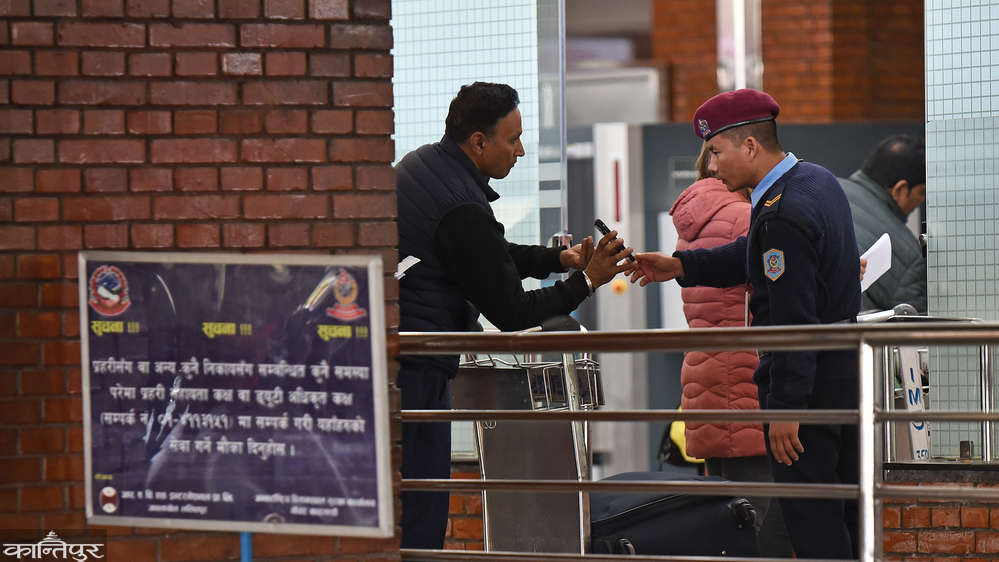
committee, private sector counters such as taxi counters, tourist information centers should be operated in appropriate locations, employees should wear mandatory uniforms, all airline companies should submit the operator security program to the airport office, check whether prohibited items are left/not left by passengers and inform the airport office. It was mentioned to be given.
The revenue, national investigation, special police, narcotics control, etc. monitoring agencies at the airport should submit the rationale of their actions to the National Civil Aviation Security Committee and work as integrated as possible. It is said as a suggestion to create an event and practice it immediately.
Homework given by the commission to the government
At that time, there were 49 different agencies at the airport. As a long-term suggestion, the commission stated that the agencies that are not needed there should be removed, and the agencies that are needed should be mobilized under the control of the Civil Aviation Office under the integrated command structure .
It was said that the departure hall that was under construction at that time should be made a completely sterile departure hall, perimeter roads should be built outside and inside the airport, private land and settlements in the south-east of the airport should be acquired immediately, and an airport security force should be established and operated by experts for the complete security of the airport. was .
It was suggested that an authorized air safety monitoring unit should be established to supervise and monitor the status of international conventions related to air . As the study time was short, the commission also instructed the National Civil Aviation Safety Committee chaired by the Minister of Tourism and the Board of Directors of the Nepal Civil Aviation Authority to conduct a detailed study and, by a joint decision, to evacuate non-essential bodies from the airport. The
committee pointed out that although the then security system at the airport was in accordance with the international convention and the Nepalese law which was made with that in mind, there was laxity in the work that should be done procedurally. The
report stated that there are 11 factors that contribute to the laxity of security operations. Security personnel focus on personal benefits more than security, number of security personnel is less than required, lack of knowledge, skills and abilities, need to go on duty to a new place every day, skills to operate security inspection equipment and eyes are not used to inspect, security The screening equipment is not modern and reliable, the airport terminal building is under construction, there is a lack of training and rehearsal arrangements for the security personnel, there is no supervision and control from the supervisor, the lack of supervision and control by the police towards the security personnel. The duty time is too long and the security system set by the airport management cannot be implemented effectively. The
commission has pointed out that the security system of Nepal did not arrange the information keeping in mind the estimation of the general threat due to the rapidly tense situation in the neighboring countries of Nepal.
"Effective implementation of security systems requires continuous information flow," the summary of the report states, "Important organizations such as airports have specific standards for security systems." Based on that, security arrangements are made. But any security system should be timely alert . In order to update the security system, it is absolutely necessary to make the organization effective and mobilize it to collect and distribute the facts in time.
Commission claimed that the short-term and long-term security suggestions given in the report will solve the weaknesses seen at that time, including the hijacking of the plane.
How is the airport now?
Kathmandu Airport spread over an area of 4 thousand 904 ropani is surrounded by double chain-link fencing according to International Aviation Organization (ICAO) standards. At the time of the hijacking, the Kathmandu airport was surrounded by single or double barbed wire.
The Tribhuvan International Airport, which is under siege on two levels, is the largest entity under siege in Nepal. The perimeter of the road around it is 14.6 km.
According to the airport office, now there are 170 agencies including government and private, airline companies, security agencies, and taxis. In 24 hours, 5 thousand employees of all these agencies work in three shifts. handwritten pass, identity card was used when
airport was hijacked . Radio Frequency Identification (RFID) cards with photographs are now used. 8,400 such digital cards have been distributed by the airport office. Such a card, which is purchased at 725 rupees per card, must be used by everyone working there.
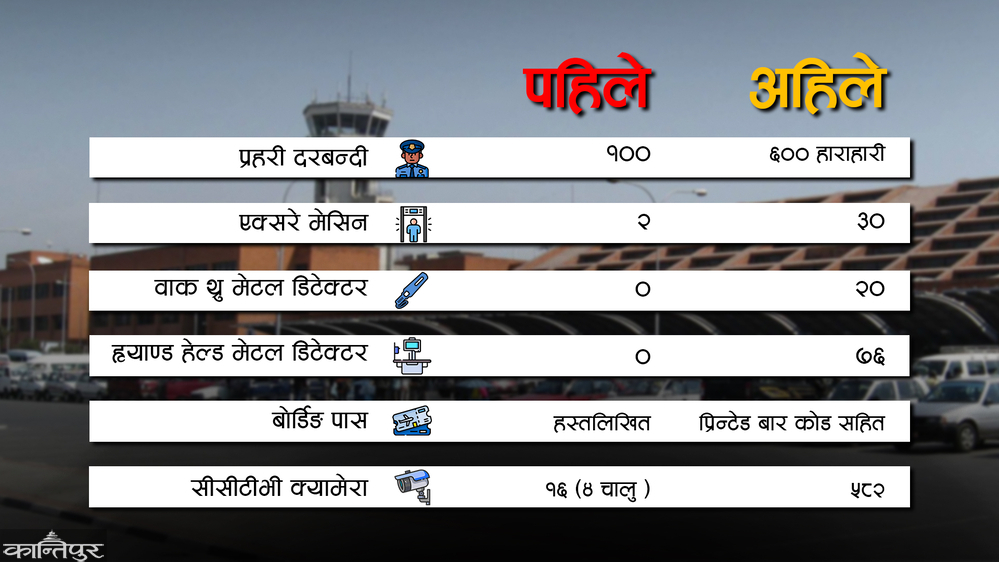
Buddha Air and Nepal Air Service Corporation are 11/1100 among those who use the most RFID cards. After that, the Civil Aviation Authority has distributed this card to its 700 employees. After this, Nepal Police is using around 600 RFID cards according to the airport office. Now there are around 600 police personnel at the airport. 25 years ago as the Airport Police Superintendent According to the retired Additional Inspector General of Police Vinod Singh, who was the head there, there were around 100 police posts at that time.
According to Jagannath Niraula, the general manager of the airport, everything from boarding passes to passports is now digital. Biometric security equipment is mandatory for every passenger on international flights. Passengers' fingerprints and facial records are kept. 25 years ago handwritten passports, handwritten boarding passes were used. Now a separate pass is issued for the vehicles that drive inside. Tankers, drivers and security personnel of the oil company carrying fuel for the ship from the depot of the oil corporation in the same premises are allowed to enter the apron only after checking. Even when it comes out, it is left only after checking .
At that time there were 16 CCTV cameras at Tribhuvan International Airport. Out of them only 4 cameras were active. He He used to record videos for 480 hours. Now there are 582 color CCTV cameras inside the airport. He records videos for up to 90 days . There is a separate police unit to monitor the cameras.
Earlier there were only two x-ray machines at Kathmandu Airport. Luggage and passengers were checked without X-ray machines at the cargo and domestic terminals. Now there are 30 x-ray machines in the airport.
At that time, the police only did a cursory inspection of the passengers . There was also no walkthrough handheld metal detector device to check passengers and bags before going to the departure hall. There are now 20 walkthrough metal detectors . 76 hand held metal detectors have been distributed to the police. The police have 50 checking points inside and outside the airport. Police have to do three shift duty . The authority has purchased 200 modern radio sets (walkie-talkies) for the police. Today's color X-ray machines can examine both dimensions of bags, not just luggage. Luggage is checked twice. Passengers are checked three times. The civil aviation academy in Bhaktapur provides training to the police stationed at the airport about 16-day airport security. Those who have not received that training are not assigned to duty.
The airport has Explosive Test Detector (ETD) technology to test for explosives. It detects any kind of explosives - dust or liquid - microscopically. When it comes to weapons, even fake toys cannot be carried . A large weapon will be shown by X-ray . Now such a technology has come - which detects even if there is a needle in a passenger's bag or bag. Apart from the police, the bomb disposal unit of the army has a separate office at the eastern gate.
So far, 32 ministers have changed in the Ministry of Tourism. When Rabindra Adhikari and Yogesh Bhattarai were tourism ministers, there was also a discussion of forming a separate squad for airport security. However, making laws was limited to discussion.
from the airport occasionally to great effect When the incidents of gold and drug seizures were made public, the security situation here is not going to be questioned. But if it was not for that shocking incident 25 years ago, would the airport security have been improved as it is now? And, is the current security system enough to meet the challenge?

