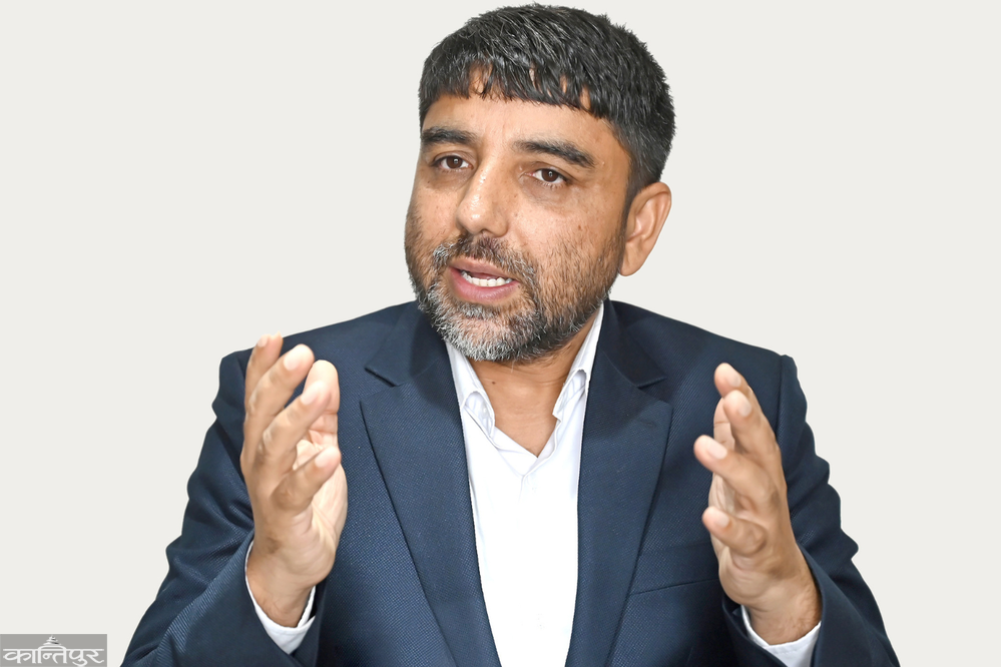
In an interview with Kantipur, he says, ”We consider collective candidacy, collective solicitation of votes, or campaigning against the code of conduct. There is a system in place for each member to individually run for the position they want and campaign in their own way.”
We use Google Cloud Translation Services. Google requires we provide the following disclaimer relating to use of this service:
This service may contain translations powered by Google. Google disclaims all warranties related to the translations, expressed or implied, including any warranties of accuracy, reliability, and any implied warranties of merchantability, fitness for a particular purpose, and noninfringement.
Rarely does a political party get the good fortune of the Rashtriya Swayamsevak Sangh (RSS) party. For example, it has got the opportunity to take over the reins of power even before holding its first general convention. All this has been possible within four years of the party's establishment. The country's largest party has expressed national interest in the general convention organized in Chitwan on 27-28 Asar. What will the RSSSP look like after the general convention? What will the relationship between the government and the party be like? And what kind of leadership will be selected? A conversation between the RSSSP general secretary Kavindra Burlakoti and DP Upadhyay , Jaisingh Mahara and Gaurav Pokharel for Kantipur: The RSSSP got a huge public vote in the elections. How will the party's first general convention perceive this politically and functionally?
It is a rare opportunity for us. We have entered the first general convention with the votes that the common Nepali citizens have given us to build the destiny of the country. At this time, the party is also leading the government. We have a presence in the house with about two-thirds of the seats. Thus, we have arrived at a rare moment of opportunity, but we also feel like we are carrying a very heavy burden. The party and the government have been working towards fulfilling the hopes and expectations of the common people. This general convention will set the direction to further improve the work.
Similarly, this general convention will also decide how to improve both the party's policy and leadership. It is natural for issues like how to take forward the policy we have adopted so far or what changes and comprehensive reforms should be made to it. We have had such expectations. This 7th Asad marks the completion of four years of the establishment of the Rashtriya Swayamsevak Sangh (RSS). The party was registered on 17 Ashar 2079. In the same year, on 25 Ashar, we held our first gathering in Bharatpur. It was a district-level gathering. And from there, we started the party's political journey. After reaching four years, we are holding the national convention in Bharatpur.
In reaching this point, we have faced ups and downs, challenges and opportunities. We have also received blessings from the citizens. This convention is very historic to bring this to a conclusion. That is why we have also called this first convention the 'Historical First National Convention'. How is it historic? During this period, there were many ups and downs in the life of the party. Especially, there were ups and downs related to the leadership. Then, even the cadres had to face problems. In the meantime, the country experienced the Gen-G rebellion.
You are one of the few who joined the Rashtriya Swayamsevak Sangh (RSS) when it was formed. The crowd that connects with the dreams carried by a few people seems large at the moment. That is why some local, district and state conventions have not been able to hold. Do you think that all the people who have come to the Rashtriya Swayamsevak Sangh (RSS) are coming in a hurry to build the country or are they out of a desire to get a position?
I would like to say with respect that most of the people have come to this party in a hurry to build the country. They should support the agenda that the leadership of this party has taken to build the country and they have also come because now is the right time. However, while bringing a load of hay, sometimes there may be thorns, there may be dry sticks. I cannot say that it will not happen. I generally accept that. They may have come with petty interests or because they think that there is an opportunity in the Rashtriya Swayamsevak Sangh (RSS). However, what we are trying to bring is the 'grass'. But sometimes worms may also have walked along with the grass while bringing grass.
Worms? Explain this, please?
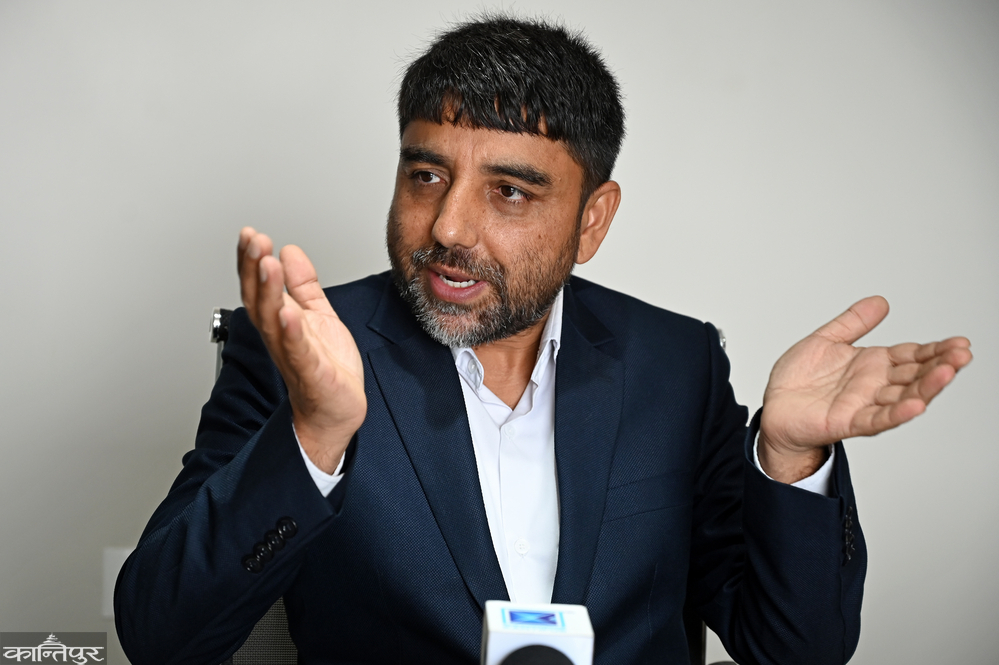 Those who come to the party may be opportunists. But, now I do not want to make such an objection from the popular media. Everyone has the right to come because they should embark on the path of building the country and join the campaign to build the country. We accept that and welcome them. All we want to request is that when coming to the Rashtriya Swayamsevak Sangh (RSS) please leave behind selfish feelings. And, let us all add one brick each to this golden opportunity to build the country.
What will be the message that the RSSS will give after the general convention?
The general convention works on three 'factors'. That is, the general convention has an impact. The first impact is within the party. How does the party operate, what kind of leadership does the party have, what kind of agenda does the party take, how much attention does the party pay to inclusiveness and how does the party carry the main agenda of nation building? Such issues are related to the party. Similarly, we are in the House. Since the party's issues are 'reflected' in the House, they also have an impact there. Of course, after this general convention, there will be a lot of enthusiasm in the House. Because this general convention is like bathing in the Ganges. We take a bath among thousands of friends who have faith in the party and who have taken the leadership with the belief that the party should build the country and go to the party, we go to the House.
The Prime Minister is present at the general convention. Ministers are also present. Therefore, the general convention of the RSVP has an impact on the party, the House and the government in which we are present. I think it sends a broad message to all of these. It also sends a message to the common citizen. I think that the party is holding the general convention at the appointed time, appreciating the votes given to the Rashtriya Swayamsevak Sangh (RSS). Because we are holding the general convention in Chitwan in Ashar, about four to five months after the general election. This is also courage. Because, before the election, we had resolved in the party central committee that we would hold the general convention within six months of the general election.
In the meantime, there were ups and downs in the party, adjustments were made. That was not a small issue, was it? An established alternative politics, from Tharuhat-Tharuwan with a large 'cluster' to the Dalit community, we brought a person who received a large public vote in the Kathmandu Metropolitan City election to the party while he was still the mayor and gave a message of change nationwide. We brought the leader of the Gen-G movement and the injured, including family members, to the House. The conclusion is that such issues send a message of positive energy to the citizens. Similarly, we have resolved to make the party more inclusive from this general convention. In that regard, homework is being done.
How will you include all the parties that came to the RSP in the general convention? How much challenge have you felt in that?
Since the organization department is also looking into it, I will look at this process in four parts. First, there are the signatures made during the adjustment and the decisions made by the party around that date. At that time, decisions were made on how to address the adjustment. Second, we went to the elections and local conventions. We distributed tickets from the perspective of adjustment to friends who came from different groups, parties or movements in the elections. Many friends have also been elected. We put 'full force' into the elections, taking all the parties that came from the establishment of the party at that time and the adjustment. As a result, we won about two-thirds of the seats in parliament.
Third, we are now at the general convention. There are friends who have come through both the above stages. There are friends who have taken on leadership roles at various levels. We have brought some friends from the list of adjustments as representatives to the general convention. This general convention will address the adjustment process. Fourth, someone can also be left out of the general convention. But the central committee after the general convention will review the matter. If this person is left out, but he should not be left out and if it is felt that he should be addressed, the central committee after the general convention will also take a decision. Therefore, we will continue the remaining work of adjustment even after the general convention.
Arrangements have been made to select the president and central members in the first phase and the remaining office bearers in the second phase. What will the new leadership be like? How are the office bearers selected? Has the leadership been decided in advance or will the general convention decide?
The Rashtriya Swayamsevak Sangh (RSS) is a party formed by the citizens through a broad public vote. The party will move forward in a way that justice is served. The general convention will decide how the decision will be made. There are friends who have come as general convention representatives from various levels. There are also friends who have recently joined the party. All parties are participating. The party will move forward according to the direction that all the representatives discuss and decide at the general convention. We have not come to the general convention with any predetermined structure. I am happy that we have not come to the general convention with any preconceived ideas or predetermined conclusions. The party leadership is selected according to the direction directed by the general convention. I believe that the general public will be happy when the leadership is selected in this way.
The RSP was formed by a mixture of different factions. In that sense, this is also a general convention of unity. Therefore, does unopposed selection get priority over holding elections for the selection of leadership and office bearers?
A question arises - does the effort to make it unopposed weaken the democratic process? Let's give an example, if the water of Trishuli is a little murky and the water of Marsyangdi is clear, then both seem to flow with different colors. But if both waters are clear, they appear to be one as soon as they are connected, they cannot be separated. All the forces currently connected to the Rashtriya Swayamsevak Sangh are like clear water. They have practiced clean politics. They want to establish clean politics. That is why we are united. There is no doubt about it. However, discussions are being held on whether the friends who have recently joined the party will face any difficulties during the guidelines of the general convention. I believe that the party leadership will take necessary steps not to leave such friends. This sends a positive message.
This time, the number of office bearers and central members nominated by the president has also been increased. The size of the central committee has also been increased. So does that mean there will be no elections? No. Democracy is dialogue and consensus. In the case of the party, it is an internal election. All these three aspects are democratic practices. There is also a process of consensus. Even after that, if necessary, the general members can go through the process of making decisions based on what they want. All these are democratic methods. Therefore, the party respects the democratic method. It is discussing to find a way out of that process. It will move forward accordingly.
Since the emergence of the RSVP, some questions have been continuously following it - from the RSVP being weak in terms of inclusiveness to the lack of a clear vision of federalism. Will the party move forward with a political document while remaining committed to the federal democratic republican constitution in this general convention? Or will it propose any changes or reforms?
The RSVP is a party committed to federalism. This issue is clearly documented in our ideological document. Similarly, the party has also clearly expressed its commitment to a federal democratic republic and has included it in the document. The party has no second opinion on this issue. However, there are some proposals for structural reform of federalism. The party is not saying that the provinces should be abolished, but that the provincial assembly should be reformed. Our opinion is that the provincial law-making assembly should either be made smaller and simpler, or a new structure should be proposed as an alternative. For that, we have envisioned a 'provincial council'. But since this is a matter related to constitutional amendment, it can only be decided through a comprehensive national discussion.
The political document is the party's opinion. But constitutional amendment should be a national opinion. If we see a need for reform on some issues from the suggestions of experts or international practice, we will not hesitate. After stating our opinion, we are not in favor of sticking to it. जहाँ सुधारको पर्याप्त आधार हुन्छ, त्यहाँ पुनर्विचार गर्न पार्टी खुला छ । यो पार्टी मुलुक निर्माणका लागि आवश्यक परे आफ्ना विचार परिमार्जन गर्न पनि तयार छ । मुलुकको सार्वभौमसत्ता, अखण्डता, उन्नति, प्रगति र समृद्धिका लागि आवश्यक परे पार्टीले आफ्ना धारणा सुधार्न हिचकिचाउँदैन ।
तपाईंले पार्टीको संरचनाको सन्दर्भमा तीनवटा लोकतान्त्रिक विकल्पको कुरा गर्नुभयो– सर्वसम्मति, निर्वाचन वा सहमतिका अन्य प्रक्रिया । महाधिवेशनपछि रास्वपाको नेतृत्व कस्तो देखिएला ? पार्टी देशको चरित्रजस्तै समावेशी हुन्छ ?
यो पहिलो महाधिवेशन भएकाले अधिकांश नेतृत्व तदर्थ समितितिर बढी ढल्किनु स्वाभाविक हो । किनभने पार्टी निर्माणमा, नीतिगत नेतृत्वमा र संगठन निर्माणमा जसले बढी भूमिका खेलेका छन्, उनीहरूतर्फ केही झुकाव हुनु अस्वाभाविक होइन । मैले सुनेको थिएँ, माछा धेरै खायो भने शरीरबाट पनि माछाकै गन्ध आउँछ रे π त्यसैगरी रास्वपा निर्माण गर्दा हामीले जसरी काम गरेका छौं, त्यसका धेरै पक्षले अहिले पनि निरन्तरता पाउँछन् । संगठनमा पनि यो एक प्रकारको वंशाणुगत गुणजस्तै हो । तर त्यसलाई आवश्यक सुधार गर्दै लैजानुपर्छ भन्ने हाम्रो स्पष्ट सोच छ । पार्टीप्रति आएका टिप्पणी र सुझावलाई ध्यानमा राख्दै सुधारका लागि निरन्तर प्रयासरत छौं । यसको उदाहरणका रूपमा हामीले दलित समुदायले नेतृत्व गरेको पार्टीलाई समावेश गर्यौं । थारुहट–थारुवान आन्दोलनको नेतृत्व गरेको समूहलाई पनि पार्टीमा ल्यायौं । वैकल्पिक राजनीतिको अभ्यास गर्दै आफ्नो विचार स्थापित गरिसकेको विवेकशील साझा पार्टीलाई पनि हामीले पार्टीमा समेट्यौं । यी सबै समावेशी चरित्र निर्माण गर्ने प्रयासका उदाहरण हुन् ।
अर्को विषय, मधेश प्रदेशमा हामीले अकल्पनीय जनमत प्राप्त गर्यौं । प्रतिनिधिसभाका ३२ मध्ये ३१ निर्वाचन क्षेत्रमा रास्वपाको उपस्थिति रह्यो । प्राविधिक रूपमा एउटा क्षेत्रमा हामी आउन सकेनौं । तर ३१ क्षेत्रमा पार्टीको उपस्थिति छ । त्यसैले अब मधेशको प्रतिनिधित्व पनि पार्टीमा अझ सशक्त रूपमा हुन्छ । अहिलेसम्म मधेशका साथीहरूलाई केही कमी महसुस भएको हुन सक्छ, तर त्यो अवस्था अब परिवर्तन हुन्छ ।
मधेशले तपाईंहरूलाई चुनावमा खुलेर साथ दियो । तर सत्तामा पुगेपछि ‘भन्सार कडाइ’ गरेर मधेशी समुदायलाई नै अप्ठ्यारो थप्नुभयो । पार्टीभित्रको प्रतिनिधित्वमा मधेशीलगायत अल्पसंख्यक समुदायप्रति कन्जुस्याइँ गरेको आरोप लाग्छ । कतै रास्वपा ‘ब्राह्मण–क्षेत्रीको क्लब’ जस्तो त बन्दै गएको छैन ?
म यो आरोपसँग सहमत छैन । मैले अघि पनि भनें, हामी तदर्थ समितिबाट क्रमशः परिमार्जन हुँदै अघि बढिरहेका छौं । मधेशको चरित्र अब पार्टीभित्र स्पष्ट रूपमा झल्किन्छ । यो महाधिवेशनपछि मधेश मात्र होइन, अन्य समुदायहरूको प्रतिनिधित्व पनि अझ मजबुत हुन्छ । पार्टी थप समावेशी बन्छ । हाम्रो उद्देश्य नै सबै समुदायको प्रतिनिधित्व सुनिश्चित गर्नु हो । त्यस दिशामा यो महाधिवेशन निकै महत्त्वपूर्ण हुनेछ ।
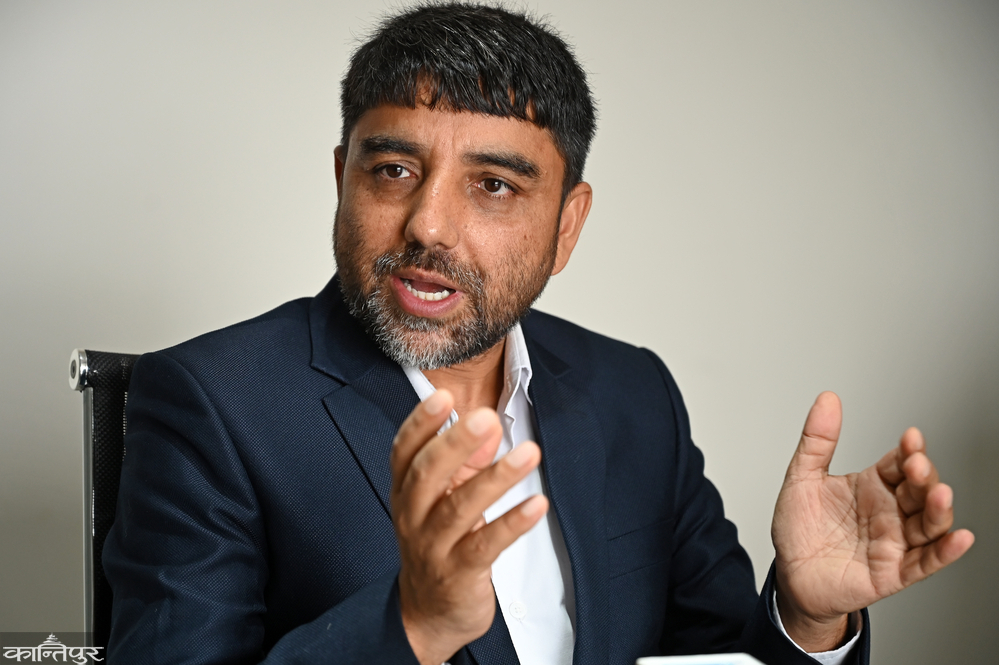 पार्टी र सरकारको नेतृत्व अहिले तपाईंहरूकै हातमा छ । महाधिवेशनपछि पार्टी र सरकारबीचको समन्वय कसरी अघि बढ्छ ? यसबारे पनि कुनै निर्णय हुन्छ ?
यस विषयमा महाधिवेशनले धेरै फरक पार्दैन । अहिले जसरी पार्टी र सरकारबीच समन्वयात्मक रूपमा काम भइरहेको छ, महाधिवेशनपछि पनि त्यही ढंगले अघि बढ्छ । पार्टी र सरकारबीच सौहार्दपूर्ण तथा रचनात्मक समन्वय कायम रहनेमा म विश्वस्त छु ।
कतिपय दलमा महाधिवेशनपछि सरकार र पार्टीबीच द्वन्द्व बढ्ने गरेको देखिन्छ । रास्वपा कुन दिशामा जान्छ ?
हाम्रोमा समन्वय नै कायम रहन्छ । किनभने पार्टी र सरकार दुवै साधन हुन्, साध्य होइनन् । हाम्रो लक्ष्य सरकार चलाउनु मात्र होइन । हाम्रो लक्ष्य परिवर्तन, समृद्धि, सुशासन कायम गर्नु हो । लोकतन्त्र र लोककल्याणकारी राज्य निर्माण गर्नु हो । त्यो लक्ष्य हासिल गर्न पार्टी, संसद् र सरकारबीच उच्चस्तरीय समन्वय आवश्यक हुन्छ । त्यसैले हामी यही समन्वयलाई प्राथमिकता दिन्छौं ।
महाधिवेशनमा उम्मेदवारी घोषणा सुरु भइसकेको छ । अर्कोतर्फ सामूहिक उम्मेदवारी दिने चर्चा पनि छ । पार्टीले यसलाई कसरी व्यवस्थापन गर्छ ?
अहिलेसम्मको हाम्रो अभ्यास हेर्ने हो भने पार्टीले सामूहिक उम्मेदवारीलाई प्रोत्साहन गर्दैन । सामूहिक उम्मेदवारीले समूहगत राजनीति बढाउँछ र व्यक्तिगत क्षमता भएका साथीलाई पछि पार्न सक्छ । त्यसैले पार्टी ‘मेरिट’ का आधारमा प्रतिस्पर्धा हुनुपर्छ भन्ने पक्षमा छ । हामी सामूहिक उम्मेदवारी, सामूहिक रूपमा भोट माग्ने वा प्रचार गर्ने कार्यलाई पनि आचारसंहिताविपरीत मान्छौं । अघिल्ला अधिवेशनहरूमा पनि यस्ता अभ्यासलाई निरुत्साहित गरेका थियौं । हरेक सदस्यले आफू इच्छाएको पदमा व्यक्तिगत रूपमा उम्मेदवारी दिने र आफ्नै ढंगले प्रचार गर्ने व्यवस्था छ ।
‘एक व्यक्ति, एक पद’ को व्यवस्था रहन्छ कि रहँदैन?
यसको अर्थ बुझ्न आवश्यक छ । एउटै अंगभित्र एउटै व्यक्तिले धेरै जिम्मेवारी लिनु उपयुक्त हुँदैन । उदाहरणका लागि, एकै व्यक्ति जिल्ला सभापति पनि हुने, केन्द्रीय सदस्य पनि हुने, प्रदेश इन्चार्ज पनि हुने जस्ता अभ्यासलाई हामी निरुत्साहित गर्छौं । एउटै अंगमा एउटा मात्रै जिम्मेवारी हुँदा काम प्रभावकारी हुन्छ । तर संसद्, पार्टी र सरकार फरक–फरक अंग हुन् । कुनै व्यक्ति सांसद पनि हुन सक्छ, पार्टीको जिम्मेवारीमा पनि हुन सक्छ वा सरकारमा पनि हुन सक्छ । यी फरक प्रकृतिका जिम्मेवारी भएकाले त्यसलाई एउटै मापदण्डबाट हेर्न मिल्दैन । यद्यपि, व्यावहारिक रूपमा जिम्मेवारीहरू एकअर्कासँग नजुधुन् र सम्बन्धित व्यक्तिले प्रभावकारी रूपमा भूमिका निर्वाह गर्न सकुन् भन्नेमा पार्टीले ध्यान दिएको छ ।
तपाईं पार्टी गठनदेखि नै पदाधिकारी हुनुहुन्थ्यो । अहिले महामन्त्री हुनुहुन्छ । महाधिवेशनपछि तपाईंलाई कुन भूमिकामा देख्न पाइन्छ ?
त्यो निर्णय महाधिवेशनले नै गर्छ । अहिले म पार्टीको जिम्मेवार पदमा बसेको व्यक्ति भएकाले आफ्नो व्यक्तिगत आकांक्षाबारे बोल्नु उपयुक्त हुँदैन । त्यसले महाधिवेशन प्रतिनिधिहरूलाई प्रभाव पार्न सक्छ । त्यसैले महाधिवेशनले जे जिम्मेवारी दिन्छ, हामी सबैले त्यसलाई स्वीकार गरेर पार्टीलाई अगाडि बढाउनेछौं । अन्ततः हाम्रो लक्ष्य पद प्राप्त गर्नु होइन, पार्टीलाई बलियो बनाउँदै देश निर्माणमा योगदान गर्नु हो ।