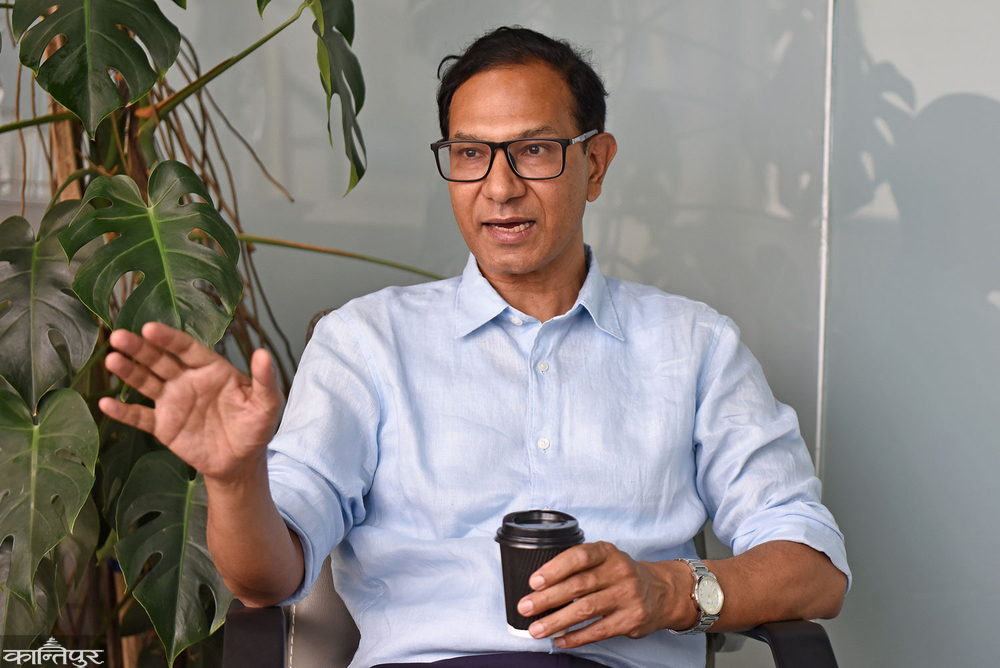
Comparing Nepal with Bangladesh is wrong. The suspicion that Sri Lanka will become a little earlier was rather correct. Because Sri Lanka's foreign exchange reserves were very low. At that time, we also had reserves that could only import goods for 6 months. But the situation in Bangladesh is different. Because one person was in power there for 15 years.
We use Google Cloud Translation Services. Google requires we provide the following disclaimer relating to use of this service:
This service may contain translations powered by Google. Google disclaims all warranties related to the translations, expressed or implied, including any warranties of accuracy, reliability, and any implied warranties of merchantability, fitness for a particular purpose, and noninfringement.
There has been a massive change in relations, activities and priorities between countries. From the arms war between the superpowers to the 'tariff war', traditional alliances and partisanship are being disrupted. When powerful countries put security as their priority, budgets for areas such as education, health, hunger, and climate crisis have been reduced for the citizens of the world.
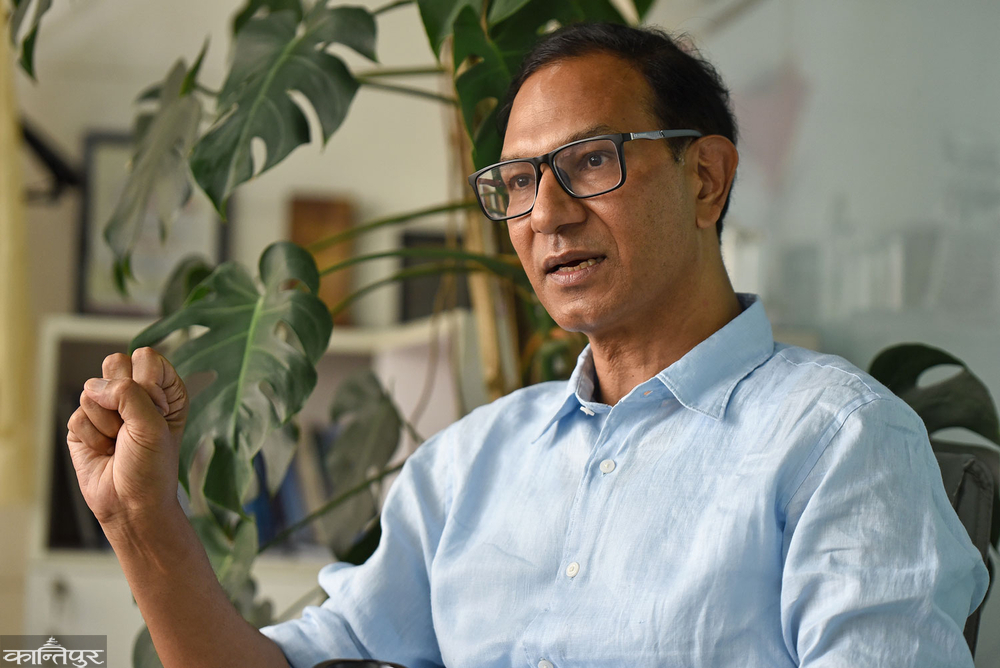
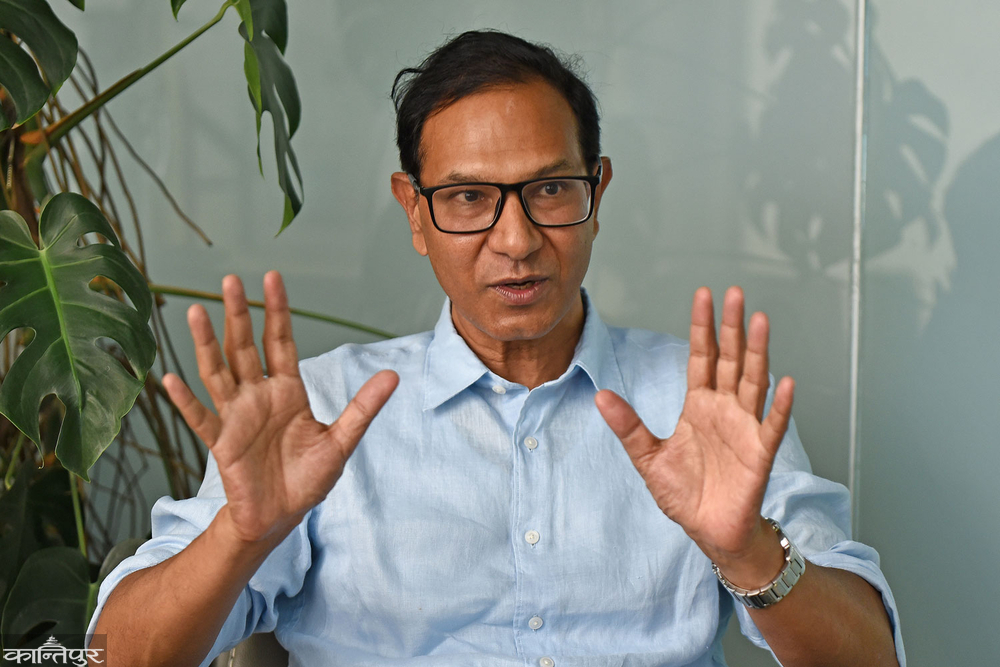
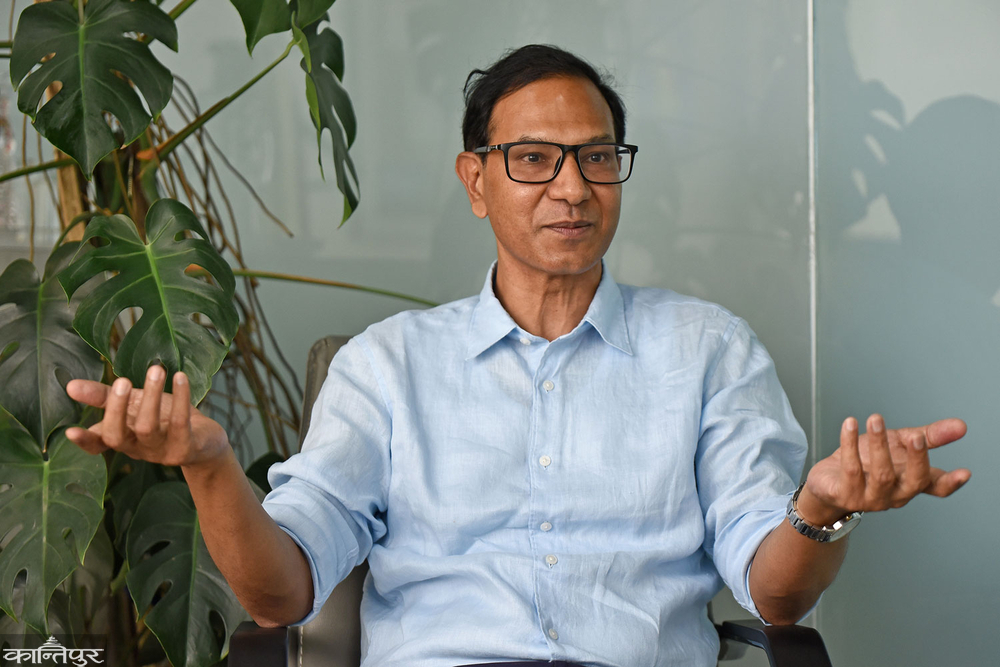
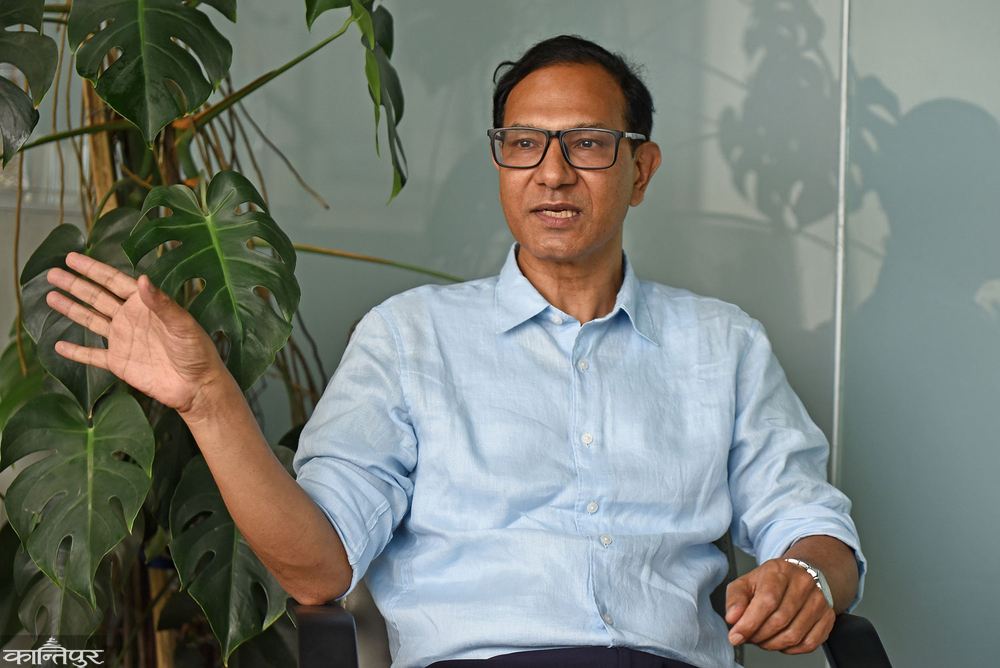
It is sure to have an impact on very less developed countries like Nepal. However, it is often analyzed that the 'tariff war' has also given an opportunity. Such a situation has raised questions on the effectiveness of regional thematic organizations from the United Nations. Focusing on the changing economic, political and diplomatic issues of the world, The edited part of the conversation between Krishna Acharya and Kishore Dahal for Kantipur with Angraj Timilsina, the international governance advisor of the United Nations :
The fundamental political developments of the world, relations between countries, alliances, favoritism could often be assessed . But lately it has started to be difficult. Is it natural or unnatural? Did it happen suddenly or gradually?
After the Second World War, there were not so many divisions and geopolitical challenges during the Cold War. At least at that time we knew which 'blocks' were with the Soviet Union and the US/Western Europe . There was a place for forecasting and assessment. Now many poles are seen . Nowadays it is called 'The Planet is Burning'. The war for human society, the crisis of climate change is looming, amid the great uncertainty of what the 'New World Order' will be like, it is not certain who is on which side in the international political alliance . A country that is in one side of the alliance due to security interest is going to the other side due to trade or economic interest . Now everyone has started paying attention only to their vested interest .
The existing 'international order' was developed as a 'rule-based order', this is the biggest progress in the world after the Second World War
It is also the responsibility of rich countries to help for climate, conflict, peace, sustainable development, and uplifting poor countries. But because they are only focused on their own internal affairs, the official development assistance (ODA) is decreasing . Foreign direct investment is also decreasing. Overall, politics seems to be divided globally. Let's look at the tension between India and America. It is said that the Indian Prime Minister will visit China after seven years with the background of US imposing a 50 percent tariff on India. The Prime Minister of India is in dialogue with the presidents of Russia and Brazil about the new situation.
BRICS includes countries including Russia, India, South Africa and China. The Asia-Pacific's four-nation security mechanism Quad is again America, Japan, India and Australia. The purpose of the Quad is to prevent China's dominance in the South China Sea. The suspicion of what the current 'trade war' will do to it has increased. Now there is news that the Indian Prime Minister does not go to the meeting of the Quad, but sends others. It has been analyzed that the traditional 'global order' like
has started to disintegrate. Where will the world go in such a situation? How will it affect us?
If every country moves forward in its own way, they cannot solve the world's big problems . Issues such as climate, sustainable development, and regulation of new technologies are not limited to developing countries. For both developed and developing. Similarly, human rights, immigration is everyone's issue .
The existing 'international order' was developed as a 'rule based order'. As the United Nations looks at aviation, it creates a standard . Nepal says it does not meet the standard and puts it on the 'black list'. The Financial Task Force has developed its own regulatory standards. Nepal has been placed on the "grey-list" because it has not been done accordingly. WHO has prepared various health standards from vaccines. UNICEF has prepared standards for children, UN Women for women, and UNDP for 'Governance'. These are not only for a country or society, but for the whole world. This is the biggest progress in the world since World War II.
Now, some countries, including the US, are behaving as if there is no need for 'world order', it is not necessary to advance it . While it was their significant investment to get here after the Second World War . It will affect the whole . Alternatively, other emerging countries should increase investment . If the old ones withdraw their hands and the new ones do not invest, then the problem will increase for the 'Rule Based World Order'.
From the meeting of September, many European countries are recognizing Palestine as a country, after seeing the humanitarian crisis in Gaza, the situation of children. It has some parts . Let's look at the political side . Extremist politics is on the rise worldwide. Democratic forces are lagging behind. In ten years, the civil space is getting weaker all over the world . Even though the digital space is increasing, 'misinformation' and 'disinformation' are increasing . With the increase in the use of AI, challenges have been added to 'Information Integrity'. This also shows that we need a 'global order'. Otherwise, it is not enough for one country to make a policy on how to see and deal with AI.
The same is true of climate. An average of $500 billion is needed each year for developing countries. That money will not come from one country . Developing countries cannot. It had to come from developed countries . Therefore, 'Glober Order' is confirming its justification in a way.
is the justification of the United Nations. Russia-Ukraine war is going on, Israel is attacking Palestine. Children there are dying of hunger. What about the United Nations? Well, his intervention and effective role ?
Resolutions are being passed at the United Nations General Assembly. Every country is giving its 'position'. Imagine what would happen if the United Nations did not exist? Now, in the September meeting, many European countries are recognizing Palestine as a country. France, Canada, UK said to do it .
They took such a position after seeing the humanitarian crisis in Gaza and the situation of children. It makes sense. But the United Nations is an organization of countries. Its 'governance' structure should be up-to-date. But it has given all the countries of the world a 'mega platform' to have their say. While the conflict is going on, the United Nations staff are putting their lives on the line every day for rescue and relief.
The League of Nations was formed after the First World War. Later, no one noticed it and it disappeared in the background of the Second World War. Concerns are also being expressed that the United Nations is not going to the same situation, isn't it?
anxiety is right. But I don't think so. I give three/four reasons for that . Hitler did not like losing his country in the First World War . He started saying that no one can beat Germany . By saying that he does not like communists and Jews, he created nationalism in Germany and unified the people. It was against this background that the Second World War began.
doesn't seem to be a reason to go to the third world war at this time . Compared to 70-80 years ago, the 'Relative Strength' of the 'Super Powers' has decreased . All countries are connected in the 'Economy Supply Chain' . The world is not the same as it was then . Much progress has been made in matters such as information technology and globalization. On the other hand, it is called 'Nuclear Power Do Not Go to War Each Other'. Let's look at India and Pakistan. Why did the tension after the Pahalgam incident not go away for a long time? Because, both are nuclear powers. Let's say, if Russia uses a nuclear missile in Ukraine, the West will also have to think about it.
Again, the current way of war has changed. It is not necessary to cross the border of another country with an army like before. Instead, there is a 'cyber attack'. By damaging the 'satellite' they destroy the 'information system'. They cause damage to the electricity grid . No need to send people, drones can be produced in the factory and sent. In other words, war is also of different types . Therefore, I do not see the development of a new type of 'order' in the third war.
Let's take a look at the current 'tariff war', 'trade war'. How did it start ? Where does it go?
'Trade war' is not a new topic . When Bill Clinton was in the US presidency, a new trade agreement between Mexico, the US and Canada came up as part of the 'Economy First' policy. Not only America, we also impose taxes on imports . If a developing country like us does not do that, our industrialists cannot be competitive . It can be taken in the sense that if you do not take a policy to protect your businessmen, you cannot compete with outsiders .
But this is not according to the concept of open market . It has been recognized that trade can be increased by 'protecting' developing countries . Even now, 160 countries are recognized by the WTO. Even now, if there is a need to resolve the trade disputes of big countries, they will go to the WTO. But if every country starts looking only at its own interests, there will be a problem . There are also treaty agreements between the two countries, but following the established standards of the world, when there is a trade treaty-agreement, we can go to a 'win-win' situation .
A country has a system of imposing tariffs on imported goods . It has come to a situation where it is applied overnight without following the methodology. How does it affect ?
Now the American judicial system will examine whether the tariff is legal or not. But the President has the power to increase and decrease the tariff . Rather, how long will it last, whether it is the only strategy of 'negotiation' or not, the issue of other effects on the economy is important. However, no time has been given for 'negotiation' between the two countries . How many countries were told time up to 90 days . Even now, Mexico has been extended 90 days, China has also been extended . But all these issues are connected with the recent US election agenda and results, the 'Maka Movement' is connected with .
How will 'tariff war' affect us? That we have a space to take advantage of ?
especially the tariff is not good . Everyone should be able to produce their goods in a competitive manner and sell them anywhere. But a child cannot be asked to compete in a marathon with a grown man . Someone's technology is already ahead . Developing countries like Nepal are just producing . Our competitiveness and product prices are low . There is a difference between selling Apple (iPhone) and selling tomatoes or cucumbers.
But it is not possible to say how far the current 'tariff war' will go. In the long run, it will affect the global economy. If the economic growth of 3 percent of the world that is projected now comes to 2 percent, everyone will suffer losses. It affects all areas like development, education, health.
If time goes on in the current 'tariff war', the global economy will be greatly affected. There are two difficulties in making a leap in economic development, firstly, there is no stability in the tax range, secondly, the 'input cost' is also very high. In three/four months, the revenue coming from the new 'tariff' increased sharply in America . Well, this is just the beginning. Inflation may be affected even if the revenue is collected . Tariffs to 100, 150 countries at the same time may increase the price of goods coming there . If the consumer buys less goods due to rising prices, the economy will be affected . If you look at South Asia now, the US has imposed a 50 percent tariff on India, 20/20 percent on Sri Lanka and Bangladesh, 19 percent on Pakistan, 15 percent on Afghanistan and 10 percent on the remaining Maldives, Bhutan and Nepal. In such a situation, there are short-term and long-term aspects of the benefits we take .
As the tariff is low for us, if we can increase the investment, we can benefit . For example, there is an opportunity to produce goods in a joint venture with China or India and send them to America with 'Made in Nepal'. For that there must be an environment here . But we have more labor cost. Road infrastructure is not good . Even with investment now, it will take four/five years to start production . But there is also an opportunity to make ourselves competitive in the American market by subsidizing the production of goods that we are now sending to America.
Overall, it is difficult for us to make a leap in economic development without improving two aspects. First, we do not have stability in the scope of taxation . The minister keeps changing. It cannot be predicted. Secondly, the 'input cost' here is also very high . It is also difficult to bring the goods that came to the sea here . Road infrastructure is not up to speed. In such a situation, even if the tariff is low for us, the producer will not benefit .
If the world's economic growth rate drops to 2 percent in the long term, it will affect us too. Because, our growth rate is only 4 percent in 60 years . Real growth is negative especially when inflation is 6/7 percent. Such an increase does not benefit the common man . That growth will benefit only certain sectors . Backward classes cannot be brought up . Therefore, if the tariff is affected globally, it will also affect us.
What are the effects of the current tension between India and the US, which are among the main countries that support us?
Looking at the data of 20-30 years in our 'development financing', the main contributors are the World Bank and the Asian Development Bank . Our projects are made with their help . If you do it in terms of country, it is Japan. But there is not much of Japan here. Both China and the United States talk about America.
All the ambassadors are His Excellency, but if you look at the profile of the ambassador sent by America to India, China, Europe or other big countries and the profile of the ambassador sent to Nepal, it is not difficult to find out how much priority we are. America's major support was through USAID. Without that, we are being affected . Because its budget was big . It was spending 700 million dollars for Nepal until 2027. Without it, everything from nutrition to maternal health will be affected.
Countries have started to increase the security budget and give priority to the purchase of weapons. It has reduced IA's spending on human welfare issues, education, health, climate, hunger. How does this affect us? How do we handle ?
In the same year of 2023-24, the world's security budget increased by about 233 billion to about 3 trillion dollars . While the world's 32 major donors will give $212 billion in aid in 2024. That is, the security budget increased by more than the total development aid in one year.
Let me give you a statistic to understand how important the role of development aid is. As in 2024, the US has given about 5 billion dollars to the 'World Food Program', which amount is more than one third of Nepal's budget .
In 2012 to 2023, 50 percent of foreign investment was taken by three countries, China, India, and Brazil, while the remaining seven countries, including those three countries, took two-thirds. Total foreign aid has decreased by 7 percent in the previous year alone. The UK is also saying that it will increase the security budget . Germany is also saying the same. The 32 NATO member countries have set a goal of increasing their defense budget to 5 percent of GDP by 2035. After covid-19, the economy around the world is not getting better . In such a situation, the budget to be spent for development and human welfare is decreasing all over the world.
The World Bank is saying that foreign direct investment has also reached its lowest point in 20 years. Looking at the data from 2012 to 2023, 50 percent of the foreign investment was carried by three countries, China, India, and Brazil. Including those three countries, the remaining seven countries are going to take two thirds . The remaining seven include Mexico, Indonesia, Vietnam, Thailand, the Philippines, Malaysia and South Africa. 2 percent goes to 26 poor countries. We don't want to be poor. 30, 35 to 40 maybe. Only 2 percent of the total foreign investment goes to the 26 poorest countries in the world. That is very less. Talking about Nepal, the average foreign investment from 1972 to 2024 is 0.16 percent of GDP, which is negligible. We also held three investment conferences . We also showed investment projects. They also say investors will come. But they think about a lot of things while making a decision. Because they have a lot of options .
Now the foreign aid is decreasing drastically . Investment is also low. Our revenue is not even able to cover current expenses . But we have a lot of work to do in areas like education, health, climate and employment. What should we do to manage this situation? Internal and external challenges for
development are increasing. If we do not move forward with this situation, the situation will be more uncomfortable for us . "ODA" is decreasing . Donors' security budgets are increasing while interest in aid is also decreasing . There is a lot of challenge towards our internal side as well. We have not been able to increase production and employment opportunities . Economic growth is low .
Our budget is also very technical. A group makes . Prebudget discussions don't go well either. There is no priority discussion among common people. Plans like Kanika Chhare are also included in the budget. It doesn't matter . In other countries, it is said that 'fiscal space' has shrunk, i.e. there is no place to invest. We don't have fiscal space.
Our revenue is like a double-edged sword. Increasing imports will increase revenue, but it will increase external dependence in our economy . We have only five percent of the population paying 'income tax'. Our informal economy is said to be up to 51 percent. All 'transactions' will be done accordingly, remittances will also come in the same way . Buying and selling happened accordingly.
We need more than three billion to pay the principal and interest of our loan. Three/four billion will be spent on social security and allowances. 2-3 billion will be spent on salary and pension. Subsidies should also be given to the local level and the province. In such a situation, there is nothing in the budget announcement just to say so much amount to a project. We call it a project of national pride. But his construction work can never be done . What is the benefit of taking a new loan and making it for forty years? It does not help in production growth .
Those who go to the government say that we have the 'space' to take loans . But there are also questions about the liability of such loans. Borrowing 'space' can still be used or not? Are we under pressure or not?
It is important to study what the country is doing in this situation. We are still in a favorable position. Because compared to GDP, our debt has not exceeded 50 percent . Even if it exceeds 60 percent, there is nothing, if the loan is to be taken in the productive sector . As production increases and the overall economic situation improves, the debt burden will decrease . But we haven't done that . We have also taken the debt unproductive sector (expenditure) to run.
We must move towards 'effective' and 'efficient' options . Three-four things can be done for that . First, widening the scope of taxation. The informal economy should be formalized . People can also put money to open a bank account . It can be said to do business there . 80 percent of transactions in Kenya are done via mobile. Now is the age of technology . Efforts should be made to formalize the informal economy by using it.
Similarly, the scope of 'Income Tax' should be made 'Proposal'. Rather than taxing a lot, only the minimum tax should be imposed to bring it into scope . For that, options like health insurance can be used. What happens, many people have to be included in the scope .
Taxes are not only imposed on business goods, old systems such as VAT are disappearing, now new tax concepts have come. Such as 'green tax' can be applied . This concept has already arrived in Nepal, but there is a problem of implementation. Apart from this, carbon tax, technology platform tax, health tax, financial transaction tax, green bond, infrastructure bond, diaspora bond etc. concepts need to be implemented with good preparation .
Current expenditure is more than capital expenditure, for us . When the budget of 19 trillion comes, only 4/5 trillion is allocated for capital expenditure . That's not even 33 percent . It should be at least around. Every year the capital expenditure should increase . Then the production areas would increase . We also have to cut
expenses. There are ways to do that. Some must be spent in necessary places . But the work that can be done by the private sector is given to them. But even though we were told to cut expenses, it has not been implemented.
Our internal and external challenges are . In order to minimize it, we may have to communicate with different countries . You should have your voice on the international stage. How is our presence in this regard ?
Even though countries like Switzerland or Singapore have now reached high incomes, they believed in multilateralism from the beginning. Appeared on every stage, influenced the world . The country had to have either an army, power or a large economy . Otherwise, they will be present at the international forum and raise their questions.
Let's look at a context . After separating from Malaysia, Lee Kuan Yew, the founder of the small country Singapore, went on a visit to 15-20 countries in Africa at once. He discussed his identity saying that Singapore is a new country. They brought trees from every country in Africa and planted them on the streets of Singapore. In this way, he not only represented in different countries, but also presented an example of long-term planning .
Even now countries like Singapore, Switzerland or Norway do not have their missions in many countries. Rather, the role of ambassador is given to represent aspects such as climate, trade, and sustainable development. They reach every relevant platform . It is difficult to see an international platform without their representation.
These experiences are also important for us. It is meaningful for us to be represented on multilateral to bilateral platforms. Our high-level visits should continue in India and China as well. There must be a dialogue . By doing so, it would be good if the solution to the problem comes out, otherwise trust will be earned. It is also important to gain trust in diplomacy and not to damage the relationship even if it cannot be repaired.
All parties should have the same opinion on foreign policy. Well, we say Panchsheel . We also say that we will not come under the security umbrella of any country. It's ok . However, the priority of our traditional foreign policy needs to be restructured. Climate justice, technology, sustainable development, 'trade' and 'tariffs', economy, security issues are connected with diplomacy. All these will move forward together . There is a need to restructure our established foreign policy by taking a deep study of what our position is and what others are doing.
Are we on the right path in terms of strengthening democracy, building institutions, and prioritizing development?
Now the 'global order' is going through a challenging time . Therefore, the external pressure for good governance seems to be reduced . For example, it is not a situation to maintain good governance and only give money. But from the point of view of good governance, we have been standing where we are in the last decade. In the data of 'Transparency International', the average score for the last 12/13 years is 43 . But we are getting 32/34 marks . That is, we are below the world average.
There are some things we have not been able to do for good governance . We have institutions . Mechanisms are also . But there is more politicization in institutions . It is also affecting institutions like Election Commission, Authority, Court. Laws are not non-existent, implementation is lax. Good governance has some important aspects. As a
, the effectiveness of the government . How effective is the service effect ? How is the 'check and balance' going? What is the complaint handling mechanism? How fast can you get a passport, citizenship or license, should you pay a bribe or not? All this falls under the effectiveness of government . But our civil 'setup' is not according to the 21st century . I, the 'Public Service Extlens' is not able to go to the concept of 'Public Service Acilons';. & Nbsp; & NBSP;
must have something to corruption & nbsp;. You must reduce a politicism & nbsp;. The right people in the institutions should go to the right place & Nbsp ;. Similarly, the "integerrity 'of political parties should be increased and nbsp;. How do they take the 'Confication of Interest'? Property Details fill that would not fill the & nbsp;? It is the truth to be tested or not & nbsp;? What is the action of giving wrong information & nbsp;? Such subjects should be clear in such matters, and Nbsp ;. Similarly, the details of your attached organizations should be made public, "Beneficial OpenCill Transpency 'is essential for and Nbsp ;. Not only in stories-braak lust we are not just & nbsp;. As 'World Justice Project' is in 72 of 142 in the 'Ruel of Lo,'. South Asia is above the other country of Asia. Citizen is with us a strong side of debating the subjects and nbsp;. The issue of debate about state, corruption, leader is also a mechanism of 'accountability'; There may be some jails for various reasons, but it does not stop the debate on any issue in Nepal and NBSP;. The 'check & balance' in behalf of the citizens is important & nbsp ;.. So I say that no one is a dictator in Nepal and NBSP;. Because the city of the citizens 'Check & Balence' is very strong & nbsp;. & Nbsp;
can be Bangladesh or nbsp;?
cannot be Bangladesh & Nbsp ;. Compare is wrong & nbsp;. The former Sri Lanka, who is a Sri Lanka, was fine and not right & nbsp; 5 Because Sri Lanka's foreign exchange reserves were very low and Nbsp ;. At that time, for our 6 months, it was reserved for 6 months and nbsp;. But the situation of Bangladesh is different & NBSP;. Because, there was one person living for 15 years and Nbsp ;. The election system and its credibility were also question & nbsp ;. We have turns turn to a few months and Nbsp in a few months. Periodic elections to us are not constantly choosing, and NBSP;. The people continue to bring a change in balance and Nbsp;. She is also a side of 'Check & Balance';
We are upgrading from the development nation from the least developed nations and nbsp;. Seems to be confused in the question that understands and preparing it and NBSP;. What benefits or disadvantages are made to us?
is good to climb the category of the following medium-revenue country and nbsp;. He gives a message improved with education, health, physical infrastructure from the income and nbsp;... Over 130 dollars are means that economic progress and development is increasing and nbsp This still gives a good sign for a stability, physical infrastructure will become better than also. But before, many facilities do not contain many facilities that are getting to the rightly of the country. But for us, they will open the doors to us and nbsp;. & Nbsp;
is a youngest developed and developing 'cut off'ment', we have passed as we are crossing and nbsp;. But what is our preparation for reaching the new status? What are the territory of the opportunities we recognized ?? Now increase interest rates from the World Bank, Asian Development Bank and NBSP;. I think that there is no relevant it is not relevant to such behaves.
is so necessary to study both of the opportunity and the challenge to details and Nbsp ;. There is still a few times available for that & nbsp;. Especially about the 'World Trade Order', especially in the Now that we are going to the club, we can know what the country is doing is and NBSP;. If you are planned with all such aspects, it is the standardized opportunity in developing home and nbsp;.