The international system is found to work in favor of the big nation, international organizations speak only where it is beneficial
We use Google Cloud Translation Services. Google requires we provide the following disclaimer relating to use of this service:
This service may contain translations powered by Google. Google disclaims all warranties related to the translations, expressed or implied, including any warranties of accuracy, reliability, and any implied warranties of merchantability, fitness for a particular purpose, and noninfringement.
Due to historical events, the countries that are in dispute have reached the level of war in recent years. Thousands of unarmed civilians have lost their lives in Russia-Ukraine war, Israel-Palestine-Lebanon-Iran war, India-Pakistan war, etc.
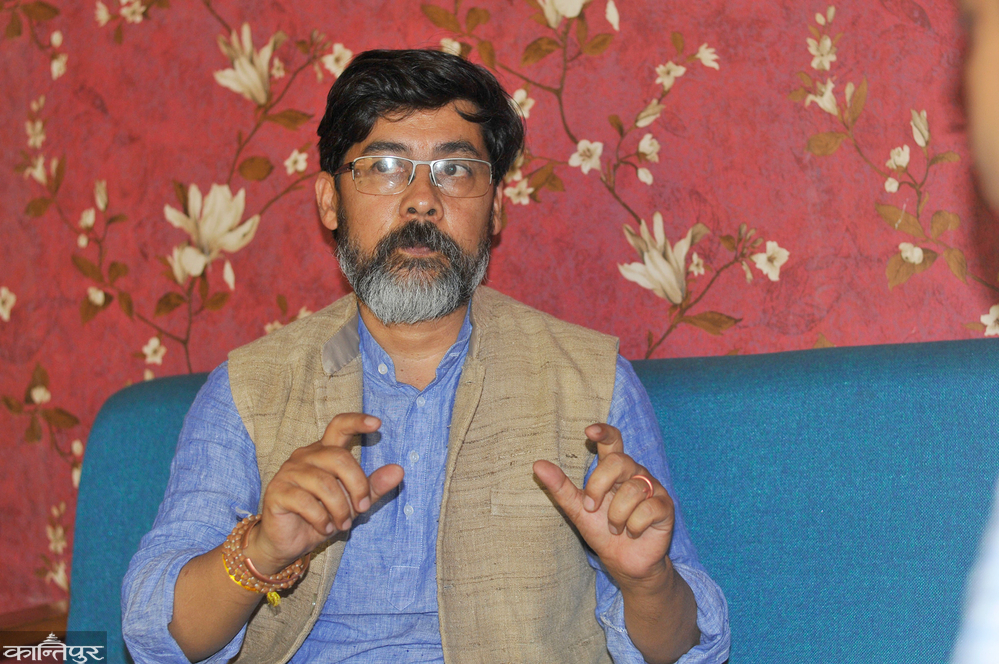
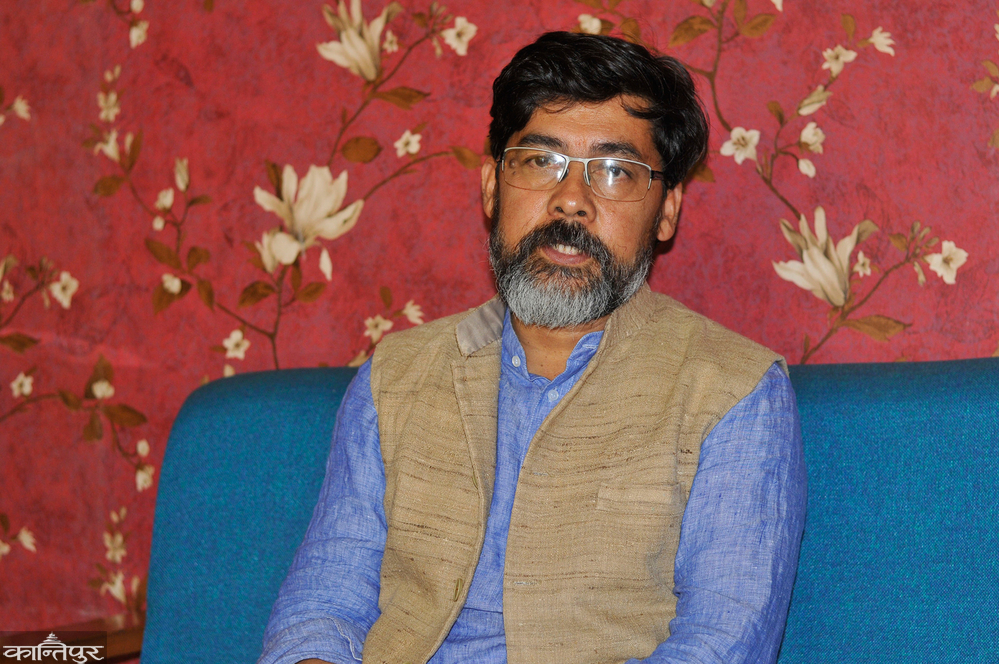
Due to the involvement of the world's powerful countries in all these wars, the international organizations have not been able to play their minimum role in favor of the citizens. In this context, Durga Khanal of Kantipur and Rajesh Mishra had a conversation with international affairs expert Chandradev Bhatt about recent major wars, changes in the world order due to wars and the impact on countries like Nepal:
Now the conflict of different countries of the world has risen to the level of war. Recently, there have been big wars between Iran and Israel, Russia and Ukraine. This is changing the world order and some people have even seen this as the beginning of the third world war, isn't it?
Currently, the conflicts seen in different places around the world are turning into wars. But the conflicts and wars seen in each region have their own characteristics. There is a kind of conflict between the US and China at the global level. America's relations with other countries are not smooth either. Israel and Iran have been at war for the past few days and now there is a truce. But it is not certain how long the ceasefire will last. Because the conflict between Iran and Israel or the Arab countries is historical. Historical conflicts cannot be resolved through simple diplomatic means. Many such exercises were done in the past. So you have to get to the root of it.
What are the main causes of historical conflict, religion, geography, economic conditions or social structure?
If we look at history, religion seems to be at the center of war. Another problem caused by religion is geography. The first conflict seems to be between the Jews and the Christians. Because the Jews did not accept the Christians. Jews are 'monotheists' meaning they believe in one religion and one God. The Roman Empire at that time believed in many gods. As a result, Jews were historically driven out of the world. But later in time there was a sort of compromise between the Jews and the Christians.
The conflict at the beginning was a bit dull. But later came another conflict between Jews, Christians and Islam. The conflict between the three was about what God is like. There was a conflict over whose god would rule. Interestingly, all three have 'Abrahamic' religion. The origin of Abrahamic religions is the same. How to explain the problem? How to understand? Is your God bigger or mine? Is your scripture bigger or my scripture bigger? It started with
That dispute led to a fight. The "Torah" of the Jews, the "Bible" of the Christians and the "Quran" of Islam have all three interpretations of their deities. The way of understanding is different. Although they have the same origin, their interpretation is different. All three religions have been fighting over the issue of God since the very beginning. That feud continues to this day.
A conflict of religion later turns into a conflict of land. Israel's 'Jerusalem' is considered as the 'Promised Land'. The Jews are the 'Chosen People'. There is a prolonged conflict between the 'Chosen Land' and the 'Chosen People'. The same form of conflict is seen now. In the early days there was conflict between Christians and Jews. Islam also came second. Then there was a conflict between the Arabs and Israel. Iran was a Persian civilization. Israel and the Jews have a different civilization. When Islam entered Iran then the trouble started.
After the introduction of Islam, it increased the conflict with Israel. Even within Islam, there is a problem between Shia and Sunni communities. Iran is Shia. And other Muslim countries are Sunni. Shias and Sunnis have different views on how to understand Muhammad and how to interpret the Qur'an. Shias consider Muhammad's son-in-law Ali as the successor. God is considered the representative of Allah. Sunnis consider Abu Bakr. There is also a problem. The Arab-Israeli conflict is also a conflict of civilizations. Understanding the Abrahamic God is also a problem.
In Abrahamic religions there is always a struggle between Gods. That conflict has not been resolved to this day. That is why Iran does not accept the existence of Israel today. Ayatollah Khomeini has said that Israel is a "cancerous tumor" and should be thrown out.
So this is a long-standing conflict. The conflict of religion later turns into a mob. Jerusalem, the "Promised Land" of the "Chosen People" is the birthplace of Jesus Christ for Christians. Abrahamic abode for Jews and Mohammed for Islam is said to have gone to heaven from there. That is why a long time was spent in the dispute about who will dominate that land. Therefore, the United Nations has put Jerusalem under "international administration".
Israel was born as a nation in 1948 after the fall of the Ottoman Empire. For a long time the Israelites were oppressed in Europe. In the early days, there was conflict between the Roman Empire and the Jews. Because of that conflict, many came to Europe from the 'Promised Land'. After coming to Europe, they had no place to live. That accommodation was guaranteed by the Walfour Declaration of 1917. As soon as the State of Israel was guaranteed, the scattered Jews began to move there. As the number of migrants increased, the two communities became at loggerheads. After Israel became a separate country in 1948, the first war broke out between the Arabs and Israel. Since 1948 many initiatives have been taken to solve that problem. But it did not pass, many times the war continued. is still ongoing.
Israel, a country formed in 1948, is constantly fighting many wars. But his power is increasing, his financial status is also good. Is this made possible by America's entry into Israel? Why and how is America entering Israel?
The main reason behind US entry is for strategic balance in West Asia. Israel is an important country for America's strategic balance. America's involvement and trustworthiness with Israel increased after Israel's unprecedented success in the Arab conflict in the 1967 war. Second, the Jewish lobby around the world, from America to the West, is very strong.
Jews come to the fore in the world's biggest business houses. That is why America has provided financial and technical support to Israel from the beginning. As oil is the main resource and the economic situation is strengthened, America's vision is increasing. After 1970 till today, oil has dominated the global political-economy of the world. As long as that dominance prevails, America's interests remain. The second is strategic balance and the third is religious reasons. Because the level of difference that existed between Jews and Christians is not there today. America is fighting a global war.
How will the big wars in the Middle East and other countries affect countries like Nepal?
What is happening in the Middle East has an impact on many countries in South Asia. Because the question of life is connected with it. A large part of Nepal's economy also comes from West Asia. Our economy depends on the economy there. If there is any impact, it will come to us. If there is a conflict and people have to leave, it will have a direct impact on Nepal. Similarly, the situation in countries like East Africa is also affected. About 80 percent of the total immigrant population of our country is there. So as soon as there is any instability, it affects us.
Now there is a 12-day war between Iran and Israel. America attacked Iran itself. But when Iran attacked the US military base in Qatar. Then why did the US take the lead in the ceasefire?
After Iran attacked Qatar, the Americans were also shocked. Another thing is that if that region really turns into a war, it will be a big blow to American interests. A few days ago, US President Donald Trump visited Qatar and took a big gift with him. The US is also somewhat dependent on that sector. The US is indirectly involved in the war between Russia and Ukraine. The 'trade war' between China and America is going on.
That is why there is a problem when opening a 'war front' in many places. Damage to Iran's nuclear facilities was a top priority for the US. But how much damage has not been confirmed. There is also information that Iran has already managed the weapons before the US attack. If Iran actually starts a war, it will also be a huge loss for the US. If Iran were to close the port of Hormuz, about 30 percent of the world's oil would pass through it. Its effect can be seen.
Where there is war, there is America, how and why is this happening?
Yes, this is interesting. America has been a super power for the last one and a half hundred years. Since 1876, no country has worn that crown of super power for so long. America is the only such country. No nation wants to see its influence diminished. Especially after 1945, America seems to have been involved in all the wars. During the Cold War there was a lot of 'proxy war'.
There is universal criticism of the work done by others on issues such as war. Rapid action, reactions and questions are raised. However, why do not international organizations speak even when the US goes to another country and drops a bomb?
Even to this day, international institutions, systems, global political or economic architects have been seen to favor those who founded them. The issue of human rights is also seen in the same way. As a result, global dissatisfaction has also arisen. Look at the issue of Gaza. Civilians have been killed there.
There has not been the kind of initiative that should be taken by international organizations and structures. There is no strong voice and lobbying against what is happening. Apart from rituals, sometimes the international system still works in favor of the big nation. That's why in the last few days, voices have been raised that this 'structure' should be changed. Voices are being raised to make the current 'structure' more democratic. Such has come from the Chinese and especially from the Global South. It has been seen in many places that international organizations only speak where there is an advantage and do not speak at other times.
Traditional war and modern war in terms of the use of weapons?
has now changed the form of traditional war. In the past, whoever had the largest number of soldiers won the war. In recent days, the number of soldiers has not affected much. Because, the soldiers do not appear to have gone into direct conflict. Technology played a major role in the later wars. Now the country which has the dominance in technology, even if the country is small in geography, it has come to win the war. In the present war, many countries merely 'tested' weapons for the future. India, Russia and China tested their technology through Pakistan. So tomorrow's war will be about modern weapons and drones rather than human fighting. He who has technology is powerful.
Why is the European Union, which has always been with America, inactive during the last war?
The European Union itself has weakened internally lately. There is also an economic recession. There are internal political problems. The Europeans who advocated for democracy and human rights in the past are now in a position where they have to look within themselves. Their economy has not grown as it should have. Another biggest, for a long time they depended on the US for security. However, when Europe needs to be protected or supported, America does not seem to be able to give the same level of commitment.
That is why there is a crack in the relationship between America and Europe in recent days. Europe has not been able to advance itself in technology as it should. He himself is in trouble for not being able to innovate. On the other hand, the Russia-Ukraine war is going on at the edge of Europe. That is why Europe has a challenge. As instability continued in West Asia, Europe also suffered the consequences. Europe has to face the refugee problem. Refugees from Syria, Libya, Lebanon or Iraq have reached Europe. It affected the internal politics of Europe. That is why their current priority is internal management.
What is another powerful country China doing while the recent wars are going on?
China is emerging economically. He does not appear to have directly intervened in world events. But he is giving the message that the world order cannot move forward in this situation. China has improved its relations with most countries in West Asia. It has a 25-year strategic partnership with Iran. Many countries have joined his 'Belt and Road Initiative' BRI project. His priority does not seem to be war. He advocated peace at the international level. China is positioning itself differently to fulfill its political and economic interests. He has also extended his ties to Southeast Asia and Africa.
International tensions are being moderated by small countries like Qatar. But China could not play any role in this matter?
China does not seem to play a major role in mediating political and diplomatic agreements at the international level. But he is playing his role through 'backdoor diplomacy'. America intervenes directly. But China is playing a role in minimizing the conflict through diplomatic means. Historically speaking, China does not interfere in the affairs of others. He does not encourage war. He talked about political stability. China believes in quiet diplomacy. He will also increase his role after becoming financially stronger tomorrow.
What is the impact of one stressful event happening globally, other than the economy?
Political, economic developments in the world and problems caused by technology affect everyone. Not only the 'Global Economic Order' but also the 'Global Social Order' are interconnected. In this case, the events that happen in any corner of the world affect us too. Our people are scattered all over the world to work, study and live. It will affect it. We are aiming to go from a least developed nation to a developing nation.
also has a big impact on that. Conflicts affect international development partnerships. Globalization was bringing a kind of economic opportunity. Now it is shrinking. New leadership in America has brought a different kind of impact on the economic partnership. We need strong multinational institutions. The United Nations must be strong. However, conflict has shown that multinational organizations will weaken and multi-power centers will become stronger. Multi-power centers do not benefit us that much. They only exercise their power. A small country like us, where there is a need for economic development. That is why multilateral institutions must be strong. Therefore, we should lobby for the establishment of multilateral organizations in international forums at the global level.
Trump's second term in the United States and where is his work style leading the world now?
What Trump had promised before coming to power, it does not seem to have progressed. There is great ambivalence and instability in his foreign policy. He said that he would not fight. But the war spread to West Asia. He announced that the Russia-Ukraine war would be stopped within a month. He also said to end the Israel-Gaza war. Both have not happened to this day. The way Iran is trying to make itself nuclear. It is the old policy of America to manage it. Yesterday, Trump somewhat weakened the US policy of promoting 'soft power'. World politics wanted some kind of stability. But he was unstable.
How should Nepal show its position in the international conflicts?
should be shown in favor of peace. We need to talk about that. In recent days, about 50 Nepalis have become victims of terrorism. Nepalis have been killed in Gaza, Iraq and Afghanistan. Nepal is becoming a victim of international Islamic terrorism. Nepal must speak for that. Last time a Nepali was killed in Pahalgam, India. There are 7/8 thousand Nepalis in Israel. We have a long relationship with Israel. And, interests are also connected. Nepali society is polarized in relation to Israel and Palestine. Where there is injustice, we must speak.
How is Nepal's diplomatic efforts regarding the safety of its citizens scattered around the world? Even Nepal could not know the general condition of Bipin Joshi, who went missing in the Gaza attack. How many other diplomatic efforts do you see Nepal making other than issuing a statement even when there are other problems? A
release is an immediate response to an event. Long term foreign policy can be defined by two words. One by hunger, the other by fear. Hunger is 'desire'. . What is the 'desire' of our foreign policy? Nepal should look at its national interests. How to defend the diaspora who are economically, socially, culturally or outside? And how to make progress? Likewise, fear. Where is the threat coming from? For example, even if there is a conflict in West Asia, it will affect our economy. A war or the creation of a new kind of technology or economy troubles us. We should be able to balance between hunger and fear.
Various conflicts have also been seen in South Asia. There is a permanent dispute between India and Pakistan. India-Bangladesh does not seem to be getting along. There are problems elsewhere. where are we
The conflict in this region is increasing. The kind of geopolitics that has developed in South Asia. Indo-Pacific policy is coming as the center of it. There is talk of replacing NATO with the Indo-Pacific Treaty Organization (IPTO). India-Pakistan conflict and its consequences. Similarly, behind the political changes in Bangladesh are the ups and downs in India-Bangladesh relations. Its impact is also falling elsewhere. It happened to us too. Everyone should work together for the peace of South Asia. But, that kind of environment is not visible.
After accepting and signing China's BRI framework, what kind of diplomatic impact has it had in Nepal?
It is the sovereign right of Nepal to enter into what kind of agreement with which country. Even though we did not sign the BRI agreement with China, there is still an 'economic engagement, political engagement' between China and Nepal. Other countries should not worry about Nepal's economic engagement with China, India or any other country. This is absolutely our topic. Any collaboration should be seen to see how it benefits us. What we are looking for is economic prosperity.
Now, how do you view the relationship with Nepal's southern neighbor? The
isn't that bad either. But not good either. We should have built the kind of trust that we could at the international level. We are missing it. We are not able to instill confidence in ourselves. In the absence of internal political instability or lack of a clear vision/position of the leadership, relations with neighbors should be enhanced. That doesn't seem to be the case.
Financial aid from the US and the European Union is decreasing. Can our two neighbors be the alternative?
of course. The kind of help that came from America or the West until yesterday. The latest political dimension has discouraged it. Cooperation has decreased. The alternative should be found in the neighborhood. We can increase some level of engagement with economically strong China and India. First, we have to look at how we can be financially strong, and secondly, where is the immediate financial benefit from?

