Keeping more staff than necessary inside the Singh Darbar, but not sending staff to the municipality directly connected to the people, has made service delivery difficult.
We use Google Cloud Translation Services. Google requires we provide the following disclaimer relating to use of this service:
This service may contain translations powered by Google. Google disclaims all warranties related to the translations, expressed or implied, including any warranties of accuracy, reliability, and any implied warranties of merchantability, fitness for a particular purpose, and noninfringement.
I entered politics by joining the student unit of the then Rashtriya Madhesh Samajwadi Party under the leadership of Saratsingh Bhandari. I was 13 at the time. From that age, I increased my activity in writing studies and various activities. He used to participate in various programs and rallies held by the party.
He performed his role and responsibility. During the Madhesh movement, rebellion, I was in various committees and actively performed my role.
In my childhood, during the Madhesh rebellion, during the clashes in Rupni and Maleth, I escaped from police bullets, I almost didn't die. During that time, he had to stay in police custody a few times. Because of being active in the movement, the party nominated me as a central member of the student body. While organizing the traders of my village Chinnamasta and working on their various problems, at the age of 16 he was appointed as secretary of the Chinnamasta market management committee. It made me more responsible.
In the 2074 local level election, I started an initiative for a ticket within the party to run for the ward president of Chinnamasta-3. I was 21 years old then. Being a man from a normal family with no political background, son of a farmer, belonging to a minority caste with a low income level, it was not easy to get a ticket. I continued every effort. I was also harassed mentally while taking the ticket.
The statement that I have only 24 votes in the ward from the caste I represent and that I can't even get that many votes, I was publicly teased. Finally, the party promoted me as the youngest ward president in the country at that time.
On the day of the nomination, the so-called political chiefs of the place gathered in hundreds of slogans and mocked my self-esteem, publicly shouting not to contest the elections and not to do politics. But I nominated. At that time my party had become Rashtriya Janata Party (RJP). Interghat got 444 votes from the then winner and became the closest rival by a narrow margin of 32 votes. But all the four ward members of the party who participated in the election with me won.
Being more responsible for the trust and faith shown in me by the local ward residents, I continued day and night to increase the political journey ahead, gladly accepting the defeat. During that time parents and family members actively supported my every political activity. After the election, the party made me joint secretary of the district committee. During that time, I continued to work with problems related to people's daily lives. I strongly strived for a solution. While connecting with the people, I did not realize that 2074 to 2079 had already arrived.
A few months before the 2079 election, a friend started encouraging you by suggesting that you should run for the mayor. I also started discussions on that topic in Toltol and Basti. I started collecting people's opinions. I felt that I wanted to see my behavior/preferences in the head of the municipality. After consulting the family, it was suggested to move forward. When I told the leader of my party that I would run for mayor, some laughed, some made fun of me, and some cut off the conversation saying it was childish. But some suggested to prepare.
Why was the ticket of the municipal chief more challenging for me because Prabhakar Yadav, who was the then head of the district coordination committee Saptari, who won from my party, was also a strong contender for the post of rural municipality chairman. He also said that there is no comparison between him and me. The continuous discussion of the party finally led to the decision to give me the ticket. He participated in the election competition with famous political figures and veterans. I was elected with 2895 votes. Apart from me, no one from my party could win the election. Which became more of a challenge for me.
During the first term of the local level elections, the village assembly could not be held for three years. He was not so comfortable in running the municipality by being elected alone by the party in a municipality that was mired in conflict. After assuming office on May 12, 2079, I gathered all the friends who were elected and proposed to rise above the party interests for the development and development of the municipality. Proceed with the practice accordingly.
After coming to the main leadership of the municipality as the head of the municipality, I have been given the opportunity to address and resolve various problems of the society in an executive role in the activities of development. But running the municipality is not that easy. Due to the obligation to include ceilings and piecemeal plans given to the wards during the budget distribution, there is no situation to make big plans with new thinking.
Since the majority is a minority, it is not at all challenging to face the bargaining of the people's representatives and to understand their feelings and move forward. Even today, the thinking of some people's representatives is of the same old mercury. According to the 21st century, I am engaged in the long-term development of the municipality by addressing those who are trying to move forward in the old way by having a piecemeal plan rather than suiting the era. On the one hand, it is difficult to maintain service delivery and good governance due to lack of staff, on the other hand, due to the lack of big plans, the problem is not being solved.
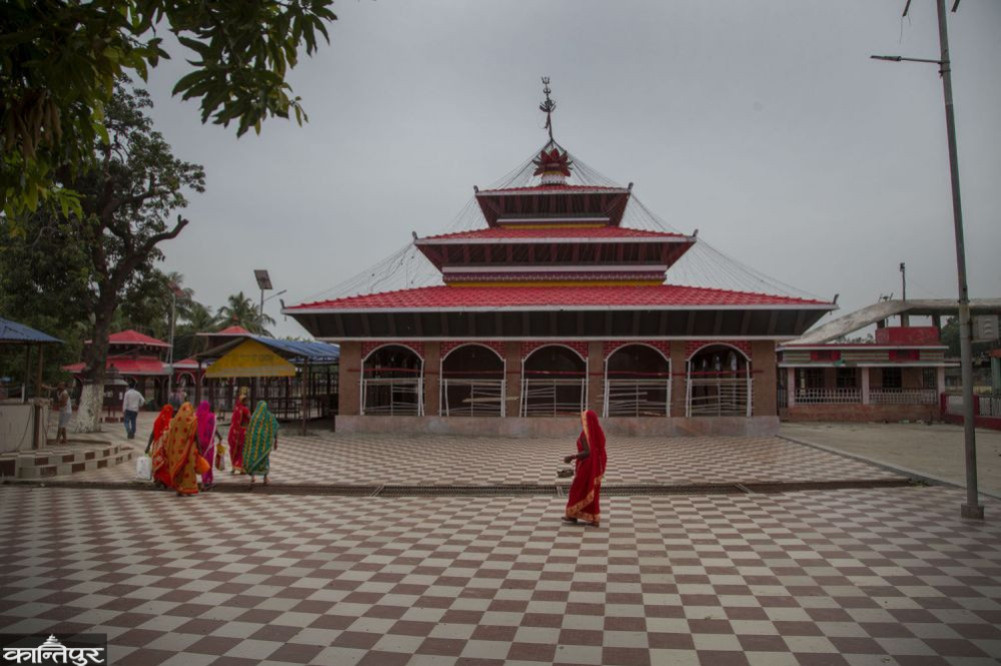
I am the chairman of a municipality on the Nepal-India border. There is a famous Shaktipeeth Chinnamasta Bhagwati historical temple in my city. A considerable number of people come here every day, even though it is for temple darshan from Nepal and India.
I have a challenge to advance the development activities while appreciating the problems of the citizens of my municipality and also the feelings of tourists coming from outside. Being a historical temple and receiving 25 to 30 million internal and external tourists every year, it is sad that the federal government is not paying attention to the relative development of this temple.
Chinnamasta Temple is not only a means of avoiding the shock of thousands of families in this area, it is also a place that has the potential to be developed as a major religious tourist spot in the country. Due to the connection with the Indian border, it is still not possible to bring Indian religious tourists here by the efforts of the local level alone. It is necessary to get the attention of the federal government.
In today's condition, the way to reach the famous Chinnamasta temple is not easy. The period for tendering the construction of the road from Rupni on Mahendra Highway to Nyor border with Chinnamasta temple through Rajviraj has also ended. However, the work of this road has not been completed. Because of this, devotees are forced to travel in dust and mud. We have the bitter experience that many people do not come to Chinhmasta because of the rough roads. This is a road tendered by the federal government.
We can't work on it because of legal hurdles, we don't even have a budget of that magnitude. But I communicated with the road office for the timely construction of the road leading to Chinnamasta. Under my leadership, the people's representatives of the municipality staged a dharna at the road office in Lahan.
I went to the responsible officer in the road department and asked. I even went to the chief executive of the country, the Prime Minister, and requested that the road be built with due diligence. But the hand got zero. The roads were not built, instead the existing roads were dug up and made shabby. Traffic is running smoothly and even walking has become difficult. If the local municipality was financially strong, there would be no need to face the center.
federalism has come to the country but still federalism suitable for our soil has not come. Even today, since the Civil Servant Act has not been enacted and the budgetary resources have not been allocated according to the concept of financial federalism, even the priority schemes identified as financial shortages cannot be implemented. The municipal budget is limited. We have no internal resources. Our municipality is a rural area and an area with a majority of farmers. But even if we want to, due to lack of budget, we are not able to completely solve the problems of irrigation and fertilizer for the farmers. My experience is that the federal government has turned a blind eye to this.
As the federal government failed to take any steps to modernize and mechanize agriculture, especially in the agriculture-dominated municipalities, farmers in rural areas are leaving agriculture and moving to India and the Gulf countries for employment. All three levels of government should pay serious attention to this.
Keeping more staff than necessary within Singha Durbar, but not sending staff to the local municipality, which is directly connected to the service delivery of the people, has made the service delivery difficult.
The working unit is the local government, but what would be so ridiculous and shameful that the federal and state governments also run a scheme of 25-50 thousand by calling it a conditional grant program? Although there is a provision for coordination and cooperation between the three levels of government in every matter in the constitution, there is no mechanism to determine which government has brought what policy and program or who is doing what program. Even though the
problem remains a problem, despite the limited resources, I have moved forward by formulating a plan to work according to people's expectations based on priorities. I am mainly promoting education, health, agriculture, infrastructure and tourism. I am dedicated to how the service delivery can be made according to the public expectations by making maximum use of the limited resources available. But there are many obstacles to accomplish all that is thought. This problem is not only for me but for the whole country. But since I am young, it is natural that I have higher expectations than others. I recognize that there is a great opportunity to move forward by addressing these expectations on a priority basis.