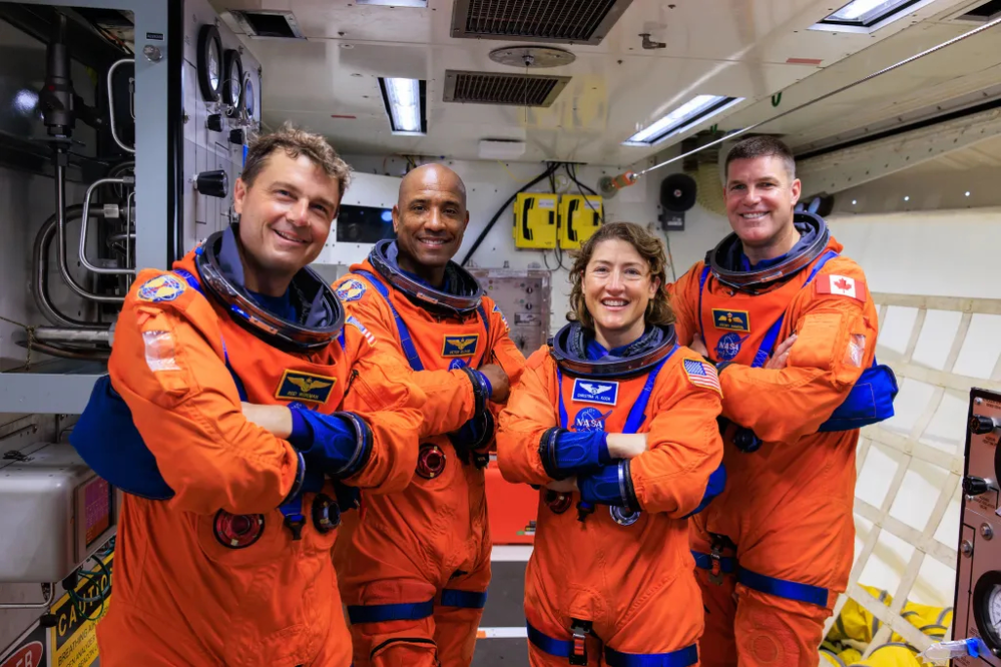
The mission, dubbed Artemis II, will last about 10 days. The four astronauts will orbit the moon at an altitude of 7,400 km. They will circle the moon at a distance of about 8.9 million km before returning to Earth.
We use Google Cloud Translation Services. Google requires we provide the following disclaimer relating to use of this service:
This service may contain translations powered by Google. Google disclaims all warranties related to the translations, expressed or implied, including any warranties of accuracy, reliability, and any implied warranties of merchantability, fitness for a particular purpose, and noninfringement.
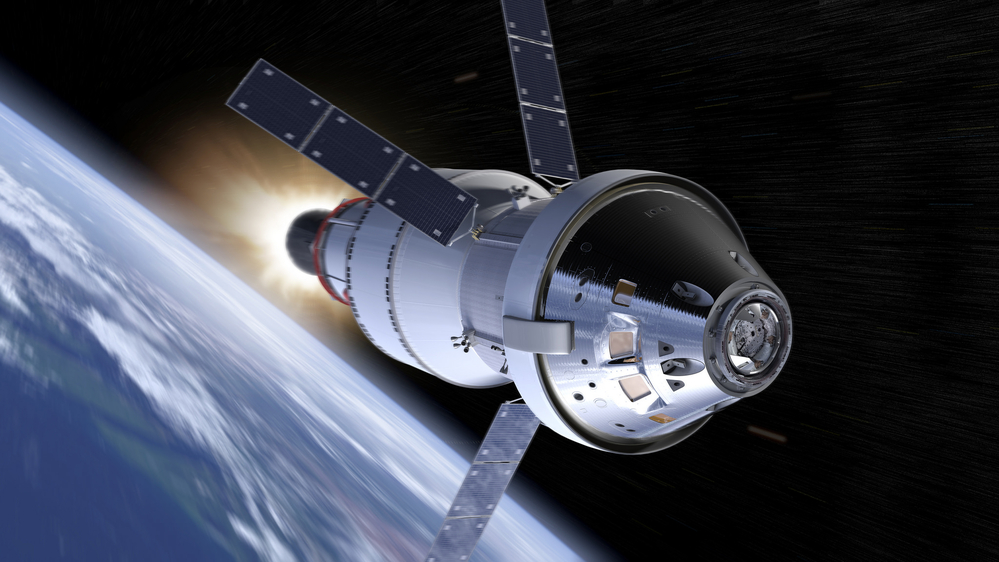
Nearly 54 years after humans set foot on the moon, humans are set to set off on a journey to the moon again. This will be the first time since the Apollo 17 mission in 1972 that humans will set out into deep space, far beyond Earth's low orbit. A rocket carrying four passengers is scheduled to be launched from the Kennedy Space Center in Florida at 4 am (Nepalese time) on Thursday, in collaboration with the US space agency NASA. The mission, named Artemis II, will last for about 10 days. It will include the first female, black and non-American (Canadian) astronauts. They will orbit 7,400 km above the moon's surface. They will travel around the moon for about 8.9 million km before returning to Earth. This time, the mission is not just for exploration, but also with the goal of establishing a long-term human presence on the moon. It takes about 3 to 4 days to reach the moon from Earth. The mission, which has been postponed for a month due to weather and other technical reasons, will not land passengers on the lunar surface. NASA's powerful Space Launch System (SLS) rocket has been used in this mission. It will carry the Orion spacecraft to space. Orion is about to travel the farthest distance in human history. During the mission, the passengers will test various new technologies, equipment and systems, as well as perform manual control exercises and various evaluations of the spacecraft's performance, NASA said. Artemis 2's Orion spacecraft. It will take astronauts around the moon and return them to Earth. Photo: NASA
Upon returning to Earth, the spacecraft will re-enter the Earth's atmosphere at a speed of about 40,000 kilometers per hour. At that time, the spacecraft's heat shield will be tested and the feasibility of reusing it will be assessed. NASA officials have described the mission as an important bridge between past exploration and future permanent settlement.
NASA Administrator Bill Nelson has called it the beginning of a new era of exploration, emphasizing international cooperation and private sector participation. The Apollo missions of the 1960s and 70s focused mainly on short-term lunar landings and geopolitical competition, while the Artemis program is oriented towards building long-term infrastructure. It involves the US, the Canadian and European Space Agencies. SpaceX and Blue Origin are partners from the private sector.
The importance of this mission is not limited to reaching and returning. The moon is envisioned as a base for scientists to Mars or beyond. Long-term settlement, resource utilization, and autonomous technologies will be tested there. The Artemis program is also expected to open up new possibilities in the space economy. It includes plans ranging from mining the moon's natural resources to manufacturing in space. However, its cost is high, according to NASA, the total cost of the entire Artemis mission is estimated to exceed $90 billion.
Of NASA's 17 Apollo missions from 1969 to 1972, six of them successfully landed 12 astronauts on the moon. However, no one thought of establishing long-term structures or making human habitation possible at that time. The current new plan has brought the race to dominate space back into the mainstream in the broader geopolitical landscape. China has also moved forward with its own lunar mission and base construction plans. China has put forward a plan to land its own manned spacecraft on the lunar surface by 2030 and build a long-term base camp by 2035. In this context, NASA's latest proposal to establish a joint research center with international partners has come up.
If all goes according to plan in the Artemis II mission, astronauts will complete a lunar orbit and land in the Pacific Ocean on the tenth day of the journey. After that, the next important step will be Artemis 3. It aims to land humans on the lunar surface within this decade, i.e. by 2030.
-With the help of the agency,
Minus a second home on Mars!