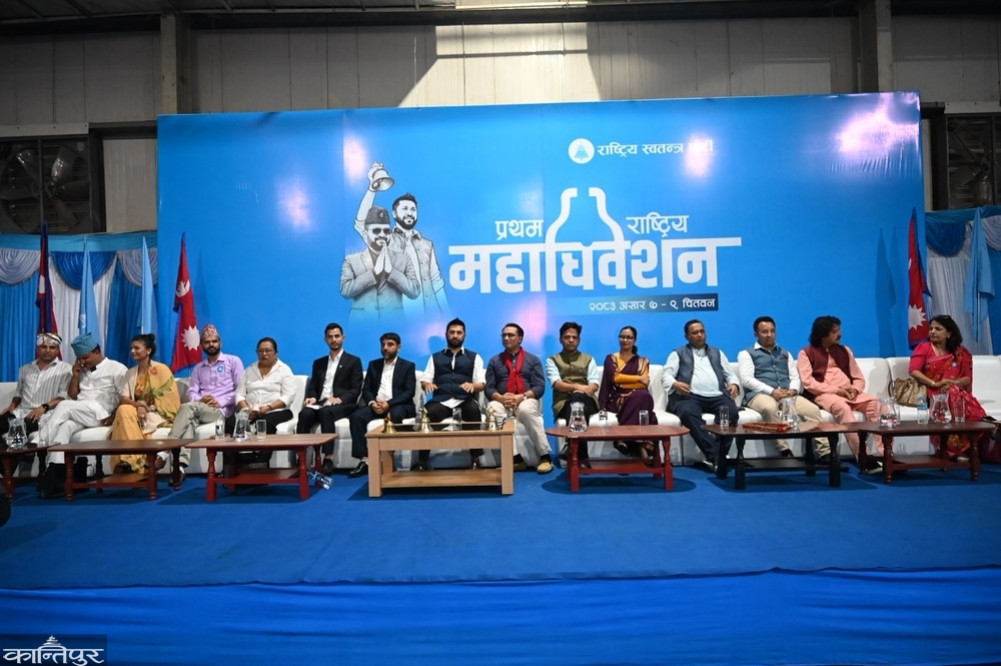
Total 158-member Central Committee, total number of office bearers 19, 11 office bearers by nomination
We use Google Cloud Translation Services. Google requires we provide the following disclaimer relating to use of this service:
This service may contain translations powered by Google. Google disclaims all warranties related to the translations, expressed or implied, including any warranties of accuracy, reliability, and any implied warranties of merchantability, fitness for a particular purpose, and noninfringement.
Although Ravi Lamichhane was elected unopposed as the President of the Rashtriya Swayamsevak Sangh (RSS), the election of other office bearers and members has not yet taken place.
According to the new statute, the size of the central working committee of the RSSS has been increased from 121 to 158 members. The number of office bearers has been increased from 11 to 19. According to the new statute, seven office bearers, including the president, will be elected through elections and 11 will be nominated.
According to the new statute, the central working committee will have a mixed structure of directly elected, inclusive, provincial representation and members nominated by the president. The election of 100 people, including the directly elected president, will be held at the national general convention. Since the president has been elected unopposed, now 99 central members will be elected. The election of the remaining party office bearers will be held in the second phase.
Out of the 99 central members elected in the first phase, 5 will be elected from the provinces, 35 will be elected from the provinces. Central members elected from the provinces will not be able to claim office-bearers. The remaining 64 will be elected openly and from representatives from all over the country. Only these 64 central members will be eligible to be candidates for office-bearers in the second phase of the election.
The Rashtriya Swayamsevak Sangh (RSS) has made arrangements for 19 office-bearers including the president, senior leader, 3 vice presidents, 2 general secretaries, 5 joint general secretaries, 1 spokesperson, 3 joint spokespersons, 1 treasurer and 2 joint treasurers. Of these office-bearers, seven will be elected including the president, 2 vice presidents, 1 general secretary and 3 joint general secretaries. Since the president is unopposed, the election of 6 office-bearers will now be held in the second phase.
The remaining 11 will be nominated by the president after approval by the central committee. One of the two vice presidents elected as office-bearers and one of the three joint general secretaries has been reserved for women.
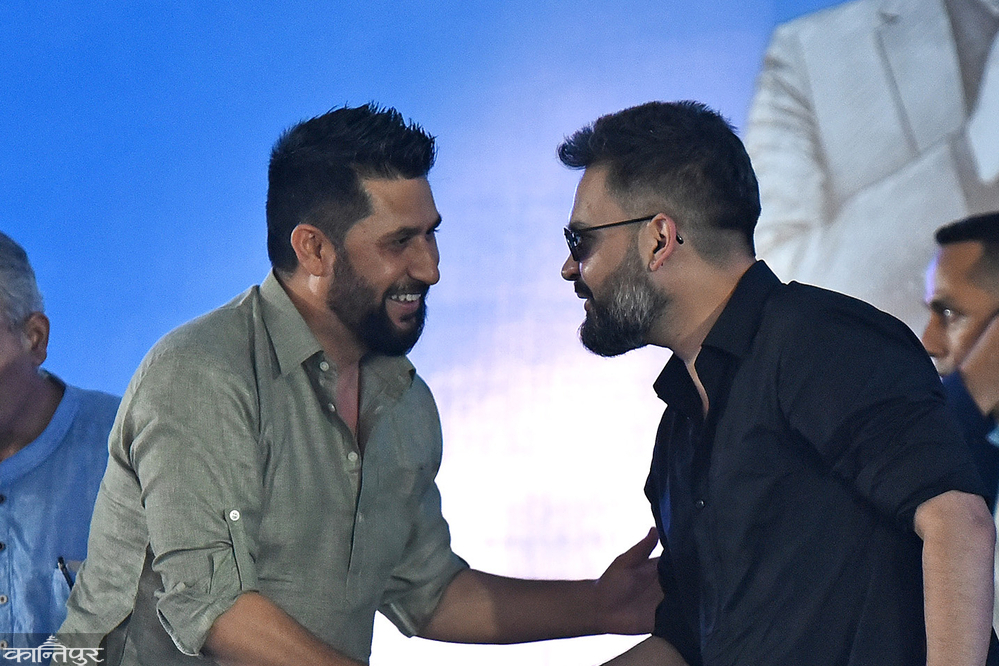
The president will be able to nominate 51 people to the central committee. In addition, there is a provision for the provincial presidents of all seven provinces to be ex-officio members. There is a provision for candidates for the post of president and candidates who receive at least 10 percent of the total votes to automatically become central members. When proposed, the provision for senior leaders was not included in the statute. Prime Minister Balendra Shah has been the senior leader after the president and has been announced to continue in the same position. However, after representatives raised their voices saying that there is no provision for senior positions in the statute, the provision for the senior leader has been added from the closed session hall. The Rashtriya Swayamsevak Sangh (RSS) has made the central working committee inclusive. Out of the 64 central members to be elected at the national level, 32 will be elected from the open and 32 from the inclusive group.
Out of the 32 seats on the inclusive side, 10 will be elected from Khas Arya, 9 from Adivasi Janajati, 5 from Madhesi, 5 from Dalit, 2 from Tharu and 1 from Muslim community. Within this arrangement, representation of one backward area and one person with disability has been ensured. There will be 55 women in the total number of members of the Central Working Committee, which is 33.33 percent of the total number of members.
It is mentioned that at least 33 percent women and the same percentage of youth will be ensured at all levels of the party. However, the statute is silent on the issue of representation of Gen-G. Earlier, there was a provision that 50 youths would be mandatory in the total central members of the party. Prohibition of familyism and nepotism The most drastic change in ideology is the new provision to legally prohibit 'familyism' and nepotism.
It has been provided that more than one member of the same family cannot be appointed, nominated or elected to any committee, department, commission or mechanism of the party at the same level. The statute has made a provision that the family of a member of the party's central body and provincial body cannot be recommended or nominated for appointment to any party body or any state body on behalf of the party.
The statute itself has clarified the relationship within the family. It states, 'Family means husband, wife, father, mother, stepfather, stepmother, son, daughter, elder brother, elder sister, younger sister, grandson, granddaughter, grandfather, grandmother, great-grandfather, great-grandmother, uncle, aunt, uncle, uncle, brother-in-law, brother-in-law, sister-in-law, and their spouses or wives.'
The provision that any elected public representative or person holding an executive position of the party can be recalled before the end of his term if he does not fulfill his official responsibilities has also been legally arranged. There has been an arrangement that no one person can serve more than two terms as the party president, and there will be five levels of central, four levels of provincial, and eight levels of local levels