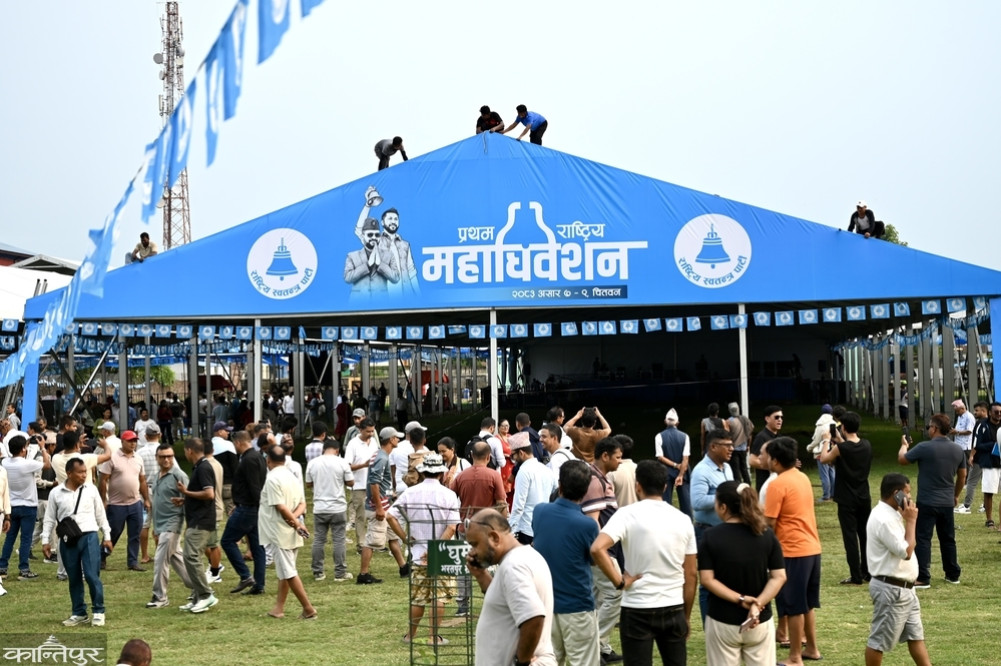
With an unexpected rise, historic public opinion, a short period of power, and a series of crises, the four-year journey of the Rashtriya Swayamsevak Sangh (RSS) has become one of the most ups and downs in Nepali politics. The biggest test for the RSS, which is on the verge of its first general convention, is to institutionalize its claim to 'alternative politics'.
We use Google Cloud Translation Services. Google requires we provide the following disclaimer relating to use of this service:
This service may contain translations powered by Google. Google disclaims all warranties related to the translations, expressed or implied, including any warranties of accuracy, reliability, and any implied warranties of merchantability, fitness for a particular purpose, and noninfringement.
When announcing the Rashtriya Swayamsevak Sangh (RSS) on 6 Ashad 2079, leaving the television program 'Sidha Kura', Ravi Lamichhane had said, 'We will ring the bell in the minds of the corrupt.' The party led by Lamichhane, who announced the start of the journey of good governance before going with the proposed name and election symbol, not only received unexpected votes within 5 months, but also participated in the Pushpa Kamal Dahal-led government formed immediately after the election. On the day of his swearing-in on 11 Paush 2079, Prachanda made him Deputy Prime Minister and Home Minister, and MPs Shishir Khanal, Dol Prasad Aryal and Toshima Karki also became ministers.
However, after being dragged into the citizenship controversy, President Lamichhane was relieved of his posts as Deputy Prime Minister and Home Minister, MP and party president within a month. Immediately after stepping down, he announced that he would 'take the party forward by becoming the Prime Minister, not the Deputy Prime Minister and Home Minister, in the upcoming elections.' Lamichhane was elected again with a huge margin in the by-election held in Chitwan-2 and entered parliament. On 23 Falgun 2080, he became the Deputy Prime Minister and Home Minister for the second time.
From then on, voices began to be raised in parliament for an investigation into Lamichhane's involvement in cooperative fraud. A parliamentary investigation committee was formed under the leadership of UML leader Surya Bahadur Thapa, including the Rashtriya Swayamsevak Sangh (RSS). Four months later, the Prachanda-led government lost the support of the UML, and a Congress-UML coalition government was formed. The RSSS did not only join the opposition, Lamichhane was arrested from the party office on 2 Kartik 2081. Starting from Kaski, cooperative fraud cases were registered against him in Kathmandu, Chitwan and Rupandehi.
The then government also added money laundering cases to Lamichhane along with organized crime. After President Lamichhane himself went to prison, there was silence within the RSSS, and for a long time Lamichhane directed the party from prison. In his absence, the then Vice President Dol Prasad Aryal led the party. ‘Whenever there has been a crisis in the party, the Rashtriya Swayamsevak Sangh (RSS) has emerged stronger,’ says RSS General Secretary Kavindra Burlakoti.
The situation changed after the Gen-G movement organized by the youth on 23 Bhadra against the rampant corruption and injustice in the country. On 24 Bhadra, Lamichhane was released from prison citing security reasons, but after criticism began, he went back to prison a few days later. Later, after the election government was formed under the leadership of Sushila Karki, on 3 Poush 2082, the High Court ordered Lamichhane to be released on bail equal to the amount.
Lamichhane had initiated discussions through leaders to make the RSS a center of alternative power instead of being in prison. Initially, a committee led by Pukar Bam, later a high-level dialogue committee led by Swarnim Wagle, was formed and dialogue began with Balendra Shah, Kulman Ghising, and others.
Although the RSVP initially proposed making Ghising the prime ministerial candidate, the matter was stuck when he was not ready. After Lamichhane was released from prison, he took the initiative and started a 'one-to-one' dialogue with the then mayor of Kathmandu Metropolitan City, Balendra Shah. Finally, on 13 Poush 2082, a seven-point agreement was reached with Balendra leading the government and Ravi leading the party.
Although attempts were made to bring Kulman Ghising into the RSVP, they were unsuccessful. When Ravi and Balen united, the RSVP won almost a two-thirds majority with 183 seats in the House of Representatives elections held on 21 Falgun. Finally, as Ravi said on 22 Magh 2079, the RSVP formed the government, with Balendra Shah becoming the prime minister as agreed upon.
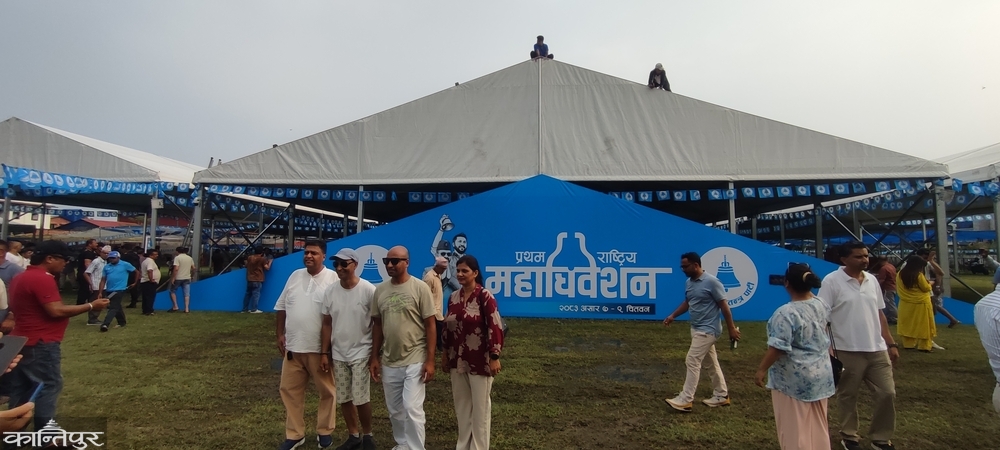
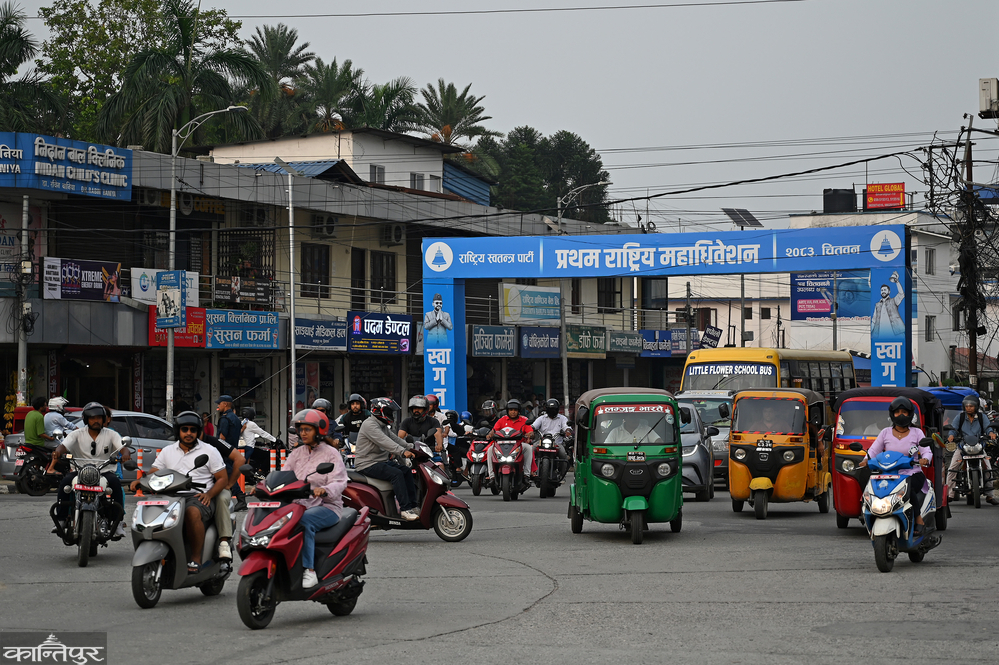
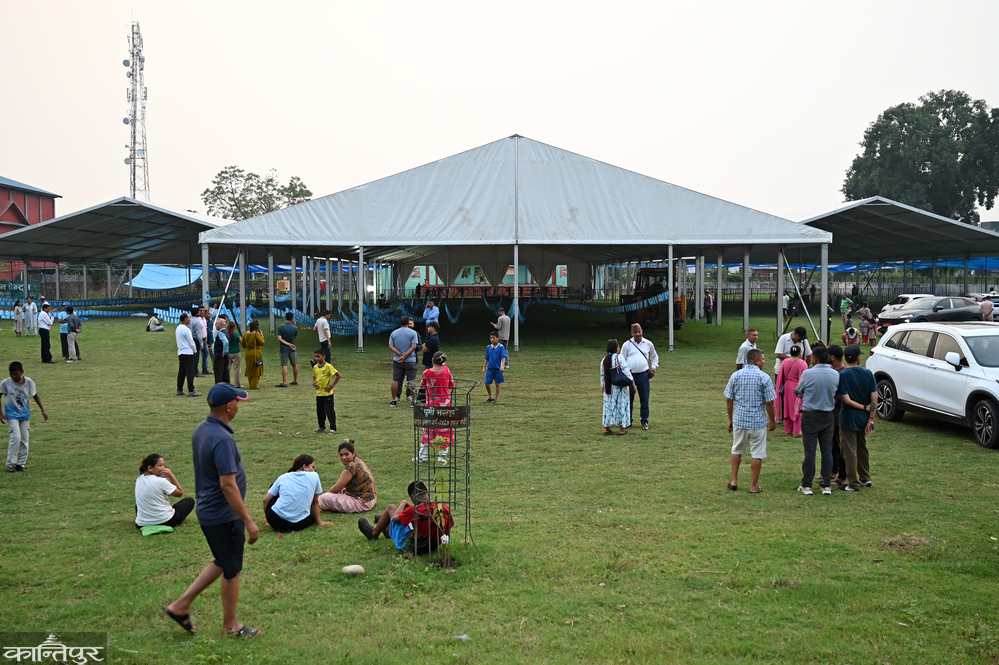
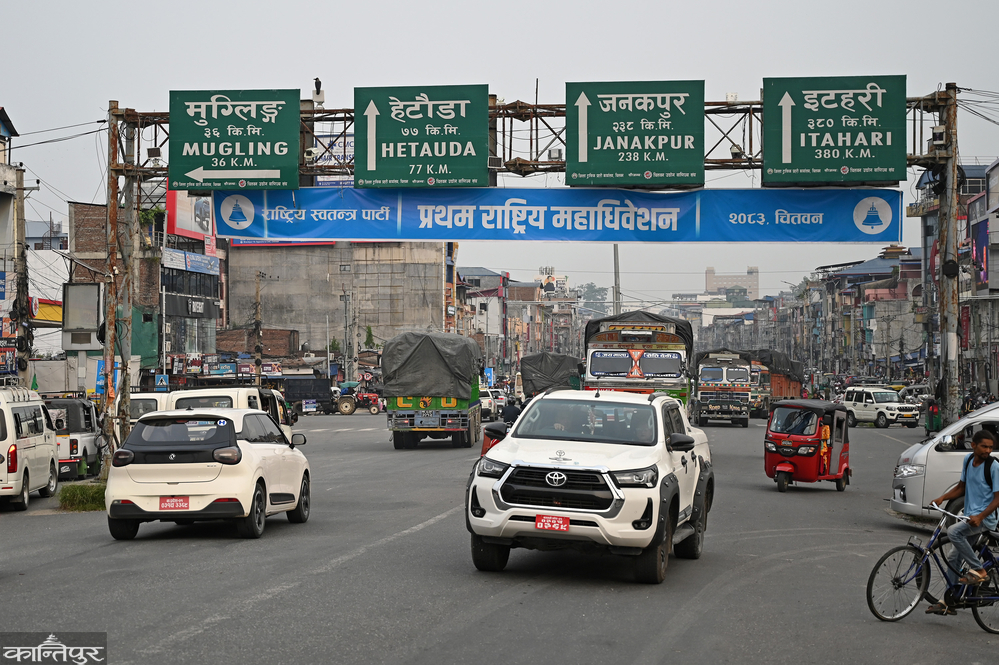
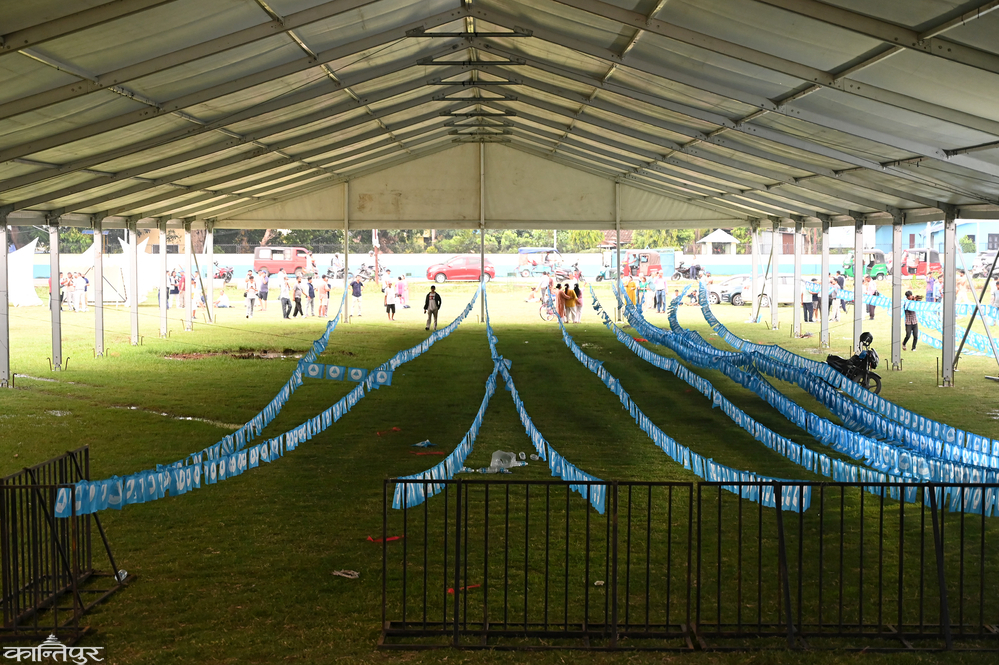
The Rashtriya Swayamsevak Sangh (RSS) party, which became a mainstream party after the Rabi-Balen unity, is holding its first general convention in Bharatpur, Chitwan, from Sunday to select its policy and leadership. ‘Chitwan is the place where the party was born as well as its place of origin,’ says Rashtriya Swayamsevak Sangh (RSS) general secretary Bhupdev Shah, ‘That is why we are growing from here to give the message of unity to the party.’ The Rashtriya Swayamsevak Sangh (RSS) held its first assembly in Chitwan after the party was registered with the Election Commission.
This is how the Rashtriya Swayamsevak Sangh (RSS) was formed
Rabi Lamichhane, who is gaining popularity through television programs, had started a campaign to build a 15-bed hospital in Raskot, Kalikot in 2074 BS. During the same campaign, which was launched through the Rabi Lamichhane Foundation on the proposal of Dr. Mukul Dhakal, they began regular discussions about the political situation in the country and the need for a new political force. Although they had reached the conclusion that they should enter politics, Lamichhane had not immediately decided to start a party.
After the then Prime Minister KP Sharma Oli dissolved the House of Representatives in 2077 Poush and the subsequent political upheavals further weakened public confidence in the parties. While the parliament remained blocked from Bhadra 2078 to Jestha 2079, Balendra Shah in Kathmandu, Harkaraj Rai in Dharan, and Gopal Hamal in Dhangadhi won as independent candidates in the local elections of 2079 Baisakh. This sent a message that public opinion could be organized outside the established parties.
‘There was talk of forming a party since the construction of Raskot Hospital, but Ravi Dai used to say that the time had not yet come,’ says Dr. Dhakal, the founding general secretary of the Rashtriya Swatantra Party. ‘Balen Shah’s victory gave him the confidence to start a new party, and then we came to the conclusion that we should move forward.’
After the local elections, the youth who were running independent political campaigns across the country were also trying to build a common force for the House of Representatives elections. A proposal was made at a similar gathering held at Indreni Banquet in New Baneshwor to name the ‘National Independent Party’.
The gathering was attended by everyone from the group led by Ramesh Kharel to those running the Lauro campaign. They were debating whether they should go ahead with the elections scheduled for Mangsir 2079 unitedly and the votes received by independent candidates at the local level should be added to the House of Representatives. According to Dhakal, he told Ravi Lamichhane the same name, and the Election Commission checked whether it was registered or not. By then, it was revealed that no one else had registered this name, so an agreement was reached on that name.
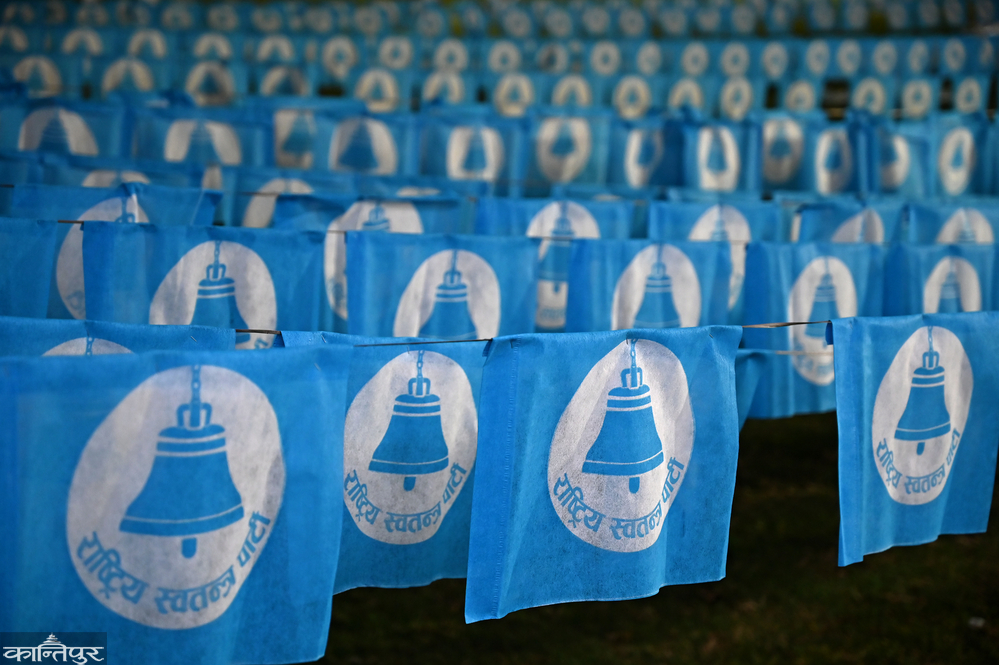
After the name was finalized, the search for an election symbol began. Towards the end of Jestha 2079, leaders including Lamichhane, Dhakal, Bipin Acharya, DP Aryal, Khusbu Sarkar Shrestha discussed proposals including ‘Mike holding fist’, ‘Mandala’, ‘Whistle’ and ‘Dunga’ in a WhatsApp group called ‘Election Announcement’. Finally, after Dhakal proposed ‘Ghanti’, Lamichhane expressed his support by saying ‘Ghanti is correct’.
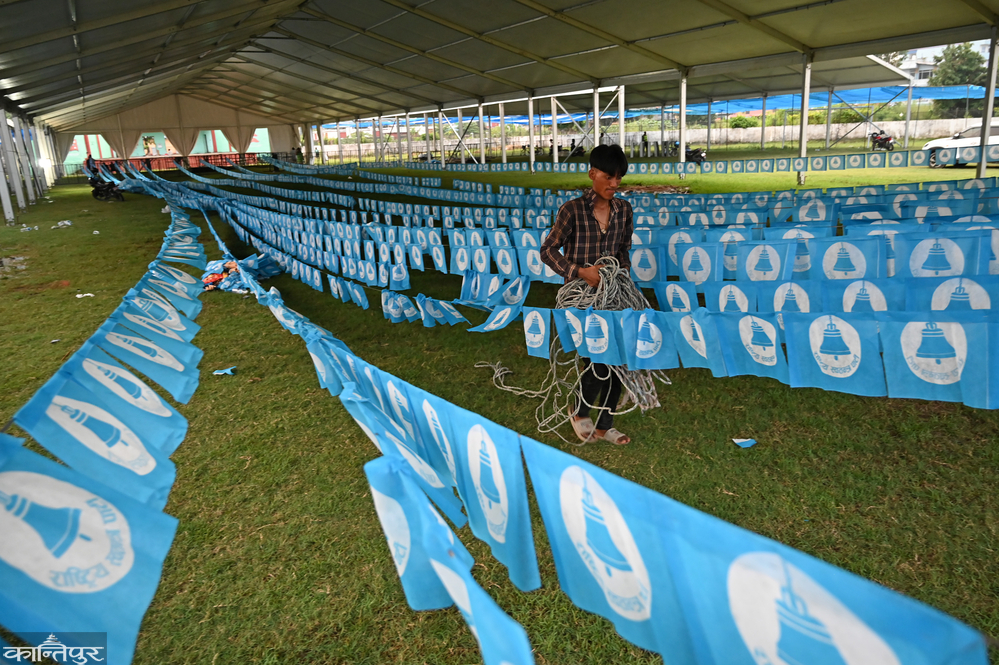
According to the details of the conversation that took place at that time, obtained by Kantipur, Dhakal wrote about how the bell election symbol came about, ‘The idea of the bell symbol came after Bipin Acharya repeatedly proposed the whistle election symbol, the traditional form of the whistle is the bell.’ A photo sent there also reads, ‘Now the bell will ring across the country.’
Dhakal also mentioned in the WhatsApp group that he had visited the Election Commission at least three times to look at the party election symbols and was surprised to find that no one had taken the bell election symbol. Nikita Poudel Lamichhane was also a participant in the discussions from naming the party to selecting the election symbol. After the party name and election symbol were finalized, Ravi Lamichhane wrote about what kind of candidate a candidate becomes, ‘To become a candidate, you need honesty in your chest, vision in your mind and 1 rupee in your pocket.’
The Rashtriya Swayamsevak Sangh (RSS) registered with the Election Commission on 17 Ashad 2079 with the election symbol of a bell, rang the bell in the base area of traditional parties in the elections held within four months of its establishment. When President Ravi Lamichhane and Hari Dhakal won a landslide victory in Chitwan, the party won 21 seats even through proportional representation.
‘At that time, the people were fed up with the old parties, and the RSS decided to enter parliament by taking the votes of discontent,’ says young political analyst Naveen Tiwari, ‘but since it came to power in the beginning, questions were raised both inside and outside the parliament.’
Its commitment to raising a strong voice against corruption, creating pressure in favor of good governance, and keeping people’s livelihood issues at the center in the elections had raised great expectations among the general voters. In the beginning, the RSS experienced the role of both the government and the opposition. The Rashtriya Swayamsevak Sangh (RSS) party, which entered the opposition in a short time due to the controversy over Speaker Lamichhane, tried to create pressure on the government on issues of corruption, good governance, public service delivery and political accountability. After reaching the opposition bench, the RSS party lawmakers raised their voices on issues such as the collection of money from the airport in the name of visit visas.
RSS party founding leader and Law Minister Sobita Gautam claims that the people gave an even bigger mandate for the second time based on the party's activism in the first parliament. She says that the RSS party lawmakers who entered the parliament for the first time have established themselves as an alternative force by playing an active role in corruption control, good governance, transparency and lawmaking.
‘We were first-time MPs, but we were effective in issues ranging from law-making to good governance,’ Gautam told Kantipur. ‘The main reason why the party has now received a large mandate is the people’s trust in the work done in the parliament during its first term.’ She said that the RSVP has also brought the debate on generational change into the mainstream in politics. ‘I myself was elected MP at the age of 26. The RSVP challenged the idea of becoming a leader or MP only after reaching adulthood,’ she said. ‘The RSVP has given a message from the parliament that the presence of youth should not only be in election slogans, but also in policy-making and state administration.’ Currently, the RSVP has become a party with organizations in all 77 districts, every municipality and ward with more than five lakh active members.
A link connecting those involved in alternative politics
When the RSVP was established, Dr. Dhakal, who collaborated with Lamichhane in the Raskot Hospital construction campaign, joined as a spokesperson. Similarly, Aryal, Burlakoti and others who collaborated with Lamichhane on television were also in the founding team.
When the party was registered with the Election Commission, Deepak Raj Bohora, Bipin Kumar Acharya, Maheshwor Ghimire, Basumaya Tamang, Upendra Pandey, Ishra Mulla Miya, Ganesh Parajuli, Sobita Gautam, Kusum Maharjan, Bishnukumar Shrestha, Ramkrishna Bhattarai, Dr. Prabhat Adhikari, Geeta Regmi, Dr. Rakesh Yadav, Pramila Kuluzu, Rabina Ghimire and Eliza Gurung were included as members. At that time, apart from Lamichhane, there were not many nationally known faces in the party.
But when it came to the elections, Lamichhane put forward candidates from different professions and backgrounds, including Shishir Khanal, Indira Rana Magar, Toshima Karki, Birajbhakta Shrestha, Sumana Shrestha, Pukar Bam, Hari Dhakal and others. This group also played an important role in establishing the Rashtriya Swayamsevak Sangh (RSS) as a new generation political force.
Four years later, the RSS has now joined the group of the then mayor of Kathmandu Metropolitan City, Balendra Shah, along with the Bibeksheel Nepali Dal, which has been running an alternative political campaign for a decade and a half. With the Rabi-Balen understanding reached before the 21 Falgun elections, Bhupdev Shah, Sunil Lamsal, Sasmit Pokharel, Khadakraj Poudel, and Khagendra Sunar have joined the RSS. Before this understanding, the RSS had merged with the Bibeksheel Sajha Party, which had been presenting itself as an alternative force, on 14 Mangsir 2082.
After the dissolution of the first Constituent Assembly, Bibeksheel, which started with the campaign "We took full wages, now give us a constitution", decided to merge with the RSS after 13 years when Samiksha Baskota was the president and Ranju Darshana was the general secretary. With this integration, a team including Vice President Prakash Chandra Pariyar, who was also the coordinator of the then negotiation committee, and Spokesperson Ashutosh Pradhan entered the RSS. Later, after the merger with Balendra, Bibeksheel leader Ramesh Paudyal, who was also a former provincial MP, joined the Rashtriya Swayamsevak Sangh (RSS). Milan Pandey is now the education department coordinator in the party.
KP Khanal, Bablu Gupta, Manish Gupta, Purushottam Yadav, Pradeep Gyawali, and others, who emerged as Gen-G leaders after the Gen-G movement on 23 Bhadra, have also been included in the RSSW. Sudhan Gurung, who led the dialogue held at Jangi Adda after the Gen-G movement, was himself elected as an MP from the RSSW and is the Home Minister in the government. Gurung had also tried to include Kulman Ghising, who was running the Ujjaya Nepal campaign, in the RSSW. For that, he had taken him to the place where Ravi-Balen was holding discussions, and an agreement was reached between the three leaders. But it did not last long. When the RSSW got unexpected votes, Kulman himself was defeated in the election by the Ujjaya Nepal Party.
Now, the group of Laxman Tharu and Geeta Chaudhary, who are associated with the Tharuhat movement, has also merged with the Rashtriya Swayamsevak Sangh (RSS). Chaudhary is now the Minister of Agriculture. ‘When the RSSS was started, President Lamichhane had somehow created it, but so far this party has become a link connecting alternative political groups and individuals who are scattered in various parts,’ says party central member Ramesh Paudyal, ‘Now it has become a platform to answer everyone.’
Keshav Dahal, an analyst who was also active in alternative politics in the past, says that if the RSSSS wants to make itself a center of alternative power, it should clarify what is new in its ideas, behavior, social and political agenda. ‘The general convention should clarify what kind of leadership will implement that agenda, what kind of party document it is, what kind of inter-party democracy should be,’ he said, ‘Alternative power means not only building a strong, solid and large party but also innovation in ideas, so the challenge for the RSVP is to truly develop a new culture as the party grows.’
RSVP giving ideological clarity after four years
Critics have been accusing the RSVP of not having clear principles and ideas since its inception. Chairman Lamichhane also kept asking the opposite question during the debate on ideas, ‘Do we need ideas to catch thieves? Do we need ideas to stop corruption and black marketing, control price increases, and solve problems by improving infrastructure quality?’
However, there was a debate from the beginning about what the party’s ideological line would be among those who joined the party before the 2079 elections and entered the party after winning the elections. At that time, Shishir Khanal, an elected MP from Kathmandu, used to say that the party's ideological line was 'center to left', while leaders like Biraj Bhakta Shrestha said that they would move forward by sticking to the middle path and moving forward as 'left-right'. Later, President Lamichhane himself said that the Rashtriya Swayamsevak Sangh (RSS) would be 'middle right' in ideological terms.
Until later, there were different opinions in the party on ideological issues. The RSP's view on federalism was also questioned when it did not field candidates for the provincial assembly. Balendra Shah, who has now become the Prime Minister from the RSP, had not voted in the provincial assembly elections in the past. Before the elections, Shah gave a message that he was in favor of federalism by holding an election rally in Janakpur, saying that he would 'not go to Kathmandu to demand rights, but to visit Pashupati'.
Some leaders who left the party had been questioning the RSP's view on the current constitution and system. However, later, in 2080 Mangsir, a meeting was held in Jaleshwor and an attempt was made to bring ideological clarity by considering ‘democratic republic, liberal economy with social justice and pluralism’ as the guiding principles. However, the word republic was not mentioned in the constitution so far. The RSP leaders have said that the party is preparing to make the future roadmap for a fully democratic republic based on pluralism in the constitution from the general convention to be held four years after the party was formed.
The RSP is preparing to mention ‘a fully democratic republican governance system based on pluralism with full guarantees of individual freedom and fundamental rights and accountable good governance based on the law’ as the main ideological perspective and ideal in Article 6 of the constitution to be amended.
Acharya, coordinator of the constitution amendment committee, says that the party’s ideological and theoretical perspective has been clarified. ‘The party’s political and ideological vision is advanced democracy and good governance,’ he said, ‘We are clarifying what the party’s cornerstones are for running the party and how to move forward as a party.’
The proposed statute also states that the RSVP will move forward on the path of constitutional socialism. ‘Remaining committed to equitable progress, a liberal economy with social justice and a competitive social market system,’ the amendment proposes, ‘Achieving the main goals of socialism through peaceful means and running a state based on national policy, constitutional socialism.’
The founding general secretary of the RSVP, Dr. Mukul Dhakal, recalls that there were many discussions on the basic principles when the party was formed. ‘If there is no debate on policy, it will not provide long-term solutions, ideas will be empty and directionless,’ he says, ‘I suggest you be careful so that it does not lead to accidents.’
The Rashtriya Swayamsevak Sangh (RSS) party, which emerged as a new hope four years ago, has overcome all the excitement, ups and downs and has become a two-thirds power by the time it reaches its first general convention. The next test is to institutionalize itself and turn the claims of alternative politics into practice. ‘The achievement so far is the income of the RSS, which will have to be converted into assets through institutional practice,’ says RSS party spokesperson Manish Jha, ‘The campaign for change was the election, the institutional practice will be the general convention.’