The constitutional provision that an ordinance will automatically become inoperative if it is not approved by both houses is rejected by the opposition parties, as the ruling party, the Rashtriya Swayamsevak Sangh (RSS), has zero presence in the National Assembly.
We use Google Cloud Translation Services. Google requires we provide the following disclaimer relating to use of this service:
This service may contain translations powered by Google. Google disclaims all warranties related to the translations, expressed or implied, including any warranties of accuracy, reliability, and any implied warranties of merchantability, fitness for a particular purpose, and noninfringement.
The opposition parties are working on a strategy to have the ordinances recently introduced by the government rejected by the National Assembly. The Congress, UML and NCP, which have been protesting against the ordinances being introduced by postponing the already called parliament session, have not yet reached a conclusion on whether to reject all the ordinances at once or move forward by looking at the content.
There is a constitutional provision that if an ordinance is not approved by both houses of the federal parliament, it will automatically become inoperative. Since the ruling Rashtriya Swayamsevak Sangh (RSS) has almost two-thirds of the seats in the House of Representatives, there is no problem in approving the ordinances. But the RSS is not present in the National Assembly. Therefore, the Congress, UML and NCP are working on the homework of defeating some of the ordinances from the National Assembly.
All eight recently issued ordinances are on the agenda to be presented in the meeting of the House of Representatives and the National Assembly to be held on Monday. Among them, opposition party leaders say that informal discussions are underway on rejecting the ‘Constitutional Council (Work, Duties, Powers and Procedures) First Amendment Ordinance’ and the ‘Special Provisions Ordinance on the Removal of Public Officials’. ‘A decision is yet to be made on whether to reject all the ordinances at once or to proceed selectively,’ said a leader.
The National Assembly Rules have a provision to register a notice of rejection within two days of the ordinance being presented. There is a rule that the reason for rejecting the ordinance must be mentioned while registering the notice. If more than one proposal is presented, only one is selected for discussion based on mutual agreement or the order of registration.
When the National Assembly Speaker presents a rejection motion for decision, if the majority reaches it, the ordinance is automatically rejected at that stage. Only if it is not rejected in the House does the government pave the way for the replacement bill to be moved forward.
Constitutional scholar and senior advocate Bipin Adhikari says that while there is a facility to move forward by bypassing the National Assembly in the case of a bill, the government does not have such a facility in an ordinance. ‘The House of Representatives can move forward even by bypassing the National Assembly in a bill, there is no such constitutional provision in the case of an ordinance,’ he said, ‘If an ordinance is rejected by only one of the two houses, its legitimacy is lost and it becomes inactive.’
Adhikari says that since an ordinance is a law that is brought when something needs to be done immediately, it cannot be accepted by the House of Representatives alone.
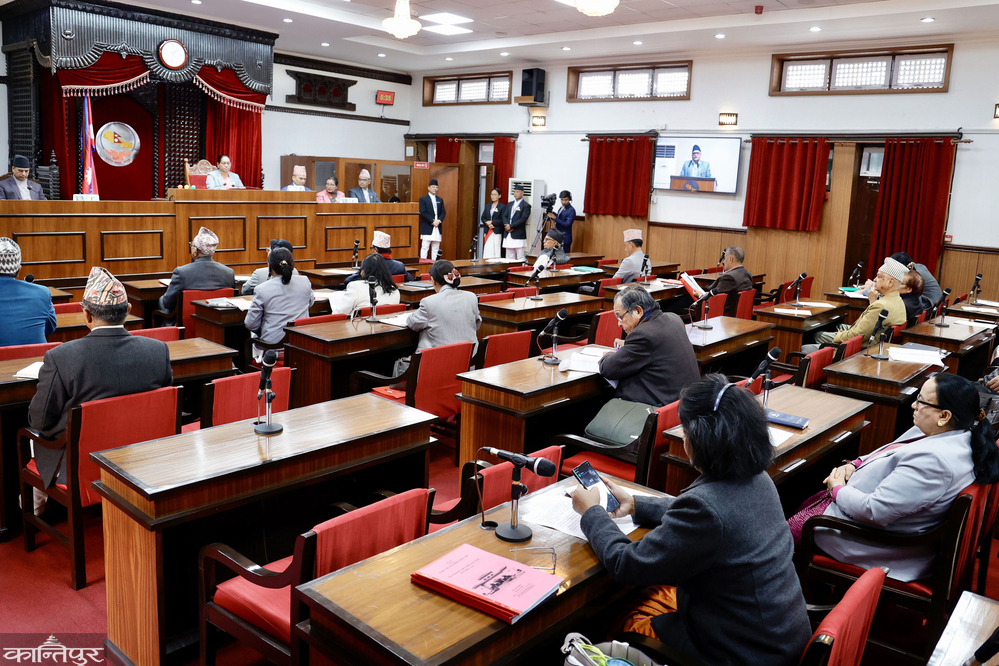
 Congress, UML, CPN and RPP have been standing together on political issues recently. In principle, all four parties are against the ordinance. Since the RPP does not have representation in the National Assembly, the role of the three parties is linked to the future of the ordinance. Congress is the first party with 24 seats in the 59-member National Assembly. The NCP has 17 members, the UML has 10, the JSP has 2, the LOSPA and the Rastriya Janamorcha have 1 each. There are two nominated by the President.
The Congress has opposed the ordinance through the Central Performance Committee and the parliamentary party meeting. The UML and the NCP have also formally opposed it. UML leader Mahesh Bartaula says that preparations are underway to have the National Assembly reject at least the ordinance related to the removal of the Constitutional Council and public officials.
The ordinance has amended the working procedures related to the meeting of the six-member Constitutional Council chaired by the Prime Minister. The ordinance has amended the provision that the presence of the chairperson and at least four members constitutes a quorum for the meeting, and has made a provision that the presence of the chairperson and at least three members constitutes a quorum.
The UML leader Bartaula says that the ordinance should be rejected to remove it since the Constitutional Council Act has been amended to fragment the principle of majority. ‘The government is an institution of continuous succession. If I say that I do not accept it because the previous government did it, then the rules of the state will end. Therefore, the system of dismissing public officials in one go under the guise of an ordinance is also serious,' he said, 'We reject this too. We cannot go into other issues too much.'
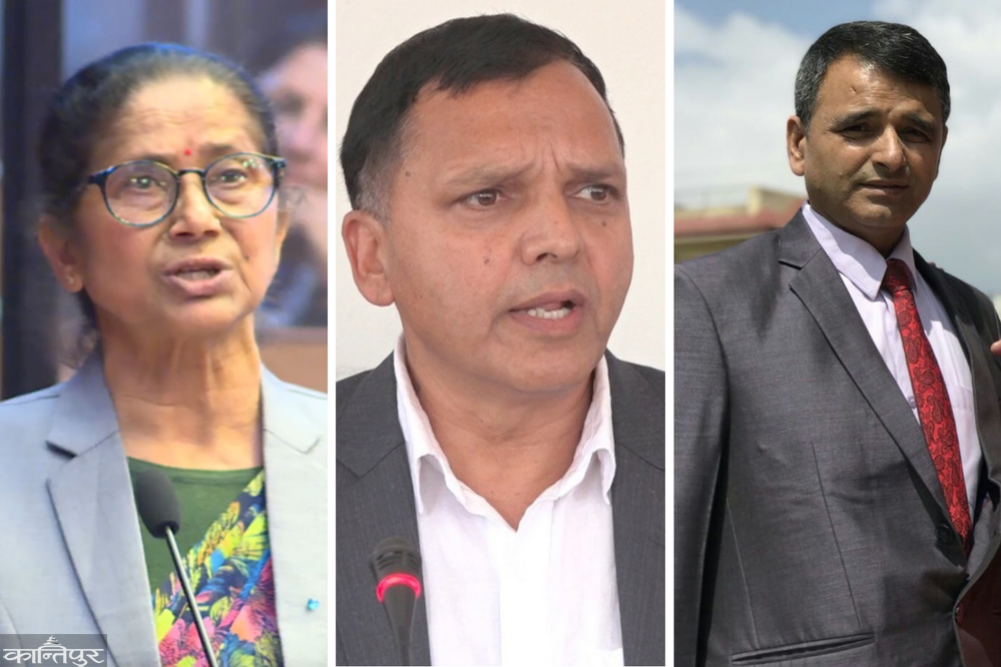
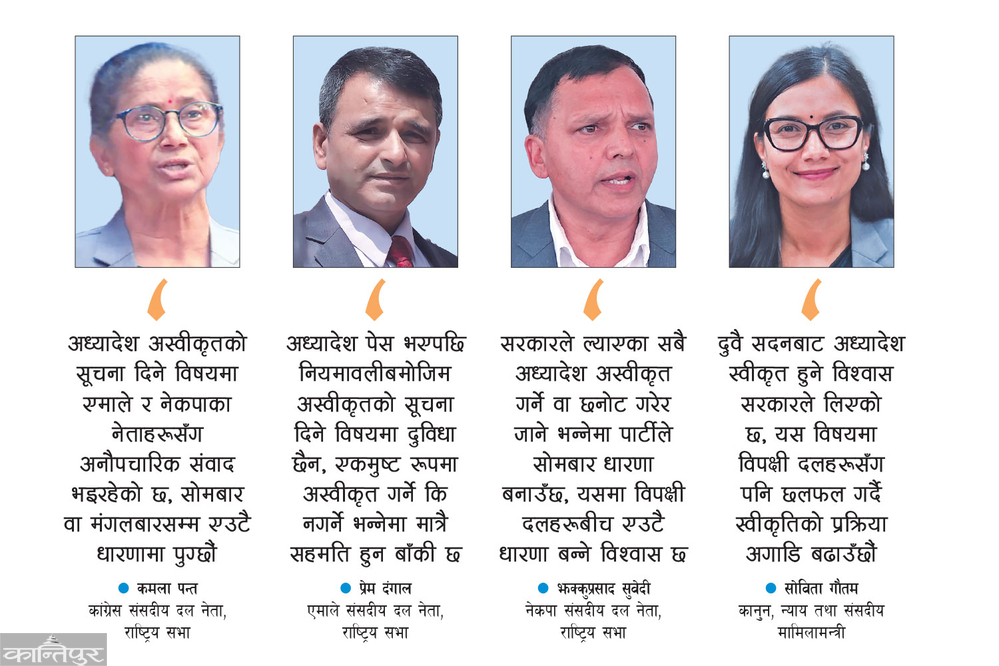
Kamala Pant, leader of the Nepali Congress parliamentary party in the National Assembly, said that a decision has yet to be reached on how many ordinances to reject. She said that the ordinance related to the Constitutional Council and the ordinance related to the removal of public officials are seen as serious in nature, so the opposition parties will stand together on these.
 Pant said that informal talks are underway with the leaders of the UML and the NCP regarding the notification of the rejection of the ordinance as per the provisions of the National Assembly Rules. 'A formal concrete agreement is yet to be reached. We will reach a common understanding by Monday or Tuesday,' she said, 'Among the opposition, talks are yet to be held with the Rastriya Janamorcha, and discussions are underway with everyone else.'
Jhakku Prasad Subedi, leader of the NCP's National Assembly parliamentary party, said that there was a serious discussion within the party regarding two of the eight ordinances. According to him, although there are principled objections to the process of bringing the ordinances and their contents, the party will form a position on Monday on whether to reject all the ordinances or to proceed with a selection. He also said that he is confident that the opposition parties will have a common position on this issue.
'The interpretation that three members, including the Prime Minister, will form a majority in the six-member council is fundamentally wrong,' Subedi said, 'We also disagree with the process of bringing the ordinances by suspending the parliament session that has been called for 17 Baisakh.'
UML parliamentary party leader in the National Assembly, Prem Dangal, said that there was no hesitation in giving notice of rejection within the time limit provided by the regulations after the ordinances were presented in parliament. He said that the only thing that remained to be agreed upon was whether to reject the ordinances unanimously.
‘The way the ordinance was brought to postpone the already-called parliament session is undemocratic and unparliamentary. Although some of the content is good, it is not possible to agree with the process being violated. There are not many objections to the ordinances related to public procurement and cooperatives. But in others, the way the general ordinance has replaced the special law is serious,’ he added, ‘Since the opposition parties have publicly opposed this, there is no point in backing down from it.’
According to the constitutional expert, in the event that an ordinance is rejected, the work completed through it continues on the basis of its immediate validity. He says that since the ordinance is rejected, the provisions amended in the old act will be repeated, and the ordinance will have no effect on subsequent work.
The government has amended about 150 laws through eight ordinances. The ordinance on the removal of public officials has been amended to revoke the appointment of about 1,500 public officials by amending 110 laws alone. After the ordinance was issued, the government has been sending letters to the concerned officials informing them of their removal. “If the ordinance has been rejected, the government has removed the official as long as it is valid,” the official said. “If the removal is pending and no one has been given a letter, it should be considered that the position remains in place.”
Attorney General Narayan Kandel said that it would not be appropriate for him to comment on the parliamentary process of the ordinance right now. Minister for Law, Justice and Parliamentary Affairs Sobita Gautam said that the government is confident that the ordinance will be approved by both houses. “We will also discuss this issue with the opposition parties. We will forward the ordinance for approval,” she said.