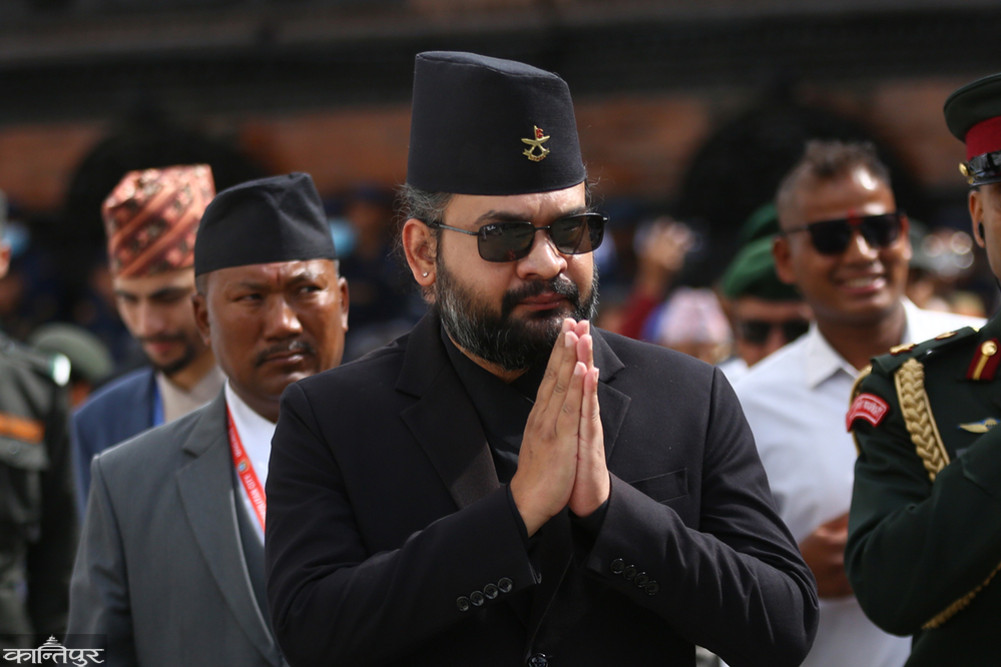
Indian media coverage of Prime Minister Balendra Shah has not always been consistent. The style of coverage seems to be different when he was mayor and when he became Prime Minister.
We use Google Cloud Translation Services. Google requires we provide the following disclaimer relating to use of this service:
This service may contain translations powered by Google. Google disclaims all warranties related to the translations, expressed or implied, including any warranties of accuracy, reliability, and any implied warranties of merchantability, fitness for a particular purpose, and noninfringement.
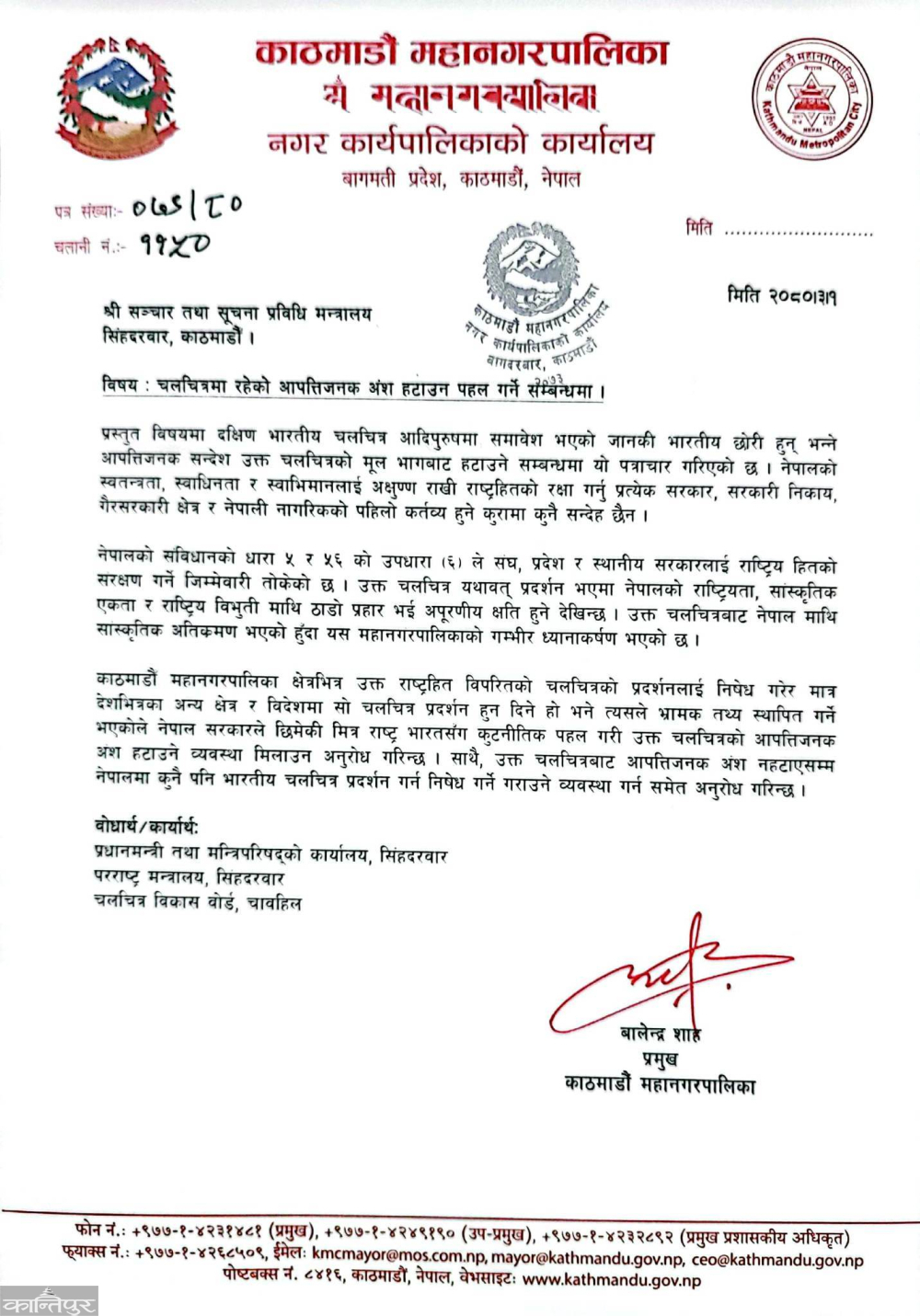
Balendra Shah has been in the Indian media since he became the Prime Minister of Nepal. Earlier, he was in the news in the Indian media when he was the mayor of Kathmandu Metropolitan City. However, at that time, those media had discussed him as an ‘anti-India’ . When he was the mayor, Shah had received extensive coverage in the Indian media for displaying a map of Greater Nepal in his office. In 2023, after the Indian film ‘Adipurush’ described Sita as ‘Bharat’s daughter’, Shah warned him to correct the line immediately. He also decided to ban Bollywood
movies in cinema halls in the metropolis if the line was not corrected. Immediately after this decision, the hall owners stopped the screenings. At that time, Bhaskar Dhungana, vice-president of the umbrella organization of the halls, the Cinema Association, had said that the decision had been taken to stop the screening of ‘Adipurush’ for the safety of the audience. Not only this, while he was mayor, Balendra had repeatedly written on his social media about the border dispute with India. During the Gen-G movement last Bhadra, Indian newspaper and television reporters had gathered in Nepal for news. At that time, Mayor Shah had become a subject of national debate. In the fall, Shah decided to resign from the post of mayor and join the Rashtriya Swayamsevak Sangh as a senior leader. At this time, Balendra was only mentioned in the Indian media. Shortly after that, the Rashtriya Swayamsevak Sangh decided to start its election campaign from Janakpur. After this, Shah started being mentioned in the Indian media again.
Kundan Aryal, head of the Central Department of Journalism and Mass Communication at Tribhuvan University, said that one of the main reasons for the increase in Shah's coverage was that he was of Madhesi origin. 'India attaches great strategic importance to the southern part of Nepal.' Everyone knows this,' said Aryal.
Shah started his campaign from Janakpur after offering prayers at the Janaki temple. He also gave a speech in Maithili. After this, his pro-Hindu image started being discussed in the Indian media and strategic circles in New Delhi. Western media has labeled him a 'rapper'. Indian media is describing his religious affinity as a new bridge for Nepal-India relations.
Anand Pradhan, who teaches at the Indian Institute of Mass Communication at Dhenkanal Campus in Odisha state, said that the Indian media has seen Shah's arrival as the prime minister as a generational change in Nepali politics.
'His arrival is being seen as the rise of a young and educated Gen-G leadership who are fed up with corruption and thoughtless governance.' His rise has been viewed with admiration, indicating both hope and desire for meaningful change in the region,” Pradhan said.
After Shah’s election campaign and landslide victory, Indian diplomats also seem to see this development as an opportunity to restore relations between Nepal and India.
Former Indian ambassadors Ranjit Rai, Rakesh Sood and Manjeev Singh Puri, along with members of India’s diplomatic community, have cautiously welcomed his entry into Nepali politics. They see the potential in him to mend ties strained by the old parties. In articles and interviews with Indian media, they have said that Prime Minister Shah can “reset” relations with India and provide a new strategic direction to the bilateral relationship.
The Times of India described him as an “engineer, rapper, mayor, disruptor,” discussing him as a transformative national leader.
The Indian Express presented him as a symbol of political change. Who, from a mere mundane, emerged as a central figure in Nepal's changing political landscape. Other media outlets have compared him to traditional political leaders of the Nepali Congress, CPN-UML and other communist parties.
Another influential Indian newspaper, 'The Hindu', in its editorial, mentioned that he became the first Madhesi Prime Minister of Nepal at the age of 35. He mentioned that he would break the old dominance of the hill elite including Brahmins-Chhetris in the power structure.
His swearing-in ceremony, which was held at the President's Office with Hindu rituals and Vedic mantras, was widely covered by the Indian media.
The Indian television channel Aaj Tak titled his swearing-in ceremony 'Raj Tilak'. Which means the coronation ceremony of the new king.
‘The swearing-in ceremony of Nepal’s new Prime Minister Shah was held on the day of Ram Navami according to Hindu Vedic traditions. Which strengthens the cultural ties between Nepal and India,’ Aaj Tak reported.
Aryal said, ‘The Indian media is keeping an eye on Shah’s Madhesi roots and what kind of relationship he will maintain with India. They are looking at his possible stance towards New Delhi, his political personality. They are looking at whether he follows the diplomatic approach of former Prime Minister KP Sharma Oli or looks different.’ 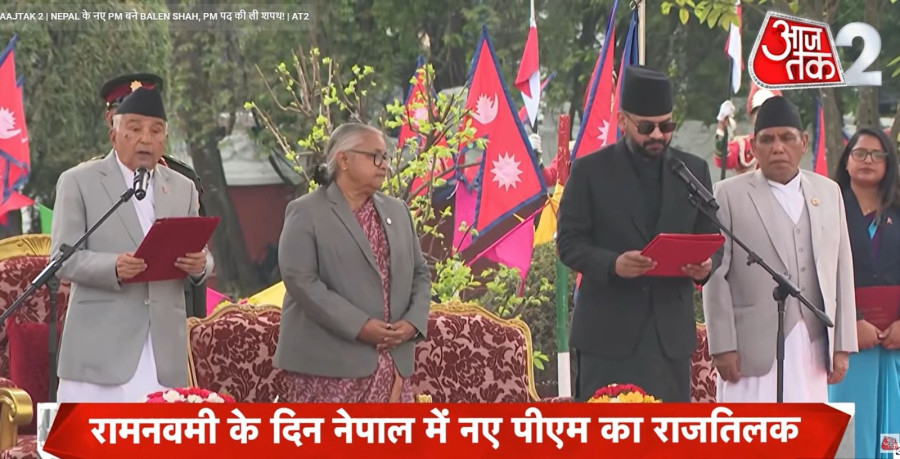
Oli had created a nationalist image in national politics after the Indian blockade in 2072 BS and the map dispute in 2076 BS. Indian media has said that Shah has strong youth support. They are discussing his anti-establishment sentiments and the role he played in the Genji movement of Bhadau.’
'Some Indian media outlets have been suspicious of his links to Western powers,' Aryal said. 'His emergence as Nepal's first Madhesh prime minister, breaking the long-held grip on power of the hill elite, has come as both a surprise and a concern to the Indian media. Also, some of his past actions as mayor have worried them. For example, Shah had a map of Greater Nepal displayed in the mayor's office after India unilaterally included Lipulekh and Kalapani in its map.'
Outlook India has called his rise a Gen-G wave against the old political parties. It has portrayed him as a key part of the broader political restructuring being undertaken by young voters in Nepal.
Other reports have portrayed him as an anti-establishment, disruptive figure, a challenger to the traditional elite, and a strong and sometimes controversial voice.'
Indian Prime Minister Narendra Modi was one of the first foreign leaders to congratulate Rashtriya Swayamsevak Sangh (RSS) President Ravi Lamichhane and Shah on their electoral success. This also contributed to increasing media attention in India. Indian media reporting has been criticized for being biased towards the government and following the government's line in foreign policy.
According to Dhananjay Tripathi, associate professor at the South Asian University, the coverage of the Bangladesh and Nepal elections in the Indian media seems to be somewhat different. "The Bangladesh election was followed more closely in the Indian media. In contrast, the coverage of the Nepal election was mainly focused on assessing the impact of the Gen-G uprising. While Nepal's unexpected mandate attracted some attention from the Indian media, the primary focus remained on the overall outcome and the decline of established political parties," he said.
Shah's nationalist stance and his past comments on India have been frequently mentioned in some Hindi newspapers and Indian news channels.
Akanksha Shah, a Delhi-based Nepali analyst who works for Indian think tanks, said there is a certain curiosity in India about Shah's personality, character and style. "His age is a particular concern because it is unusual to see such a young person in a leadership role in the neighbourhood," said analyst Shah. "I think there is excitement in India about the new prime minister. Many media persons here have been wondering whether Shah will openly interact with the media at home and abroad or adopt a more controlled style like Indian Prime Minister Narendra Modi."